Published: 13 October 2026. The English Chronicle Desk. The English Chronicle Online
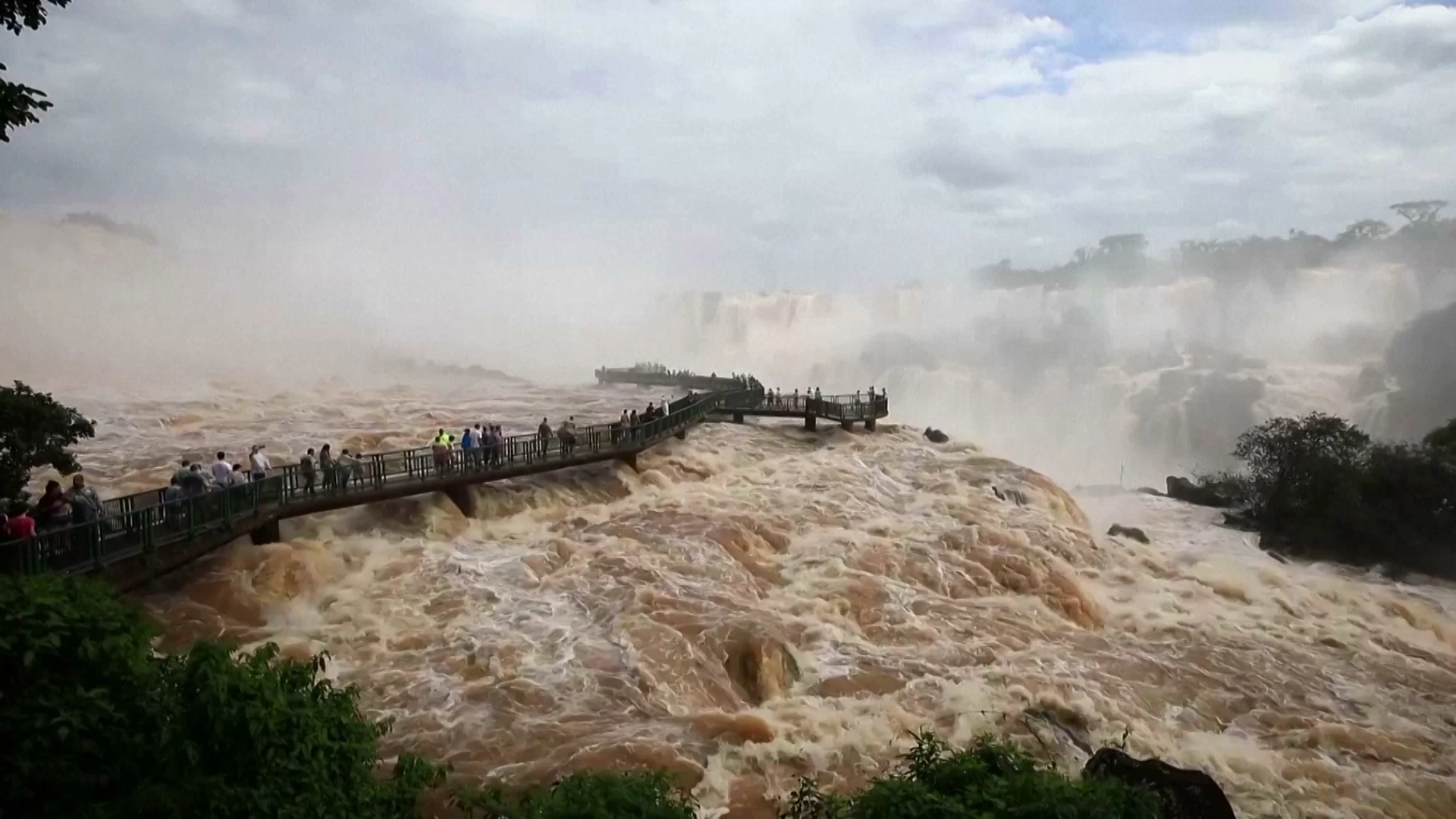
Argentina temporarily closed tourist access to the world-famous Iguazu Falls after exceptionally heavy rainfall caused the Iguazu River to swell to more than six times its normal flow, raising concerns that rapidly rising water levels could create dangerous conditions around one of South America’s most visited natural attractions.
Officials at Iguazu National Park took the precautionary decision on Monday after the river’s flow exceeded 12,000 cubic metres per second. The unusually high volume of water was linked to persistent rainfall across the region, with weather conditions being influenced by a particularly strong El Niño pattern.
The temporary closure prevented tourists from accessing viewing areas and other parts of the national park while authorities monitored the river. Officials later announced that the attraction would reopen on Tuesday following a gradual decline in the river’s flow, although the situation remained closely monitored.

José María Hervás, director of Iguazu National Park, explained that the decision had been taken because heavy rain was continuing and the volume of water being released from upstream dams had not yet fallen. With the river carrying such an enormous amount of water, authorities faced the possibility of further rises and potentially dangerous conditions near the falls and surrounding waterways.
The closure illustrates how extreme weather can quickly affect tourism at natural landmarks. Iguazu Falls normally attracts visitors from around the world who travel to the border region between Argentina and Brazil to experience one of the planet’s most spectacular waterfall systems. When water levels become unusually high, however, the same natural forces that make the falls impressive can create significant safety risks.
The Iguazu Falls stretch for approximately 2,700 metres along the border between Argentina and Brazil. The falls are recognised by UNESCO as one of the world’s largest and most impressive waterfall systems and form a major part of the region’s tourism economy.
The temporary closure was therefore not simply a precaution for visitors but also a reflection of the challenges faced by park authorities in managing a major tourist destination during periods of extreme weather. Maintaining access to trails, viewing platforms and surrounding facilities becomes considerably more difficult when rivers rise rapidly and rainfall continues for prolonged periods.
The latest disruption is not the first time that extreme water levels have forced authorities to restrict access to the falls. In 2023 and 2024, the Argentine side of Iguazu National Park was also closed because flooding associated with an earlier El Niño cycle created hazardous conditions.
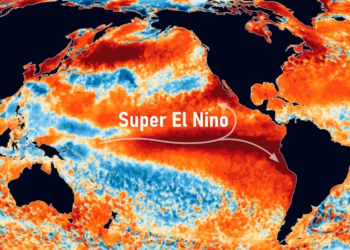
The recurrence of such events has drawn increased attention to the relationship between large-scale climate patterns and extreme rainfall. El Niño is a naturally occurring climate phenomenon that begins in the equatorial Pacific Ocean and can influence atmospheric circulation, rainfall and temperatures across distant parts of the world.
During an El Niño event, changes in winds allow substantial amounts of heat stored in the tropical Pacific Ocean to move into the atmosphere. The phenomenon generally develops during the northern hemisphere autumn, reaches a peak around December and can continue influencing weather patterns well into the following year.
Its effects are not uniform. Some regions may experience unusually heavy rainfall, while others can face drought, heat or other abnormal weather conditions. The current El Niño period has already been associated with unusual weather patterns in several parts of the world.
Meteorologists have described the 2026–27 El Niño as an exceptionally significant event, with concerns about the scale of its influence on global weather patterns. Scientists are also examining how human-caused global heating may interact with natural climate variability and potentially contribute to more intense El Niño-related impacts.
The relationship between climate change and individual weather events is complex. El Niño itself is a natural climate phenomenon, but a warmer atmosphere can hold more moisture, potentially increasing the intensity of rainfall when suitable atmospheric conditions develop. This means that natural climate cycles and long-term global warming can interact in ways that make certain extreme weather events more disruptive.
Argentina has already experienced signs of unusually wet conditions. Last month, the country’s coastal region recorded above-average rainfall, with the national meteorological service describing the pattern as similar to conditions observed during strong El Niño events.
The heavy rainfall around the Iguazu River demonstrates how these broader climate patterns can have very local consequences. A rise in river flow can affect tourism, infrastructure, transport and nearby communities even when there is no direct threat from a tropical cyclone or other major storm system.
The role of upstream dams has also been important in determining the amount of water moving through the Iguazu system. When rainfall is heavy across the river basin, water levels can rise rapidly, while releases from reservoirs may add to downstream flows. Managing those releases requires careful coordination because downstream communities and natural areas can be vulnerable to sudden changes in river conditions.
For national park authorities, the challenge is to balance public access with safety. Iguazu Falls is a major tourist destination, and temporary closures can have economic consequences for guides, hotels, restaurants, transport operators and other businesses that depend on visitors. Yet keeping the park open during dangerously high water conditions could expose tourists and staff to unnecessary risks.
The decision to close the attraction therefore reflects a broader principle in tourism management: natural environments can change rapidly, and visitor access must sometimes be restricted when environmental conditions exceed established safety thresholds.
For tourists, the closure may have been disappointing, particularly for visitors who had travelled long distances to see the falls. However, the temporary measure also provided an important reminder that nature remains unpredictable, even at destinations that operate as highly organised tourist attractions.
The reopening announcement followed a gradual decline in river flow, suggesting that authorities believed conditions were improving sufficiently to permit visitors to return. Nevertheless, continued rainfall could quickly alter the situation, making ongoing monitoring essential.
Iguazu Falls is particularly dramatic during periods of high water, when enormous quantities of water plunge over the surrounding cliffs and create vast clouds of spray. However, exceptionally high flows can also overwhelm access routes, increase the strength of currents and create hazards well beyond the main waterfall viewpoints.
The region’s experience also demonstrates why climate monitoring has become increasingly important for tourism authorities. Weather forecasts, river measurements and information about upstream water levels can help officials make decisions before conditions become dangerous.
The current episode is likely to receive further attention as the 2026–27 El Niño develops. Because the phenomenon can influence weather across multiple continents, its consequences may emerge in very different forms, from flooding and intense rainfall to drought and heat.
For Argentina, the immediate concern is the management of continued rainfall and river levels in vulnerable areas. The Iguazu National Park closure showed how quickly environmental conditions can force authorities to change plans at one of the country’s most important tourist attractions.
The episode also highlights the delicate relationship between tourism and climate. Natural landmarks attract visitors precisely because of their powerful and dynamic environments, but those same natural forces can become dangerous when conditions reach extremes.

As the Iguazu River gradually recedes from its extraordinary peak, tourists may once again be able to enjoy the falls from the Argentine side. Yet the temporary closure remains a powerful reminder that even globally recognised attractions are vulnerable to increasingly disruptive weather patterns.
For local businesses and communities, the hope will be that river levels continue to fall and tourist activity can return to normal. For scientists and authorities, however, the event provides another important example of how large-scale climate phenomena can translate into immediate local risks.
The reopening of Iguazu Falls does not mean the wider weather concerns have disappeared. With the El Niño cycle continuing and rainfall patterns remaining uncertain, authorities will need to maintain close monitoring of river conditions. For visitors, flexibility and attention to official safety information will remain essential when travelling to the region during periods of extreme weather.
Related News:
 Storm Dave Disrupts Travel but Conditions Set to Ease
 London Tube Heat Reaches Dangerous Levels
 Olympus Awaits Unesco Heritage Recognition
 Australia Races to Find Tourists Missing in Nepal
 Nepal Flood Death Toll Tops 300 as Second Flood Feared
 Typhoon Saudel Triggers Mass Evacuations in China
 Nepal PM calls deadly flood a global climate warning
 Edinburgh Glasshouses Reopen After Major Restoration
 Hurricane Isaias Puts FEMA Under New Pressure
 South Africa’s Garden Route Gem Faces Looming Water Crisis
 Evacuations Ordered as California Wildfires Spread Fast
 Queensland Braces for Potential Second Severe Cyclone Hit
 Cyclone Vaianu Forces Mass Evacuations in New Zealand
 Chornobyl Still at Risk 40 Years After Disaster
 Older Than Dinosaurs: Secrets of Mayfly Dance Revealed
 Two Dead in Adelaide Airport Plane Crash Fire
 Tractor Breakdown Tests Lincolnshire Farmers
 Britons Build Emergency Supplies Amid Rising Fears
 Sycamore Gap Artwork Chosen After Public Vote
 Pope Meets Families in Italy Toxic Waste Zone
 Essex valley emerges as rising English wine hub
 Thailand Tightens Visa Rules to Curb Tourist Misbehavior
 Sydney Records Hottest June Since 1859 as Expert Warns New High a ‘Signature’ of Global Warming
 England and Norway Fans Turn Miami Into World Cup Carnival
 UK Schools Struggle as Classrooms Top 40C
 Italy’s Beach Lunch Ban Sparks Holiday Backlash
 Three-Quarters of England’s Riverbanks Still Off Limits
 London’s 2026 ‘Great Stink’ Raises Sewer Concerns
 Wildfires rage across Europe as hundreds arrested in France
 Burnham unveils £65m drought aid for farmers
 Gen Z turns to BirdTok for a gentler digital escape
 Queue row erupts on Wales’ highest mountain
 France Eases Cheese Rules as Drought Hits Farms
 Former Railway Line Named Britain’s Favourite Path
 Drought Raises Flood Risk as UK Autumn Approaches
 Nepal Rescuers Race to Save Hundreds Trapped Underground
 UN Warns Record El Niño Could Supercharge Global Heat
 Nepal Flood Survivors Face Unimaginable Loss
 UK Subsidence Claims Surge After Record-Breaking Summer
 Nepal Tunnel Rescue Offers Hope Amid Flood Devastation
 Nepal seeks $20m climate compensation after deadly floods
 Thames Water Revises Oxfordshire Mega-Reservoir Plan
 Britain Records Second-Best Butterfly Season in 16 Years
 UK Heatwaves Set to Worsen Pothole Damage, RAC Warns
 UK Funds Gene Editing to Protect Threatened Wildlife
 Japan Braces for Dujuan as Storm Threat Grows
 Typhoon Dujuan Leaves Four Dead in Japan
 Tropics May Wait Longest for Net-Zero Climate Benefits
 Super El Niño Threatens Hundreds of Thousands of Lives
 Roman Finds Reveal Bath’s Suburban Past
 Thai downpours shift north-westwards after Bangkok floods
 UN Warns of Narrowing Window to Restore Forests
 New UK Homes in Flood Zones Face Insurance Risk
 Israel-bound Plane Lands in Saudi Arabia After Cockpit Fight
 Swiss Glaciers Lose Nearly One-Fifth of Ice in Five Years
 Pilot Recalls Fight to Save Flydubai Passengers
 Polanski Says Leadership Not Tied to By-election Result
 Bangkok Floods Push City to Breaking Point
 Rome Cracks Down on Rising Golf Cart Tours
 Experts Warn UK Food Security Is at Risk
 Pacific Climate Summit Draws Limited Global Leaders
 BA flight returns to Heathrow after steep descent
 New Zealand Faces Rising Climate Threats as Glaciers Shrink
 Ghesquière imagines a warmer future for Louis Vuitton
 Indonesia Faces Lawsuit Over Escalating Wildfire Haze
 Bendy Elm Named UK Tree of the Year
 Britons Demand Greater Honesty on Climate Crisis
 Teen Rescued After AI Gives Dangerous Hiking Route
 Sydney Town Square Plans Face New Planning Hurdle
 UK Water Firms Earn Millions From Industrial Wastewater
 Panama Hit by Powerful 7.7-Magnitude Earthquake
 UAE Says Co-Pilot Planned Suicide Attack on Israel
 Hanson Attacks Taylor as Australian Conservatives Clash
 UK Passport Rules Leave Family Facing Separation
 Mexico Storms Leave Five Dead as Flooding Worsens
 Bedbug Infestation Grounds Qantas Plane in Rome
 Middle East Airspace Crisis Strands Thousands
 British Museum Faces Questions Over Peter Thiel’s Private Bayeux Viewing
 London Facial Recognition Trial Ends With False Alert
 Healey urged to act as UK energy bills rise 4%