Published: 07 October 2026. The English Chronicle Desk. The English Chronicle Online
New Zealand is facing an increasingly severe climate challenge as greenhouse gas concentrations reach record levels and temperatures continue to rise, raising the prospect of more frequent heatwaves, destructive storms, worsening droughts and potentially catastrophic losses of the country’s glaciers.
A new government assessment of New Zealand’s atmosphere and climate has highlighted mounting pressures across the country’s natural environment and communities. The findings suggest that climate change is no longer a distant environmental concern but an increasingly immediate issue affecting public health, agriculture, infrastructure, native wildlife and culturally important places.
The report, Our Atmosphere and Climate 2026, brings together environmental statistics, scientific research and long-term observations to assess how New Zealand’s climate is changing. Its findings indicate that warming is becoming increasingly evident across multiple areas of the country’s environment.

Alison Collins, chief science adviser at the Ministry for Cities, Environment, Regions and Transport, said the evidence of climate change was becoming increasingly clear, with several independent indicators pointing towards continued warming.
New Zealand’s annual average temperature has increased by 1.36C since systematic records began in 1909. Seven of the country’s 10 warmest years have occurred during the past decade, providing a clear indication of how rapidly the nation’s climate baseline is shifting.
While an increase of just over one degree might appear relatively modest, scientists say the consequences of such a change can be substantial. A warmer baseline influences ecosystems, oceans, rainfall, extreme weather and the conditions in which people live and businesses operate.
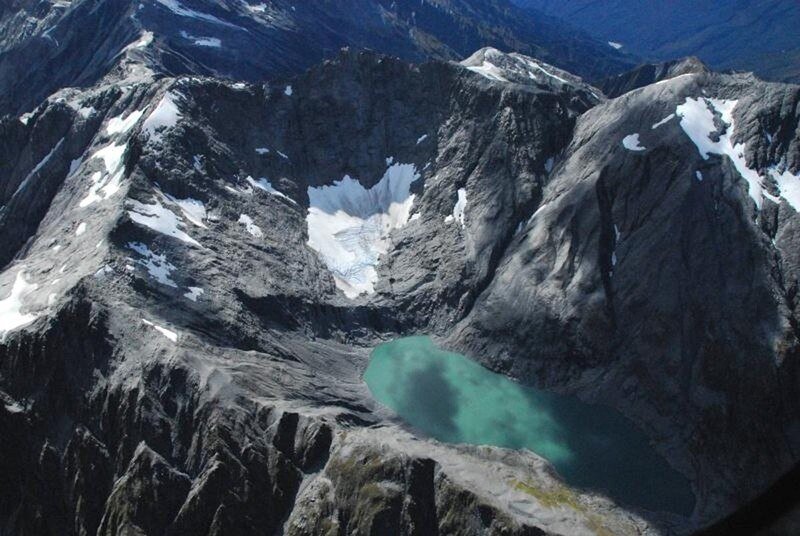
One of the most visible consequences is occurring in the mountains, where New Zealand’s glaciers are rapidly losing ice.
The country has approximately 3,000 glaciers, forming an important part of its landscape and natural heritage. Yet their combined volume has fallen dramatically, declining from about 56 cubic kilometres in 1997 to roughly 30 cubic kilometres in 2023.
Scientists warn that the decline is likely to accelerate if global temperatures continue rising.
Under a low-emissions climate scenario, modelling indicates that New Zealand’s glaciers could lose between 14% and 86% of their volume by the end of this century. Under a high-emissions scenario, the projected loss rises dramatically, ranging from 69% to potentially the complete disappearance of glacier volume.
The scale of the projected decline highlights the uncertainty surrounding the future of some of New Zealand’s most recognisable natural features. The exact outcome will depend heavily on future greenhouse gas emissions and the extent to which global warming can be limited.
The country’s atmosphere is already registering the effects of increasing greenhouse gas concentrations. Carbon dioxide levels have risen by about 30% since monitoring began in New Zealand in 1972. Methane concentrations also increased slightly in 2025, reaching their highest recorded level.
Those gases trap additional heat in the atmosphere, contributing to a chain of changes that extend far beyond rising temperatures. The government report links the additional heat to warming oceans, rising sea levels, changing rainfall patterns and increasingly intense weather extremes.
Heatwaves are expected to become particularly significant.
The report states that periods of extreme heat are very likely to become more frequent, longer and more intense across New Zealand. The number of days when temperatures exceed 25C is also expected to increase by 2050.
For the population, this could create growing health risks. Prolonged exposure to high temperatures can contribute to physical illness, aggravate existing health problems and increase psychological distress. Communities that have historically experienced relatively mild temperatures may need to adapt to conditions that were previously uncommon.
The effects are also being felt in the surrounding oceans.
New Zealand’s marine environment has experienced increasingly pronounced marine heatwaves, placing additional pressure on species that depend on stable ocean conditions. Recent observations have suggested that New Zealand’s waters have been warming significantly faster than the global average.
Marine ecosystems have already shown signs of stress. Sea sponge bleaching, the decline of southern bull kelp, unusual fish deaths and the deaths of penguins have all been associated with changing marine conditions.
The consequences could become more serious if warming continues. Marine ecosystems support biodiversity, fisheries, coastal communities and industries, meaning changes beneath the surface can eventually affect people and the economy on land.
Climate change is also expected to alter rainfall and water availability.
Some parts of New Zealand could face more frequent or severe drought conditions, placing additional pressure on ecosystems and agricultural industries. Farmers and rural communities depend heavily on predictable seasonal patterns, and changes in rainfall can affect crops, livestock, water supplies and household incomes.
At the other extreme, heavier rainfall and more intense storms could increase flooding risks.
New Zealand has already experienced devastating weather events in recent years. Cyclone Gabrielle and major flooding in Auckland in 2023 caused deaths, destroyed homes and infrastructure and generated enormous economic losses.
Those events demonstrated the vulnerability of communities to extreme weather. Climate change could make such risks more difficult to manage as rising temperatures alter atmospheric and rainfall patterns.
Coastal communities face another long-term threat from rising sea levels.
Higher seas can gradually erode beaches and shorelines while increasing the risk of flooding during storms. Roads, houses, utilities and other infrastructure located near the coast could face increasing damage and higher maintenance costs.
For some Māori communities, the consequences extend beyond physical infrastructure.
Rising seas, erosion and environmental change could reduce access to culturally significant locations and places connected to community identity and traditions. Climate change therefore has implications not only for physical safety and economic activity but also for cultural heritage.
The government assessment brings together information from several areas of environmental monitoring, including air quality, atmospheric conditions, climate, freshwater, land and marine environments. The broad scope of the report illustrates how interconnected the country’s climate pressures have become.
A warmer atmosphere affects rainfall. Changing rainfall affects rivers and agriculture. Warmer oceans affect marine ecosystems. Melting glaciers alter mountain landscapes and water systems. Rising seas threaten coastal communities and infrastructure.
These changes do not occur independently.
Scientists and government officials are increasingly examining climate change as a systemic challenge that affects almost every part of society. New Zealand’s relatively stable historical climate helped shape the country’s settlements, agriculture, infrastructure and economic activity. As those conditions shift, many existing systems may need to be redesigned.
For communities, adaptation could involve stronger flood protection, improved water management, changes to agricultural practices and better preparation for heatwaves and storms. For businesses, changing weather patterns could affect supply chains, insurance costs, production and investment decisions.
The economic implications could be considerable.
Damage from severe storms and flooding can cost billions of dollars, while gradual changes such as coastal erosion and glacier loss may create long-term expenses that are harder to measure. Agriculture, tourism and other industries that depend on predictable environmental conditions may also need to adapt.
New Zealand’s glaciers have particular significance for tourism and national identity. Their retreat is a visible reminder of a much broader global process. The loss of ice in remote mountain regions may appear distant from urban life, but it reflects changes that are occurring throughout the climate system.
The country’s experience also demonstrates that climate change is not limited to one region or one type of environmental disaster. Heatwaves, droughts, storms, ocean warming, sea-level rise and glacier retreat are interconnected manifestations of a changing climate.
The new report does not suggest that every projected impact is inevitable. Different emissions pathways produce significantly different outcomes, particularly for glacier survival and the severity of future warming.
That distinction makes the findings both a warning and an indication of the choices that remain available.

Lower emissions could limit some of the most severe consequences, while continued high emissions would increase the likelihood of profound environmental changes. Adaptation can also reduce risks to communities, although some natural systems may be difficult or impossible to restore once major thresholds are crossed.
For New Zealand, the challenge is therefore twofold: reducing the contribution to global warming while preparing for changes that are already underway.
The country’s climate history has provided the foundation on which modern communities and industries were built. That foundation is now shifting.
As Collins observed, climate change is not simply an environmental issue. It is also a human and economic story.
The shrinking glaciers, increasingly intense heat, warmer seas and growing risks from extreme weather are already changing the conditions in which New Zealanders live. The decisions made in the coming years will help determine whether those changes remain manageable or develop into a far more disruptive transformation of the country’s environment and society.
Related News:
 Wildfires rage across Europe as hundreds arrested in France
 UN Warns Record El Niño Could Supercharge Global Heat
 Nepal seeks $20m climate compensation after deadly floods
 Super El Niño Threatens Hundreds of Thousands of Lives
 Nepal PM calls deadly flood a global climate warning
 Thai downpours shift north-westwards after Bangkok floods
 UN Warns of Narrowing Window to Restore Forests
 Swiss Glaciers Lose Nearly One-Fifth of Ice in Five Years
 Bangkok Floods Push City to Breaking Point
 Evacuations Ordered as California Wildfires Spread Fast
 Queensland Braces for Potential Second Severe Cyclone Hit
 Capitalism ‘Suicidal’, Warns Petro at Climate Summit
 Nepal Rescuers Race to Save Hundreds Trapped Underground
 Europe Faces Climate Reckoning After Extreme Summer
 Japan Braces for Dujuan as Storm Threat Grows
 Typhoon Dujuan Leaves Four Dead in Japan
 Argentina Protesters Resist Milei’s Land Sale Drive
 ‘Extinct’ Antelope Returns to Sahara, Bringing Hope
 Japan Prepares for Kashiwazaki Restart After Fukushima Legacy
 Half the World’s Largest Cities Face Rising Water Stress
 The Sound of Mayhem’: Terror and Loss at Mount Maunganui
 Reindeer Deaths Rise as Finnish Herders Blame Border Wolves
 Storm Leonardo Triggers Election Delay Calls in Iberia
 Scotland’s Climate Plans Face Scrutiny Over ‘Science Fiction’ Targets
 Ocean Warming Drives Massive Marine Life Loss, Study Warns
 Tropical Flowers Shift Blooming Due to Climate Crisis
 Greenpeace $345m Ruling Sparks Appeal Battle
 Musk’s xAI Permit Sparks Fury Over Power Plant Expansion
 The Truth Behind Rising Energy Costs and Fossil Fuel Myths
 Extreme Weather: Europe Shivers as Cyclone Narelle Hits
 Trump to Deploy “God Squad” Over Gulf Wildlife Protections
 UK Records Earliest Spring as Nature Awakens Fast
 Tragic End to Outback Search as Floods Claim a Life
 Cyclone Vaianu Forces Mass Evacuations in New Zealand
 Chornobyl Still at Risk 40 Years After Disaster
 Escobar’s Hippos May Be Moved to India Zoo
 Coalition pushes fossil fuel phaseout plan
 Record May Heat to Cold Front in Eastern Australia
 Ukraine strikes Tuapse as oil disaster worsens
 Norway Doubles Down on Oil and Gas for Europe Energy Security
 Doomsday Clock Nears Midnight Amid Global Crises
 UN Faces Crucial Vote on Landmark ICJ Climate Ruling
 UK Faces Mass Water Shortages by 2055, Lords Warn
 Pope Meets Families in Italy Toxic Waste Zone
 Man killed in shark attack on Great Barrier Reef
 Hope for mountain bongos returns to Kenya
 UN Issues Urgent Warning: Imminent Return of El Niño
 Germany Summons Chinese Envoy Over Russian Troop Training
 Sydney Records Hottest June Since 1859 as Expert Warns New High a ‘Signature’ of Global Warming
 UK Heatwaves Ignite Crisis of Sleep and Public Safety
 China Storms Claim Fifteen Lives in Tragic Surge
 UK Seas Face Extreme Heatwave as Global Temperatures Surge
 Europe Scorched as Record Heatwaves Grip the Continent
 Venezuela Quake Death Toll Surpasses 4,000
 Olympus Awaits Unesco Heritage Recognition
 Wildfires Force Mass Evacuations in France And Spain
 Three-Quarters of England’s Riverbanks Still Off Limits
 Powerful 7.7-Magnitude Earthquake Hits Eastern Indonesia
 Battery Fires Cost UK Recycling Industry £1bn
 Heavy Casualties Feared as Flash Flood Sweeps Nepal-Tibet Border
 Australia Races to Find Tourists Missing in Nepal
 Nepal Flood Death Toll Tops 300 as Second Flood Feared
 Nepal-Tibet Flood Death Toll Rises as 2,478 Remain Missing
 Turkmenistan Begins Fixing Major Methane Mega-Leaks
 Nepal Flood Survivors Face Unimaginable Loss
 Daughter Finds Bones in Parents’ Burned-Out Car
 Nepal Tunnel Rescue Offers Hope Amid Flood Devastation
 Swedish Mining Push Puts Sami Land Rights Under Pressure
 Typhoon Saudel Triggers Mass Evacuations in China

 Tropics May Wait Longest for Net-Zero Climate Benefits
 Norfolk Broads Housing Levy Faces Environmental Criticism
 Europe’s Record Heat Summer Signals Climate Risks
 Berlin App Helps Residents Protect City Trees
 Edinburgh Glasshouses Reopen After Major Restoration
 Polanski Says Leadership Not Tied to By-election Result
 Turkey’s Landfill Methane Leaks Raise Climate Questions
 Pacific Climate Summit Draws Limited Global Leaders
 Drax Datacentre Faces Major Carbon Emissions Concerns
 Zelenskyy Signs Fighter Jet Deal Amid Russian Drone Attacks