Published: 13 October 2026. The English Chronicle Desk. The English Chronicle Online
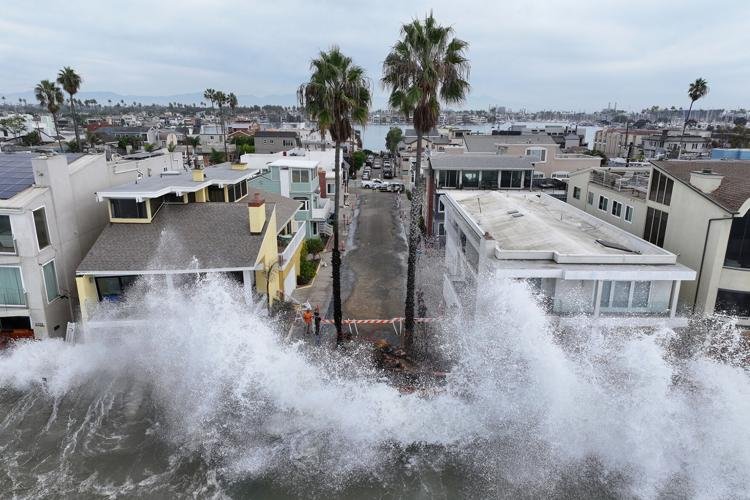
At least five people have died after Hurricane Simon and Tropical Storm Rachel battered Mexico’s Pacific coast, triggering flash floods, damaging infrastructure and leaving communities struggling to cope with dangerous weather conditions. Emergency services have launched rescue operations, using helicopters to evacuate stranded residents as floodwaters inundate homes, roads become impassable and electricity infrastructure suffers extensive damage.
The two weather systems have affected different parts of Mexico, bringing heavy rainfall, destructive winds and dangerous coastal conditions. While Hurricane Simon has weakened after moving close to the Pacific coastline, officials have warned that the risk of flooding and landslides remains high. Meanwhile, Tropical Storm Rachel has been linked to four deaths in Baja California, where authorities are continuing emergency operations and searching for missing people.
The deaths have renewed concerns about the vulnerability of coastal communities to extreme weather, particularly when heavy rainfall combines with overflowing rivers, unstable hillsides and inadequate drainage infrastructure. Emergency authorities have urged residents in affected areas to remain alert as conditions continue to evolve.

In the southern state of Guerrero, Hurricane Simon was blamed for the death of a 71-year-old man in Chilpancingo after a wall collapsed. Guerrero Governor Evelyn Salgado confirmed the fatality during a press conference, highlighting the danger posed by weakened structures and the intense weather affecting the region.
The storm also damaged homes and public infrastructure in coastal communities across Guerrero, including Acapulco, one of Mexico’s most important Pacific seaports and a major tourist destination. Floodwater-covered streets, fallen trees and damaged electricity poles have disrupted daily life, while blocked roads have complicated movement in several areas.
Although Simon did not make landfall, its proximity to the coast brought significant rainfall and dangerous conditions. Mexican authorities reported that the hurricane had weakened to Category 2 on the five-category Saffir-Simpson hurricane wind scale and was moving away from the coastline. However, the downgrade did not eliminate the threat, as rain continued to create potentially life-threatening conditions.
The National Hurricane Center in Miami warned that heavy rainfall associated with Simon could affect west-central Mexico over the following days, increasing the risk of flash flooding and mudslides. Such hazards can develop rapidly, particularly in mountainous areas where saturated soil becomes unstable and water rushes through river channels and low-lying settlements.
Authorities also warned that waves could reach approximately five metres in some coastal areas. Dangerous surf and strong currents pose additional risks to residents, fishermen, maritime workers and visitors who may underestimate the strength of the remaining storm conditions.
Flooding and landslides have already affected communities near rivers and streams in the states of Michoacan and Colima. Residents living in low-lying areas face particular risks when rainfall accumulates faster than drainage systems and waterways can accommodate it. In vulnerable settlements, even a relatively short period of intense rain can cause substantial damage to houses, roads and essential services.
The situation has placed emergency responders under pressure to assist affected communities while monitoring weather forecasts and identifying areas where further evacuations may become necessary. The authorities have continued to emphasise the importance of following official warnings and avoiding flooded roads, swollen streams and exposed coastal areas.
In Baja California, Tropical Storm Rachel has been associated with a separate tragedy. Four members of one family, including two children, were found dead on the outskirts of Ensenada, according to the state prosecutor’s office. The deaths added to the toll from the severe weather affecting Mexico’s Pacific region and raised further concerns about the safety of families living in areas exposed to flooding.
Five additional people remained missing, prompting continued efforts to establish their whereabouts. Security forces deployed helicopters to rescue 32 people, according to prosecutors, as emergency teams worked to reach individuals affected by the dangerous conditions.
Baja California Governor Marina del Pilar said officials were assisting more than 50 people staying in temporary shelters. Such facilities provide an essential refuge for residents whose homes have been damaged or who cannot safely remain in their communities while the weather threat persists.
For displaced families, the immediate challenges extend beyond finding shelter. They may also need food, clean drinking water, medical assistance, replacement clothing and reliable information about relatives who have become separated during evacuations. Children and older people can face additional difficulties when familiar support networks and normal routines are disrupted.
The full extent of the damage caused by the two weather systems remained uncertain as emergency operations continued. Fallen electricity poles and damaged infrastructure can slow recovery efforts, while blocked roads can prevent emergency personnel from reaching isolated communities. Prolonged flooding may also complicate access to schools, workplaces, health facilities and essential supplies.
The overlapping effects of Simon and Rachel illustrate the difficulties faced by emergency services when multiple weather systems threaten different parts of a country within a short period. Although the storms have followed different paths, both have contributed to a wider emergency involving fatalities, missing people, damaged property and the displacement of residents.
Weather conditions in the region have also drawn attention to the broader influence of the El Niño climate phenomenon. El Niño occurs when sea-surface temperatures in the central and eastern tropical Pacific become unusually warm, affecting atmospheric circulation and altering rainfall and wind patterns across many parts of the world.
Scientists and meteorologists have been examining the relationship between changing Pacific Ocean conditions and hurricane activity. The effects are complex, however, and El Niño does not influence every storm in the same way. Its impact can vary according to the location, intensity and timing of individual weather systems, as well as other atmospheric and oceanic conditions.
Climate researchers have also raised concerns about the potential interaction between natural climate variability and human-caused global heating. Rising global temperatures can increase the amount of moisture the atmosphere holds, contributing to heavier rainfall in many circumstances. Warmer ocean waters can also provide additional energy to tropical cyclones, although the development and strength of any individual storm depend on several factors.
The 2026–27 El Niño period has attracted attention because of concerns about unusually strong climate impacts. Nevertheless, claims that it will be the strongest event ever recorded require careful assessment against established observations and scientific forecasts. The precise contribution of El Niño and long-term climate change to Simon and Rachel’s impacts cannot be determined from the reported damage alone.
For communities along Mexico’s Pacific coast, the immediate priority remains protecting lives and preventing further casualties. Residents in areas exposed to flooding, landslides and dangerous surf may need to follow evacuation instructions even when a storm appears to be weakening or moving away.
Authorities and emergency organisations must also assess damage to roads, electricity networks and homes while helping displaced residents return only when conditions are considered safe. Recovery may take time in places where infrastructure has been damaged or where further rainfall threatens to worsen existing problems.
The deaths in Guerrero and Baja California demonstrate how rapidly severe weather can turn into a humanitarian emergency. The loss of a family, including two children, is especially devastating, while the continuing search for missing people leaves relatives and communities facing uncertainty.
As Mexico responds to the consequences of Hurricane Simon and Tropical Storm Rachel, meteorological warnings, effective evacuation planning and timely emergency assistance will remain crucial. Even as Simon moves away from the coast, the continuing threat of heavy rain, flooding, landslides and large waves means that the danger is not necessarily over.

The coming days will be important for determining the extent of the damage, locating missing people and supporting families affected by the storms. For residents whose homes and livelihoods have been disrupted, the priority will be securing safe shelter, restoring essential services and beginning the difficult process of recovery.
The unfolding emergency is also a reminder that preparedness must continue beyond the moment when a storm reaches its peak. Reliable warnings, resilient infrastructure and coordinated rescue services can help communities respond to dangerous weather, reduce avoidable losses and protect people whose lives are threatened by increasingly challenging environmental conditions.
Related News:
 Nepal seeks $20m climate compensation after deadly floods
 Bangkok Floods Push City to Breaking Point
 Venezuela Quake Death Toll Surpasses 4,000
 Powerful 7.7-Magnitude Earthquake Hits Eastern Indonesia
 Wildfires rage across Europe as hundreds arrested in France
 Nepal Flood Death Toll Tops 300 as Second Flood Feared
 Nepal-Tibet Flood Death Toll Rises as 2,478 Remain Missing
 Nepal Rescuers Race to Save Hundreds Trapped Underground
 Nepal Flood Survivors Face Unimaginable Loss
 Nepal Tunnel Rescue Offers Hope Amid Flood Devastation
 Japan Braces for Dujuan as Storm Threat Grows
 Typhoon Dujuan Leaves Four Dead in Japan
 Nepal PM calls deadly flood a global climate warning
 Thai downpours shift north-westwards after Bangkok floods
 Cyclone Vaianu Forces Mass Evacuations in New Zealand
 Wildfires Force Mass Evacuations in France And Spain
 Heavy Casualties Feared as Flash Flood Sweeps Nepal-Tibet Border
 Australia Races to Find Tourists Missing in Nepal
 UN Warns Record El Niño Could Supercharge Global Heat
 Typhoon Saudel Triggers Mass Evacuations in China
 Super El Niño Threatens Hundreds of Thousands of Lives
 UN Warns of Narrowing Window to Restore Forests
 Swiss Glaciers Lose Nearly One-Fifth of Ice in Five Years
 Pacific Climate Summit Draws Limited Global Leaders
 New Zealand Faces Rising Climate Threats as Glaciers Shrink
 Panama Hit by Powerful 7.7-Magnitude Earthquake
 Storm Leonardo Triggers Election Delay Calls in Iberia
 North Korea Fires Missiles Amid US-South Korea Drills
 Evacuations Ordered as California Wildfires Spread Fast
 Southeast Asia Turns to Russia Amid Energy Crisis
 Capitalism ‘Suicidal’, Warns Petro at Climate Summit
 Coalition pushes fossil fuel phaseout plan
 China Fireworks Factory Blast Kills 21 in Hunan
 US Awaits Iran Reply on New Ceasefire Proposal
 Hormuz Talks Near Critical Stage
 Maldives Cave Diving Tragedy Raises Safety Alarm
 Pope Meets Families in Italy Toxic Waste Zone
 Discontent grows around Putin amid war strain
 Germany Summons Chinese Envoy Over Russian Troop Training
 Sydney Records Hottest June Since 1859 as Expert Warns New High a ‘Signature’ of Global Warming
 Millions Gather for Khamenei’s Six-Day State Funeral
 Olympus Awaits Unesco Heritage Recognition
 Houthis Strike Saudi Arabia as Middle East Tensions Rise
 Israeli Strike in Southern Lebanon Kills Seven
 Nepal-Tibet Flood Leaves 270 Dead and 1,400 Missing
 Families Fly to Nepal in Search of 33 Missing Britons
 Nepal Flood Death Toll Tops 1,000 as Tunnel Search Intensifies
 Saudi Arabia Shuts Oil Pipeline After Drone Attack

 Indonesia Receives First Aircraft Carrier
 Tropics May Wait Longest for Net-Zero Climate Benefits
 Japan PM Backs International Criminal Court
 Iran Rejects Claims of Shift in US Talks
 Trump gives Xi red-carpet welcome as trade truce extends
 Chinese Hybrid Car Surge Raises EU Auto Industry Concerns
 Greece Pushes for Parthenon Marbles Reunification
 Ukraine and Russia Escalate Long-Range Drone War
 Xi urges Trump to avoid US-China military conflict
 Saudi intercepts Houthi missiles as oil fears grow
 South Korea-Ukraine Row Erupts Over North Korean POWs
 South Korea demands apology over DMZ mine blast
 New Maps Reveal Gaza’s Vast Destruction
 Pilot Recalls Fight to Save Flydubai Passengers
 North Korea Fires Missile Amid DMZ Tensions
 Germany Pledges €1bn Military Aid to Ukraine
 Argentina Protesters Resist Milei’s Land Sale Drive
 Okinawa US Troops Face Curfew After Murder Case
 Israel Marks Three Years Since October 7 Attack
 South Korea Probes Fuel Shipments to Russia
 Houthi Missile Claim Sparks Riyadh Airport Disruption
 Israel Promotes Film Challenging Controversial Gaza Documentary
 India’s Youth Movement Alleges Mass Detentions Before Protest
 Gaza War Deepens India’s Strategic Ties With Israel
 Turkey Rules Out Troops in Saudi Arabia’s Houthi Conflict
 Trump Rules Out Iran Attack Before US Elections
 Hurricane Isaias Puts FEMA Under New Pressure
 Trump’s Russian Diesel Deal Sparks Ukraine Fury
 Hanson Attacks Taylor as Australian Conservatives Clash
 Australia Rejects Russian Fuel as Trump Strikes Deal
 Delhi Detains Protest Leaders as Youth Rally Escalates