Published: 06 October 2026. The English Chronicle Desk. The English Chronicle Online
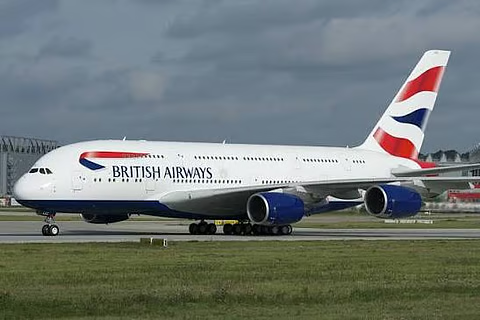
A British Airways flight travelling from London to Chicago was forced to declare an emergency and return to Heathrow after the aircraft suddenly descended thousands of feet over Ireland following what the airline described as a technical issue.
British Airways flight BA295 was operating a scheduled service to Chicago O’Hare International Airport when the Boeing 777-200ER encountered problems approximately an hour into the transatlantic journey. Oxygen masks were deployed inside the cabin as the aircraft made a rapid descent, leaving passengers uncertain about what was happening before the pilots stabilised the situation and turned the aircraft back towards Britain.
The aircraft departed London Heathrow at approximately 12.14pm on Monday and initially climbed normally. About an hour after take-off, it reached a cruising altitude of around 37,000 feet. The flight then encountered turbulence before the aircraft began a substantial descent over Ireland.

According to flight-tracking information, the aircraft descended to below 10,000 feet, representing a loss of approximately 28,000 feet from its cruising altitude. The pilots also transmitted the international 7700 emergency squawk to air traffic control, signalling a general emergency.
The decision to descend rapidly was followed by a turn back towards the United Kingdom. Rather than immediately landing at Heathrow, the aircraft entered a holding pattern over the Bristol Channel between Pembrokeshire and North Devon.
The holding manoeuvre allowed the aircraft to burn fuel and reduce its weight before attempting to land. After spending several hours in the area, the Boeing 777 eventually returned to Heathrow and landed safely shortly after 5pm.
Passengers described a tense period inside the aircraft but said the descent itself did not appear as dramatic from the cabin as the flight data might suggest. Tom Nicholls, one of the passengers, said there had been a sudden period of turbulence before the emergency developed.
He said passengers initially became uncertain when oxygen masks dropped from the ceiling. However, an announcement from the captain informed those on board that the aircraft had descended below 10,000 feet, meaning supplemental oxygen from the masks was no longer required.
The incident nevertheless created considerable anxiety among passengers, particularly because oxygen masks are commonly associated in the public mind with serious aircraft emergencies.
Images taken by passengers and later shared online showed oxygen masks hanging from the overhead panels as the aircraft made its return journey. The photographs provided a visible indication of the unusual situation experienced by those on board.
British Airways said the aircraft had landed safely and emphasised that the safety of passengers and crew remained its highest priority.
The airline said its highly trained pilots had returned the aircraft to Heathrow following a technical issue. Passengers were able to leave the aircraft normally after landing, while airline teams began making alternative travel arrangements for those affected by the disruption.
The precise cause of the technical problem has not yet been confirmed. The sequence of events, however, has prompted attention because a rapid descent below 10,000 feet combined with the deployment of oxygen masks and an emergency squawk is commonly associated with a loss of cabin pressurisation.
Aircraft normally cruise at altitudes around 30,000 to 40,000 feet, where the air is too thin for passengers and crew to breathe normally without a pressurised cabin. If cabin pressure is lost or becomes unsafe, pilots can rapidly descend to a lower altitude where breathable air is available.
The use of the 7700 emergency code is also a standard procedure when pilots encounter a serious technical or operational problem requiring immediate assistance or priority handling from air traffic controllers. Its use does not, by itself, indicate that an aircraft is in imminent danger of crashing.
The successful return to Heathrow demonstrated the importance of established aviation procedures and crew training during unexpected events. Once the pilots had identified the problem and stabilised the aircraft, returning to the departure airport provided access to maintenance teams and other operational resources.
The aircraft involved was a Boeing 777-200ER, one of the older aircraft types still operating within British Airways’ long-haul fleet. The particular aircraft was delivered to the airline in July 1997, meaning it has been in service for almost three decades.
Despite the aircraft’s age, the Boeing 777 family has a long-established reputation as one of the most widely used long-haul aircraft types in the world. Aircraft of this generation can remain in service for many years provided they undergo extensive scheduled maintenance, inspections and component replacement.
The incident therefore does not by itself indicate that the age of the aircraft was responsible for the technical problem. The cause will need to be established through the airline’s engineering investigation and any relevant aviation safety procedures.
For passengers, however, the immediate concern was completing their journey to the United States. Many travellers had planned to reach Chicago on Monday, only to find their transatlantic trip interrupted after the aircraft turned back.
British Airways subsequently began transferring affected passengers to alternative services, with many expected to depart on Tuesday.
The incident also highlights the complexities involved when a wide-body aircraft experiences a technical problem far from its departure airport. A transatlantic flight carries substantial quantities of fuel, and aircraft may need to remain airborne for a period before landing if fuel levels exceed the permitted landing weight.
That appears to have contributed to the aircraft’s holding pattern over the Bristol Channel. By remaining airborne and consuming fuel, the pilots could reduce the aircraft’s weight and prepare for a normal landing at Heathrow.
The decision also gave airline and airport teams time to prepare for the aircraft’s arrival. Emergency procedures can be activated even when pilots expect a safe landing, ensuring that appropriate personnel and equipment are available should circumstances deteriorate.
The flight-tracking data provided a clearer picture of the aircraft’s movements than passengers inside the cabin could see. After the steep descent over Ireland, the aircraft turned eastwards towards Britain and later spent time over the Bristol Channel before finally approaching Heathrow.
For people following the flight from the ground, the prolonged holding pattern may have raised concerns. However, such manoeuvres can be part of routine operational planning when an aircraft needs to reduce fuel or wait for landing clearance.
The safe outcome was welcomed by passengers who had faced an unexpected and potentially frightening interruption to their journey. The experience also demonstrated the value of clear communication between pilots and passengers during emergencies.
The captain’s announcement that the aircraft had descended below 10,000 feet helped reassure passengers that the oxygen masks were no longer required. Such communication can be particularly important when passengers are confronted with unfamiliar emergency equipment or sudden changes in aircraft operation.
The incident occurred during a busy period for international air travel, when thousands of passengers rely on long-haul services between Britain and North America each day. A disruption affecting a large aircraft can have consequences beyond those immediately on board, as replacement seats, aircraft availability and crew schedules all have to be rearranged.
British Airways now faces the task of determining the exact technical problem and ensuring that the aircraft is safe before it returns to passenger service. Engineers are expected to inspect the aircraft following the emergency landing.
For passengers affected by the incident, the immediate priority is reaching their destination with as little additional disruption as possible. Many have already been rebooked onto flights departing on Tuesday.
Although the dramatic loss of altitude initially raised concerns, the aircraft ultimately completed one of the most important objectives in aviation: returning safely to the ground with everyone on board protected.

The incident remains under review, and further details about the technical fault could provide a clearer explanation of why the aircraft descended so rapidly and why the oxygen masks were deployed. Until the airline confirms the cause, it would be premature to draw conclusions about the aircraft’s condition or the precise nature of the emergency.
What is clear is that a routine London-to-Chicago journey became an unexpected test of the aircraft’s systems, cockpit procedures and crew training. The successful return to Heathrow ensured that what began as a potentially alarming situation ended without reported serious injuries, while passengers were given alternative arrangements to continue their journeys.
For the aviation industry, such incidents serve as another reminder that long-distance air travel depends on layers of safety procedures designed to respond to technical problems quickly. In this case, the pilots’ rapid descent, emergency communication, controlled return and eventual landing allowed the situation to be managed safely despite the uncertainty experienced inside the cabin.
Related News:
 EU Biometric Border Checks Delayed for UK Travellers
 Storm Dave Disrupts Travel but Conditions Set to Ease
 10 Scenic Stays in Scotland’s Highlands & Islands
 Essex valley emerges as rising English wine hub
 Thailand Tightens Visa Rules to Curb Tourist Misbehavior
 London Tube Heat Reaches Dangerous Levels
 Italy’s Beach Lunch Ban Sparks Holiday Backlash
 Olympus Awaits Unesco Heritage Recognition
 Queue row erupts on Wales’ highest mountain
 Roman Finds Reveal Bath’s Suburban Past
 Edinburgh Glasshouses Reopen After Major Restoration
 Rolling Hills and Heritage: A Car-Free Break in Leicestershire
 UK Banks Maintain £100 Contactless Limit Despite FCA Rule Change
 Rising Costs Force Families to Rethink Days Out
 Glasgow Central Set for Full Reopening After Fire
 Kezia Dugdale Warns of Possible Reversal of Equal Rights Gains
 Synagogue Arson Attempt Sparks Security Fears
 NHS Safety Fears as Nurses Cover Doctor Gaps
 Two Children Die in Wolverhampton House Fire Tragedy
 Two Dead in Adelaide Airport Plane Crash Fire
 John Terry Faces Backlash Over Political Posts
 Border Chaos: UK Travellers Face Massive EU Delays
 Greens Face Internal Row Over Antisemitism Claims
 Barrister Criticises Trial After Suicide Case Verdict
 Tractor Breakdown Tests Lincolnshire Farmers
 Labour Members Turn Against Starmer Leadership
 Man killed in shark attack on Great Barrier Reef
 Farage and Reform UK Reshape British Politics
 Starmer Leadership Under Pressure After Setbacks
 UK Nations Brace for Potential Breakup Amid Reform Surge
 British Teens in EU Face Soaring UK University Fees
 England and Norway Fans Turn Miami Into World Cup Carnival
 UK Schools Struggle as Classrooms Top 40C
 Three-Quarters of England’s Riverbanks Still Off Limits
 Westminster Council Threatens Charing Cross Soup Kitchen
 BBC Warned About Missing Clothes of Murder Victim
 Burnham unveils £65m drought aid for farmers
 Australia Races to Find Tourists Missing in Nepal
 RAF Barnham Protests Fuel Tensions in Norfolk Town
 British Museum Faces Questions Over Peter Thiel’s Private Bayeux Viewing
 London Launches First Self-Driving Taxis
 Internal Exclusions Surge in England’s Schools
 UK Subsidence Claims Surge After Record-Breaking Summer
 Masked Protesters Bring Dover Port Traffic to Standstill
 UK House Prices Fall as Mortgage Rates Rise
 Councils spend £125m on illegal children’s care
 Nats Boss Summoned as UK Flight Chaos Continues
 Iceland to Open First UK High Street Store in Falklands
 UK Retailers Accused of Breaking Refund Laws
 UK Heatwaves Set to Worsen Pothole Damage, RAC Warns
 Mahmood Warns Far Right Over Asylum Protests
 Disabled Travellers Seek Fairer UK Care Rules
 NHS Breast Care Review Finds Serious Patient Harm
 UK Rent Gap Puts Low-Income Families Under Pressure
 Lib Dems Prepare for Election Amid Reform Challenge
 Headteachers Warn New Ofsted System Is Harming Wellbeing
 Labour Apprenticeship Scheme Faces Slow Start
 UK Flights Hit by Fresh Air Traffic Control Fault
 King Refers Jamaica Slavery Petition to Privy Council
 GP List Policy Risks Cutting Off Vulnerable Patients
 Greece Pushes for Parthenon Marbles Reunification
 Elif Eralp Emerges as Berlin’s Next Political Force
 Frome Community Loses Bid for Major Regeneration Site
 Free Speech Emerges as Key UK Election Issue
 Avanti West Coast Set for Public Ownership in March
 London Facial Recognition Trial Ends With False Alert
 Pelicot Trial Play Comes to London for One Night
 UK University Strikes Spread as Financial Pressure Grows
 Burnham Opens Door to Possible UK Return to EU
 Poundland Rescue Bid Could Protect 11,000 Jobs
 Drumcree Talks Falter as Legal Challenge Deepens
 UK-France Returns Deal Faces Expiry as Talks Stall
 Healey urged to act as UK energy bills rise 4%
 Green Party faces dispute over Zionism motion
 Pilot Recalls Fight to Save Flydubai Passengers
 Badenoch Raises Prospect of 2027 UK Election
 BT Broadband Pauses Raise Digital Switchover Concerns
 Rome Cracks Down on Rising Golf Cart Tours
 Experts Warn UK Food Security Is at Risk
 Gosport Protesters Clash With Police Over Migrant Rescue