Published: 23 October 2026. The English Chronicle Desk. The English Chronicle Online
A powerful magnitude-7 earthquake has struck a remote, high-altitude region in northern Tibet, claiming the lives of at least 16 people, injuring dozens, and leaving hundreds of homes in ruins across the rugged plateau. Search and rescue operations are currently under way under harsh climatic conditions as emergency response teams scramble to locate survivors trapped beneath collapsed structures and clear vital transportation arteries.
The severe tremor struck at 10:33 pm local time on Thursday, sending shockwaves through the high-altitude terrain of Nagqu city in the northern sector of the Tibet Autonomous Region. According to data provided by the US Geological Survey, the epicenter of the earthquake was located roughly 119 miles east-north-east of Nagqu, occurring at a depth of 11 miles in a sparsely populated mountainous area. The intensity of the quake was felt across wide distances, causing widespread panic in local communities where residents rushed outdoors into the freezing night air to escape potential building collapses.
Official media reported that the disaster resulted in the collapse of at least 339 residential homes and 20 livestock sheds, while hundreds of other structures suffered severe structural damage, including deep cracks and roof collapses. At least 54 people sustained varying degrees of injuries, with several individuals remaining in critical condition as local health authorities work around the clock to provide medical care. The event has been identified as the most powerful seismic disaster to strike the region in five years, according to statements from China’s national broadcaster.

Following the initial tremor, seismologists recorded at least seven significant aftershocks ranging between magnitudes 4.3 and 5.2, all originating at depths of approximately six miles. The repeated shaking has heightened anxiety among residents and complicated initial rescue operations. Video footage broadcast by state media captured chaotic scenes inside local businesses and restaurants, showing items violently falling from supermarket shelves and workers sprinting into open streets as structures shook vigorously overhead.
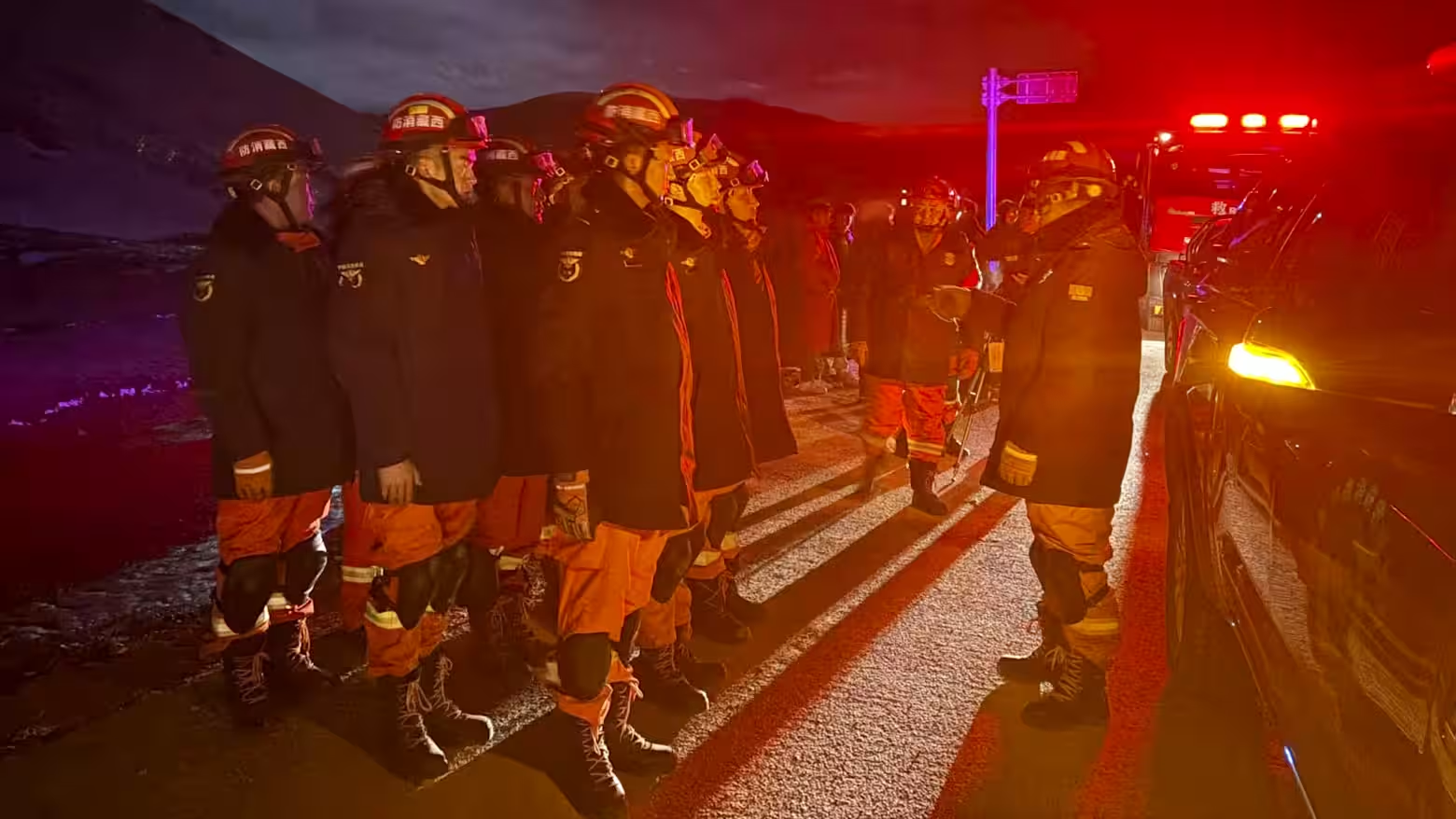
In response to the catastrophe, a massive emergency relief effort was launched across the affected county. Over 1,600 personnel—including local firefighters, rescue workers, military units, and police officers—were deployed to navigate the hazardous terrain and inspect damaged neighborhoods. Ground crews clambered over piles of concrete, timber, and brick, searching meticulously for signs of life. Emergency distribution networks moved swiftly to deliver crucial supplies into the frigid highland zone, dispatching 1,000 prefabricated housing units, 3,000 tents, folding beds, winter clothing, flashlights, and heating stoves to accommodate displaced families facing sub-zero overnight temperatures.
The quake also caused severe infrastructure disruptions. Rockfalls and landslides triggered by the shaking blocked key transport corridors, forcing authorities to shut down a major section of National Highway 317. Highway clearance crews worked urgently to remove heavy debris and boulders, keeping the route open strictly for emergency vehicles, ambulance convoys, and official support logistics. Telecommunication networks and power lines experienced temporary outages in certain remote pockets, further hampering communication with isolated villages. In addition, local railway operators enacted emergency protocols, halting train operations passing through the region to inspect tracks and ensure passenger safety.
Environmental conditions pose an additional threat to ongoing relief activities. Weather forecasters warned of intermittent snowfall expected across the high-altitude plateau over the coming days, which threatens to slow rescue teams and increase the hardship faced by survivors sheltering in temporary accommodations. China’s President, Xi Jinping, issued a directive calling for an all-out effort in the rescue and medical relief operation, urging authorities to prioritize saving lives and minimizing secondary casualties.
Nagqu, situated more than 185 miles north of Tibet’s regional capital of Lhasa, sits within a seismically active belt formed by the ongoing collision of tectonic plates. Earthquakes and geological hazards are a recurring reality in this region. Earlier in January 2025, a devastating earthquake in Tibet’s rural Tingri county left at least 126 people dead and damaged extensive infrastructure. The plateau was also hit by disastrous flooding along the border areas with Nepal, causing significant destruction across vulnerable alpine settlements. In December 2023, a deadly quake in Gansu province killed at least 134 people, standing as one of the region’s deadliest natural disasters in recent years.
The high-altitude region of Tibet, which came under Chinese administration in the 1950s, remains one of the poorest and geographically isolated territories in China. Many ethnic Tibetans maintain a complex relationship with central authorities in Beijing, frequently citing concerns over restrictions placed on local culture and religious expressions. Information control in remote border zones often complicates independent reporting, but international monitoring agencies continue to track humanitarian needs as relief operations proceed across the affected plateau.

The powerful tremor struck late Thursday evening at 10:33 pm local time, sending violent shockwaves through the vast, cold landscape of Nagqu city in the northern sector of the Tibet Autonomous Region. According to precise tracking data provided by the US Geological Survey, the epicenter was identified approximately 119 miles east-north-east of Nagqu, originating at a shallow depth of about 11 miles beneath the surface. The earthquake’s shallow focal depth amplified the ground movement significantly across the surrounding mountainous terrain, causing intense tremors that were distinctly felt across vast distances, including in communities hundreds of miles away. The sudden midnight shaking caused widespread panic in local villages, where terrified residents rushed out into the freezing night air to escape collapsing walls and falling debris.
Rescue teams continue to conduct overnight searches using specialized equipment and thermal imaging in an effort to reach isolated homesteads before severe winter conditions set in. Local government agencies have set up temporary shelters and medical stations to treat the injured, while emergency workers remain on high alert for additional aftershocks.
Related News:
 Nepal seeks $20m climate compensation after deadly floods
 Nepal-Tibet Flood Death Toll Rises as 2,478 Remain Missing
 Nepal Flood Survivors Face Unimaginable Loss
 Nepal Tunnel Rescue Offers Hope Amid Flood Devastation
 Nepal PM calls deadly flood a global climate warning
 Bangkok Floods Push City to Breaking Point
 Venezuela Quake Death Toll Surpasses 4,000
 Powerful 7.7-Magnitude Earthquake Hits Eastern Indonesia
 Wildfires rage across Europe as hundreds arrested in France
 Nepal Rescuers Race to Save Hundreds Trapped Underground
 Thai downpours shift north-westwards after Bangkok floods
 Panama Hit by Powerful 7.7-Magnitude Earthquake
 Mexico Storms Leave Five Dead as Flooding Worsens
 Escobar’s Hippos May Be Moved to India Zoo
 Capitalism ‘Suicidal’, Warns Petro at Climate Summit
 Wildfires Force Mass Evacuations in France And Spain
 Nepal-Tibet Flood Leaves 270 Dead and 1,400 Missing
 Nepal Flood Death Toll Tops 300 as Second Flood Feared
 UN Warns Record El Niño Could Supercharge Global Heat

 Europe Faces Climate Reckoning After Extreme Summer
 Japan Braces for Dujuan as Storm Threat Grows
 Typhoon Dujuan Leaves Four Dead in Japan
 Super El Niño Threatens Hundreds of Thousands of Lives
 Sri Lanka Easter Bombings: 15 Get Long Prison Terms
 Trump Asked Xi About Buying US Weapons
 UN Warns of Narrowing Window to Restore Forests
 South Korea-Ukraine Row Erupts Over North Korean POWs
 South Korea demands apology over DMZ mine blast
 Swiss Glaciers Lose Nearly One-Fifth of Ice in Five Years
 Pilot Recalls Fight to Save Flydubai Passengers
 Turkey’s Landfill Methane Leaks Raise Climate Questions
 Pacific Climate Summit Draws Limited Global Leaders
 Argentina Protesters Resist Milei’s Land Sale Drive
 New Zealand Faces Rising Climate Threats as Glaciers Shrink
 India’s Youth Movement Alleges Mass Detentions Before Protest
 Delhi Braces for Youth Protests Over Voter Roll Dispute
 Delhi Detains Protest Leaders as Youth Rally Escalates
 PTI Announces Swabi Rally Ahead of Long March Plans
 India’s Voter Roll Crisis Sparks Nationwide Protests
 Indonesia Tests Dry Ice as Toxic Haze Spreads Across Asia
 Suu Kyi Appears in Rare Photos After Royal Gift
 Japan’s Takaichi Faces a Crucial Second Year in Power
 UN Warns World Must Cut Emissions by 18% by 2030
 ‘Extinct’ Antelope Returns to Sahara, Bringing Hope
 Half the World’s Largest Cities Face Rising Water Stress
 Ocean Warming Drives Massive Marine Life Loss, Study Warns
 Greenpeace $345m Ruling Sparks Appeal Battle
 The Truth Behind Rising Energy Costs and Fossil Fuel Myths
 Extreme Weather: Europe Shivers as Cyclone Narelle Hits
 Trump to Deploy “God Squad” Over Gulf Wildlife Protections
 Coalition pushes fossil fuel phaseout plan
 China Fireworks Factory Blast Kills 21 in Hunan
 US Awaits Iran Reply on New Ceasefire Proposal
 UK Faces Mass Water Shortages by 2055, Lords Warn
 Maldives Cave Diving Tragedy Raises Safety Alarm
 Pope Meets Families in Italy Toxic Waste Zone
 Discontent grows around Putin amid war strain
 UK Heatwaves Ignite Crisis of Sleep and Public Safety
 Olympus Awaits Unesco Heritage Recognition
 Houthis Strike Saudi Arabia as Middle East Tensions Rise
 Swedish Mining Push Puts Sami Land Rights Under Pressure
 Typhoon Saudel Triggers Mass Evacuations in China
 Tropics May Wait Longest for Net-Zero Climate Benefits
 Trump gives Xi red-carpet welcome as trade truce extends
 Chinese Hybrid Car Surge Raises EU Auto Industry Concerns
 Xi urges Trump to avoid US-China military conflict
 Europe’s Record Heat Summer Signals Climate Risks
 Okinawa US Troops Face Curfew After Murder Case
 Israel Marks Three Years Since October 7 Attack
 South Korea Probes Fuel Shipments to Russia
 Sri Lanka Ex-First Lady Arrested Over Donation Probe
 Houthi Missile Claim Sparks Riyadh Airport Disruption
 Trump Rules Out Iran Attack Before US Elections
 Delhi Tightens Security Ahead of Election Protest
 Trump’s Russian Diesel Deal Sparks Ukraine Fury
 Hanson Attacks Taylor as Australian Conservatives Clash
 UK Shoppers Urged to Avoid Hake and Coley
 Gadi Eisenkot: Israel’s Anti-Netanyahu Challenger
 Zelenskyy Says US Failed to Warn Kyiv of Russian Strikes