Published: 15 October 2026. The English Chronicle Desk. The English Chronicle Online.
Indonesia has begun testing an unconventional approach to tackling a devastating wildfire crisis, turning to dry ice in an attempt to reduce the thick, toxic haze that has engulfed parts of the country and spread across neighbouring nations. The experimental operation, planned over South Sumatra, comes after conventional firefighting measures, including cloud seeding, water bombing and the deployment of military personnel, have struggled to contain the fires.
The initiative reflects the growing urgency facing Indonesian authorities as the country experiences its worst fire season in more than a decade. Since January, nearly 900,000 hectares of land have reportedly been burned across Indonesia, generating vast quantities of smoke that have damaged air quality, disrupted daily life and raised serious concerns about public health throughout Southeast Asia.
Coordinating security minister Dudung Abdurachman said the dry ice dispersal trial was being conducted under the direct instructions of President Prabowo Subianto. According to Indonesia’s state news agency, the government intends to evaluate the results before deciding whether the technique should be introduced in other fire-affected regions.

The planned operation involves a Cessna aircraft dispersing approximately 1.5 tonnes of dry ice over Palembang, the capital of South Sumatra. Authorities hope the intervention will help reduce the haze and improve visibility and air quality. However, experts have cautioned that the technique may provide only temporary relief and cannot replace the difficult task of extinguishing the fires responsible for the pollution.
The trial comes at a time when the environmental emergency has become a regional crisis. Thick smoke from Indonesian wildfires has travelled across national borders, affecting Singapore, Malaysia and the Philippines. Timor-Leste has also announced temporary school closures in response to deteriorating air conditions, illustrating how a disaster originating in one country can disrupt communities hundreds of kilometres away.
For millions of people living under the haze, the consequences have become increasingly difficult to ignore. Schools have faced closures, transport operations have been disrupted, and residents have been exposed to polluted air for prolonged periods. Health authorities have also faced growing pressure as people seek treatment for breathing difficulties and other respiratory problems associated with smoke exposure.
The dry ice experiment is therefore being watched as a possible short-term intervention, even as scientists and environmental campaigners continue to stress that Indonesia’s underlying fire problem requires a more comprehensive response.
Dry ice is solid carbon dioxide. When exposed to warmer surroundings, it changes directly from a solid into a gas without first becoming liquid. The substance has previously been used in cloud-seeding experiments designed to encourage ice-crystal formation in suitable atmospheric conditions.
The principle behind such techniques involves introducing particles into clouds under particular temperature and moisture conditions to influence the formation of ice crystals and precipitation. However, the effectiveness of any such intervention depends heavily on the existing weather conditions, cloud structure and the specific method being used.
Indonesia’s current trial is intended to explore whether dispersing dry ice could help alleviate the immediate effects of the haze over a limited area. The government has not yet established that the operation will produce substantial or lasting improvements, and its effectiveness will need to be assessed through observations and air-quality measurements.
Experts have warned against viewing the experiment as a definitive solution. Rick McRae, an adjunct professor associated with the bushfire research group at the University of New South Wales, said the approach might offer local relief for a limited period but would not necessarily prevent polluted air from returning.
Weather systems continually move smoke across affected areas. Even if an intervention temporarily improves conditions in one town, additional smoke may be carried in from surrounding regions. This means that any improvement could be short-lived unless the fires themselves are brought under control.
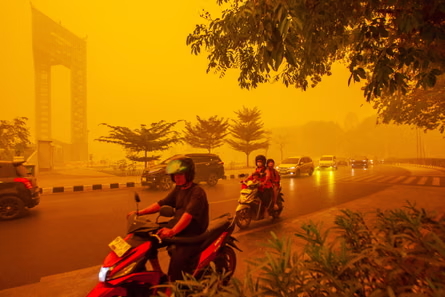
The scale of the pollution has been particularly alarming in Central Kalimantan, where the Indonesian environment ministry’s air pollution index reportedly exceeded 1,200 on Wednesday. That figure is four times the index’s cited hazardous threshold of 300, highlighting the extraordinary severity of the conditions recorded in the province.
Local footage showed thick smoke blanketing Palangka Raya, the provincial capital, substantially reducing visibility for motorists. Roads, rivers and urban areas have been obscured by the haze, creating dangerous conditions for people travelling to work, attending school or accessing essential services.
Such pollution presents a serious concern because wildfire smoke contains fine particles and other pollutants that can penetrate deep into the respiratory system. Exposure can aggravate asthma and other existing conditions, irritate the eyes and throat, and increase the risk of breathing difficulties. Children, older people, pregnant women and individuals with heart or lung conditions can be particularly vulnerable.
The effects extend beyond immediate physical symptoms. Persistent haze can prevent children from attending school, discourage outdoor activities and make routine work more difficult. Families may also face additional medical expenses, while businesses can experience disruption when employees become ill or transport conditions deteriorate.
In Singapore, the authorities have introduced subsidies for haze-related medical treatment, a measure last activated during a similar major episode in 2015. The city-state has also begun distributing N95 masks to eligible residents to help reduce exposure to airborne particles.
Malaysia has experienced similarly concerning conditions. Kuala Lumpur’s skyline has been obscured by smoke, while pollution readings have placed the city among the most affected urban areas during the latest episode. Singapore has also appeared among the world’s most polluted cities in recent rankings reported during the crisis.
Timor-Leste has taken additional precautions, announcing that schools would close nationwide for three days beginning Thursday. Authorities have urged families to keep children indoors and to use respiratory protection when going outside where necessary.
These measures demonstrate how the consequences of Indonesia’s fires extend far beyond the locations where the flames are burning. Smoke can travel over considerable distances, meaning that communities with no direct connection to the fires may still face serious environmental and public-health consequences.
The fires have been exacerbated by unusually severe climate conditions associated with this year’s powerful El Niño pattern. El Niño can alter rainfall and temperature patterns across parts of Southeast Asia, increasing the likelihood of dry conditions in vulnerable landscapes. When vegetation and soil become sufficiently dry, fires can spread more easily and become difficult to extinguish.
Land-clearing practices are another major concern. The use of slash-and-burn methods to prepare land for agriculture, including palm oil cultivation, has long contributed to fire risks in Indonesia. Although not every wildfire originates from agricultural activity, deliberate burning and poorly controlled land clearance can allow flames to spread into surrounding vegetation and peatland.
Peatlands present a particularly difficult challenge. These landscapes contain layers of partially decomposed organic material that can retain moisture under normal conditions but become highly vulnerable to combustion during prolonged drought. Once ignited, peat fires can continue burning beneath the surface, sometimes for weeks, even when visible flames have disappeared.
Underground combustion makes it difficult for firefighters to determine where a fire is still active. Water dropped from aircraft may help suppress visible flames, but it may not adequately reach burning material beneath the surface. Effective control can require sustained efforts to locate hotspots, saturate affected ground and prevent fires from reigniting.
President Prabowo has ordered authorities to intensify firefighting operations and take stronger action against those suspected of starting fires. Nevertheless, the government has faced criticism over its response as the emergency has continued to affect large areas and expose residents to hazardous air.
The pressure has also extended into the legal arena. A class-action lawsuit filed in Indonesia last week reportedly accused the government of gross negligence in handling the wildfire crisis. The case reflects growing public frustration over the health consequences of the haze and questions about whether sufficient preventive measures were taken before conditions deteriorated.
The allegations have not, by themselves, established legal responsibility. However, the lawsuit adds to demands for stronger environmental enforcement, more effective fire prevention and better protection for communities exposed to recurring smoke pollution.
Environmental specialists argue that the crisis cannot be resolved through emergency firefighting alone. Preventing land-clearing fires, enforcing restrictions, improving early-warning systems and protecting vulnerable peatlands are all important parts of a long-term strategy. Better coordination between national and local authorities is also essential because fires can spread across administrative boundaries and require substantial resources to control.
Regional cooperation is equally important. Since smoke crosses borders, governments in Southeast Asia have a shared interest in monitoring air quality, exchanging information and coordinating responses. Public-health warnings, access to protective equipment and timely communication can help reduce exposure while firefighting teams work to contain the underlying sources of pollution.
Climate change adds another layer of uncertainty. Rising temperatures and changing rainfall patterns can intensify drought in some regions, increasing the likelihood that vegetation and peatlands will become vulnerable to fire. As extreme conditions become more difficult to predict, governments may need to invest more heavily in prevention and preparedness rather than relying primarily on emergency responses after fires have spread.
McRae has warned that the interconnected nature of the problem means it should not be regarded solely as a challenge for Indonesia. The movement of smoke across borders demonstrates how local environmental damage can produce consequences on a regional and potentially wider scale.

For now, the dry ice trial offers Indonesia another method to investigate as officials search for ways to ease the immediate suffering caused by the haze. Its success will depend on whether the operation produces measurable improvements in local conditions and whether those benefits last long enough to make a meaningful difference.
Even if the experiment proves useful, it will not eliminate the need to extinguish the fires, protect peatlands and address the practices that allow destructive burning to recur. The most effective response will require a combination of emergency action, scientific monitoring, public-health protection and sustained environmental management.
As smoke continues to affect communities across Southeast Asia, the central challenge remains clear: reducing the immediate danger to millions of people while preventing the fires that generate the pollution. Dry ice may provide a limited tool in that effort, but a lasting solution will depend on bringing the fires under control and reducing the conditions that allow them to return.
Related News:
 Super El Niño Threatens Hundreds of Thousands of Lives
 Nepal PM calls deadly flood a global climate warning
 Berlin App Helps Residents Protect City Trees
 Edinburgh Glasshouses Reopen After Major Restoration
 WHO Seeks Russia Answers Over Suspected Plague Death
 Indonesia Faces Lawsuit Over Escalating Wildfire Haze
 Britons Demand Greater Honesty on Climate Crisis
 UK Shoppers Urged to Avoid Hake and Coley
 Ocean Warming Drives Massive Marine Life Loss, Study Warns
 ‘Drinking from a Fetid Pond’: Superbug Genes in Lough Neagh
 Chornobyl Still at Risk 40 Years After Disaster
 Escobar’s Hippos May Be Moved to India Zoo
 Older Than Dinosaurs: Secrets of Mayfly Dance Revealed
 Record May Heat to Cold Front in Eastern Australia
 Pope Meets Families in Italy Toxic Waste Zone
 Deadly H5 Bird Flu Reaches Australia’s East Coast
 UK Heatwaves Ignite Crisis of Sleep and Public Safety
 Europe Scorched as Record Heatwaves Grip the Continent
 UK Schools Struggle as Classrooms Top 40C
 London Tube Heat Reaches Dangerous Levels
 Three-Quarters of England’s Riverbanks Still Off Limits
 Weight-Loss Drugs Offer Food Savings Mainly to High Earners
 London’s 2026 ‘Great Stink’ Raises Sewer Concerns
 Gen Z turns to BirdTok for a gentler digital escape
 Battery Fires Cost UK Recycling Industry £1bn
 UN Warns Record El Niño Could Supercharge Global Heat
 Nepal Flood Survivors Face Unimaginable Loss
 Nepal Tunnel Rescue Offers Hope Amid Flood Devastation
 Typhoon Saudel Triggers Mass Evacuations in China
 Nepal seeks $20m climate compensation after deadly floods
 Fiji Declares National HIV Emergency as Cases Surge
 Nature Access Gaps Expose Inequality Across England
 Europe Faces Climate Reckoning After Extreme Summer
 UK Funds Gene Editing to Protect Threatened Wildlife
 Tropics May Wait Longest for Net-Zero Climate Benefits
 Chinese Hybrid Car Surge Raises EU Auto Industry Concerns
 Norfolk Broads Housing Levy Faces Environmental Criticism
 Thai downpours shift north-westwards after Bangkok floods
 Swiss Glaciers Lose Nearly One-Fifth of Ice in Five Years
 Europe’s Record Heat Summer Signals Climate Risks
 Banned Health Coach Faces UK Events Criticism
 Polanski Says Leadership Not Tied to By-election Result
 Bangkok Floods Push City to Breaking Point
 Turkey’s Landfill Methane Leaks Raise Climate Questions
 Experts Warn UK Food Security Is at Risk
 Pacific Climate Summit Draws Limited Global Leaders
 Drax Datacentre Faces Major Carbon Emissions Concerns
 Tech-Optimist Scientists Less Likely to Take Climate Action
 Sardinia Village Emerges as Longevity Hotspot
 Norway Fjord Faces Fresh Mine Waste Dumping
 Bendy Elm Named UK Tree of the Year
 Teenager Receives UK’s First Testicular Tissue Transplant
 UK Water Firms Earn Millions From Industrial Wastewater
 Panama Hit by Powerful 7.7-Magnitude Earthquake
 Controversial Vaccine Trial Approved in Guinea-Bissau
 Australian Advocates Seek Subsidised Drugs for PMOS
 Patients to Test Health at Home to Ease NHS Winter Pressure
 New AI tool could cut wasted efforts in organ transplants
 Google Removes Some AI Health Summaries Over Safety Concerns
 Polycrisis Anxiety Leaves Many Feeling Trapped in the Present
 Autistic Girls Often Missed in Childhood Diagnoses, Study Finds
 Chikungunya Spread in Europe Climbs as Climate Warms
 Zorevunersen Breakthrough for Dravet Syndrome
 Cancer Death Rate in Britain Falls by Nearly a Third
 Taking Multivitamins Daily Could Slightly Slow Ageing, Study Finds
 Robots Outpace Humans in Beijing Half-Marathon
 Barrister Criticises Trial After Suicide Case Verdict
 UK Faces Mass Water Shortages by 2055, Lords Warn
 Maldives Cave Diving Tragedy Raises Safety Alarm
 Sydney Records Hottest June Since 1859 as Expert Warns New High a ‘Signature’ of Global Warming
 Olympus Awaits Unesco Heritage Recognition
 Powerful 7.7-Magnitude Earthquake Hits Eastern Indonesia
 Burnham unveils £65m drought aid for farmers
 Heathrow Expansion Faces New Climate Conditions Over CO₂
 UK Heatwaves Set to Worsen Pothole Damage, RAC Warns
 Trump gives Xi red-carpet welcome as trade truce extends
 Xi urges Trump to avoid US-China military conflict
 Drones Could Speed Up Defibrillator Delivery
 London Facial Recognition Trial Ends With False Alert
 Elizabeth Struhs Inquest Examines Child Safety Failures