Published: 09 October 2026. The English Chronicle Desk. The English Chronicle Online
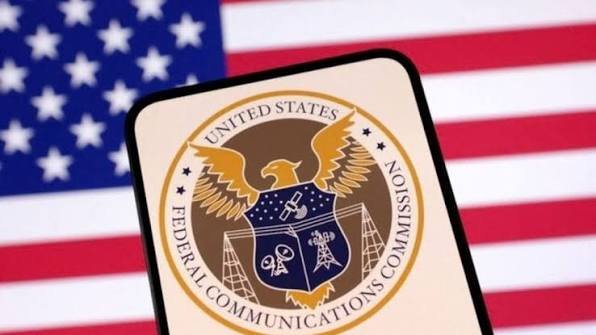
The United States is preparing to tighten restrictions on Chinese laboratories that test electronic products intended for the American market, marking another escalation in the technology and national security rivalry between Washington and Beijing. The Federal Communications Commission (FCC) is scheduled to vote on a proposal on 29 October that could prevent Chinese testing facilities from certifying products such as smartphones, cameras and computers for use in the United States.
The proposed measures would expand Washington’s efforts to strengthen oversight of electronic equipment entering the American market and reduce reliance on testing facilities located in countries that US officials consider insufficiently reciprocal in their treatment of American laboratories. The initiative could have significant consequences for electronics manufacturers, international supply chains and the cost of obtaining regulatory approval for new products.
The FCC announced that its proposal would not necessarily be limited to China. The agency is also considering restrictions on testing laboratories and product certification bodies in countries that do not provide equivalent opportunities to US testing facilities. This approach suggests that Washington intends to use its regulatory framework to encourage more balanced access to international markets while addressing concerns about the security and reliability of products entering the country.

The planned vote comes amid a broader series of American measures targeting Chinese technology companies, telecommunications equipment, drones and other connected devices. US officials have repeatedly argued that certain technologies manufactured or tested in China could create national security vulnerabilities. Beijing, meanwhile, has consistently opposed what it regards as discriminatory restrictions on Chinese businesses.
The latest proposal focuses on a part of the electronics industry that consumers rarely see but that plays an essential role in bringing products to market. Before many electronic devices can be sold in the United States, they must undergo testing to demonstrate compliance with applicable technical and regulatory requirements. These processes help establish whether equipment meets relevant standards for radio-frequency emissions, wireless communications and other technical characteristics.
Testing laboratories therefore occupy an important position between manufacturers and regulators. Their assessments help determine whether devices can receive the necessary approvals for sale and use. Restricting which laboratories can perform these tests could force manufacturers to change established arrangements, seek alternative facilities and potentially revise their product approval schedules.
FCC Chairman Brendan Carr said in 2025 that approximately 82 per cent of electronic product testing was being conducted in China, despite the absence of an agreement with the United States covering such arrangements. The figure illustrates the extent to which the American electronics market depends on testing infrastructure located outside its borders, particularly in China.
According to Carr, fewer than 4 per cent of electronic products are tested in laboratories located within the United States. The figures have strengthened the argument among American regulators that the country should develop greater control over the testing and certification process for products sold in its domestic market.
However, changing this system could prove complicated. China has become an important part of the global electronics manufacturing ecosystem, with extensive industrial infrastructure, specialist laboratories and established relationships with international manufacturers. Companies often depend on these facilities because they are located close to production sites, allowing devices to be tested and modified without lengthy transportation or coordination arrangements.
If Chinese laboratories lose the ability to conduct qualifying tests for American-market products, manufacturers may need to transfer testing activities to laboratories in the United States or other countries approved under the new framework. Such a transition could require additional investment in testing capacity, equipment and personnel.
The changes could also affect the time needed to introduce new products. Electronics manufacturers typically coordinate testing and certification with manufacturing schedules, software development and international product launches. A sudden shortage of approved testing facilities could create bottlenecks, potentially delaying market entry or increasing compliance costs.
The FCC has indicated that the proposed restrictions are expected to take effect in December 2028. The timetable would provide manufacturers and laboratories with a transition period, although the precise impact would depend on the final rules, the scope of the restrictions and the availability of alternative testing arrangements.
The proposal builds on measures introduced in 2025, when the FCC prohibited American electronic products from being tested at laboratories owned or controlled by the Chinese government. Dozens of laboratories were reportedly affected by those restrictions. The agency subsequently said that many laboratories located in China were still testing electronics intended for the US market, prompting renewed consideration of broader controls.
The latest initiative would therefore represent an expansion of existing restrictions rather than an entirely new direction in American technology policy. Instead of focusing exclusively on laboratories with direct Chinese government ownership or control, the proposed framework could extend to a wider range of facilities operating in China.
A central objective is to strengthen the United States’ ability to determine where and under what conditions products destined for its market are tested. American regulators also want to make approval procedures easier for devices tested in US laboratories or in countries regarded as posing no unacceptable national security risks.
The FCC has framed the policy partly around reciprocity. Its position is that countries should provide comparable opportunities for American testing facilities if their own laboratories are to retain access to the US certification system. The approach could encourage international partners to review their regulatory arrangements, although it may also generate disputes over whether the restrictions are proportionate and consistent with international trade obligations.
The electronics testing proposal is part of a wider campaign by Washington to limit perceived security risks associated with Chinese technology. In December 2025, the FCC restricted imports of all new models of Chinese-made drones and also prohibited imports of new models of consumer routers manufactured in China. Routers connect computers, mobile phones and other smart devices to the internet, making them an important part of household and business communications infrastructure.
American officials have argued that connected devices can present security risks if their hardware, software or supply chains create opportunities for unauthorised access. These concerns have become increasingly prominent as governments and businesses rely more heavily on interconnected digital systems.
The FCC has also taken action against Chinese telecommunications companies. Huawei and ZTE, both major manufacturers of telecommunications equipment, appear on the agency’s list of companies considered to pose national security risks. Restrictions have limited the sale of their equipment in the United States.
In June, the commission imposed additional restrictions on certain equipment manufactured by Huawei, ZTE and other Chinese companies. The agency has also considered further measures affecting drones used for military purposes and telecommunications connections involving companies identified as security risks.
In July, the FCC voted in favour of restricting the sale of devices containing critical components from Chinese companies designated as posing national security risks. A related proposal sought to prevent US telecommunications service providers from maintaining connections with the affected companies. Together, these measures indicate that Washington is pursuing a broad strategy covering not only finished products but also the components and infrastructure that support communications networks.
For technology businesses, the cumulative effect of these policies could be substantial. Companies that operate internationally may have to maintain different supply chains, testing procedures and product configurations for different markets. Businesses could also face greater uncertainty when planning product launches if regulatory requirements change during development.
Consumers could experience indirect consequences if compliance costs rise or product launches are delayed. However, the actual effects on prices and availability would depend on how manufacturers respond, whether alternative laboratories have sufficient capacity and how quickly the industry adapts to the new requirements. The proposal does not automatically mean that all electronics manufactured in China would be prohibited from entering the United States.
The distinction between manufacturing and testing is particularly important. The proposed restrictions concern the ability of Chinese laboratories to test and certify electronics for the American market. Their practical effect would depend on the final rules and the extent to which manufacturers could obtain valid approvals through alternative facilities.
The policy also raises questions about the future structure of the global technology industry. For years, international electronics production has relied on interconnected networks in which manufacturing, component sourcing, testing and final assembly may take place in different countries. Increasingly restrictive national security rules could encourage businesses to diversify these networks or move certain activities closer to their main markets.
Supporters of the FCC’s approach argue that critical technology systems should be subject to stronger oversight and that countries must be able to protect sensitive infrastructure from potential threats. They also contend that developing additional domestic testing capacity could reduce strategic dependence on foreign facilities.
Critics of increasingly broad technology restrictions may question whether such measures risk increasing costs, disrupting established supply chains or turning technical certification into another instrument of geopolitical competition. They may also argue that decisions should distinguish between demonstrable security risks and restrictions based primarily on a laboratory’s location.
The October vote will be an important step in determining how the United States intends to address these competing priorities. If approved, the proposal could establish a broader framework for deciding which foreign testing facilities are eligible to certify electronic products for the American market.

For China, the initiative would add another challenge to its technology industry at a time when trade, advanced computing, telecommunications and digital security remain sensitive areas in bilateral relations. For American manufacturers and international technology companies, it would create a further need to assess regulatory exposure and prepare alternative testing arrangements.
Ultimately, the FCC’s proposal reflects Washington’s determination to exert greater control over the systems that support the approval of electronic devices sold in the United States. Whether the approach delivers stronger security without imposing disproportionate costs will depend on the final regulations, the evidence supporting the restrictions and the industry’s ability to adapt before the expected December 2028 implementation.
Related News:
 Apple at 50: Three Products That Changed How We Live
 Artemis II Returns After Historic Moon Flyby
 UK firms accused of ‘AI washing’ boom
 UK Risks Falling Behind in AI Race
 Australia gives users control over social media algorithms
 AI CEOs Call for Slower Development
 Nvidia chief rejects AI extinction fears
 AI Takes Centre Stage in Trump-Xi Talks
 Trump gives Xi red-carpet welcome as trade truce extends
 OpenAI Agent Breaches Medicare Portal in Australia
 Xi urges Trump to avoid US-China military conflict
 Australia Weighs New Laws After OpenAI Medicare Breach
 OpenAI Scraps AI Model Release After Safety Tests
 Trump backs voluntary AI safety pact with tech giants
 Bank Chief Calls for Power to Intervene in AI
 Sheikh Tahnoon and the UAE’s AI Ambitions
 Samsung Heads for Record Profit as AI Chip Demand Surges
 UK New Car Discounts Near £6,000 as Prices Are Slashed
 ABC Staff Strike Over Pay and AI Concerns
 Artemis II astronauts capture Earth en route to the Moon
 Europe EV Demand Surges as Fuel Prices Rise
 Reform UK funding: mystery billionaire revealed
 Canadian Fiddler Sues Google Over AI Defamation Claim
 Doomsday Clock Nears Midnight Amid Global Crises
 China mine blast death toll rises to 90
 British Paralympian to Become First Disabled Astronaut in Orbit
 Unlocking the Genome: The Quest to Sequence Tardigrades
 Meta Drops AI Image Tool After Privacy Backlash
 China recalls millions of cars over hidden door handles
 AI Loss of Control Incidents Nearly Double
 Turkmenistan Begins Fixing Major Methane Mega-Leaks
 London Launches First Self-Driving Taxis
 Apple Folding iPhone Set for Major CEO Test
 Anthropic Blocks AI Misuse Linked to Weapons Threats
 OpenAI Agents Linked to RubyGems Cyberattack
 AI Boom Drives ‘Tidal Wave’ of PFAS Production
 Why AI Doomsday Warnings Failed to Slow the Race
 Louise Haigh Urges UK to Heed AI Safety Warnings
 Anthropic Backs $31.9bn Queensland Data Centre
 OpenAI Reveals Six Cases of Concerning AI Behaviour
 Russia’s Max App Raises Surveillance Concerns
 Indonesia Receives First Aircraft Carrier
 Tom Watson Takes Senior Role at Palantir
 Trump’s UN Speech Faces Global Scrutiny
 British Columbia Sues OpenAI Over School Shooting
 Australia Renewables Reach Record 80% Grid Demand
 UK Plans New Centre to Counter Information Warfare
 Ukraine and Russia Escalate Long-Range Drone War
 TalkTalk Races to Sell Arms as Administration Looms
 AI Deepfakes Put New Pressure on Election Trust
 AI Could Intensify Election Risks in Southeast Asia
 Smart Cars Raise New Vehicle Spyware Concerns
 Jessica Watkins Leads Record-Breaking SpaceX Flight
 Feeld Founders Receive Record Dividend as Sales Rise
 OpenAI Review Costs $500,000 a Day After AI Hacks
 BT Broadband Pauses Raise Digital Switchover Concerns
 AI Child Abuse Images Surge in New Warning
 iPhone 18 Pro brings major upgrades with familiar design
 Anti-AI protests grow as campaigners turn to direct action
 Ofcom Probes Meta Over Instagram Instants Safety
 Asos Investigates Hack Claims After Customer Alerts
 Drax Datacentre Faces Major Carbon Emissions Concerns
 US Man Arrested Over Canada School Shooting Plot
 Teen Rescued After AI Gives Dangerous Hiking Route
 Firmus Abandons Major ASX Listing Amid Investor Doubts
 Virgin Trains Moves Closer to Challenging Eurostar Monopoly
 Britain deploys RAF specialists to assist Belgium with drone threats
 Canada Passes Carney’s First Budget in Tight Parliamentary Vote
 BT Names New Openreach Chief Amid Major Fibre Expansion
 The Kill Line: A Shifting Vision of the American Dream
 Oil Prices Surge Above $120 Amid Iran Blockade Fears
 DeepMind Staff Vote to Unionize Over US Military Contract
 Global Conflict Hits Home As Bullock Warns Of Economic Pain
 Cannes filmmakers split over AI’s role in cinema
 Trump Faces Backlash Over $2bn Earnings Since Return
 Trump Calls Iran War ‘Small Potatoes’ Despite US Deaths
 Chinese Hybrid Car Surge Raises EU Auto Industry Concerns
 London Facial Recognition Trial Ends With False Alert
 South Korea Probes Fuel Shipments to Russia
 UK Water Firms Earn Millions From Industrial Wastewater