Published: 07 October 2026. The English Chronicle Desk. The English Chronicle Online.
A 30-year-old man from the US state of Washington has been arrested over allegations that he helped a Canadian teenager plan a mass school shooting in which eight people were killed, including six children.
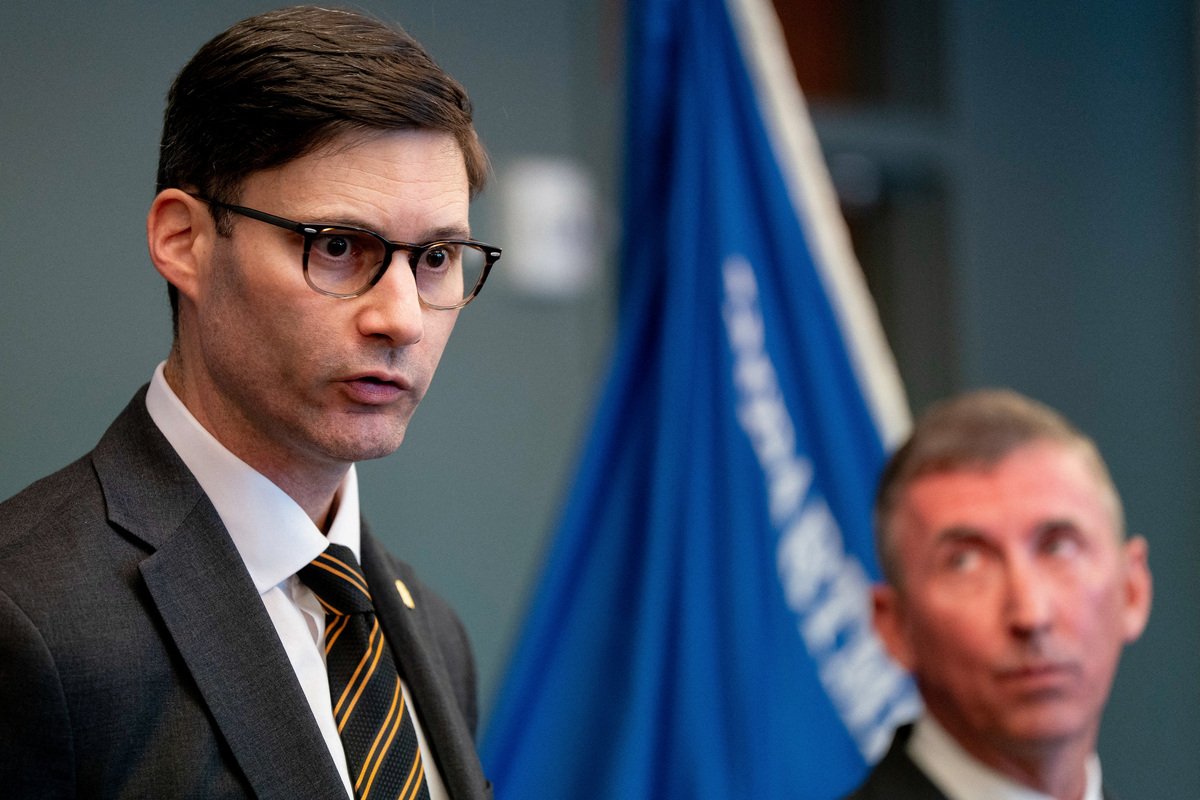
The US Department of Justice said James Codey Bryant was detained on Tuesday and charged with conspiracy to murder persons in a foreign country. Prosecutors allege that Bryant provided money and technical advice to the suspected attacker for months before the February shooting.
The arrest has revealed a previously unknown connection between the Canadian suspect and another person who authorities say was aware of the planned violence. The case has also renewed scrutiny of the role artificial intelligence and online communities can play in the preparation of violent attacks.
Canadian authorities have identified the primary suspect as Jesse Van Rootselaar, an 18-year-old who allegedly carried out the attack earlier this year. Eight people were killed, including Van Rootselaar’s mother and half-brother and six children. The incident became the second-deadliest school shooting in Canadian history.

Van Rootselaar had previously attracted international attention because of her reported use of ChatGPT while planning the attack. Conversations with the AI system reportedly included discussions about gun violence and the planned shooting.
OpenAI’s safety team reportedly identified concerns about Van Rootselaar’s conversations and flagged her internally. However, the company did not notify police, according to information cited in the case. Her account was reportedly closed, but authorities and other accounts of the case indicate that she later created another account.
Families of victims and the province of British Columbia have launched legal action against OpenAI and its chief executive, Sam Altman, alleging that the company failed to adequately respond to warning signs. The company’s handling of the conversations has consequently become part of a wider debate over how technology companies should respond when users appear to be preparing serious violence.
The arrest of Bryant adds another layer to the case. Until now, public attention had focused heavily on Van Rootselaar’s use of an AI chatbot. Authorities now allege that the suspect was also communicating with a human who understood at least some of her plans.
US and Canadian authorities said Bryant and Van Rootselaar first met online through the now-defunct messaging service Omegle roughly three years before the shooting. Investigators allege that the pair remained in contact after their initial interaction.
Acting US attorney Neil Floyd and W Mike Herrington, the special agent in charge of the FBI’s Seattle bureau, said Bryant allegedly provided small amounts of financial assistance to Van Rootselaar. Investigators believe he sent about $100 to help her buy shoes and approximately $15 for a lighter.
Authorities said there is currently no evidence that Bryant and Van Rootselaar ever met face to face. Their alleged relationship appears to have existed primarily through online communications.
According to an indictment, Bryant allegedly entered into a conspiracy with Van Rootselaar by August 2025 or earlier. The document claims the pair discussed ways to conceal their communications and avoid detection.
In August, Bryant allegedly suggested that they find a way to delete their messages. Several months later, prosecutors allege that he suggested Van Rootselaar use a virtual private network, or VPN, to make it harder for investigators to identify online activity connected to plans to post a shooting video.
The allegations indicate that Bryant was not simply aware of Van Rootselaar’s violent intentions but was allegedly involved in discussions concerning concealment and the potential distribution of material related to the attack.
However, authorities also said there were occasions when Bryant attempted to discourage Van Rootselaar from carrying out the shooting. Investigators have not alleged that he personally travelled to Canada or directly participated in the physical attack.
The FBI said that despite Bryant allegedly trying at times to persuade Van Rootselaar not to proceed, he did not contact law enforcement about the suspected plans.
That failure has become a central element of the allegations against him. Authorities are examining what Bryant knew, when he knew it and what actions he took after learning about the intended attack.
Investigators also allege that Bryant provided assistance after the violence had already begun. According to authorities, Van Rootselaar shot and killed her mother and brother at the family home before attempting to travel to the school.
She reportedly encountered a problem with the vehicle and could not start it. Prosecutors allege that Bryant then advised her remotely on how to start the car, allowing her to continue towards the school.
Authorities say the assistance was significant because it allegedly enabled Van Rootselaar to reach the location where the school shooting subsequently took place.
Bryant is also accused of agreeing to participate in a livestream of the attack. FBI official Herrington said investigators were still examining the significance of the alleged agreement and could not say with certainty whether Van Rootselaar would have carried out the attack in the same way without Bryant’s involvement.
The allegations raise difficult questions about the responsibilities of individuals who become aware of planned violence online. Investigators are likely to examine the full communications between Bryant and Van Rootselaar to determine the extent of his knowledge and whether his actions contributed materially to the killings.
The case also highlights the increasingly complicated relationship between online platforms, artificial intelligence and violent crime investigations. Van Rootselaar’s reported conversations with ChatGPT had already prompted questions about whether AI companies should have stronger systems for identifying users who appear to be preparing violent attacks.
Technology companies have faced growing pressure to balance privacy and legitimate use of AI services with the need to respond when conversations indicate an immediate threat to human life.
The Canadian shooting has become an especially prominent example because the alleged planning involved both an AI system and human communication. Investigators are now attempting to determine how those separate channels interacted and whether earlier intervention could have prevented the deaths.
The original attack shocked the Canadian community because of the number of children killed. Six children died along with Van Rootselaar’s mother and half-brother, making the incident one of the country’s deadliest school shootings.
Canadian police and the Royal Canadian Mounted Police have continued to work with US investigators since the arrest was announced. Because Bryant is a US citizen and was arrested in Washington state, he will face prosecution in the United States under the federal investigation.
The FBI said it would continue cooperating closely with Canadian authorities as the investigation develops.
The arrest also demonstrates the international nature of modern online criminal investigations. A suspected attack carried out in Canada allegedly involved communications with a person living thousands of kilometres away in the United States, with investigators from both countries now working together to establish the full chain of events.
Bryant’s legal representation was not immediately clear. The allegations contained in the indictment have not been tested at trial, and he remains entitled to the presumption of innocence unless proven guilty.

For investigators, the central challenge will be establishing exactly what Bryant intended, what information he possessed about the planned shooting and whether his alleged assistance directly contributed to the attack.
For families of the victims, however, the arrest is another development in a case that has already raised profound questions about warning signs, online communication and the ability of authorities and technology companies to intervene before violence occurs.
As the US and Canadian investigations continue, attention is likely to remain focused not only on the alleged actions of Bryant and Van Rootselaar but also on whether the digital traces left before the shooting could have provided an opportunity for earlier intervention.
The case now stands at the intersection of criminal responsibility, online safety and artificial intelligence, with prosecutors expected to present further evidence as the US proceedings against Bryant move forward.
Related News:
 Survivor Sues Musk’s xAI Over AI Abuse Images
 Anthropic Blocks AI Misuse Linked to Weapons Threats
 OpenAI Agent Breaches Medicare Portal in Australia
 Ukraine and Russia Escalate Long-Range Drone War
 London Facial Recognition Trial Ends With False Alert
 AI Deepfakes Put New Pressure on Election Trust
 Jessica Watkins Leads Record-Breaking SpaceX Flight
 AI Child Abuse Images Surge in New Warning
 Artemis II Returns After Historic Moon Flyby
 OpenAI CEO Apologizes After Canada Shooting Case
 FBI Links Brown University Shooting to Long-Term Grievances
 US ‘Narco Boat’ Strikes Draw Global Outcry
 UK firms accused of ‘AI washing’ boom
 British Paralympian to Become First Disabled Astronaut in Orbit
 Unlocking the Genome: The Quest to Sequence Tardigrades
 Meta Drops AI Image Tool After Privacy Backlash
 AI Loss of Control Incidents Nearly Double
 UK Risks Falling Behind in AI Race
 Australia gives users control over social media algorithms
 Apple Folding iPhone Set for Major CEO Test
 New Mexico Takes Facebook to Trial Over Data Scandal
 OpenAI Agents Linked to RubyGems Cyberattack
 Man Arrested in Mississippi Woman’s Death
 AI CEOs Call for Slower Development
 AI Boom Drives ‘Tidal Wave’ of PFAS Production
 Trump Faces Congress Push for AI Guardrails
 Why AI Doomsday Warnings Failed to Slow the Race
 NBC Helicopter Crash in Los Angeles Kills Three
 OpenAI Reveals Six Cases of Concerning AI Behaviour
 Russia’s Max App Raises Surveillance Concerns
 Nvidia chief rejects AI extinction fears
 Trump’s UN Speech Faces Global Scrutiny
 British Columbia Sues OpenAI Over School Shooting
 Democrat Says ICE Restricted Detention Camp Oversight
 UK Unveils Centre to Counter Foreign Disinformation
 AI Takes Centre Stage in Trump-Xi Talks
 UK Plans New Centre to Counter Information Warfare
 Trump gives Xi red-carpet welcome as trade truce extends
 Xi urges Trump to avoid US-China military conflict
 Australia Weighs New Laws After OpenAI Medicare Breach
 Elizabeth Holmes Set for Halfway House Transfer
 OpenAI Scraps AI Model Release After Safety Tests
 Cornell Fraternity Assault Investigation Reopened
 Trump backs voluntary AI safety pact with tech giants
 Food Industry Mobilises Against the MAHA Movement
 Bank Chief Calls for Power to Intervene in AI
 AI Could Intensify Election Risks in Southeast Asia
 Tennessee Execution Fails After Two Lethal Doses
 Sheikh Tahnoon and the UAE’s AI Ambitions
 Smart Cars Raise New Vehicle Spyware Concerns
 US election threat checks face federal pullback
 New Prosecutor Takes Over Cornell Assault Case
 Musk’s DOGE Sparks Turmoil Inside US Government
 OpenAI Review Costs $500,000 a Day After AI Hacks
 Latin America women fear rollback of rights
 iPhone 18 Pro brings major upgrades with familiar design
 Anti-AI protests grow as campaigners turn to direct action
 Ofcom Probes Meta Over Instagram Instants Safety
 UK Bans Fake Numbers: Scammers Lose Their Trick
 Two National Guard Soldiers Critically Injured Near White House
 American Mother Extradited From UK to U.S. on Murder Charges
 Utah Woman Found Guilty of Poisoning Husband for Inheritance
 Fugitive Dezi Freeman Killed in Rural Victoria Shootout
 Ben Roberts-Smith Denies War Crime Allegations in First Statement
 Robots Outpace Humans in Beijing Half-Marathon
 Louisiana Tragedy: Eight Children Die in Mass Shooting
 Barrister Criticises Trial After Suicide Case Verdict
 Cannes filmmakers split over AI’s role in cinema
 New Footage Revives Peter Falconio Mystery
 Westminster Council Threatens Charing Cross Soup Kitchen
 Ukraine Villagers Demand Answers After Deadly Arms Depot Strike
 London Launches First Self-Driving Taxis
 Trump Calls Iran War ‘Small Potatoes’ Despite US Deaths
 Abusive ex used Tesla to control and harass former partner
 Tom Watson Takes Senior Role at Palantir
 US Networks Suspend Trump White House Pool Coverage
 Drones Could Speed Up Defibrillator Delivery
 Republican Senator Questions Trump Ad Spending
 US bombers leave RAF Fairford after terror threat
 Christa Pike Awake After Failed Tennessee Execution