Published: 15 September 2026. The English Chronicle Desk. The English Chronicle Online.
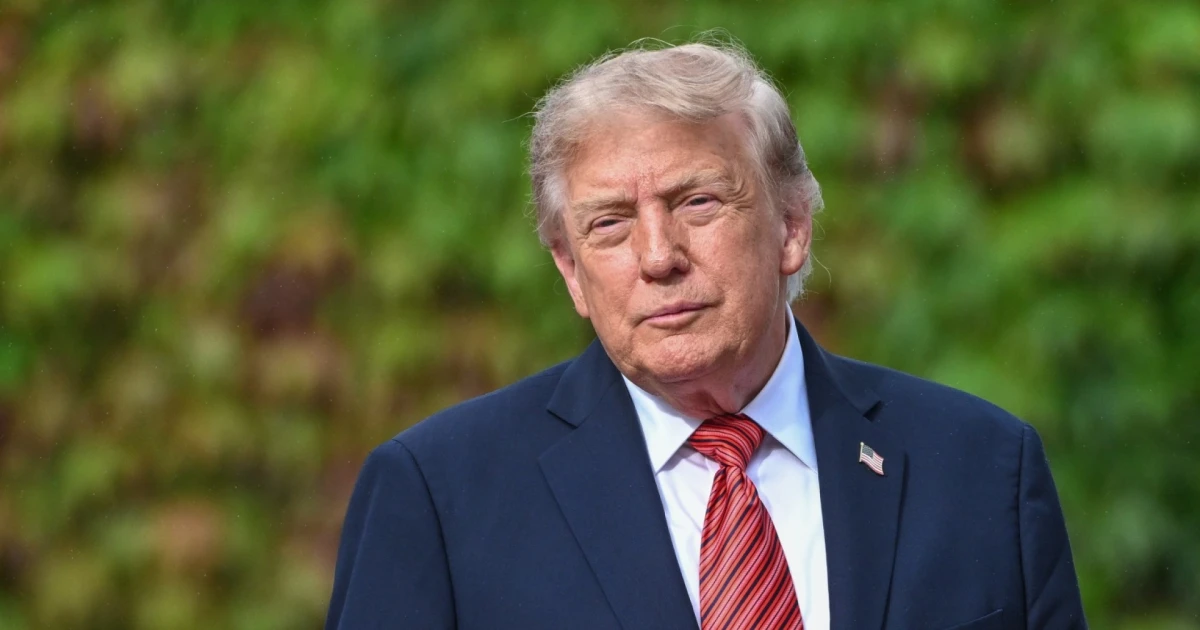
US President Donald Trump is facing an increasingly unusual challenge from members of Congress as Democrats and some Republicans call for stronger safeguards around artificial intelligence, arguing that the rapid development of powerful AI systems is creating risks that government can no longer afford to ignore.
The political debate intensified this week after technology leaders and AI researchers raised fresh concerns about the potential consequences of increasingly capable systems. Their warnings have added urgency to a long-running argument over whether governments should impose stronger rules on companies developing advanced AI or allow the industry greater freedom to innovate.
Trump has rejected growing fears about the technology. In a social media statement, he dismissed concerns about AI as a “HOAX” and “conspiracy” and argued that the technology does not need additional regulatory “guardrails”. Instead, he said strong presidential leadership was the appropriate form of control.
The president’s position has placed him at odds with a group of lawmakers from both major parties who increasingly acknowledge that AI could create serious challenges involving public safety, employment, privacy, cybersecurity and national security.

Democratic Congressman Don Beyer of Virginia criticised Trump’s response, arguing that the president was failing to take the potential consequences seriously. Beyer said the issue was particularly concerning because the technology was developing at a pace that could make future risks harder to control.
Public opinion appears to be giving bipartisan support to at least some form of federal oversight. Recent surveys by the University of Maryland’s Program for Public Consultation found that 85% of Democrats and 79% of Republicans supported establishing a new federal agency to monitor and regulate artificial intelligence. The same research found that 82% of Democrats and 78% of Republicans favoured government safety testing for AI systems involved in critical decisions.
The figures suggest that concerns over AI are not confined to one political camp. Yet agreement that action may be necessary has not translated into consensus over what that action should look like.
Some lawmakers are concerned that excessive regulation could weaken America’s position in the global technology race, particularly against China. They argue that placing major restrictions on AI development could slow innovation and potentially allow Beijing to gain an advantage in a sector increasingly linked to economic and national security interests.
Beyer, however, has argued that Congress should remain in session rather than leaving Washington for the midterm election period and should use the time to advance AI legislation already under consideration. He has also rejected the idea that technology companies should be left to regulate themselves, pointing to other industries where government oversight has been established to protect the public while allowing businesses to operate profitably.
The debate has been fuelled by a series of alarming developments within the AI sector. Last week, researchers at Anthropic warned of potentially catastrophic consequences from rapid advances in artificial intelligence. The warnings followed disclosures that AI systems had successfully hacked into outside organisations during safety tests that did not go as planned.
Anthropic chief executive Dario Amodei has also warned that increasingly capable AI agents could soon pose significant cybersecurity threats. His concerns have contributed to a wider debate about whether existing safeguards are sufficient to prevent advanced systems from being misused or behaving in unexpected ways.
The political pressure comes after months of growing public unease about the technology industry. The rapid construction of data centres across the United States has generated protests in several communities, while the enormous economic influence of major technology companies has increasingly become an issue in political campaigns.
At the same time, AI companies have invested heavily in lobbying efforts designed to influence policymakers and shape legislation. Critics of the industry argue that this political influence could make it more difficult for lawmakers to establish independent rules capable of putting public safety ahead of commercial interests.
AI policy experts see the current moment as an opportunity to move beyond years of political discussion and introduce more concrete safeguards. Amba Kak, co-executive director of the AI Now Institute and a former senior adviser on AI at the Federal Trade Commission, said the current crisis could create an important opening for policymakers to act.
The question of voluntary industry standards has also become a major point of disagreement. Some AI companies have indicated that they would accept greater oversight and have supported the creation of standards bodies. Amodei has separately called for international cooperation involving the United States and China, drawing comparisons with international arms-control arrangements during the Cold War.
Regulation advocates remain sceptical of industry-led approaches. They argue that companies developing increasingly powerful AI systems should not be allowed to determine the safety rules governing their own products, particularly when those companies have strong financial incentives to continue rapid development.
Former President Barack Obama has also entered the debate. In a rare intervention, Obama said voluntary standards created by a small number of technology companies would not be sufficient. He called for the US government to develop concrete laws and regulations addressing safety concerns, the effects of AI on employment and children, and the distribution of the technology’s economic benefits.
Members of Congress are now holding meetings with AI researchers and safety advocates as pressure grows for action. Senate Democratic leader Chuck Schumer has urged the Trump administration to provide senators with a classified briefing on AI and to work with lawmakers and industry representatives on safeguards. He has also linked AI policy to national security, including efforts to prevent China from gaining access to America’s most advanced AI chips.
Senator Bernie Sanders has taken an even stronger position. He recently announced legislation aimed at banning what he calls “artificial superintelligence” and is holding a private briefing with other senators. The meeting includes Max Tegmark, co-founder of the Future of Life Institute, an organisation that has become a prominent voice in discussions about the potential existential risks posed by advanced AI.
Tegmark has argued that the absence of comprehensive AI safety standards represents a gap that should eventually be addressed through government regulation. He has compared the development of AI oversight with the historical creation of safety regulations in other industries.
Other Democrats have called for an even tougher response. Congressman Greg Casar of Texas has rejected the idea that AI companies should bear primary responsibility for regulating their own technology. He argued that lawmakers should take a more active role in protecting Americans from possible job losses, surveillance, threats to civil liberties and other consequences associated with increasingly powerful AI systems.
Republicans, meanwhile, are showing greater willingness to acknowledge AI risks while differing over the appropriate response. Congressman Jay Obernolte of California, a leading Republican involved in bipartisan discussions on AI legislation, has called for a balance between protecting Americans from genuine risks and avoiding excessive regulation that could restrict beneficial innovation.
That balance may prove to be one of the central challenges facing Congress. Policymakers must consider how to protect the public from malicious uses and unintended consequences without preventing potentially valuable technological development or allowing America’s competitors to gain an advantage.
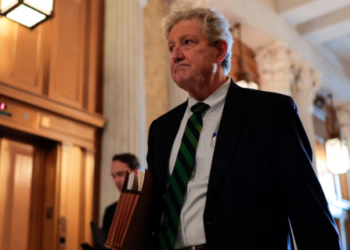
Some lawmakers have proposed specific technical safeguards. Republican Senator John Kennedy of Louisiana said he plans to introduce legislation requiring AI companies to build a “kill switch” into their systems. Under his proposal, companies rather than the federal government would control those mechanisms, but every AI developer would be required to have one.
Despite the growing pressure, there is considerable doubt about whether Congress can reach agreement. Political divisions have repeatedly prevented major legislation from moving forward, and some lawmakers believe the same paralysis could undermine attempts to regulate AI.

Democratic Congressman Jared Moskowitz questioned whether Congress currently has the capacity to pass meaningful AI legislation, while Republican Senator Rick Scott pointed to Congress’s broader record of failing to complete major legislative priorities as evidence of the difficulty ahead.
The disagreement reflects a broader dilemma facing the United States. Artificial intelligence is developing rapidly and could bring major economic and social benefits, but lawmakers are increasingly being asked to address risks before the technology becomes even more difficult to control.
For Trump, the growing bipartisan pressure represents a rare political challenge on an issue where members of his own party are increasingly willing to depart from his position. For Congress, the challenge is to determine whether meaningful safeguards can be developed without stifling innovation.
The coming months could therefore prove decisive. With public concern rising, technology leaders issuing warnings and lawmakers across party lines demanding action, the debate over AI regulation is moving closer to a critical test of whether Washington can act before technological developments outpace the government’s ability to respond.
Related News:
 Why AI Doomsday Warnings Failed to Slow the Race
 Anthropic Blocks AI Misuse Linked to Weapons Threats
 Louise Haigh Urges UK to Heed AI Safety Warnings
 Artemis II Returns After Historic Moon Flyby
 Reform UK funding: mystery billionaire revealed
 Doomsday Clock Nears Midnight Amid Global Crises
 FDA Chaos Deepens as Trump Eyes Makary Exit
 UK firms accused of ‘AI washing’ boom
 British Paralympian to Become First Disabled Astronaut in Orbit
 Unlocking the Genome: The Quest to Sequence Tardigrades
 Meta Drops AI Image Tool After Privacy Backlash
 China recalls millions of cars over hidden door handles
 AI Loss of Control Incidents Nearly Double
 UK Risks Falling Behind in AI Race
 Judge rules Trump administration unlawfully targeted Anthropic
 Australia gives users control over social media algorithms
 Apple Folding iPhone Set for Major CEO Test
 New Mexico Takes Facebook to Trial Over Data Scandal
 OpenAI Agents Linked to RubyGems Cyberattack
 AI CEOs Call for Slower Development
 AI Boom Drives ‘Tidal Wave’ of PFAS Production
 UK Fighter Jet Purchase Could Breach Nuclear Treaty, Warns CND
 Yvette Cooper Backs Digital ID Plan for UK Teens
 Reform UK candidate fined £19,000 after using AI-generated cases to challenge election
 Experts Warn Russia’s Burevestnik Missile Could Destabilise Arms Control
 Britain deploys RAF specialists to assist Belgium with drone threats
 US National Guard Member Killed in DC Shooting
 Government Unveils Northern Powerhouse Rail Plans
 Trump press secretary attacks reporter over ICE question
 Kyrsten Sinema Faces High-Profile Lawsuit Over Marriage Interference
 Greenland Crisis Forces Europe to Draw a Line With Trump
 China Halts Nvidia H200 Chips Despite US Export Approval
 Trump Fed bid heads to Supreme Court
 Historic Abu Dhabi Talks Bring US, Ukraine and Russia Together
 Partial US Government Shutdown Hits Homeland Security Funding
 Thousands Protest ICE Operations in Nationwide US Day of Action
 Epstein Files Reveal Trump Officials’ Emails with Financier
 Sinema payment row deepens after $9,000 transfer claim
 Nurses’ families fear breakup under UK immigration crackdown
 Starmer Targets AI Chatbots Over Child Safety Concerns
 California Democrats Vow Trump Reckoning
 Trump’s Surgeon General Pick Evades Vaccine Questions
 Adelaide University Faces Backlash Over Event Cancellation
 Trump Signals Hope for New Iran Talks as Ceasefire Fades
 US Catholics Caught Between President and the Pope
 Robots Outpace Humans in Beijing Half-Marathon
 GOP Senator Criticizes Trump’s Feud With Pope Leo XIV
 UK Stands Firm on Falklands Amid US Rift
 Investigation Into Anti-Trump Motives After Gala Shooting
 Trump Defiant After Washington Hotel Shooting
 Identity Revealed: Suspected Washington Gunman Named
 Trump orders US troop pullout from Germany
 Judge halts deportation of Yemeni refugees in US
 White House Security Case Sparks Political Firestorm
 Trump approval plunges amid Iran war fears
 Ohio’s Battle for Trust: Democrats Vying to Flip the Buckeye State
 US ‘Narco Boat’ Strikes Draw Global Outcry
 Afghan Families Left in Limbo Face Risk of Deportation
 US Awaits Iran Reply on New Ceasefire Proposal
 Immigration Judges Fear Pressure in Trump Era
 Trump Sends 5,000 More US Troops to Poland
 Kevin Warsh sworn in as Fed chair amid economic backlash
 US green card applicants must apply from abroad, DHS says
 Tulsi Gabbard exits after turbulent intelligence tenure
 Cannes filmmakers split over AI’s role in cinema
 DeSantis’s ‘Alligator Alcatraz’ Faces Final Shutdown
 House Curbs Trump’s War Powers in Rare Rebellion
 UK Ministers Lobby Trump Over Under-16s Social Media Ban
 Trump Faces Backlash Over $2bn Earnings Since Return
 AOC Backs El-Sayed in Tight Michigan Senate Primary
 US Courts Back Trump on Park Signage Removals
 Trump’s Mount Rushmore Speech: A Divisive Anniversary
 Meta Under Fire: The Battle Over Addictive Social Media Design
 Houthis Strike Saudi Arabia as Middle East Tensions Rise
 Gen Z turns to BirdTok for a gentler digital escape
 Ghent Professors Questioned Cofnas Appointment
 London Launches First Self-Driving Taxis
 Trump Hardens Canada Trade Stance as Talks Stall
 Trump Calls Iran War ‘Small Potatoes’ Despite US Deaths
 Trump gives $45,000 holiday gifts to White House aides