Published: 24 August 2026. The English Chronicle Desk. The English Chronicle Online
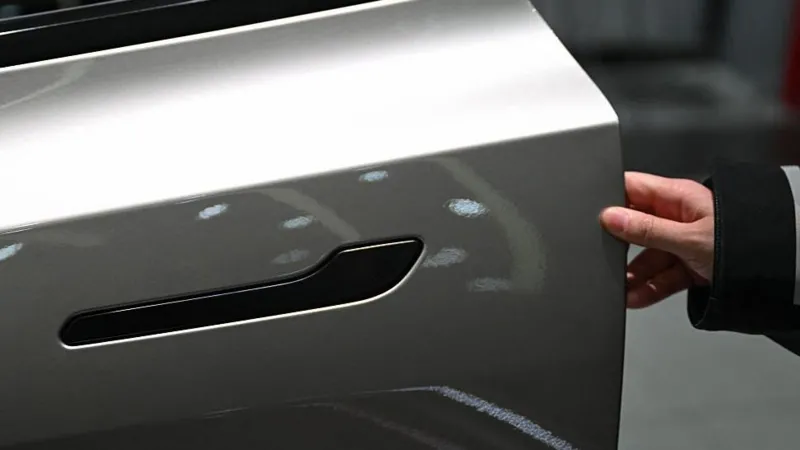
China has launched its biggest-ever vehicle recall, affecting more than four million cars over concerns that minimalist hidden door handles could make it difficult for occupants or rescuers to escape during emergencies.
The recall includes about 2.98 million China-made Tesla vehicles, alongside models produced by Chinese manufacturers including XPeng, Xiaomi and Geely. The action places renewed scrutiny on a design that has become increasingly common in the electric vehicle industry but is now facing questions over safety and emergency access.
Hidden or retractable door handles became closely associated with Tesla, whose Model S helped popularise the feature more than a decade ago. The handles sit almost flush with the bodywork, extending when the vehicle is unlocked or approached by its owner. The design has since been adopted widely by Chinese EV manufacturers seeking to create vehicles with a streamlined and futuristic appearance.
However, Chinese regulators have increasingly questioned whether the pursuit of a cleaner exterior has compromised a basic safety requirement: the ability to open a car door quickly when conventional electrical systems fail.
Tesla said it was recalling certain Model 3, Model Y, Model S and Model X vehicles manufactured in China. The company said the affected handles could be difficult to identify and operate because their colour was similar to the surrounding interior trim.
The problem could become particularly serious following a severe collision in which the vehicle’s low-voltage electrical system stops functioning.

In such circumstances, occupants may struggle to locate the emergency mechanism, while rescuers outside the vehicle could also face difficulties trying to open the doors.
Tesla said it would address the issue through warning labels and a software update designed to automatically lower the vehicle’s windows after a collision. The company said the changes were intended to help occupants or emergency responders access the vehicle when necessary.
The scale of the recall, however, means the controversy extends far beyond Tesla.
Hidden handles spread across China’s EV market
Tesla’s influence on China’s rapidly expanding electric vehicle sector has been substantial, and the hidden-door-handle design is one of the clearest examples.
The feature was initially promoted as part of a futuristic vehicle aesthetic. By eliminating traditional protruding handles, manufacturers could create smoother body panels and a more minimalist appearance.
Chinese automakers subsequently adopted similar systems across a wide range of electric models.
Tu Le, founder of consultancy Sino Auto Insights, said the design had “snowballed” after Chinese manufacturers began copying the sleek appearance associated with Tesla’s Model S.
The popularity of the feature means that concerns about emergency access now involve a significant portion of China’s modern EV market.
Other companies named in the recall include XPeng, Xiaomi and Geely, although the precise circumstances and remedies may differ between manufacturers.
The issue has gained additional attention following two fatal crashes involving Xiaomi electric vehicles in China, where power failures were suspected of preventing doors from being opened.
Those incidents have intensified public debate over whether electrically operated or concealed door mechanisms should be subject to stricter safety requirements.
China moves to ban the design
The recall comes after Chinese authorities announced new restrictions on hidden door handles earlier this year.
Under regulations due to take effect on 1 January 2027, new vehicles sold in China will be required to have mechanical door releases on both the inside and outside.
The change represents a significant shift in the country’s approach to vehicle design and safety.
Mechanical releases do not depend on a vehicle’s electrical system, meaning occupants and rescuers should still have a way to open doors after a major collision or power failure.
The new requirements also reflect the increasingly important role China plays in global EV manufacturing.
China is the world’s largest electric vehicle market and has become a major exporter of electric cars. Safety regulations introduced there can therefore influence vehicle designs well beyond the domestic market.
For manufacturers, the new rules could require substantial engineering changes to models that currently rely heavily on electronic access systems.
Tesla faces scrutiny beyond China
The controversy is not limited to Tesla’s operations in China.
Tesla’s door handles have previously attracted attention from US safety regulators following reports that the mechanisms could stop functioning and leave occupants, including children, trapped inside vehicles.
In July, the US National Highway Traffic Safety Administration suggested developing a new formal safety standard covering door-release systems across the automotive industry.
That indicates that regulators in different markets are beginning to examine whether modern vehicle designs provide adequate emergency escape options.
For Tesla, the issue is particularly significant because the company helped establish the hidden-handle concept as a distinctive feature of its vehicles.
What was originally marketed as an elegant design innovation is now being assessed through a much more practical question: can someone get out of the vehicle when the electronics fail?
Software fix raises questions
Tesla’s proposed response has also attracted criticism.
The company plans to install warning labels and introduce a software update that will automatically lower windows following a collision.
While such measures could help improve emergency access, they still depend to some extent on the vehicle’s electronic systems functioning correctly.
Tu Le described the approach as more of a “band-aid” than a permanent solution.
That criticism reflects a broader concern within the automotive industry: software can improve safety, but it cannot necessarily replace a simple mechanical mechanism when a vehicle has suffered severe physical or electrical damage.
The Chinese regulations scheduled for 2027 appear to take the more conservative approach by requiring mechanical releases.
A wider lesson for EV manufacturers
The controversy highlights a growing tension within the electric vehicle industry between design innovation and conventional safety principles.
Modern EVs increasingly rely on electronic systems for functions that were once entirely mechanical. Door locks, handles, windows and other controls can now be integrated into a vehicle’s digital architecture.
This can create advantages in terms of convenience, styling and functionality, but it can also introduce additional failure points.
A major collision can damage wiring, batteries or low-voltage systems. In an emergency, even a relatively minor design complication can become critical if passengers are disoriented, injured or unable to understand how to operate an unfamiliar mechanism.
Emergency responders face another challenge. A rescuer arriving at a damaged vehicle may not immediately recognise how a particular model’s concealed door mechanism works.
That makes consistency and simplicity important considerations in vehicle safety.
Global manufacturers under pressure
It remains unclear whether Tesla, XPeng, Xiaomi and Geely will introduce similar recalls or modifications for vehicles sold outside China.
The BBC has contacted the companies for further comment.
The issue could nevertheless become an international regulatory concern if authorities in other major automotive markets conclude that concealed electronic door handles present a significant emergency-access risk.
The US regulatory review is already pointing in that direction, while China’s decision to require mechanical releases from 2027 provides a clear indication of where one of the world’s largest vehicle markets believes the industry should go.
For manufacturers, the changes could mean redesigning doors, handles and emergency-release systems across future vehicle generations.

For consumers, the controversy may also influence perceptions of automotive technology. Features that once appeared futuristic and sophisticated could increasingly be judged according to a simpler standard: whether they continue to work when everything else has gone wrong.
The recall therefore marks more than a dispute over one particular vehicle feature. It reflects a broader reassessment of how far automotive design should go in replacing traditional mechanical systems with electronic alternatives.
As electric vehicles become more sophisticated, regulators are likely to demand that innovation does not come at the expense of basic emergency safety.
China’s enormous recall is a strong indication that the era of hidden door handles being treated primarily as a styling feature may be coming to an end.
Related News:
 UK firms accused of ‘AI washing’ boom
 Apple at 50: Three Products That Changed How We Live
 Artemis II Returns After Historic Moon Flyby
 Europe EV Demand Surges as Fuel Prices Rise
 Robots Outpace Humans in Beijing Half-Marathon
 Reform UK funding: mystery billionaire revealed
 China mine blast death toll rises to 90
 British Paralympian to Become First Disabled Astronaut in Orbit
 Unlocking the Genome: The Quest to Sequence Tardigrades
 Meta Drops AI Image Tool After Privacy Backlash
 Anglian Water Fined £63 Million Over Sewage Scandal Amid National Outrage
 How to Exit Your Broadband Contract Without Paying Exit Fees
 Permission Granted for Britain’s First Vertical Rocket Launch at Shetland Spaceport
 Government Expands Electric Car Grant Scheme, Offers Discounts on Five More Models
 Ed Davey Urges Government to Block Elon Musk’s Tesla from Supplying UK Home Energy
 Apple Unveils Ultra-Thin $999 iPhone Air at “Awe-Dropping” Annual Event
 Merck Abandons £1bn London Research Hub and Cuts 125 Jobs in Blow to UK Life Sciences
 UK and US Forge Landmark Deals to Build Modular Nuclear Reactors Across Britain
 Big Pharma Investment Freeze Puts UK Life Sciences Sector Under Strain
 UK Could Generate Nearly £2bn Annually by Taxing SUVs, New Study Reveals
 Jaguar Land Rover Extends Production Halt Following Cyber-Attack
 British AI Startup Outshines Human Forecasters in Global Prediction Contest
 Royal Mail Owner Acquires Stake in Collect+ and Launches High Street Rebrand
 Jaguar Land Rover to Resume Production After Cyber-Attack, Launches Supplier Support Scheme
 NHS May Pay 25% More for Medicines Amid US Drug Talks
 Watchdog Rules Red Tractor Ad Misled Public on Environmental Claims
 Bloomsbury chief: AI will aid authors in beating writer’s block
 Virgin Trains Moves Closer to Challenging Eurostar Monopoly
 North Sea oil workers must lose weight or face job loss
 New laws to bolster UK’s defences against cyber attacks on NHS, transport and energy
 UK Taskforce Unveils Plan to Streamline Nuclear Reactor Rules
 China Halts Nvidia H200 Chips Despite US Export Approval
 MPs warn AI financial risks threaten UK stability
 MPs warn AI financial risks threaten UK stability
 AI job losses UK: Britain faces sharper employment shock
 UK AI avatar firm Synthesia valuation jumps to $4bn
 SpaceX Plans $1.5tn IPO Amid Planetary Alignment
 Amazon mistakenly signals new global layoffs to employees
 UK New Car Discounts Near £6,000 as Prices Are Slashed
 Bithumb Bitcoin Mistake Shocks Crypto World
 BT Names New Openreach Chief Amid Major Fibre Expansion
 AI fears hit UK wealth and comparison sites
UK Firms Warned of Rising Iran Cyber Threats
AI fears hit UK wealth and comparison sites
UK Firms Warned of Rising Iran Cyber Threats
 UK Firms Warned of Rising Iran Cyber Threats
 Tesla Enters British Energy Market Following Ofgem Approval
 Cern Prepares First-Ever Antimatter Transport Test
 UK Pushes NHS and MoD to Buy British Tech
 ABC Staff Strike Over Pay and AI Concerns
 High Court Orders Lynch Estate to Pay £920m to HPE
 UK Watchdog Probes Five Firms Over Fake Review Failings
 OpenAI Halts Stargate UK Project Amid Energy Crisis
 Washington Summit Targets Massive Cyber Risks From Latest AI Breakthrough
 Heavier SUVs Accelerate Britain’s Pothole Crisis
 Gene Therapy Wins Major Prize for Restoring Vision
 Southeast Asia Turns to Russia Amid Energy Crisis
 Disneyland Adds Facial Recognition at Entrances
 Inside the World of AI Jailbreakers
 Disney+ Wins Champions League Rights in Key Markets
 Canadian Fiddler Sues Google Over AI Defamation Claim
 DeepMind Staff Vote to Unionize Over US Military Contract
 Vodafone Seeks Full Control of UK Mobile in £4.3bn Deal
 US Awaits Iran Reply on New Ceasefire Proposal
 A Massive Legal Triumph Reshapes the Future of AI
 SpaceX IPO Filing Reveals Bizarre Details of Musk’s Empire
 Tech Giant Nvidia Shatters Wall Street Financial Projections
 Hormuz Talks Near Critical Stage
 UK rejects EV charging VAT cut amid Treasury clash
 Cannes filmmakers split over AI’s role in cinema
 SpaceX Prepares for Historic Valuation Launch
 Silicon Valley Shifts South as AI Boom Transforms City Housing
 CMA Approves Major Bakery Merger to Prevent Market Collapse
 BT and Verizon Form Landmark Global Joint Venture
 Trump Faces Backlash Over $2bn Earnings Since Return
 Ocado CEO Tim Steiner to Step Down by 2028
 Record £28m Fine for Virgin Media Over Cancellation Woes
 Xavier Niel Becomes Vodafone’s Largest Shareholder
 Weight-Loss Drugs Offer Food Savings Mainly to High Earners
 Gen Z turns to BirdTok for a gentler digital escape
 China Probes Alleged Formaldehyde Use on Cabbages
 Shein targets $27bn valuation in Hong Kong debut