Published: 10 September 2025 | The English Chronicle Online
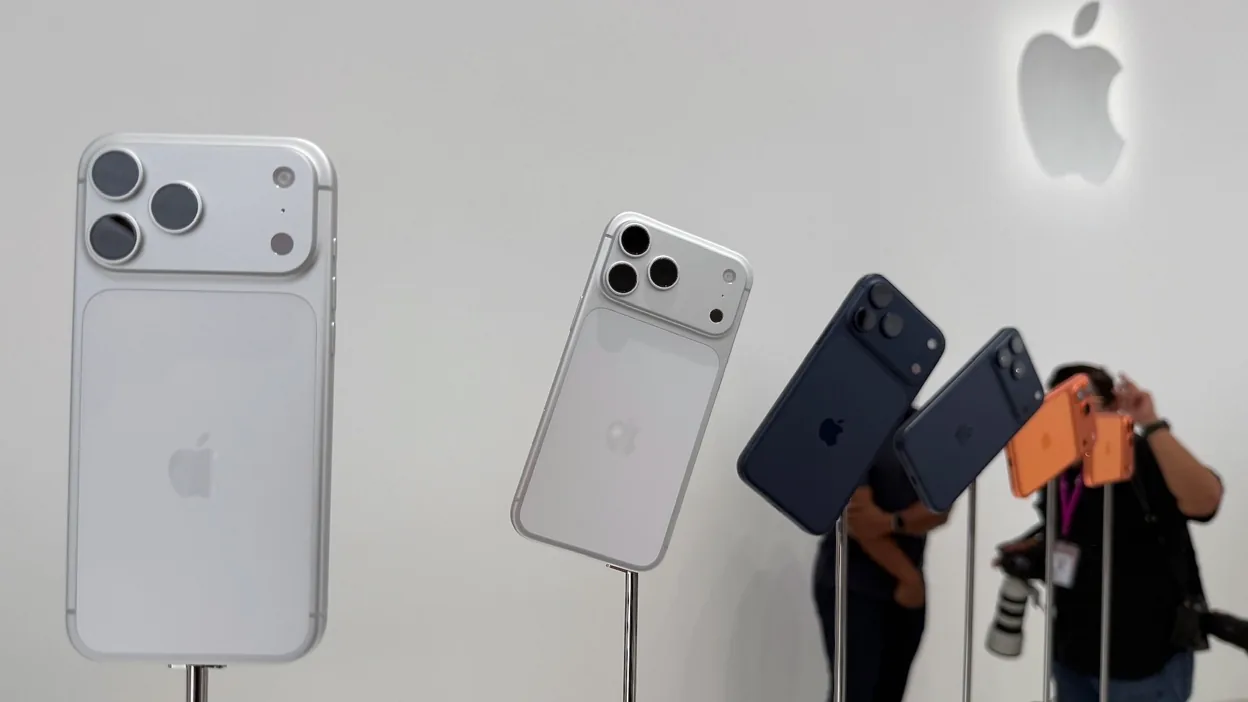
Apple has once again sought to redefine the smartphone market with the launch of its sleekest device yet — the iPhone Air — unveiled on Tuesday at the company’s annual product showcase in Cupertino. Billed as “awe-dropping,” the event highlighted Apple’s push toward design minimalism while balancing durability and performance.
Tim Cook, Apple’s CEO, opened the presentation by declaring, “Design is at the core of everything we do.” He introduced the iPhone Air as the company’s “biggest leap ever” since the first iPhone in 2007. Measuring just 5.6mm in thickness and constructed from “spacecraft titanium,” the device features a 6.5-inch display, a range of lightweight-inspired color palettes, and reinforced durability to resist cracks despite its slimmer frame.

Retailing at $999, pre-orders for the iPhone Air begin Friday ahead of its global release on 19 September. The iPhone 17 lineup, which also includes standard, Pro, and Pro Max editions, received upgrades to processing speeds, battery life, and storage capacity. Cameras now feature a dual filming mode, allowing simultaneous front and rear recording — a nod to content creators seeking flexibility.
Beyond the flagship iPhone, Apple unveiled new versions of its AirPods and Apple Watch. The AirPods Pro 3, priced at $249, debut in five customizable sizes and feature enhanced noise cancellation along with live translation, enabling wearers to hear real-time language interpretations. Apple’s competitors, particularly Google with its Pixel Buds, had pioneered such features, and Apple’s addition signals its effort to catch up in this field.
Meanwhile, the Apple Watch Series 11 and refreshed editions of the Watch Ultra and Watch SE were revealed with new health functions. Among them, a hypertension monitoring system expected to alert at least one million users this year, and enhanced sleep tracking tools, reinforce Apple’s growing emphasis on health technology.
Yet the event’s optimism was shadowed by political and economic uncertainties. The company continues to navigate potential U.S. tariffs on Chinese goods introduced by Donald Trump, which could push iPhone prices sharply upward. Apple has already shifted parts of its supply chain to India while accelerating shipments into the U.S. in anticipation of higher import levies. Cook downplayed fears of a $2,000 iPhone but acknowledged the challenge posed by shifting geopolitical dynamics.
On the subject of artificial intelligence, however, the event was noticeably quiet. Apple Intelligence, launched in October 2024 with promises of integrating generative AI across iPhones, received scant mention. Last year’s pledge to reinvent Siri remains unfulfilled, although Cook previously stated in a July earnings call that progress was being made toward a “more personalized Siri,” with release targeted for next year. Reports suggest Apple is in talks with Google to integrate its Gemini AI models into Siri, reflecting Apple’s struggle to keep pace with rivals in the AI race.

While Wall Street analysts regard Apple as trailing behind competitors like Google in deploying advanced AI tools, the iPhone Air’s design and accompanying ecosystem updates reinforce Apple’s focus on blending form, function, and lifestyle. For consumers, the balance of innovation, aesthetics, and price will determine whether this ultra-thin model can capture the imagination of a saturated global smartphone market.
Related News:
 British AI Startup Outshines Human Forecasters in Global Prediction Contest
 Bloomsbury chief: AI will aid authors in beating writer’s block
 New laws to bolster UK’s defences against cyber attacks on NHS, transport and energy
 Anglian Water Fined £63 Million Over Sewage Scandal Amid National Outrage
 How to Exit Your Broadband Contract Without Paying Exit Fees
 Permission Granted for Britain’s First Vertical Rocket Launch at Shetland Spaceport
 Government Expands Electric Car Grant Scheme, Offers Discounts on Five More Models
 Ed Davey Urges Government to Block Elon Musk’s Tesla from Supplying UK Home Energy
 Merck Abandons £1bn London Research Hub and Cuts 125 Jobs in Blow to UK Life Sciences
 UK and US Forge Landmark Deals to Build Modular Nuclear Reactors Across Britain
 Big Pharma Investment Freeze Puts UK Life Sciences Sector Under Strain
 UK Could Generate Nearly £2bn Annually by Taxing SUVs, New Study Reveals
 Google Pledges £5bn AI Investment in UK Ahead of Trump State Visit
 Donald Trump’s UK State Visit Kicks Off Amid Major Tech Investments and Business Engagements
 Jaguar Land Rover Extends Production Halt Following Cyber-Attack
Public Skepticism Over AI Poses Challenge to UK’s Superpower Ambitions, Says Tony Blair Institute
Jaguar Land Rover Extends Production Halt Following Cyber-Attack
Public Skepticism Over AI Poses Challenge to UK’s Superpower Ambitions, Says Tony Blair Institute
 Royal Mail Owner Acquires Stake in Collect+ and Launches High Street Rebrand
 Jaguar Land Rover to Resume Production After Cyber-Attack, Launches Supplier Support Scheme
 NHS May Pay 25% More for Medicines Amid US Drug Talks
 UK Energy Firms Complete First Hydrogen Blending Trial
 Microsoft Study Reveals Jobs Most at Risk from AI
 UK Pupils Fear AI Is Eroding Their Learning Skills
 Waymo to Launch Driverless Taxis in London by 2026
 Watchdog Rules Red Tractor Ad Misled Public on Environmental Claims
 Runners’ records at risk as Garmin goes to war with Strava
 Eurostar to launch doubledecker trains through Channel Tunnel by 2031
 Harry and Meghan join global AI leaders urging superintelligence ban
 Met Launches Drones to Respond Rapidly to 999 Calls
 Breath test could ‘revolutionise’ pancreatic cancer treatment
Virgin Trains Moves Closer to Challenging Eurostar Monopoly
Breath test could ‘revolutionise’ pancreatic cancer treatment
Virgin Trains Moves Closer to Challenging Eurostar Monopoly
 Mortgages and AI Set to Feature in English Schools
 Vibe coding’ named Collins dictionary’s word of the year
 North Sea oil workers must lose weight or face job loss
 England schools to receive AI-generated attendance targets
 Stop using ChatGPT to write speeches, AI minister tells MPs
 Valve Opens the Door for Android Games on Steam
 Google Chief Urges Caution: Don’t Trust AI Blindly
 UK launches major AI drive to fight deadly superbugs
 Poll Reveals China Leads World in Trusting AI Technology
 UK Taskforce Unveils Plan to Streamline Nuclear Reactor Rules
 AI Actress Creator Says Tilly Norwood Won’t Replace Actors
 YouTube Warns Kids Will Be Less Safe Under Australia Ban
 Post Office Scandal Compensation Tops £1 Billion as Victims Finally See Justice
 Tensions Unfold in Market Harborough as Asylum Seeker Hotel Sparks Divisive Protests
 Unseen Killers of the Deep Inside the UK Lab Uncovering the Silent Deaths of Sea Creatures
 China’s crackdown on civil servant perks sparks economic concerns
 Chancellor Rachel Reeves Pushes for Sweeping Changes to Environmental Protections to Accelerate Development
 Inflation Latest: Cost of Living Expected to Rise Again in Key Figures Released Today
 Shein UK Faces Allegations of Shifting Majority of Profits to Singapore to Reduce UK Tax
 Spectacular ‘Blood Moon’ Illuminates Skies Across the Globe
 Weatherwatch: From Astrology to Modern Meteorology
 UK Labour Market Shows Signs of Cooling as Wage Growth Slows and Redundancies Rise
 UK Government Backs Return of International Rail Travel to Kent Stations
 UK Fighter Jet Purchase Could Breach Nuclear Treaty, Warns CND
 GSK Chief Executive Emma Walmsley to Step Down After Eight Years at the Helm
 Senior Tories Condemn Badenoch’s Vow to Repeal Climate Change Act as Catastrophic
 Wetherspoon vows to keep prices low amid soaring energy and tax costs
 He-Man Set for Big Comeback as UK Toy Industry Rides ‘Newstalgia’ Wave
 Millions in the UK at Risk of Cyber-Attacks as Microsoft Ends Windows 10 Updates, Warns Which?
 Cooper Unveils £4m Cyber Plan Against Russian Hackers
 Yvette Cooper Backs Digital ID Plan for UK Teens
 Genetic Tests May Predict Return of Blood Cancer
 Capita Fined £14m for 2023 Cybersecurity Failures
 Parents spending £5,000 on special school assessments in England
 Pizza Hut to shut 68 sites after collapsing into administration
 Reform UK candidate fined £19,000 after using AI-generated cases to challenge election
 Experts Warn Russia’s Burevestnik Missile Could Destabilise Arms Control
 Tony Blair think tank warns Rachel Reeves must cut taxes if manifesto broken
 Earl of Yarmouth Faces £1.3m Legal Bill Over Family Estate
 Skims Eyes Global Expansion After Reaching $5 Billion Value
 Working-Class Men with Prostate Cancer Left Behind by NHS
 Pokémon to open world’s first theme park in Japan next year
 Global markets drop amid tech sell-off and China slowdown
 How Cultures Interpreted the Aurora Through History
 US Judge Says Meta Did Not Hold Illegal Social Media Monopoly
 Healthy Habits in Your 30s That Boost Life in Your 70s
 Mossmorran Plant Closure Hits Cowdenbeath Hard
 Coffins Now Too Large to Cremate Amid Rising Obesity Crisis
 Virgin Media Fined £23.8m Over Telecare Safety Failures
 Rising Water Bills Lift Troubled Thames Back to Profit