Published: 16 June 2026. The English Chronicle Desk. The English Chronicle Online.
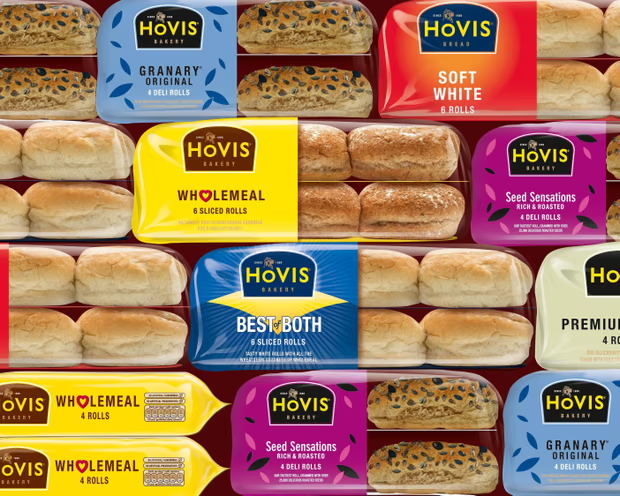
The British bakery sector faces a massive transformation following a definitive regulatory ruling today. The Competition and Markets Authority officially cleared a monumental seventy-five million pound corporate acquisition. This decision allows Associated British Foods to successfully complete its strategic takeover of Hovis. The monumental agreement will effectively merge two of the largest baking companies in Britain. Industry experts predict this merger will create the most dominant bread supplier nationwide. The regulatory watchdog conducted a lengthy investigation before granting full clearance to this transaction.
Officials determined that the transaction would not harm the existing commercial marketplace. The regulator concluded that blocking the deal could trigger a much worse economic outcome. Without this crucial intervention, the Allied Bakeries division would likely collapse entirely very soon. A complete market exit by a major supplier would severely disrupt national food infrastructure. This potential insolvency posed a significant threat to the consistent supply of daily essentials. Therefore, the government watchdog approved the merger to protect the wider public interest.
The final decision brings immense relief to millions of hard-pressed households across the country. Bread remains a fundamental dietary staple for low-income families throughout the United Kingdom. Any sudden disruption in production could easily drive grocery prices up significantly. Vulnerable consumers rely heavily on affordable bakery products for their basic nutritional needs. The competition watchdog prioritized food security and market stability during its detailed assessment. Consequently, the approved corporate rescue plan preserves vital manufacturing capabilities within the country.
Associated British Foods operates a massive corporate portfolio including several household staple brands. Their prominent commercial baking division owns highly recognizable names like Kingsmill and Sunblest. They also manufacture the popular Allinson’s range alongside various specialty morning goods. Their extensive product line includes popular items like fresh muffins and morning crumpets. Beyond branded goods, they manufacture extensive private-label products for major supermarket chains. Their operations span across multiple production facilities located throughout the British mainland.
The modern British baking industry faces unprecedented financial challenges and shifting consumer habits. Total consumer demand for traditional white sliced bread has decreased steadily for years. Simultaneously, manufacturing costs have surged dramatically across every single stage of production. Energy prices remain volatile while agricultural wheat costs continue to fluctuate very unpredictably. Furthermore, complex distribution logistics require massive daily investments to maintain nationwide delivery routes. These combined economic pressures have severely impacted corporate profit margins for over a decade.
Financial records indicate that Allied Bakeries has suffered heavy losses for fourteen years. The company attempted multiple expensive restructuring programs to improve its overall financial health. They invested heavily in modernizing facilities and optimizing their complex logistics networks. However, these extensive corporate interventions failed to reverse the negative long-term financial trends. The continuous shift toward lower-margin supermarket own-brand products further eroded their core profitability. High fixed overhead costs ultimately proved unsustainable for the struggling commercial baking operation.
The regulatory authority initiated a comprehensive phase two investigation into the deal last August. Independent investigators scrutinized extensive corporate documents and interviewed various industry retail experts. They analyzed detailed financial forecasts and evaluated alternative commercial scenarios for both companies. Associated British Foods recently announced separate plans to spin off its Primark retail chain. This strategic divestment demonstrates a broader corporate restructuring of their entire global business portfolio. The Hovis acquisition represents a core consolidation of their traditional food manufacturing operations.
Cyrus Mehta chaired the independent inquiry group responsible for evaluating the proposed merger. He emphasized that bread represents a truly vital commodity for British families everywhere. His dedicated team examined a vast repository of confidential commercial and financial evidence. The data clearly illustrated the severe financial distress facing many domestic bakery operators. Investigators verified that Allied Bakeries could not survive independently without this corporate merger. This critical finding formed the primary legal basis for granting full regulatory approval.
The famous Hovis brand has experienced its own complex corporate journey recently. The United Kingdom private equity firm Endless purchased the historic bakery business in twenty-twenty. Despite achieving some operational efficiencies, the brand continued to face substantial financial headwinds. Recent statutory filings revealed that their pre-tax losses escalated to nearly five million pounds. This marked a noticeable increase from the previous financial year’s negative balance sheet. The entire sector has clearly suffered from structural economic challenges for several consecutive years.
Market analysts note that Kingsmill has historically struggled against its primary domestic competitors. The brand frequently lost market share to the highly successful Warburtons family business. This fierce commercial rivalry caused a substantial decline in overall branded sales volumes. Maintaining a nationwide distribution network requires substantial capital investment six days every week. These high logistical expenses created an unsustainable financial burden for the parent company. Restructuring options were simply insufficient to rescue the business in its current form.
The historic merger will combine two highly complementary distribution and production networks. Executives plan to optimize delivery routes to reduce overall carbon emissions and costs. This consolidation aims to create a highly resilient and financially stable baking enterprise. Supermarkets will continue to receive a steady supply of affordable bakery products daily. Independent retailers will also benefit from the enhanced reliability of the merged distribution network. The combined entity will possess the financial strength required to withstand ongoing economic pressures.
Some consumer advocacy groups initially raised valid concerns about potential market monopolization. They feared that reducing the number of major suppliers might eventually increase prices. However, the regulatory findings successfully demonstrated that a bankruptcy would cause greater harm. A sudden market exit would immediately reduce competition and disrupt national food supplies. The approved transaction effectively keeps essential production assets active within the British economy. This proactive regulatory approach safeguards jobs and maintains consistent production levels across factories.
The modern grocery landscape requires massive scale to satisfy demanding supermarket procurement contracts. Major retailers constantly demand lower prices while operational costs continue to climb higher. Small and mid-sized bakery operations find it increasingly difficult to survive this climate. Corporate consolidation appears to be the only viable path forward for traditional brands. This major transaction reflects wider consolidation trends currently transforming the entire European food sector. The newly expanded business must now focus on delivering long-term efficiency gains.
Baking industry workers have welcomed the relative stability provided by this regulatory decision. The merger secures thousands of manufacturing and distribution jobs across multiple regional sites. Employees faced significant uncertainty during the year-long investigation by the competition watchdog. The final clearance provides a clearer path forward for the combined workforce nationwide. Management can now implement integration plans to secure the future of these brands. Consumers can expect to see their favorite bread products remain on shelves.
Related News:
 Virgin Trains Moves Closer to Challenging Eurostar Monopoly
 North Sea oil workers must lose weight or face job loss
 New laws to bolster UK’s defences against cyber attacks on NHS, transport and energy
 UK Taskforce Unveils Plan to Streamline Nuclear Reactor Rules
 UK Car Sales Pass 2 Million as Chinese Brands Surge
 MPs warn AI financial risks threaten UK stability
 MPs warn AI financial risks threaten UK stability
 AI job losses UK: Britain faces sharper employment shock
 UK AI avatar firm Synthesia valuation jumps to $4bn
 SpaceX Plans $1.5tn IPO Amid Planetary Alignment
 Amazon mistakenly signals new global layoffs to employees
 UK New Car Discounts Near £6,000 as Prices Are Slashed
 Bithumb Bitcoin Mistake Shocks Crypto World
 BT Names New Openreach Chief Amid Major Fibre Expansion
 AI fears hit UK wealth and comparison sites
UK Firms Warned of Rising Iran Cyber Threats
AI fears hit UK wealth and comparison sites
UK Firms Warned of Rising Iran Cyber Threats
 UK Firms Warned of Rising Iran Cyber Threats
 Revealed: UK AI Push Faces Phantom Investment Claims
 Tesla Enters British Energy Market Following Ofgem Approval
 ABC Staff Strike Over Pay and AI Concerns
 High Court Orders Lynch Estate to Pay £920m to HPE
 UK Watchdog Probes Five Firms Over Fake Review Failings
 New Gmail Feature Ends Era of Embarrassing Email Names
 Apple at 50: Three Products That Changed How We Live
 OpenAI Halts Stargate UK Project Amid Energy Crisis
 Washington Summit Targets Massive Cyber Risks From Latest AI Breakthrough
 Heavier SUVs Accelerate Britain’s Pothole Crisis
 Europe EV Demand Surges as Fuel Prices Rise
 Reform UK funding: mystery billionaire revealed
 Disney+ Wins Champions League Rights in Key Markets
 DeepMind Staff Vote to Unionize Over US Military Contract
 Vodafone Seeks Full Control of UK Mobile in £4.3bn Deal
 A Massive Legal Triumph Reshapes the Future of AI
 SpaceX IPO Filing Reveals Bizarre Details of Musk’s Empire
 Tech Giant Nvidia Shatters Wall Street Financial Projections
 China mine blast death toll rises to 90
 UK rejects EV charging VAT cut amid Treasury clash
 UK firms accused of ‘AI washing’ boom
 SpaceX Targets Record Listing as Musk Eyes Trillionaire Status
 SpaceX Prepares for Historic Valuation Launch
 Silicon Valley Shifts South as AI Boom Transforms City Housing
 BT and Verizon Form Landmark Global Joint Venture
 AI Transformation Sparks Major Job Cuts at British American Tobacco
 Trump Faces Backlash Over $2bn Earnings Since Return
 Ocado CEO Tim Steiner to Step Down by 2028
 Record £28m Fine for Virgin Media Over Cancellation Woes
 Xavier Niel Becomes Vodafone’s Largest Shareholder
 Weight-Loss Drugs Offer Food Savings Mainly to High Earners
 Big Pharma Investment Freeze Puts UK Life Sciences Sector Under Strain
 Reeves Faces Setback as Labour May Miss Homes Target
 Trump’s UK Ambassador Urges North Sea Drilling to Strengthen US Ties
 UK Bans Fake Numbers: Scammers Lose Their Trick
 Vibe coding’ named Collins dictionary’s word of the year
 Millionaires group urge Reeves to introduce wealth tax to ‘lift kids out of poverty’
 Sundar Pichai Cautions on AI Hype and Market Risks
 Starmer Says Labour’s Economic Plan Needs Years to Deliver
 Starmer Faces Parliamentary Battles Over UK-EU ‘Reset’ Plan
 ScottishPower Tops List of Worst UK Energy Suppliers
 Trump Fed bid heads to Supreme Court
 EU launches Grok AI probe into X over explicit images
 ABC Facebook Page Briefly Hacked, Adult Photos Posted
 Meta trial over child exploitation claims begins
 Tech Trends Set to Transform Life in 2026
 UK Unemployment Rate Climbs to 5.2% Peak
 Stewart Brand on Musk, Bezos and a Life of Long Thinking
 The Kill Line: A Shifting Vision of the American Dream
 ‘Drinking from a Fetid Pond’: Superbug Genes in Lough Neagh
 Rising Costs Force Families to Rethink Days Out
 US and Iran Agree to Two-Week Provisional Ceasefire
 Silent Tracks: Rail Line Without Passengers
 High Stakes in Beijing as Trump and Xi Meet Amid Global Turmoil
 Trump and Xi Convene in Beijing for Historic High-Stakes Summit
 UK Eases Russian Oil Sanctions as Fuel Costs Soar
 Mid-Year Surge to Push Average Annual Bills Beyond £1,900
 Tube Strike Brings Capital to a Standstill Over Shift Disputes
 From Pocket Monsters to the Frontline
 No Brutal EV Price War For British Motorists
 Sainsbury’s Boss Optimistic As Grocery Inflation Eases
 Sydney Records Hottest June Since 1859 as Expert Warns New High a ‘Signature’ of Global Warming
 Telstra Software Fault Triggers Massive Nationwide Outage