Published: 25 September 2026. The English Chronicle Desk. The English Chronicle Online
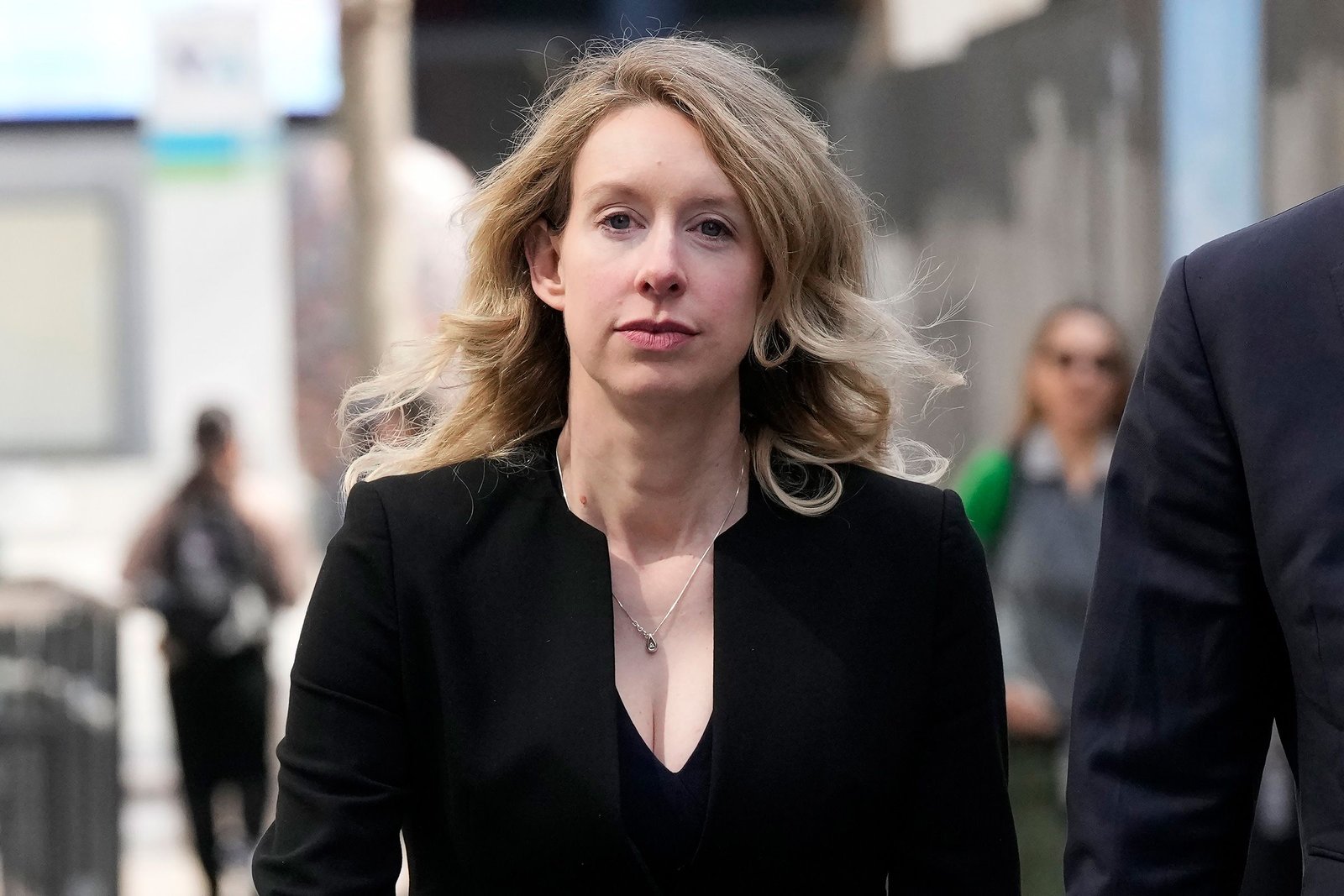
Elizabeth Holmes, the founder of the collapsed blood-testing company Theranos, is reportedly scheduled to leave federal prison for a halfway house in Texas next year, marking another significant stage in the legal aftermath of one of the most closely followed corporate fraud cases in the United States.
Holmes is expected to be transferred to the Austin transitional center in Del Valle, Texas, in August 2027, according to reports citing information from the US Federal Bureau of Prisons. The planned move would place her in a transitional setting as she continues serving the sentence imposed after her conviction for defrauding investors in Theranos.
The 42-year-old former technology entrepreneur was sentenced in 2022 to more than 11 years in federal prison after being convicted of defrauding investors through misleading claims about the capabilities of Theranos’s blood-testing technology.
Holmes became one of the most prominent figures in Silicon Valley after presenting Theranos as a company that could transform medical testing. The company claimed that its technology could perform a wide range of tests using only a small amount of blood obtained through a finger prick.

Those claims attracted substantial investment and widespread attention. Theranos reached a multibillion-dollar valuation at its height, while Holmes became a prominent figure in the technology and business worlds.
The company’s technology, however, failed to perform as represented. Investigations and subsequent legal proceedings revealed major problems with the company’s testing system and the way its capabilities had been presented to investors and the public.
Holmes was ultimately found guilty on four counts related to defrauding investors. She was acquitted on several other charges, while the jury was unable to reach a verdict on some additional counts.
Her sentence included more than 11 years in federal prison, although the time she is expected to spend incarcerated has subsequently been reduced.
Holmes has been held at a minimum-security federal prison facility in Bryan, Texas. The Federal Bureau of Prisons has now reportedly notified victims connected with the Theranos case about her planned transfer to a halfway house.
A halfway house, formally known in the federal system as a residential reentry center or transitional facility, is designed to help prisoners move from incarceration toward eventual release. Such facilities can provide structured accommodation, employment assistance and other forms of supervision while individuals prepare to return to the community.
The reported August 2027 transfer does not mean Holmes will have completed her federal sentence. Bureau of Prisons records indicate that her current projected release date remains in February 2030.
The transition therefore represents a change in the conditions under which she serves the remainder of her sentence rather than an immediate end to her imprisonment.
Holmes’s sentence has already been reduced several times since she entered federal custody. The changes have attracted continued attention because of the scale of the fraud for which she was convicted and the amount of money involved.
US District Judge Edward Davila, who presided over the case, has previously indicated that reductions to Holmes’s sentence do not lessen the seriousness of her conduct. Court records have continued to describe the punishment as reflecting the gravity of the offences for which she was convicted.
The Theranos case remains significant because of the company’s extraordinary rise and equally dramatic collapse. Holmes founded Theranos when she was a young entrepreneur and promoted the company as a potential revolution in healthcare.
The company’s central promise was that patients could receive numerous medical tests from a very small blood sample, potentially reducing the need for conventional blood draws and making testing faster and more convenient.
Investors, business leaders and members of the public were attracted by the prospect of changing how diagnostic testing was performed. Holmes cultivated a high-profile image and secured partnerships and investment that helped turn Theranos into one of the most valuable private companies in the United States.
That reputation began to unravel after questions emerged about whether the company’s proprietary technology could actually deliver the results it claimed.
Concerns about the accuracy and reliability of Theranos’s testing practices eventually led to regulatory scrutiny, investigations and legal proceedings. The company’s valuation collapsed, operations were shut down and the business ultimately dissolved.
Holmes’s criminal trial became a major examination of corporate accountability, investor confidence and the responsibilities of company executives when promoting emerging technology.
Prosecutors argued that Holmes knowingly misled investors about Theranos’s technology, financial condition and relationships with major organisations. Her defence disputed aspects of the government’s case and maintained that the evidence did not establish the required criminal intent for all of the allegations.
The eventual conviction established criminal responsibility for the investor fraud charges on which the jury found her guilty.
The case also had a broader impact on discussions about the technology industry, particularly around the culture of rapid growth and ambitious claims that can sometimes precede independent verification.
Holmes’s planned transition to a halfway house comes as public interest in her story has once again increased. She is the subject of an upcoming documentary project by comedian and filmmaker Nathan Fielder.
The project, titled *You Can See Everything*, is expected to examine Holmes and her partner, Billy Evans, including the period before her imprisonment and the beginning of her incarceration.
The renewed attention has brought the Theranos story back into public discussion several years after the company disappeared from the business landscape.
Holmes’s personal life has also remained part of that public interest. She has a family with Evans, and reports have indicated that she plans to live in Austin following her eventual release from federal custody.
Evans has also attracted attention through his involvement with a new medical testing venture. Reports that he had raised substantial funding for the project have generated renewed speculation about the couple’s future involvement in healthcare technology.
The emergence of another medical-testing business has inevitably drawn comparisons with Theranos, although the existence of a new company does not itself establish any connection between its activities and the failures that led to Holmes’s conviction.
For Holmes, the transition to a halfway house will represent a different phase of life after several years in federal custody. Such facilities generally impose restrictions and supervision while allowing eligible individuals to begin rebuilding routines outside a traditional prison environment.
The reported move is also likely to attract attention because Holmes remains a recognisable figure in discussions about Silicon Valley entrepreneurship and corporate fraud.
Her rise and fall have been documented in books, podcasts, television productions and documentaries, making Theranos one of the most widely examined business scandals of the past decade.
The case has raised enduring questions about how investors evaluate claims made by technology companies, particularly when products involve complex scientific or medical processes that are difficult for non-specialists to independently assess.
It has also highlighted the importance of regulatory oversight in industries where inaccurate claims can potentially affect both financial decisions and public health.
The Theranos collapse was not simply a story about a failed startup. It involved investors who committed hundreds of millions of dollars, patients who relied on medical testing services and employees who raised concerns about the company’s operations.
Holmes’s prosecution ultimately placed the focus on whether the company’s representations to investors crossed the line from ambitious business promotion into criminal fraud.
Her conviction and subsequent imprisonment have made the case an important reference point in discussions about executive accountability.

The upcoming transfer does not close that chapter. With a projected federal release date in 2030, Holmes will remain under the supervision of the federal corrections system for several more years.
The reported 2027 move will instead mark the beginning of a gradual transition from prison toward eventual reintegration into society.
As interest in Holmes’s story returns through new documentary projects and renewed attention to medical-testing startups, the Theranos case continues to serve as a prominent example of the consequences that can follow when technological claims are not supported by reliable performance.
For investors, entrepreneurs and regulators, the case remains a reminder of the importance of transparency, evidence and accountability in industries where technological promises can quickly attract enormous financial backing.
For Holmes herself, the reported halfway-house transfer represents another step in a lengthy legal process that began with the spectacular rise of Theranos and ended with a criminal conviction that fundamentally changed the course of her life and career.
Related News:
 China mine blast death toll rises to 90
 ABC Staff Strike Over Pay and AI Concerns
 California fireworks blast: murder charges filed in case
 Swalwell Faces Pressure to Quit Governor Race
 Harmeet Dhillon Faces Scrutiny in DOJ Role Debate
 US Labor Department in turmoil after secretary resigns
 FBI Links Brown University Shooting to Long-Term Grievances
 FDA Chaos Deepens as Trump Eyes Makary Exit
 US judge dismisses Kilmar Abrego Garcia indictment
 Ebola outbreak in DRC overwhelms health system as cases surge
 Gunman Killed After White House Security Shootout
 Trump Refuses to Sign Housing Bill, But Law Takes Effect
 UK Risks Falling Behind in AI Race
 Survivor Sues Musk’s xAI Over AI Abuse Images
 Ukraine Moves to Seize Water Company
 Armed Suspect Attacks Ohio Governor Candidate
 Councils spend £125m on illegal children’s care
 Abusive ex used Tesla to control and harass former partner
 McLaren to Create 1,000 UK Jobs in £450m Investment
 Nats Boss Summoned as UK Flight Chaos Continues
 New Mexico Takes Facebook to Trial Over Data Scandal
 AI CEOs Call for Slower Development
 UK Urged to Probe US Diplomat Case
 UK Retailers Accused of Breaking Refund Laws
 Horse Hill Oil Site Sold as New Drilling Bid Emerges
 ICAC Examines Greenwood Payments and Nassif Links
 Horse Hill Oil Site Sold for £1m as Drilling Bid Returns
 Australia Post Worker Jailed Over Stolen Bank Cards
 Texas Transfers Raise Fears for Migrant Children
 Memphis Questions National Guard Crime Surge
 Patrick Clancy speaks publicly about children’s deaths
 Nvidia chief rejects AI extinction fears
 ICE Shooting in Austin Sparks Calls for Transparency
 British Columbia Sues OpenAI Over School Shooting
 Clancy Defense Seeks Inquiry Into Lone Juror
 Trump and Mamdani Hold Cordial Gracie Mansion Meeting
 Democrat Says ICE Restricted Detention Camp Oversight
 AI Takes Centre Stage in Trump-Xi Talks
 Trump gives Xi red-carpet welcome as trade truce extends
 Chinese Hybrid Car Surge Raises EU Auto Industry Concerns
 Xi urges Trump to avoid US-China military conflict
 Virgin Trains Moves Closer to Challenging Eurostar Monopoly
 French Taxi Driver Cleared in David Lammy Theft Case After Fare Dispute
 UK Bans Fake Numbers: Scammers Lose Their Trick
 Serial Rapist and Former Cop Found Guilty Again
 Man Denies Stealing Bronze Age Gold from Museum
 Runaway Driver Caught by DNA Evidence
 Two National Guard Soldiers Critically Injured Near White House
 US National Guard Member Killed in DC Shooting
 Virgin Media Fined £23.8m Over Telecare Safety Failures
 American Mother Extradited From UK to U.S. on Murder Charges
 China Halts Nvidia H200 Chips Despite US Export Approval
 Trump Fed bid heads to Supreme Court
 AI job losses UK: Britain faces sharper employment shock
 Partial US Government Shutdown Hits Homeland Security Funding
 Thousands Protest ICE Operations in Nationwide US Day of Action
 BT Names New Openreach Chief Amid Major Fibre Expansion
 Utah Woman Found Guilty of Poisoning Husband for Inheritance
 M&S Demands Urgent Action on Rising Violent Retail Crime
 Ben Roberts-Smith Denies War Crime Allegations in First Statement
 Louisiana Tragedy: Eight Children Die in Mass Shooting
 DeepMind Staff Vote to Unionize Over US Military Contract
 Barrister Criticises Trial After Suicide Case Verdict
 Kevin Warsh sworn in as Fed chair amid economic backlash
 Is JD Vance the Ultimate Fall Guy for Trump’s Shaky Iran Deal?
 Trump Faces Backlash Over $2bn Earnings Since Return
 New Footage Revives Peter Falconio Mystery
 Unions Warn Labour Over Zero-Hours Contract Reforms
 London Launches First Self-Driving Taxis
 Trump Calls Iran War ‘Small Potatoes’ Despite US Deaths
 Billionaire Chris Rokos poised to leave UK
 Trump gives $45,000 holiday gifts to White House aides
 JPMorgan Boss Warns Against UK Bank Tax Rise
 Man Arrested in Mississippi Woman’s Death
 Entain Plans 400 Job Cuts After Profit Update
 US Sanctions Open New Battle for Cuba Assets
 Tom Watson Takes Senior Role at Palantir
 Mahmood Warns Far Right Over Asylum Protests
 US Networks Suspend Trump White House Pool Coverage
 AO Acquires Jessops in Camera Retail Expansion