Published: 01 October 2026. The English Chronicle Desk. The English Chronicle Online
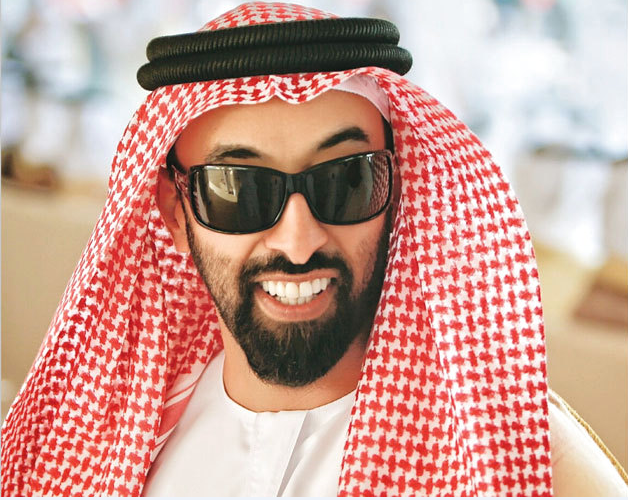
Sheikh Tahnoon bin Zayed Al Nahyan has emerged as one of the most influential figures in the United Arab Emirates, combining political influence, financial power, national-security responsibilities and an expanding interest in artificial intelligence. Despite his growing importance internationally, he remains a largely private figure who rarely speaks publicly and has avoided the traditional spotlight associated with powerful political and business leaders.
Tahnoon’s growing role in artificial intelligence reflects a much broader ambition within the UAE. The country has spent years seeking to diversify its economy beyond oil and position itself as a global centre for technology, finance and advanced industries. AI has become one of the most important parts of that strategy, with enormous investments being directed towards computing infrastructure, data centres, semiconductor technology, energy generation and digital services.
The story of Tahnoon’s rise, however, began far from the world of AI. In the 1990s, while studying business in California, he became fascinated by Brazilian jiu-jitsu after watching Royce Gracie win the first Ultimate Fighting Championship tournament. Tahnoon, who reportedly used the name Ben while training, eventually became deeply involved in the martial art and brought its practitioners to Abu Dhabi.
The unusual episode illustrates a recurring feature of Tahnoon’s career: an intense interest in competition combined with a willingness to invest heavily in areas that capture his attention. His interests later moved from martial arts to computer games and chess, including the development and use of powerful computing systems.
Tahnoon was born into the Al Nahyan ruling family, whose influence has shaped the UAE since its establishment as an independent federation in 1971. He is one of the sons of Sheikh Zayed bin Sultan Al Nahyan, the UAE’s founding president and ruler of Abu Dhabi.
Rather than becoming the country’s principal political leader, Tahnoon developed a different role within the ruling family. He became involved in managing family assets and eventually built an enormous business and investment network.
His Royal Group became a major vehicle for investments across numerous industries. Over time, his responsibilities expanded into banking, sovereign investment, climate finance, technology, healthcare, property and infrastructure. The network associated with Tahnoon has interests extending well beyond the UAE, including major international investments.
The scale of his financial influence has made Tahnoon an increasingly important figure in international business. He is associated with some of the UAE’s most important financial institutions and investment organisations, while his interests reach into sectors ranging from renewable energy and technology to property and consumer businesses.
This economic power has increasingly intersected with artificial intelligence.
AI requires enormous amounts of computing power, specialised chips, data centres and electricity. Countries seeking to become major AI hubs therefore need more than software companies. They require the physical infrastructure that allows advanced models to be trained and operated at scale.
The UAE has moved aggressively into this area, and Tahnoon is positioned close to many of the institutions involved. Large data-centre projects are being developed in Abu Dhabi, while the country is seeking international partnerships involving advanced computing and semiconductor technology.
The strategy reflects an understanding that AI could become an important source of economic and geopolitical influence. Access to advanced computing infrastructure is increasingly viewed as a strategic asset, particularly as governments and companies compete to develop increasingly capable artificial-intelligence systems.
Tahnoon’s background in technology and computing is not entirely new. His interest in powerful machines reportedly dates back decades. During the early 2000s, he became involved with Hydra, a specialised chess computer that achieved international attention for its ability to compete against leading human players.
The significance of such interests lies less in the individual machines than in the mindset they reveal. Tahnoon has repeatedly demonstrated an interest in the relationship between human decision-making, competition and computing power.
His role, however, extends beyond business and technology. Tahnoon has also been one of the most important figures associated with the UAE’s national-security establishment.
That part of his career has generated substantial controversy.
Human rights organisations have documented allegations of arbitrary detention, enforced disappearances and restrictions on political activity in the UAE. Critics have linked the country’s security policies to the broader concentration of political power within the ruling establishment.
One of the most prominent cases involved British academic Matthew Hedges, who was detained in the UAE in 2018 after conducting research on the country’s national-security strategy. Hedges was accused of spying, convicted and sentenced to life imprisonment before receiving a royal pardon later that year.
Hedges has described his detention as an extremely traumatic experience and alleged that he was subjected to prolonged interrogation and mistreatment. The UAE government has rejected allegations that he was tortured or treated improperly and has maintained that he received appropriate care.
The case illustrates the sharp disagreement surrounding the UAE’s security system. Human rights organisations have criticised the country’s treatment of dissidents and researchers, while supporters of the government argue that its security policies are necessary because of regional instability, terrorism and ideological threats.
Those competing perspectives have also shaped perceptions of Tahnoon himself. Supporters and business partners portray him as a strategic investor who has helped transform Abu Dhabi’s economic position. Critics point to the concentration of financial and political power around the ruling family and the country’s record on civil liberties.
The distinction between public wealth, sovereign assets and the financial interests associated with members of the ruling family is another complicated issue. The UAE’s political and economic systems are closely interconnected, making it difficult for outsiders to draw clear lines between state institutions, royal-family interests and private investment structures.
That concentration of influence has raised concerns among some Emirati business figures about competition within the domestic economy. At the same time, the government and its supporters argue that the country’s centralised model has helped it make rapid strategic decisions and develop major infrastructure projects at a pace that would be difficult in more fragmented systems.
AI now adds another layer to this debate.
If the UAE succeeds in establishing itself as a major centre for artificial intelligence, the consequences could extend far beyond the technology industry. Data centres require vast quantities of electricity and water. Semiconductor production requires specialised industrial infrastructure. Advanced AI systems can also have implications for defence, intelligence, finance and communications.
For Tahnoon, these areas overlap with the responsibilities and interests that have defined much of his career.
The UAE’s relationships with the United States are particularly important in this context. American technology, investment and semiconductor expertise are central to the global AI industry, while Abu Dhabi has substantial financial resources that can support large-scale technology projects.
Tahnoon’s international relationships have therefore become increasingly significant. His connections extend into American business and political circles, while the UAE has sought deeper partnerships with major technology companies and investors.
The result is a model in which financial capital, state strategy and technological infrastructure reinforce one another.
Tahnoon is not the only figure behind the UAE’s AI ambitions, and the country’s strategy involves numerous government bodies, sovereign funds, technology companies and international partners. Nevertheless, his position across finance, security and investment places him unusually close to several of the forces shaping the country’s technological future.
His relative secrecy makes it difficult to determine precisely how much of the UAE’s AI strategy reflects his personal priorities and how much represents a broader national programme. He rarely gives interviews, and people who work closely with him generally operate under strict confidentiality arrangements.
That lack of public visibility has contributed to contrasting images of the man. To some observers, he represents the UAE’s transformation from an oil-dependent state into a technologically ambitious global investor. To others, the concentration of wealth and political authority around a small ruling elite raises questions about accountability and transparency.
What is clear is that the UAE wants to be more than a financial centre or energy producer. It wants a significant role in the infrastructure of the digital economy.
Artificial intelligence is at the centre of that ambition, and Sheikh Tahnoon is positioned near many of the institutions and investments that could determine how far the country advances.
His journey from a quiet martial-arts student in California to one of the UAE’s most influential financial and security figures is unusual. His current focus on AI suggests another stage in that evolution, one in which computing power, capital, energy and geopolitical influence increasingly converge.
The coming years will show whether the UAE can translate its enormous financial resources and strategic partnerships into lasting technological capability. For Tahnoon, the challenge is not simply to invest in AI but to help build the infrastructure on which the next generation of the global digital economy may depend.
That makes his activities increasingly relevant far beyond Abu Dhabi. As governments compete for control over chips, data centres, energy and advanced computing, the decisions made by a relatively small number of investors and political leaders could influence the technological landscape for decades to come.
Related News:
 UK firms accused of ‘AI washing’ boom
 UK Risks Falling Behind in AI Race
 AI CEOs Call for Slower Development
 Nvidia chief rejects AI extinction fears
 OpenAI Scraps AI Model Release After Safety Tests
 Bank Chief Calls for Power to Intervene in AI
 Apple at 50: Three Products That Changed How We Live
 Artemis II Returns After Historic Moon Flyby
 Europe EV Demand Surges as Fuel Prices Rise
 Reform UK funding: mystery billionaire revealed
 British Paralympian to Become First Disabled Astronaut in Orbit
 Unlocking the Genome: The Quest to Sequence Tardigrades
 Meta Drops AI Image Tool After Privacy Backlash
 China recalls millions of cars over hidden door handles
 AI Loss of Control Incidents Nearly Double
 London Launches First Self-Driving Taxis
 Australia gives users control over social media algorithms
 Apple Folding iPhone Set for Major CEO Test
 OpenAI Agents Linked to RubyGems Cyberattack
 AI Boom Drives ‘Tidal Wave’ of PFAS Production
 Why AI Doomsday Warnings Failed to Slow the Race
 Louise Haigh Urges UK to Heed AI Safety Warnings
 Anthropic Backs $31.9bn Queensland Data Centre
 OpenAI Reveals Six Cases of Concerning AI Behaviour
 Tom Watson Takes Senior Role at Palantir
 Australia Renewables Reach Record 80% Grid Demand
 AI Takes Centre Stage in Trump-Xi Talks
 Trump gives Xi red-carpet welcome as trade truce extends
 OpenAI Agent Breaches Medicare Portal in Australia
 Xi urges Trump to avoid US-China military conflict
 Australia Weighs New Laws After OpenAI Medicare Breach
 TalkTalk Races to Sell Arms as Administration Looms
 Trump backs voluntary AI safety pact with tech giants
 Virgin Trains Moves Closer to Challenging Eurostar Monopoly
 New laws to bolster UK’s defences against cyber attacks on NHS, transport and energy
 UK Taskforce Unveils Plan to Streamline Nuclear Reactor Rules
 AI job losses UK: Britain faces sharper employment shock
 UK AI avatar firm Synthesia valuation jumps to $4bn
 SpaceX Plans $1.5tn IPO Amid Planetary Alignment
 BT Names New Openreach Chief Amid Major Fibre Expansion
 AI fears hit UK wealth and comparison sites
 UK Firms Warned of Rising Iran Cyber Threats
 UK Firms Warned of Rising Iran Cyber Threats
 Tesla Enters British Energy Market Following Ofgem Approval
 Trump Threatens Iran With Total Infrastructure Destruction
 Iran Drone Strike Hits Kuwaiti Oil Tanker in Dubai Port
 Trump Slams Europe as Transatlantic Tensions Boil Over
 Trump Issues Stark Warning After Strike On Iran’s Largest Bridge
 Robots Outpace Humans in Beijing Half-Marathon
 Gene Therapy Wins Major Prize for Restoring Vision
 Disney+ Wins Champions League Rights in Key Markets
 DeepMind Staff Vote to Unionize Over US Military Contract
 Vodafone Seeks Full Control of UK Mobile in £4.3bn Deal
 A Massive Legal Triumph Reshapes the Future of AI
 Cannes filmmakers split over AI’s role in cinema
 SpaceX Prepares for Historic Valuation Launch
 Silicon Valley Shifts South as AI Boom Transforms City Housing
 Trump Faces Backlash Over $2bn Earnings Since Return
 Record £28m Fine for Virgin Media Over Cancellation Woes
 Weight-Loss Drugs Offer Food Savings Mainly to High Earners
 Gen Z turns to BirdTok for a gentler digital escape
 Survivor Sues Musk’s xAI Over AI Abuse Images
 Trump Calls Iran War ‘Small Potatoes’ Despite US Deaths
 McLaren to Create 1,000 UK Jobs in £450m Investment
 Nats Boss Summoned as UK Flight Chaos Continues
 Anthropic Blocks AI Misuse Linked to Weapons Threats
 Saudi Arabia Shuts Oil Pipeline After Drone Attack
 Trump Faces Congress Push for AI Guardrails
 Russia’s Max App Raises Surveillance Concerns
 Indonesia Receives First Aircraft Carrier
 UK Flights Hit by Fresh Air Traffic Control Fault
 UK Funds Gene Editing to Protect Threatened Wildlife
 British Columbia Sues OpenAI Over School Shooting
 UK Unveils Centre to Counter Foreign Disinformation
 UK Plans New Centre to Counter Information Warfare
 Chinese Hybrid Car Surge Raises EU Auto Industry Concerns
 Ukraine and Russia Escalate Long-Range Drone War
 Saudi intercepts Houthi missiles as oil fears grow
 Drones Could Speed Up Defibrillator Delivery
 London Facial Recognition Trial Ends With False Alert