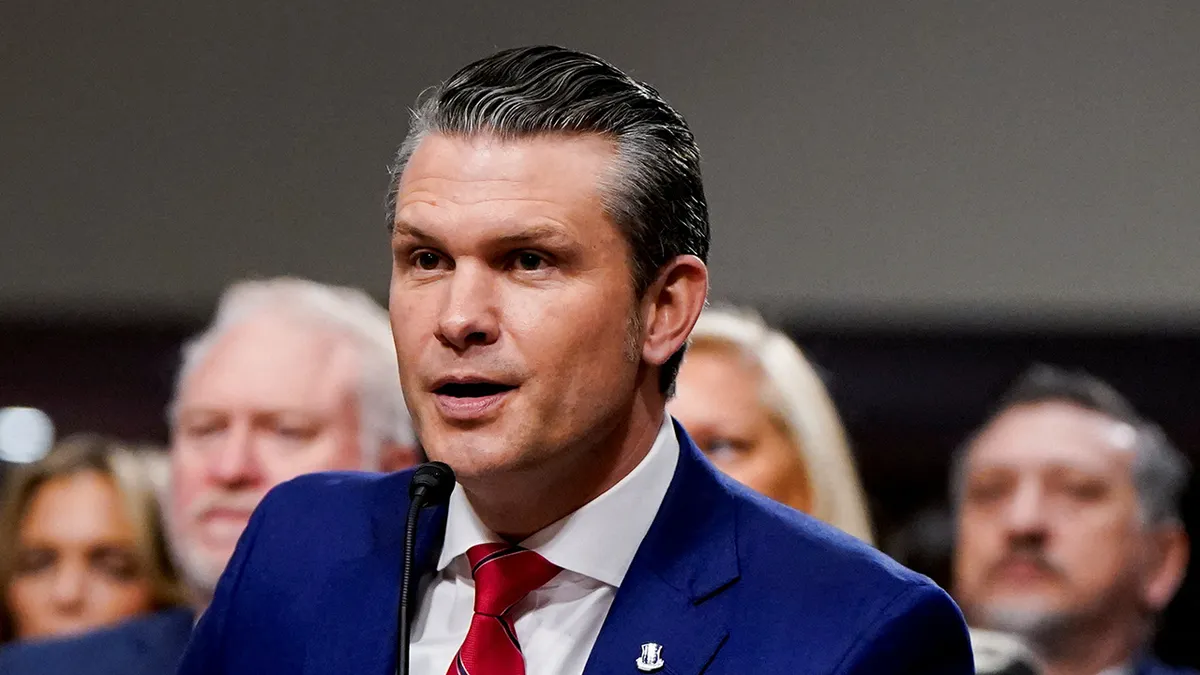
US Defense Secretary Pete Hegseth is facing mounting political pressure following the Republican Party’s significant defeats in the 2026 midterm elections, with growing questions over his role in the controversial war against Iran and his ability to maintain support in Congress. Although President Donald Trump has publicly defended his defense chief, political criticism within Republican ranks is intensifying, raising the possibility that Hegseth could become one of the administration’s most prominent casualties of the election results.
The Democrats’ sweeping victories have fundamentally changed the political landscape in Washington. By securing control of both the House of Representatives and the Senate, Democrats have dealt a major setback to Trump’s second-term political agenda. The election outcome has also created uncertainty within the Republican Party, with lawmakers increasingly examining the administration’s decisions on foreign policy, national security and economic management.

Among the issues attracting the greatest attention is the US military campaign against Iran. The conflict has become a significant political liability for Republicans, particularly as voters have expressed concerns about its financial costs, military consequences and wider implications for American security. The war has also intensified divisions within the Republican Party, with some members questioning whether the administration’s military strategy has delivered the results originally promised.
Former senior Pentagon officials and Republican figures close to the White House have suggested that Hegseth could face considerable responsibility for the political consequences of the conflict. One former senior Pentagon official argued that the military campaign had largely been driven by the Department of War, pointing to the decision to use military force to address an international foreign policy issue. According to the official, if the administration intends to hold someone accountable for the consequences of the war, the defense secretary could become a central figure in that process.
A Republican close to the White House also expressed serious concerns about Hegseth’s handling of the conflict, particularly his statements concerning military objectives, operational timelines and the expected outcomes. The source suggested that the defense secretary had repeatedly provided inaccurate or misleading information, raising questions about his credibility and leadership. Such criticism indicates that dissatisfaction with Hegseth is not limited to opposition lawmakers but is also emerging among people within the president’s political circle.
Vice-President JD Vance has added another significant dimension to the debate by publicly questioning whether the war against Iran was worth its costs. His remarks have attracted considerable attention because Vance has generally been regarded as an important figure within Trump’s administration and a leading voice in its political leadership. His comments also highlighted the growing recognition among Republicans that the conflict may have contributed substantially to their disappointing election performance.
The election results have created a difficult situation for the administration. Democrats have capitalised on public dissatisfaction and secured victories across several traditionally competitive and Republican-leaning areas. Concerns about the cost of living, the economic consequences of government policies and the Iran conflict all contributed to the political environment surrounding the vote. President Trump has also acknowledged that the war and rising fuel prices played a role in the Republican setbacks.
Hegseth is additionally facing a formal impeachment initiative led by Republican Congressman Thomas Massie of Kentucky. Massie has introduced eight articles of impeachment against the defense secretary and is preparing to push for a vote in the House of Representatives. The initiative represents an unusual political challenge because it has emerged from within Trump’s own party rather than exclusively from Democratic opponents.
The impeachment accusations cover several controversial aspects of Hegseth’s leadership and the administration’s military policies. They include allegations concerning the legality of military operations against Iran, the limits of presidential war-making authority, the protection of civilians during armed conflict and the use of American military power in other international operations. The resolution also raises concerns about alleged retaliation against a member of Congress over constitutionally protected political speech.
One of the central issues involves the War Powers Resolution of 1973, which establishes congressional oversight requirements when the United States becomes involved in military hostilities without a formal declaration of war. The legislation requires the president to notify Congress within 48 hours of introducing American forces into hostilities under relevant circumstances. It also establishes a general 60-day limit on unauthorised military engagement, followed by a limited period for withdrawing forces.
Massie argues that the administration’s handling of the Iran conflict violated constitutional and statutory restrictions governing the use of military force. His resolution also raises questions about whether the Pentagon adequately fulfilled its responsibilities concerning civilian protection. These allegations remain political and legal claims presented in an impeachment resolution rather than established findings of wrongdoing. Hegseth and the Pentagon have not accepted the accusations as grounds for his removal.
The congressman’s initiative has gained additional political significance following the Republican election defeat. With Democrats preparing to take control of both congressional chambers, the administration could face stronger scrutiny of military decisions that previously received substantial protection from Republican majorities.
Despite the growing criticism, Trump has continued to defend Hegseth. Speaking to reporters on Wednesday, the president rejected suggestions that he was considering replacing the defense secretary and said Hegseth was performing very well. Trump has previously praised him as an important supporter of the military campaign against Iran, recalling that Hegseth had been among the first administration figures to advocate taking military action over concerns about Iran’s nuclear programme.
The president’s continued support provides Hegseth with an important political advantage, at least in the short term. However, the growing disagreement within Republican ranks suggests that presidential backing may not be enough to prevent further scrutiny of his performance. The defense secretary’s relationship with lawmakers has already become strained, potentially creating difficulties for the administration’s legislative priorities.
Republican Senator Thom Tillis has also warned that Hegseth faces a difficult reckoning following the elections. Speaking before the final political consequences of the results became clear, Tillis questioned whether the defense secretary was the most suitable person to negotiate with Congress over the administration’s military requirements.
The dispute is particularly significant because the Trump administration has been seeking congressional support for a proposed $1.5 trillion defense spending package. Such a substantial funding request would require political cooperation and careful negotiations with lawmakers. Hegseth’s strained relationships on Capitol Hill could make those discussions more difficult, especially as Democrats prepare to exercise greater influence over congressional proceedings.
The incoming Democratic majority is also expected to investigate several aspects of the Pentagon’s management. Lawmakers have indicated that their oversight could cover the Iran war, military leadership changes and decisions affecting the institutional independence of the armed forces. Particular attention may be directed towards Hegseth’s removal or reassignment of senior military officers, including the chairman of the Joint Chiefs of Staff.
Democrats have also raised questions about the administration’s policies towards Ukraine and American military strikes against boats allegedly involved in drug trafficking in Latin American waters. Some Democratic lawmakers believe that certain military operations could raise serious concerns under international law, including questions about the treatment of individuals and the legality of the use of lethal force. Any investigation would need to establish the circumstances surrounding those operations and examine whether applicable legal requirements were followed.
Representative Adam Smith, the Democrat expected to lead the House Armed Services Committee in the next Congress, has promised extensive oversight of the Pentagon. His priorities are expected to include examining the Iran conflict and protecting the non-partisan foundations of the US military. He has expressed concern about what he considers a weakening of the military’s traditional political independence.
The coming months could therefore become particularly challenging for Hegseth. Congressional investigations, impeachment proceedings and disputes over defence spending may place his leadership under sustained pressure. The Democrats’ control of Congress will also give opposition lawmakers greater opportunities to demand documents, question administration officials and examine decisions taken by the Pentagon.
Nevertheless, impeachment does not automatically mean removal from office. The House of Representatives must first approve articles of impeachment before a trial can take place in the Senate, where a two-thirds majority is required for conviction and removal. With the political balance changing after the midterms, the proceedings could become an important test of congressional accountability, although the final outcome remains uncertain.

For Trump, the situation presents a difficult political calculation. Removing Hegseth could be interpreted as an acknowledgment that the administration’s military strategy contributed to the Republican defeat. Keeping him in office, meanwhile, could prolong disagreements with lawmakers and provide Democrats with additional opportunities to challenge the administration’s defence policies.
The controversy also raises broader questions about the relationship between military decision-making and democratic accountability in the United States. The president has considerable authority over national defence, but Congress retains important constitutional responsibilities concerning war, military funding and government oversight.
As Republicans assess the consequences of their election losses and Democrats prepare to assume greater congressional power, Hegseth’s political future is becoming increasingly uncertain. Trump’s public support may protect him from an immediate dismissal, but the combination of internal party criticism, impeachment accusations and anticipated Democratic investigations could make it increasingly difficult for him to remain insulated from the political fallout of the Iran war.
Related News:
 Thousands Protest ICE Operations in Nationwide US Day of Action
 US Court Ruling Reshapes Voting Rights Landscape
 US states redraw maps after voting rights ruling
 Judge halts deportation of Yemeni refugees in US
 Trump warns Iran as Middle East tensions surge again
 US Court Restores Abortion Pill Access Temporarily
 Trump’s Revenge Drive Deepens GOP Divide
 Former ICC prosecutor condemns US sanctions
 Gunman Killed After White House Security Shootout
 Mystery Grows Over Mitch McConnell’s Health
 Trump Media Ban Triggers First Amendment Clash
 US Networks Suspend Trump White House Pool Coverage
 Republican Senator Questions Trump Ad Spending
 Trump Ads Trigger Fight Over Taxpayer Money
 Trump Immigration Policy Faces New Legal Tests
 Latin America women fear rollback of rights
 Lithuania Offers to Fund Permanent US Military Base
 Trump Rally Faces Protests as Texas Race Tightens
 Tanker Attacked Near Qatar as Hormuz Tensions Escalate
 Trump Says He Deserves Nobel Peace Prize
 Trump Attacks Norway After Nobel Peace Prize Snub
 Ten US Midterm Races That Could Defy Expectations
 Brazil Court Scandal Threatens Lula as Bolsonaros Rise
 Ohio Airports Become Key Hubs for ICE Deportation Flights
 Judge Blocks Trump White House Media Ban
 Trump Warns Alaska Voters Over Rival Dan Sullivans
 Trump Targets Arizona and Montana Amid GOP Election Worries
 Brazil Cuts Working Week to 40 Hours in Lula Election Boost
 Trump Rallies GOP as Senate Democrats Boost Key Races
 Talarico Faces Tough Voter Test in Texas Senate Race
 Trump’s Ambassador Picks Face Growing Controversy
 Serbia Leader Linked to Controversial Trump Tower Plan
 Trump Falsely Questions Ossoff’s Election Legitimacy
 Trump Administration Threatens California Election Officials
 Obama Warns Against Threat to Ilhan Omar’s Citizenship
 Meta Faces Election Bias Claims Ahead of Brazil Runoff
 Omar Claims US Raid on Residence Was Meant to Intimidate
 US Midterms Could Reshape Trump’s Second Term
 Trump’s Midterm Campaign Faces Racism and Political Backlash
 Flávio Bolsonaro Reportedly Leaves Brazil After Election Defeat
 Global Crises Test Diplomacy as Trump’s Policies Face Scrutiny
 US Midterms Put Trump’s Presidency to the Test
 US Justice Department Files Lawsuit Against California Over Partisan Voting Maps
 Trump Deploys DHS to Charlotte in Major Arrest Operation
 US National Guard Member Killed in DC Shooting
 Partial US Government Shutdown Hits Homeland Security Funding
 Report Says Pezzullo Acted ‘Recklessly’ in Dealings
 Suspected Plot Targets Pipeline Before Hungary Vote
 UK Stands Firm on Falklands Amid US Rift
 Trump orders US troop pullout from Germany
 Trump approval plunges amid Iran war fears
 Ohio’s Battle for Trust: Democrats Vying to Flip the Buckeye State
 US ‘Narco Boat’ Strikes Draw Global Outcry
 US Awaits Iran Reply on New Ceasefire Proposal
 US green card applicants must apply from abroad, DHS says
 Houthis Strike Saudi Arabia as Middle East Tensions Rise
 Trump Hardens Canada Trade Stance as Talks Stall
 Trump Calls Iran War ‘Small Potatoes’ Despite US Deaths
 UK plans tougher Israel stance with settlement trade ban
 Trump gives $45,000 holiday gifts to White House aides
 New Mexico Takes Facebook to Trial Over Data Scandal
 Democrat Says ICE Restricted Detention Camp Oversight
 Xi urges Trump to avoid US-China military conflict
 Burnham Opens Door to Possible UK Return to EU
 French School Protests Escalate as 400 Schools Close
 Lula Warns of Bolsonaro Family Return as Brazil Votes
 Families Await USS Abraham Lincoln Homecoming
 Quebec separatists return to power without majority
 Okinawa US Troops Face Curfew After Murder Case
 Trump Rules Out Iran Attack Before US Elections
 Trump’s Russian Diesel Deal Sparks Ukraine Fury
 Trump Names Katie Zachariah as Next White House Press Secretary
 India’s Voter Roll Crisis Sparks Nationwide Protests
 Greens Face Leadership Test as Jordon Steele-John Misconduct Claims Leave Party in Limbo
 Lula Supporters Make Final Push Ahead of Brazil Runoff
 Trump Again Demands Peltola Prosecution as Alaska Race Escalates
 Trump’s Global Policies Put Republicans at Risk
 Riot Police Deployed as Poland Court Row Escalates
 King Charles Faces Reparations Protests at Antigua Summit
 James Talarico Makes History with Texas Senate Victory