Published: 15 October 2026. The English Chronicle Desk. The English Chronicle Online
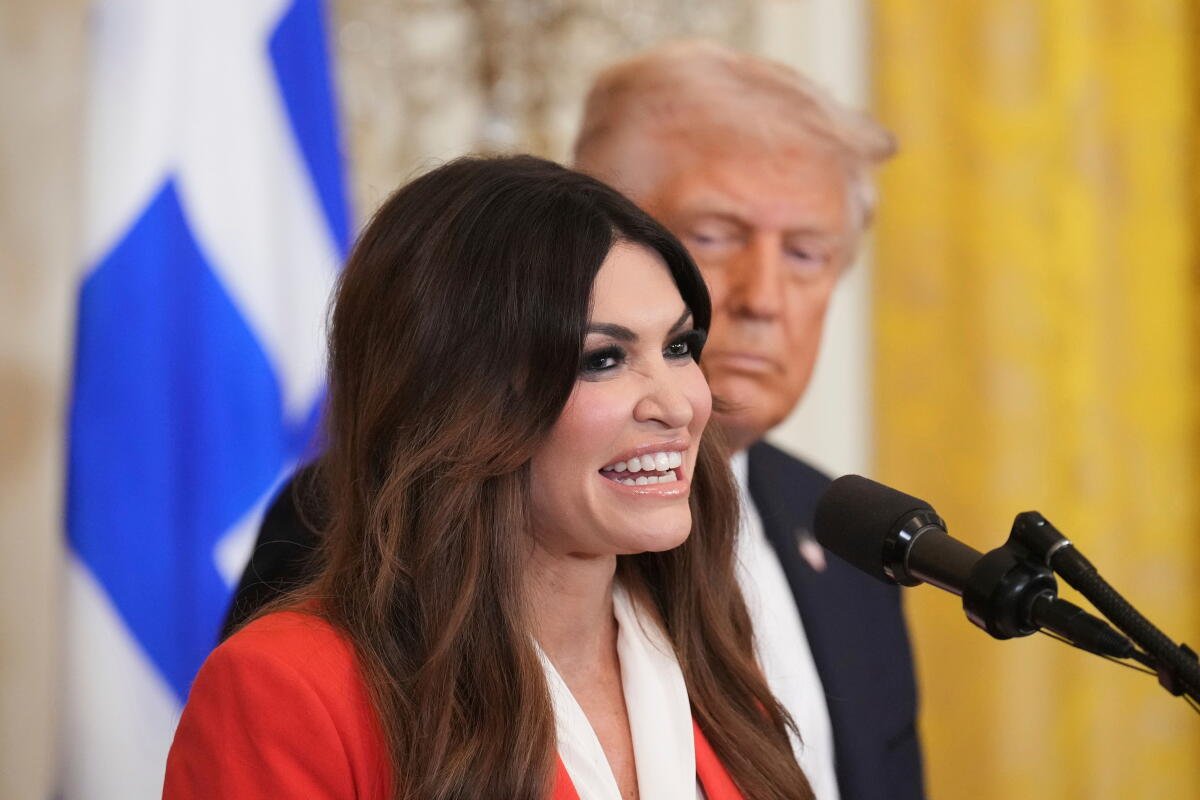
Donald Trump’s selection of political allies, personal associates and loyal supporters for key diplomatic positions is facing renewed scrutiny after Kimberly Guilfoyle’s departure as the United States ambassador to Greece. Her exit has drawn attention to a wider pattern of controversial appointments during Trump’s second presidency, raising questions about diplomatic experience, political loyalty and the potential consequences for America’s relationships with its international partners.
Although presidents from both major US political parties have historically rewarded supporters and campaign donors with ambassadorial appointments, Trump’s approach has attracted particular criticism because several of his nominees have faced public controversies, diplomatic disagreements or questions about their suitability for the positions they hold. From France and Belgium to Canada, Iceland and Poland, a number of American representatives have become involved in disputes with officials in the countries where they serve.
The controversy surrounding Guilfoyle has added fresh momentum to the debate over whether personal connections and political allegiance are receiving greater consideration than professional diplomatic experience in the selection of American ambassadors. At the same time, the fact that numerous ambassadorial positions remain vacant has raised further concerns about the administration’s ability to maintain consistent diplomatic engagement around the world.

Guilfoyle, a conservative political personality and former politician, began serving as the US ambassador to Greece in November 2025. Her appointment came shortly after the end of her engagement to Donald Trump Jr, the eldest son of the president, bringing additional attention to the personal and political connections surrounding her selection.
Her tenure ended in October 2026 following allegations of misconduct and corruption. The accusations included claims that she promoted the commercial interests of a particular Greek construction and energy company, allowed Greek lobbyists to participate in official diplomatic meetings and asked an associate to pay off a $100,000 American Express credit card bill before her Senate confirmation hearing.
These allegations have intensified scrutiny of her time in office. However, allegations should be distinguished from established findings, and their implications depend on the evidence and any relevant official investigations. Her departure nevertheless highlights the reputational risks that can arise when diplomatic appointments become entangled in questions about personal conduct and private commercial interests.
The ambassadorial role carries responsibilities beyond representing the president. US ambassadors are expected to maintain relations with foreign governments, communicate American policy, support citizens and businesses abroad and protect the credibility of the United States. Controversies involving senior diplomatic representatives can therefore create challenges for both the individuals concerned and the broader foreign policy objectives of the administration.
Another appointment attracting attention is that of Charles Kushner, the father of Jared Kushner and father-in-law of Ivanka Trump. Kushner began serving as the US ambassador to France and Monaco in July 2025. A former attorney and real estate developer, he has also been a donor to Trump.
His diplomatic tenure has been marked by a dispute with French officials. In February 2026, Kushner was barred from a meeting with his diplomatic counterparts after failing to attend a summons concerning his accusations that France was allowing antisemitism and left-wing extremism to flourish.
The disagreement demonstrated the difficulties that can emerge when an ambassador publicly criticises the government of the country in which he is stationed. Relations between Washington and Paris involve security cooperation, trade, European policy and a range of international challenges. Public disputes between senior representatives risk complicating those discussions, even when disagreements reflect genuine differences over political or social issues.
Kushner also has a controversial personal history. He was convicted of tax evasion, making false statements to the Federal Election Commission and witness tampering. Trump pardoned him in 2020. Although the pardon removed the federal consequences of the conviction, his record remains relevant to the public debate over the administration’s selection of diplomatic representatives.
In Belgium, ambassador Bill White has experienced repeated disagreements with the country’s foreign minister, Maxime Prévot. White, the former president of the Intrepid Museum, began serving as ambassador in November 2025.
In February 2026, Prévot criticised White after the American diplomat accused Belgium of antisemitism. Another dispute emerged in August, when the Belgian foreign minister rebuked White over an alleged social media description of a Belgian official as a “loser”. White denied making the remark.
The disagreements illustrate how social media and public statements can become sources of tension between diplomatic representatives and their host governments. Ambassadors frequently need to address sensitive political issues, but their words carry the weight of the governments they represent. Personalised exchanges can make it harder to resolve disagreements through established diplomatic channels.
Relations with Canada have presented another challenge for the Trump administration. Pete Hoekstra, a former Republican congressman from Michigan, became the US ambassador to Canada in April 2025. His appointment has unfolded against the backdrop of Trump’s contentious relationship with America’s northern neighbour.
Trump’s rhetoric about making Canada the 51st US state has generated considerable anger among Canadians and raised concerns about national sovereignty and the future of bilateral relations. During the summer of 2026, more than 200,000 Canadians signed a petition calling for Hoekstra’s expulsion, accusing him of normalising the president’s threats.
Hoekstra has also adopted a critical stance towards Canada. Most recently, he warned Canadians against meddling in American politics ahead of the November 2026 midterm elections. His remarks have added to tensions surrounding an important bilateral relationship that encompasses trade, border security, energy supplies, defence and longstanding cooperation between neighbouring countries.
The dispute is particularly significant because the United States and Canada have deeply interconnected economies. Diplomatic friction can complicate discussions over tariffs, industrial supply chains and cross-border commerce, making the ambassador’s communication style an important consideration for policymakers on both sides.
In Iceland, William “Billy” Long, a former Republican congressman from Missouri and a professional auctioneer, began serving as US ambassador in August 2026. Before taking up the diplomatic position, he briefly served as the commissioner of the Internal Revenue Service. He was subsequently removed from that role amid reported internal disagreements with Treasury Secretary Scott Bessent.
Long also attracted criticism after joking earlier in 2026 that the United States would make Iceland its 52nd state. He was forced to apologise for the remark, which came amid broader international sensitivities surrounding Trump’s expansionist rhetoric and comments about the status of other territories.
Although political jokes may be intended to entertain domestic audiences, comments about another country’s sovereignty can carry a different meaning when made by a senior American representative. Iceland is a NATO member and an important partner in North Atlantic security, making mutual respect and careful communication essential to the relationship.
In Poland, Tom Rose, a former conservative political commentator and adviser to former vice-president Mike Pence, began serving as ambassador in November 2025. His tenure has also been affected by disagreements involving the president and officials in the host country.
In February 2026, Rose announced that he would cut off communications with a Polish politician serving as speaker of the lower house of parliament, citing insults directed at Trump. Polish Prime Minister Donald Tusk responded by telling Rose to respect rather than lecture America’s allies. Rose rejected the criticism.
The exchange highlighted a wider question about the balance between defending the US president and maintaining constructive relationships with foreign political institutions. Poland is a significant NATO ally, particularly in the context of European security and Russia’s war against Ukraine. Maintaining cooperation requires sustained communication across political differences, even when individual officials disagree sharply over statements or policies.
Kari Lake, another prominent Trump ally, has also drawn criticism over her proposed diplomatic role. Trump selected the longtime election denier to serve as ambassador to Jamaica in May 2026, but her nomination had not been confirmed as of the reporting date.
Lake has repeatedly promoted false claims of election fraud, including allegations connected to elections in which she was a candidate and lost. She subsequently served in the administration as head of the US Agency for Global Media, which oversees Voice of America and other international broadcasting operations.
Former American ambassadors to Jamaica have questioned whether Lake is suitable for the post. Donald Tapia, who served from 2019 to 2021, said she was not the right person for Jamaica, while Luis Moreno, ambassador from 2014 to 2017, described the nomination as a relatively lightweight appointment and questioned her policy experience.
Their criticism reflects concerns about the importance of diplomatic expertise, regional knowledge and the ability to navigate complex bilateral relationships. Jamaica and the United States maintain significant connections involving tourism, trade, migration, security and the Caribbean diaspora. The ambassadorial position requires an understanding of these issues and the ability to work effectively with Jamaican officials.
Other controversial nominations have failed to proceed. The White House withdrew its nomination of Nick Adams, a right-wing social media personality known for online provocations, for the ambassadorship to Malaysia. Former Malaysian officials had criticised the choice, arguing that it was disrespectful to the Muslim-majority country.
Trump also nominated Amer Ghalib, a conservative Democrat and former mayor of Hamtramck, Michigan, to become ambassador to Kuwait. His nomination stalled in the Senate after lawmakers accused him of engaging with antisemitic content on social media. The allegations surrounding the appointment became an obstacle to its progress.
These cases demonstrate that presidential nominations are not guaranteed to result in confirmed appointments. Senate scrutiny, political opposition, public criticism and concerns raised by prospective host countries can all influence whether a nominee ultimately takes office.
The controversies have unfolded alongside a substantial shortage of American ambassadors. As of October 2026, only 92 of the 196 positions identified in the report were filled, leaving more than half vacant. The unfilled posts include Cuba, where Washington is applying political pressure, and Ukraine, which remains embroiled in its war with Russia.

Vacancies can complicate the work of American diplomatic missions, particularly during periods of international tension. Experienced embassy staff continue to carry out essential duties, but the absence of a confirmed ambassador can limit high-level representation and make it more difficult to maintain direct communication with foreign leaders.
Ultimately, the debate over Trump’s ambassadorial appointments concerns more than the reputations of individual nominees. It raises questions about how the United States chooses the people responsible for representing its interests abroad, how political loyalty should be balanced against professional competence and how diplomatic relationships can be protected from domestic political disputes.
Presidents have considerable authority to nominate ambassadors who share their policy priorities. Yet those representatives must also operate in environments where credibility, cultural understanding and restraint can be as important as political commitment. As controversies continue and vacancies persist, the administration faces a challenge in demonstrating that its diplomatic appointments can advance American interests while maintaining productive relationships with allies and partners worldwide.
Related News:
 Thousands Protest ICE Operations in Nationwide US Day of Action
 US Court Ruling Reshapes Voting Rights Landscape
 US states redraw maps after voting rights ruling
 Judge halts deportation of Yemeni refugees in US
 Trump warns Iran as Middle East tensions surge again
 US Court Restores Abortion Pill Access Temporarily
 Trump’s Revenge Drive Deepens GOP Divide
 Former ICC prosecutor condemns US sanctions
 Gunman Killed After White House Security Shootout
 Mystery Grows Over Mitch McConnell’s Health
 Trump Media Ban Triggers First Amendment Clash
 US Networks Suspend Trump White House Pool Coverage
 Republican Senator Questions Trump Ad Spending
 Trump Ads Trigger Fight Over Taxpayer Money
 Trump Immigration Policy Faces New Legal Tests
 Latin America women fear rollback of rights
 Lithuania Offers to Fund Permanent US Military Base
 Trump Rally Faces Protests as Texas Race Tightens
 Tanker Attacked Near Qatar as Hormuz Tensions Escalate
 Trump Says He Deserves Nobel Peace Prize
 Trump Attacks Norway After Nobel Peace Prize Snub
 Ten US Midterm Races That Could Defy Expectations
 Brazil Court Scandal Threatens Lula as Bolsonaros Rise
 Ohio Airports Become Key Hubs for ICE Deportation Flights
 Judge Blocks Trump White House Media Ban
 Trump Warns Alaska Voters Over Rival Dan Sullivans
 Trump Targets Arizona and Montana Amid GOP Election Worries
 Brazil Cuts Working Week to 40 Hours in Lula Election Boost
 Trump Rallies GOP as Senate Democrats Boost Key Races
 Talarico Faces Tough Voter Test in Texas Senate Race
 US Justice Department Files Lawsuit Against California Over Partisan Voting Maps
 Trump Deploys DHS to Charlotte in Major Arrest Operation
 US National Guard Member Killed in DC Shooting
 Partial US Government Shutdown Hits Homeland Security Funding
 Epstein Files Reveal Trump Officials’ Emails with Financier
 Report Says Pezzullo Acted ‘Recklessly’ in Dealings
 Hungary election: Orbán faces biggest test amid scandal
 Suspected Plot Targets Pipeline Before Hungary Vote
 UK Stands Firm on Falklands Amid US Rift
 Trump orders US troop pullout from Germany
 White House Security Case Sparks Political Firestorm
 Trump approval plunges amid Iran war fears
 Ohio’s Battle for Trust: Democrats Vying to Flip the Buckeye State
 US ‘Narco Boat’ Strikes Draw Global Outcry
 Afghan Families Left in Limbo Face Risk of Deportation
 US Awaits Iran Reply on New Ceasefire Proposal
 Immigration Judges Fear Pressure in Trump Era
 US green card applicants must apply from abroad, DHS says
 Tulsi Gabbard exits after turbulent intelligence tenure
 House Curbs Trump’s War Powers in Rare Rebellion
 Le Pen’s Popularity Holds Despite Conviction
 Houthis Strike Saudi Arabia as Middle East Tensions Rise
 Trump Hardens Canada Trade Stance as Talks Stall
 Trump Calls Iran War ‘Small Potatoes’ Despite US Deaths
 UK plans tougher Israel stance with settlement trade ban
 Trump gives $45,000 holiday gifts to White House aides
 New Mexico Takes Facebook to Trial Over Data Scandal
 Israel Accused of Undermining Palestinian Life
 Democrat Says ICE Restricted Detention Camp Oversight
 Japan PM Backs International Criminal Court
 Xi urges Trump to avoid US-China military conflict
 Lula accuses Trump of seeking control over Brazil
 Burnham Opens Door to Possible UK Return to EU
 Brazil Election Draws Religion Into Final Campaign
 French School Protests Escalate as 400 Schools Close
 Lula Warns of Bolsonaro Family Return as Brazil Votes
 DOJ Declines to Reopen Powell Renovation Probe
 Families Await USS Abraham Lincoln Homecoming
 Quebec separatists return to power without majority
 Canadian Veterans Condemn Trump Allies’ Military Remarks
 Argentina Protesters Resist Milei’s Land Sale Drive
 Okinawa US Troops Face Curfew After Murder Case
 UK Mission in East Jerusalem to Remain Open
 Trump Rules Out Iran Attack Before US Elections
 Trump’s Russian Diesel Deal Sparks Ukraine Fury
 US Execution Livestream Plan Sparks Global Outrage
 Trump Names Katie Zachariah as Next White House Press Secretary
 India’s Voter Roll Crisis Sparks Nationwide Protests
 Ukrainian Soldier Faces Trial Over Nord Stream Blast
 Gadi Eisenkot: Israel’s Anti-Netanyahu Challenger