


Published: 14 October 2026. The English Chronicle Desk. The English Chronicle Online
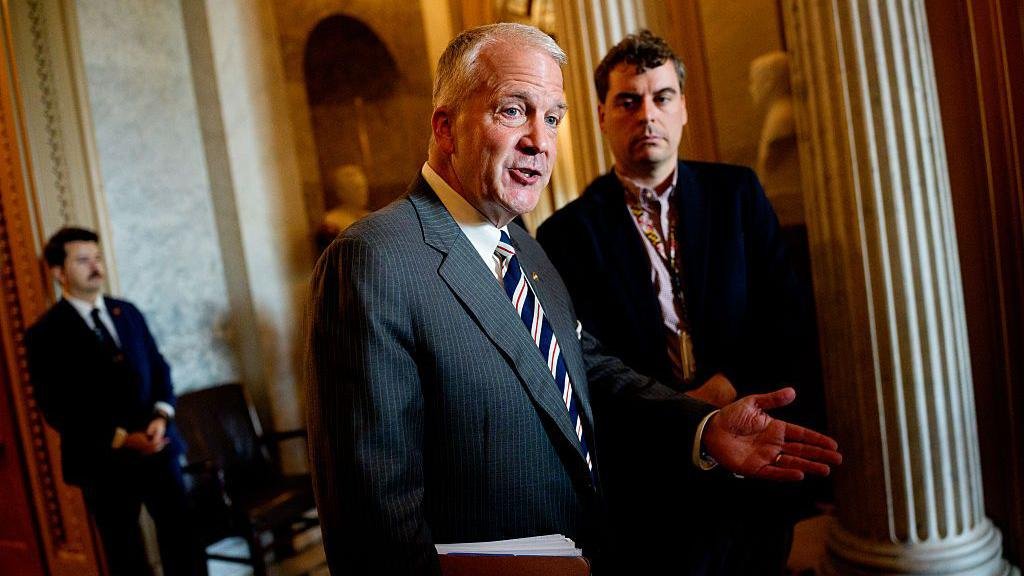
US President Donald Trump has urged voters in Alaska to support Republican Senator Dan Sullivan in the state’s closely contested Senate election, warning that a second candidate with a nearly identical name could confuse voters and potentially alter the outcome of one of the most closely watched races in the November midterm elections.
Speaking at a packed gathering in Wasilla, north of Anchorage, Trump described the incumbent as the “real” Dan Sullivan and accused the rival candidate of entering the contest to divide Republican support. His intervention reflects growing concern among Republicans that a race in a traditionally conservative state could become unexpectedly competitive as Democrats seek to regain control of Congress.
Sullivan is facing Democratic challenger Mary Peltola, a former member of the US House of Representatives, in the election scheduled for 3 November. The contest has attracted additional attention because another Republican, Daniel J Sullivan, a retired schoolteacher, is also standing for the Senate. The similarity between the candidates’ names has become a central feature of the campaign, with the incumbent arguing that the additional candidacy could divert votes that would otherwise go to him.

Trump made the issue a prominent part of his speech, telling supporters that Alaska needed to return Sullivan to Washington and warning that votes cast for the other candidate could make a decisive difference. He pointed to the rival’s performance in the August primary, when the challenger received approximately 2.5% of the vote, arguing that even a relatively small share of support could affect the final result.
The president accused Democrats of using the presence of another candidate with the same name to create confusion among voters. However, the claim that the rival candidate was recruited or coordinated by Democrats has not been independently established. The competing candidate is also registered as a Republican, making the dispute particularly sensitive within the party.
The incumbent’s campaign has increasingly focused on the possibility that voters could mistake one Dan Sullivan for the other when marking their ballots. To distinguish the sitting senator, the ballot will identify him with the designation “Registered Republican” and “Incumbent”. That distinction is intended to help voters identify the sitting officeholder, although the effect of the competing candidacy will depend on voter awareness and the way ballots are completed.
The race is unfolding against a broader national political struggle. Republicans are defending their congressional majorities and seeking to maintain support for Trump’s agenda during the final two years of his presidency. Democrats, meanwhile, hope to regain control of Congress, which would give them greater power to scrutinise the administration, challenge its policies and influence the legislative agenda.
Although Alaska supported Trump by a substantial margin in the 2024 presidential election, recent polling has indicated a close contest between Sullivan and Peltola. The apparent competitiveness of the race has placed unusual pressure on the incumbent, who is seeking to retain a seat in a state that has not elected a Democrat to the US Senate since 2008.
Peltola brings considerable political experience to the campaign. She won a special election to the House of Representatives in 2022 following the death of longtime Republican congressman Don Young. She subsequently secured a full term later that year, becoming a prominent Democratic figure in Alaska. She lost her House seat in 2024 to Republican Nick Begich and is now seeking a return to national office through the Senate race.
Her campaign has sought to focus on economic pressures, the cost of living and the future of Alaska’s energy sector rather than allowing the election to be dominated by the dispute over candidate names. A spokesperson for Peltola said she looked forward to working with Trump to expand Alaska’s energy production and reduce costs if elected to the Senate.
The statement appeared designed to challenge Republican efforts to portray Democrats as opponents of the state’s oil and gas industries. Energy production is a major contributor to Alaska’s economy, supporting employment, government revenue and related businesses. However, production has declined from its peak in the late 1980s, leaving the industry and the state’s long-term economic prospects central issues in political debate.
Before Trump addressed the gathering, Sullivan accused Peltola of failing to adequately defend Alaska’s energy sector during the Biden administration. He argued that policies introduced by former president Joe Biden and congressional Democrats had threatened jobs, increased energy costs and placed unnecessary restrictions on development.
Sullivan also criticised the role played by Democratic lawmakers in Washington, claiming that Peltola had not done enough to challenge policies he considered damaging to the state. His remarks reflect a broader Republican campaign strategy that links energy development to economic security and presents Democratic environmental and regulatory policies as obstacles to growth.
Peltola’s campaign has countered that the senator’s record has failed to address the financial pressures facing ordinary Alaskans. Her spokesperson criticised Sullivan over his policy positions and his support for the war in Iran, arguing that Peltola had spent the day speaking directly with residents about reducing household costs and tackling corruption in Washington.
The competing messages demonstrate the importance of economic concerns in a state where the energy industry remains influential but where residents also face the effects of high living costs, geographical isolation and the expense of transporting goods and services across vast distances. Both campaigns are attempting to present themselves as better equipped to protect local jobs while improving the financial circumstances of households.
Trump’s appearance also revived the debate over Alaska’s ranked-choice voting system. Approved by voters in a 2020 referendum, the system allows voters to rank candidates in order of preference rather than selecting only one candidate. Under the current rules, Alaskans can rank up to five candidates on the November ballot.
Trump denounced the system as a “scam” and encouraged voters to support a ballot measure seeking its repeal. His criticism reflects a wider Republican argument that ranked-choice voting complicates elections and can disadvantage candidates who rely on a clearly defined party base.
Supporters of the system argue that ranking candidates gives voters greater flexibility and can help ensure that the eventual winner receives broader support. Under ranked-choice voting, if no candidate secures the required majority of first-choice votes, the candidate with the fewest votes is eliminated and ballots are redistributed according to voters’ next preferences. The process continues until a winner emerges under the applicable rules.
The presence of two candidates named Dan Sullivan adds an unusual dimension to that system. Even where voters can rank multiple choices, confusion about candidates’ identities could affect first-choice selections and potentially influence the redistribution of votes. However, the precise electoral impact cannot be determined in advance, and the final result will depend on how Alaskans vote.
The incumbent’s supporters have sought to emphasise his experience and status as the sitting senator, while Trump’s endorsement is intended to strengthen Republican turnout. The president remains an influential figure among many Republican voters, and his direct appeal could help Sullivan consolidate support among those who backed Trump in 2024.

Yet the close polling suggests that the election may depend on more than party loyalty. Peltola’s previous electoral success demonstrates her ability to compete in Alaska, while the state’s economic concerns could provide an opening for Democrats seeking to persuade voters dissatisfied with the political establishment.
The competing candidacies, debate over voting rules and sharply different economic messages have made the contest unusually complicated. For Republicans, retaining the seat would help protect their position in the Senate and preserve support for the president’s legislative priorities. For Democrats, defeating Sullivan would represent a significant breakthrough in a state that has long favoured Republican candidates in federal elections.
As the 3 November vote approaches, the dispute over which Dan Sullivan deserves voters’ support is likely to remain a defining feature of the campaign. Trump has made clear that he considers the incumbent’s re-election important, but the ultimate decision will rest with Alaskan voters, whose choices will determine whether Sullivan retains his seat or Peltola achieves a return to Congress.
Related News:
 Thousands Protest ICE Operations in Nationwide US Day of Action
 US Court Ruling Reshapes Voting Rights Landscape
 US states redraw maps after voting rights ruling
 Judge halts deportation of Yemeni refugees in US
 Trump warns Iran as Middle East tensions surge again
 US Court Restores Abortion Pill Access Temporarily
 Trump’s Revenge Drive Deepens GOP Divide
 Former ICC prosecutor condemns US sanctions
 Gunman Killed After White House Security Shootout
 Mystery Grows Over Mitch McConnell’s Health
 Judge Allows Pentagon Firings at Stars and Stripes
 Trump Media Ban Triggers First Amendment Clash
 US Networks Suspend Trump White House Pool Coverage
 Republican Senator Questions Trump Ad Spending
 Trump Ads Trigger Fight Over Taxpayer Money
 Trump Immigration Policy Faces New Legal Tests
 Latin America women fear rollback of rights
 Lithuania Offers to Fund Permanent US Military Base
 Trump Rally Faces Protests as Texas Race Tightens
 Tanker Attacked Near Qatar as Hormuz Tensions Escalate
 Trump Says He Deserves Nobel Peace Prize
 Trump Attacks Norway After Nobel Peace Prize Snub
 Ten US Midterm Races That Could Defy Expectations
 Brazil Court Scandal Threatens Lula as Bolsonaros Rise
 Ohio Airports Become Key Hubs for ICE Deportation Flights
 Judge Blocks Trump White House Media Ban
 US Justice Department Files Lawsuit Against California Over Partisan Voting Maps
 Trump Deploys DHS to Charlotte in Major Arrest Operation
 US National Guard Member Killed in DC Shooting
 Trump officials continue false claims after Alex Pretti shooting
 Partial US Government Shutdown Hits Homeland Security Funding
 Epstein Files Reveal Trump Officials’ Emails with Financier
 Report Says Pezzullo Acted ‘Recklessly’ in Dealings
 Hungary election: Orbán faces biggest test amid scandal
 Suspected Plot Targets Pipeline Before Hungary Vote
 UK Stands Firm on Falklands Amid US Rift
 Trump orders US troop pullout from Germany
 White House Security Case Sparks Political Firestorm
 Trump approval plunges amid Iran war fears
 Ohio’s Battle for Trust: Democrats Vying to Flip the Buckeye State
 US ‘Narco Boat’ Strikes Draw Global Outcry
 Afghan Families Left in Limbo Face Risk of Deportation
 US Awaits Iran Reply on New Ceasefire Proposal
 Immigration Judges Fear Pressure in Trump Era
 US green card applicants must apply from abroad, DHS says
 Tulsi Gabbard exits after turbulent intelligence tenure
 House Curbs Trump’s War Powers in Rare Rebellion
 Le Pen’s Popularity Holds Despite Conviction
 Trump Refuses to Sign Housing Bill, But Law Takes Effect
 Houthis Strike Saudi Arabia as Middle East Tensions Rise
 Trump Hardens Canada Trade Stance as Talks Stall
 Trump Calls Iran War ‘Small Potatoes’ Despite US Deaths
 UK plans tougher Israel stance with settlement trade ban
 Trump gives $45,000 holiday gifts to White House aides
 New Mexico Takes Facebook to Trial Over Data Scandal
 Israel Accused of Undermining Palestinian Life
 Democrat Says ICE Restricted Detention Camp Oversight
 Japan PM Backs International Criminal Court
 Xi urges Trump to avoid US-China military conflict
 Lula accuses Trump of seeking control over Brazil
 Burnham Opens Door to Possible UK Return to EU
 Brazil Election Draws Religion Into Final Campaign
 French School Protests Escalate as 400 Schools Close
 Lula Warns of Bolsonaro Family Return as Brazil Votes
 DOJ Declines to Reopen Powell Renovation Probe
 Families Await USS Abraham Lincoln Homecoming
 Quebec separatists return to power without majority
 Canadian Veterans Condemn Trump Allies’ Military Remarks
 Argentina Protesters Resist Milei’s Land Sale Drive
 Okinawa US Troops Face Curfew After Murder Case
 UK Mission in East Jerusalem to Remain Open
 USS Lincoln Ends Record 265-Day Deployment
 Trump Rules Out Iran Attack Before US Elections
 EU Divisions Deepen Over Israel Policy
 Trump’s Russian Diesel Deal Sparks Ukraine Fury
 US Execution Livestream Plan Sparks Global Outrage
 Trump Names Katie Zachariah as Next White House Press Secretary
 Millions Face Tougher Medicaid Rules From January
 India’s Voter Roll Crisis Sparks Nationwide Protests
 Ukrainian Soldier Faces Trial Over Nord Stream Blast








