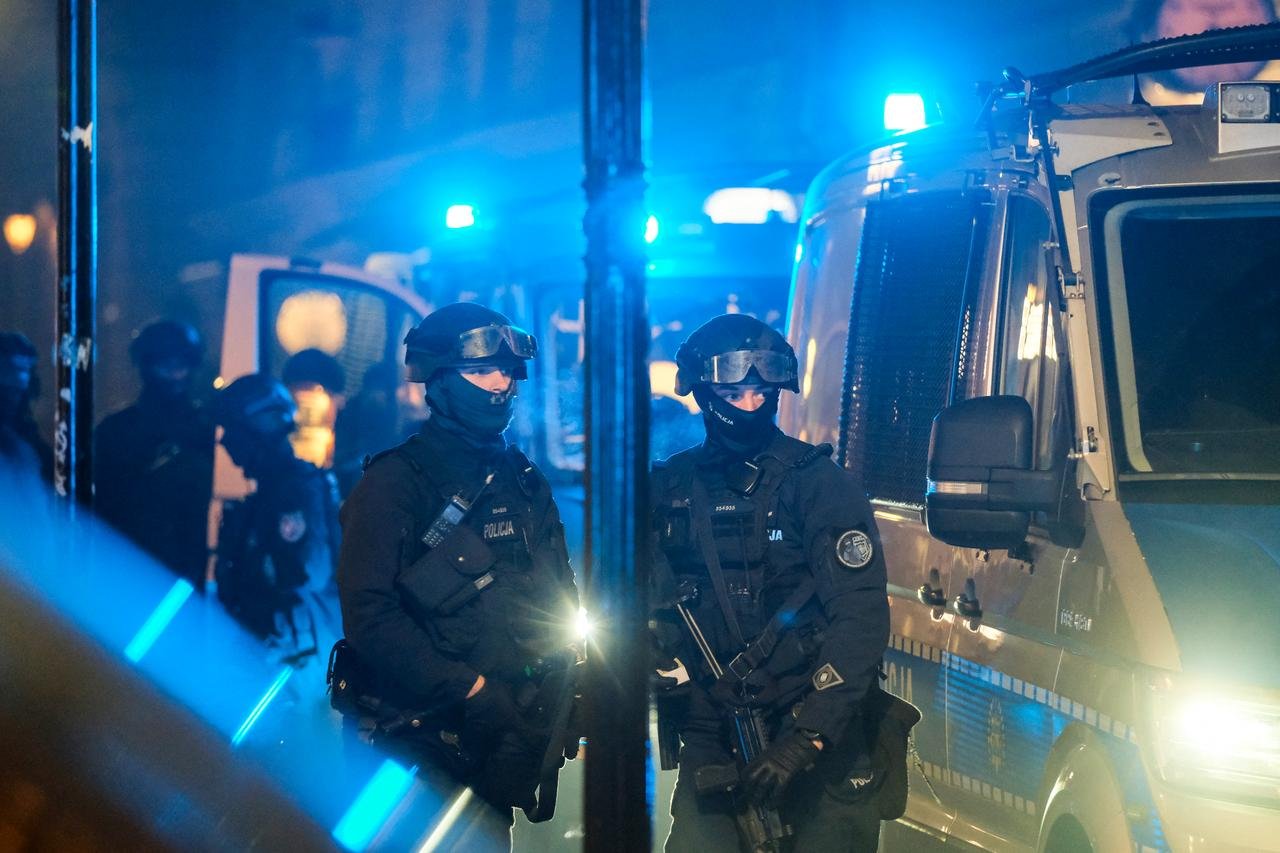
The 24-year-old man suspected of carrying out a deadly shooting in the historic market square of Kraków, Poland, has died in hospital, police have confirmed. The suspect, who was critically injured during an exchange of gunfire with law enforcement officers, had been receiving medical treatment following Saturday’s violence that left six people dead and 17 others injured. The incident has triggered a major terrorism investigation and renewed concerns about the growing influence of extremist ideologies in Poland.
Polish police announced the suspect’s death early on Monday, expressing their confirmation through an official statement. The man, identified by local media as Michal O, had remained in critical condition since being wounded during the confrontation with police. Authorities had previously indicated that his actions were potentially motivated by far-right extremist beliefs.
The shooting took place on Saturday afternoon in Kraków’s main market square, one of the country’s most recognisable historic locations and a major destination for international tourists. The normally busy public space was transformed into a scene of panic and devastation when the gunman allegedly began firing indiscriminately at people.

According to police accounts, the suspect drove into the central square at high speed at approximately 3pm local time. Wearing military-style clothing and a bulletproof vest, he allegedly began shooting while moving through the crowded area in what police spokesperson Katarzyna Cisło described as a chaotic and dangerous rampage.
The attack resulted in the deaths of six people, including a British national, while another 17 individuals sustained injuries. Several victims required medical attention, and the incident prompted an immediate emergency response involving police officers and medical personnel.
The suspect was eventually confronted by police, leading to an exchange of gunfire during which he was wounded. He was subsequently taken to hospital in critical condition. Despite medical efforts, authorities confirmed that he died early Monday morning.
The deaths have intensified public concern in Poland, where large-scale shootings of this nature are relatively uncommon. The incident has also attracted international attention because of the presence of foreign tourists and visitors in the affected area.
Polish prosecutors opened a terrorism investigation following the attack. The National Prosecutor’s Office announced that the investigation would examine the killing of six people using a firearm, alongside attempted murders involving numerous other victims, including police officers. Investigators are treating the incident as a suspected terrorist offence.
Authorities are examining the suspect’s background, possible ideological motivations, personal circumstances and activities before the shooting. Although officials have referred to his apparent fascination with far-right extremism, investigators have not yet established a complete picture of the factors that led to the attack.
Polish Interior Ministry spokesperson Karolina Galecka said investigators had discovered several different emblems on the suspect’s clothing. Some of these symbols had already undergone preliminary examination and interpretation, while others were still being assessed by specialists.
She explained that the patches appeared to represent various themes and motifs, but declined to provide further details because the investigation remained active. Authorities are expected to examine whether the symbols could establish links to extremist movements, ideological networks or individuals who may have influenced the suspect.
Interior Minister Marcin Kierwiński previously described the suspect as someone fascinated by far-right ideology who held very radical and ultra-nationalistic views. His comments have raised questions about the extent to which extremist beliefs may have influenced the violence.
Police also confirmed that three people were discovered dead at the suspect’s home following the shooting. They were identified as his father, aged 53, mother, aged 52, and sister, aged 21. The circumstances surrounding their deaths have become another important part of the investigation, particularly as authorities attempt to establish the sequence of events leading up to the attack.
The discovery has added another disturbing dimension to the case. Investigators are examining whether the deaths at the family residence were connected to the subsequent shooting in the city centre and whether the suspect had displayed warning signs before the incident.
Among those injured in the Kraków attack were five foreign nationals from Britain, Austria, Germany, Portugal and Russia. Their presence highlights the international impact of the violence, which occurred in an area regularly visited by tourists from across Europe and beyond.
Two police officers were also injured while responding to the attack. One of them was reported to be in serious condition, underlining the risks faced by officers who confronted the gunman during the incident.
The response of the police has received considerable public attention. Two officers have been praised for confronting the armed suspect and attempting to prevent further casualties. Their actions have been widely discussed as an example of the dangers emergency responders face when dealing with sudden mass violence in crowded public places.
As Poland began two days of national mourning, the country faced a period of grief and reflection. The national mourning period was announced following the deaths, with the incident prompting widespread sympathy for the victims and their families.
The attack has also intensified concerns about extremist activities in the country. Although Poland has generally been regarded as relatively safe compared with several other European countries, recent incidents have raised questions about the potential consequences of online radicalisation and the spread of extremist material.
Several school stabbings in October, which left one woman dead, had already drawn attention to the issue. Officials indicated that extremist content circulating online may have played a role in those incidents. The latest shooting has therefore added urgency to discussions about monitoring radicalisation, preventing politically motivated violence and protecting public spaces.
Security experts and authorities face the difficult task of determining whether the Kraków attack was an isolated act or part of a wider pattern of growing extremist activity. Investigators will need to examine the suspect’s online behaviour, personal communications and possible connections with ideological groups before drawing firm conclusions.
The incident has also raised questions about security arrangements in popular tourist destinations. Kraków’s main market square is normally filled with visitors, local residents, restaurants, street performers and businesses. Its historic importance and popularity make it one of the city’s busiest public spaces.
An attack of this nature demonstrates how quickly an ordinary afternoon in a crowded urban centre can turn into a major emergency. For those who witnessed the violence, the consequences are likely to extend beyond the immediate physical injuries, with many people having experienced fear and psychological distress.
For the families of the six victims, the national mourning period offers little comfort as they confront the sudden loss of loved ones. Those injured, including foreign visitors and police officers, must also face the difficult process of recovery.
The suspect’s death means that he will no longer be available for direct questioning by investigators. This may complicate efforts to establish his precise intentions and motivations. Prosecutors will therefore need to rely heavily on forensic evidence, digital records, witness accounts and material recovered from his residence and personal belongings.

Although authorities have identified possible far-right ideological influences, the investigation remains essential to determining the full circumstances of the tragedy. Police have not yet provided a complete explanation of how the suspect prepared for the attack, whether anyone else was involved or what specific factors triggered the violence.
As Poland mourns the victims, attention is increasingly turning towards the broader challenge of preventing extremism and protecting communities from politically or ideologically motivated attacks. The Kraków shooting has exposed the devastating consequences of armed violence in public spaces and reinforced the importance of early intervention when signs of radicalisation emerge.
With the suspect now dead, investigators must reconstruct the events that led to one of Poland’s most shocking recent attacks and establish whether any wider security failures contributed to the tragedy.
Related News:
 French Police Face Scrutiny Over Injured Teenagers
 Serbia’s Student Victory Sparks a ‘Smell of Freedom’
 Ukraine Villagers Demand Answers After Deadly Arms Depot Strike
 Gaza Strike Kills Child and Paramedic
 Elif Eralp Emerges as Berlin’s Next Political Force
 French Student Protests Escalate Into Violent Clashes
 French School Protests Escalate as 400 Schools Close
 Latin America women fear rollback of rights
 Former German Intelligence Chief Arrested Over Espionage
 France Promises 3,000 Teachers as Student Protests Grow
 UAE Says Co-Pilot Planned Suicide Attack on Israel
 French Students Protest Poor Conditions in Paris Suburbs
 Greta Thunberg Backs French Students in School Protests
 Macron Condemns Violence as France Faces 2,400 Arrests
 Milan Luxury Stores Shut as Italy Plans Troop Deployment
 France to Deploy 70,000 Police Amid Unrest Fears
 Fire Engulfs Hitler’s Eagle’s Nest Retreat
 Melting Dolomites Glaciers Reveal 250 WWI Explosives
 Trump’s Midterm Campaign Faces Racism and Political Backlash
 Spain Mourns 68 Dead After High-Speed Train Crash
 Novaya Gazeta to Close After Russian Government Pressure
 Spain Train Crash Kills 69, Foreign Victims Identified
 Alan Jones Trial Paused for Melbourne Cup Viewing
 Seven Arrested After Bonfire Night Violence in Scotland
 Ben Roberts-Smith Denies War Crime Allegations in First Statement
 China Fireworks Factory Blast Kills 21 in Hunan
 US ‘Narco Boat’ Strikes Draw Global Outcry
 Barrister Criticises Trial After Suicide Case Verdict
 Pope Meets Families in Italy Toxic Waste Zone
 New Footage Revives Peter Falconio Mystery
 England and Norway Fans Turn Miami Into World Cup Carnival
 Westminster Council Threatens Charing Cross Soup Kitchen
 BBC Warned About Missing Clothes of Murder Victim
 Israeli Strike in Southern Lebanon Kills Seven
 Nepal Tunnel Rescue Offers Hope Amid Flood Devastation
 Councils spend £125m on illegal children’s care
 Europe’s democracies face a growing far-right threat
 Man Arrested in Mississippi Woman’s Death
 Royal Crown Branded Enslaved Africans in Britain’s Slave Trade
 Israel Accused of Undermining Palestinian Life
 Yemen War Displaces 125,000 as Fighting Intensifies
 Lib Dems Prepare for Election Amid Reform Challenge
 Democrat Says ICE Restricted Detention Camp Oversight
 Greece Pushes for Parthenon Marbles Reunification
 Ukraine and Russia Escalate Long-Range Drone War
 Nepal PM calls deadly flood a global climate warning
 Madrid Tent Camp Grows as Spain Housing Crisis Deepens
 Cornell Fraternity Assault Investigation Reopened
 London Facial Recognition Trial Ends With False Alert
 Drumcree Talks Falter as Legal Challenge Deepens
 Green Party faces dispute over Zionism motion
 New Prosecutor Takes Over Cornell Assault Case
 Bosnia’s Young People Look Beyond Election Hope
 Germany Pledges €1bn Military Aid to Ukraine
 WHO Says Russia Plague Epidemic Risk Remains Low
 Israel Promotes Film Challenging Controversial Gaza Documentary
 Gaza War Deepens India’s Strategic Ties With Israel
 EU Divisions Deepen Over Israel Policy
 Three Convicted in Mexico Surfing Trip Murders
 Australian Advocates Seek Subsidised Drugs for PMOS
 British Military School Abuse Victims Denied Justice
 UK Greens Face Crisis Over Zionism and Extremism Row
 Elizabeth Struhs Inquest Examines Child Safety Failures
 Millions Face Tougher Medicaid Rules From January
 Ohio Airports Become Key Hubs for ICE Deportation Flights
 Ukrainian Soldier Faces Trial Over Nord Stream Blast
 Senegal LGBTQ+ Crackdown Drives People Into Hiding
 Gadi Eisenkot: Israel’s Anti-Netanyahu Challenger
 Albania’s Rama Defies Calls to Quit Amid Student Protests
 UK Bill Faces Warning Over Fayed Trafficking Victims
 Jenrick Defends Farage Amid Fresh Reform Racism Claims
 Zelenskyy Says US Failed to Warn Kyiv of Russian Strikes
 Ukraine Peace Talks Set to Resume in November
 Former RAAF Pilot Accused of Murdering Wife
 Erin Patterson Faces Life in Prison After Appeal Loss
 Bedouin Women Drive Historic Arab Election Gains
 Domestic Abuse Survivor Fears Attacker Without Tag
 ANC Faces Voter Backlash in South African Elections
 Exiled Journalists Defy Putin’s Growing Media Crackdown
 German Politician Hubert Aiwanger Found Dead in Berlin