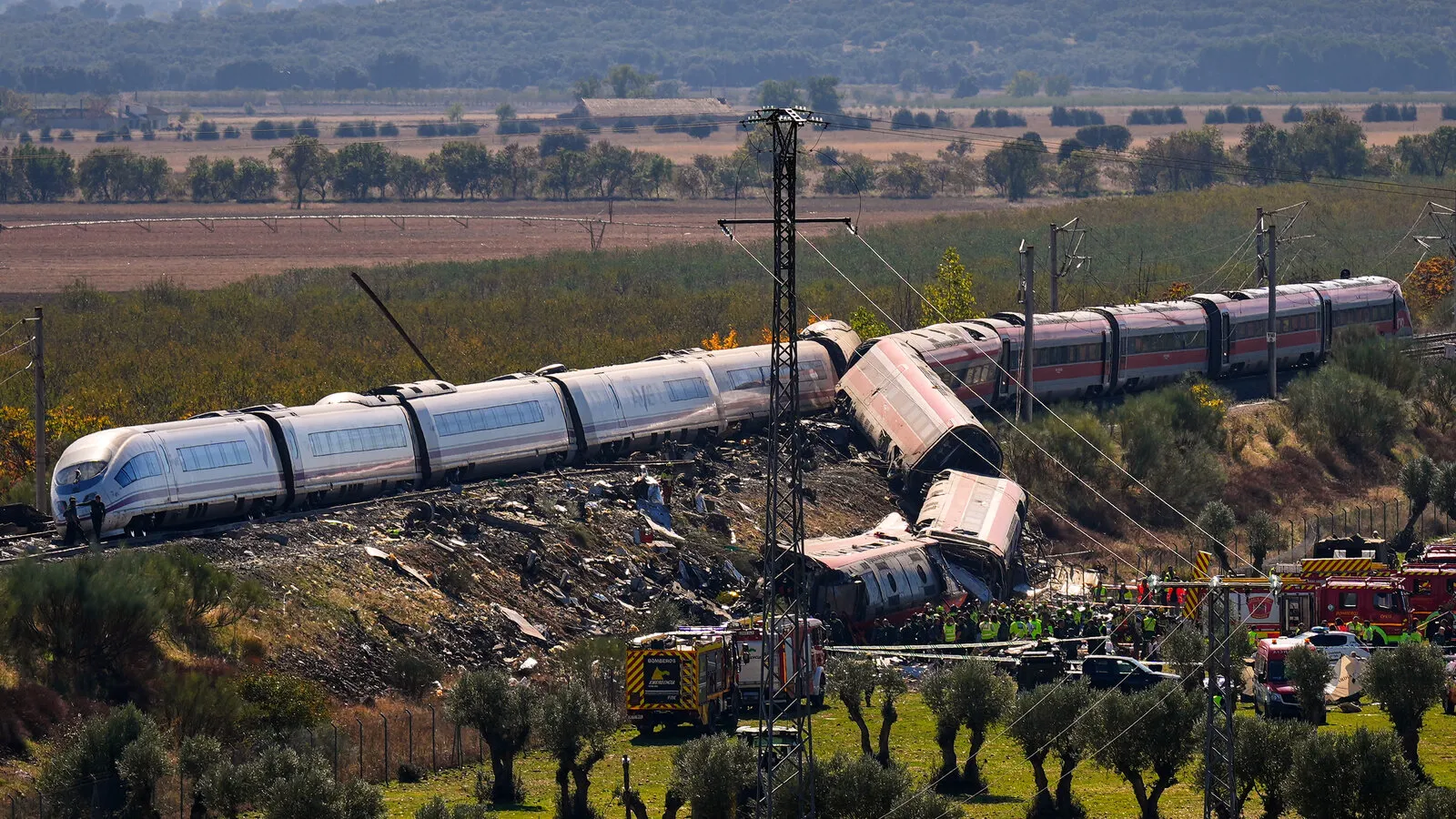
Authorities in Spain have confirmed that citizens from several countries, including the United States, Canada and Japan, were among the 69 people killed in last week’s devastating high-speed train collision. The disaster, one of Europe’s deadliest railway accidents this century, has left families across several countries grieving while investigators and forensic specialists continue their efforts to establish the identities of every victim.
According to Spanish authorities, the death toll includes 54 Spanish citizens and 15 foreign nationals. The confirmed foreign victims include four Americans and one citizen each from Canada, Japan, Argentina, Mexico, Tunisia and the Czech Republic, alongside previously identified victims from France and Portugal. The latest identification announcement has provided some families with long-awaited answers, although uncertainty remains for relatives of several missing passengers.
The identification process has proved particularly difficult because of the devastating impact of the collision. Some victims suffered injuries so severe that forensic specialists had to rely on individual body parts and detailed scientific examinations to establish their identities. For families waiting for confirmation, the process has involved days of emotional distress and uncertainty.

A special legal and forensic body established to coordinate the identification operation released an update late on Sunday, confirming the identities of the latest 10 foreign victims. The organisation includes police personnel and forensic experts working together to examine evidence, verify personal identities and provide official information to relatives.
Authorities said that all but three of the victims had been identified. Three missing-person reports remained active, involving two Australian citizens and one Japanese national. Officials explained that the families concerned had expressed their intention to travel to Spain to participate in identification procedures in person.
The authorities are awaiting the arrival of those relatives before completing the remaining identification work. Their presence is considered important to the process, particularly given the complexity of the forensic examinations and the emotional significance of providing families with reliable confirmation.
The tragedy has attracted international attention because of the number of foreign nationals involved and the scale of the destruction. Governments and diplomatic representatives from the affected countries are expected to remain engaged with Spanish authorities as families seek information, assistance and support.
For the relatives of those who died, the announcement has brought a painful mixture of relief and grief. Confirming the identity of a missing loved one can provide an opportunity to begin funeral arrangements and the difficult process of mourning. However, for families still waiting for news, the uncertainty continues to prolong an already traumatic experience.
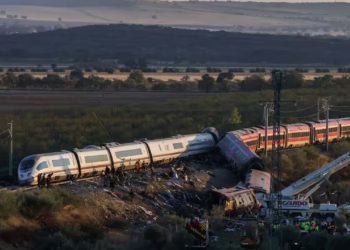
The collision occurred on Wednesday when a high-speed service operated by Spain’s state railway company Renfe crashed into the rear of a stationary train belonging to private operator Iryo. The accident happened outside the village of Urda in central Spain, approximately 130 kilometres south of Madrid.
The circumstances surrounding the collision have raised serious questions about railway safety procedures, communication between railway operators and the effectiveness of automatic protection systems. Investigators are examining how a passenger service was permitted to continue travelling along a section of track when another train remained stationary ahead.
According to the preliminary account of events, a failure involving an automatic railway safety system brought train movements to a halt along a 63-kilometre stretch of track. Despite the interruption, a control centre authorised the Renfe service to resume its journey while the Iryo train was still on the line.
The subsequent collision resulted in a major emergency response, with rescue workers, medical personnel and other emergency services deployed to assist passengers and recover victims. The severity of the incident created significant challenges for emergency teams and forensic specialists.
Investigators are expected to examine the sequence of communications between the train crews and railway control personnel, the technical condition of the signalling equipment and the procedures followed before the Renfe service resumed its journey.
The automatic safety system is likely to become a central part of the investigation. Such systems are designed to prevent dangerous situations by controlling train movements and helping ensure that services maintain safe distances. Any failure in their operation, or weaknesses in the procedures used when they become unavailable, could have serious consequences.
However, the precise reasons behind the accident have not yet been fully established. Investigators will need to determine whether the collision resulted from a technical malfunction, an operational decision, a communication failure or a combination of several factors.
The latest disaster is particularly concerning because it represents Spain’s second major high-speed train collision this year. In January, another railway accident in the southern region of Andalusia killed 46 people, raising concerns about the condition and management of the country’s railway network.
The two incidents within the same year have intensified public scrutiny of railway safety standards. Spain has invested heavily in high-speed rail infrastructure and operates one of Europe’s most extensive high-speed railway networks. The latest tragedy has nevertheless prompted questions about whether existing safety arrangements are sufficiently effective in preventing major accidents.
Railway passengers depend on a combination of modern technology, trained personnel and reliable communication systems to ensure safe journeys. When one part of that system fails, other protective measures must be capable of preventing a disaster. The investigation into the Urda collision is therefore expected to have implications beyond the immediate circumstances of the accident.
For the families affected, however, the immediate priority remains identifying missing relatives, arranging funerals and receiving support following the loss of loved ones. The presence of foreign nationals among the dead has also added an international dimension to the tragedy, with families having to navigate unfamiliar procedures and travel arrangements while coping with personal grief.
The accident has also emerged as a significant political issue ahead of Spain’s 29 November general election. Socialist Prime Minister Pedro Sánchez is preparing to defend his government’s record as his party faces an unfavourable political environment in opinion polls.
Sánchez, who has led the country for eight years, is seeking to extend his premiership at a time when the railway disaster has placed public infrastructure, government oversight and transport safety under intense scrutiny.
Although the investigation remains ongoing, the accident could influence the wider political debate about public services and government accountability. Opposition parties may seek explanations regarding railway management, investment priorities and the effectiveness of safety supervision.
The timing of the disaster is especially sensitive because transport infrastructure and public safety are issues that directly affect millions of Spanish citizens. Any evidence of preventable failures could increase pressure on the government and railway authorities to explain what went wrong and what measures will be introduced to prevent similar incidents.
At the same time, the authorities must ensure that the investigation remains focused on establishing the facts rather than allowing political arguments to interfere with the technical examination.

The identification of almost all the victims represents an important development in the aftermath of the collision, but it does not mark the end of the tragedy for those affected. Three missing-person cases remain unresolved, and investigators still face the difficult task of determining the precise sequence of events that led to the crash.
As Spain mourns the 69 victims, attention is increasingly turning towards accountability, railway safety and the need to restore public confidence in the country’s transport network. The findings of the investigation will be crucial in determining whether existing safety procedures were properly followed and whether additional safeguards are necessary.
For the families who lost relatives, no investigation or political response can reverse the devastation. Their immediate hope is for clear answers, dignified treatment of the victims and assurances that lessons will be learned from one of Europe’s most serious railway disasters in recent years.
Related News:
 Ukraine Villagers Demand Answers After Deadly Arms Depot Strike
 Former German Intelligence Chief Arrested Over Espionage
 French Police Face Scrutiny Over Injured Teenagers
 Serbia’s Student Victory Sparks a ‘Smell of Freedom’
 Ben Roberts-Smith Denies War Crime Allegations in First Statement
 Rat Poison Found in Baby Food Sparks Major Recall Row
 Cartel crackdown raises fears of fresh violence
 US ‘Narco Boat’ Strikes Draw Global Outcry
 Search Intensifies for Missing Hiker on WA Bibbulmun Track
 Irish Gangland Figure Fails in Dublin Election Bid
 New Footage Revives Peter Falconio Mystery
 Israeli Strike in Southern Lebanon Kills Seven
 Deadly TikTok Driving Trend Alarms Ireland
 Daughter Finds Bones in Parents’ Burned-Out Car
 Argentina Orders Return of Nazi-Looted Painting
 Renoir Museum hit by €9m art theft on French Riviera
 Europe’s democracies face a growing far-right threat
 Royal Crown Branded Enslaved Africans in Britain’s Slave Trade
 Israel Accused of Undermining Palestinian Life
 Gaza Strike Kills Child and Paramedic
 Ukraine and Russia Escalate Long-Range Drone War
 Elif Eralp Emerges as Berlin’s Next Political Force
 French Student Protests Escalate Into Violent Clashes
 Ukraine Faces $45m Hourly Cost From Missile Alerts
 French School Protests Escalate as 400 Schools Close
 Germany Pledges €1bn Military Aid to Ukraine
 Latin America women fear rollback of rights
 France Promises 3,000 Teachers as Student Protests Grow
 Israel Promotes Film Challenging Controversial Gaza Documentary
 EU Divisions Deepen Over Israel Policy
 UAE Says Co-Pilot Planned Suicide Attack on Israel
 French Students Protest Poor Conditions in Paris Suburbs
 Greta Thunberg Backs French Students in School Protests
 Ukrainian Soldier Faces Trial Over Nord Stream Blast
 Macron Condemns Violence as France Faces 2,400 Arrests
 Milan Luxury Stores Shut as Italy Plans Troop Deployment
 France to Deploy 70,000 Police Amid Unrest Fears
 Fire Engulfs Hitler’s Eagle’s Nest Retreat
 Ukraine Peace Talks Set to Resume in November
 Melting Dolomites Glaciers Reveal 250 WWI Explosives
 Trump’s Midterm Campaign Faces Racism and Political Backlash
 Spain Mourns 68 Dead After High-Speed Train Crash
 UAE Nominee Faces Backlash Over Sudan War Role
 Novaya Gazeta to Close After Russian Government Pressure
 Greene Pushes Epstein Files Amid Trump Fallout
 Deadly Russian Strikes Hit Western Ukraine, 20 Killed in Ternopil
 Two National Guard Soldiers Critically Injured Near White House
 American Mother Extradited From UK to U.S. on Murder Charges
 SA Police Intensify Search in Gus Lamont Case
 El Mencho Killed as Mexico Faces Violence
 Kelly Wilkinson Inquest Reveals Bail Failure
 Fugitive Dezi Freeman Killed in Rural Victoria Shootout
 Italian Town Buys Mussolini Villa to Keep Away Fascist Fans
 Barrister Criticises Trial After Suicide Case Verdict
 Maldives Cave Diving Tragedy Raises Safety Alarm
 Pope Meets Families in Italy Toxic Waste Zone
 England and Norway Fans Turn Miami Into World Cup Carnival
 Bayeux Tapestry Revives Franco-British Ties
 Trump Calls Iran War ‘Small Potatoes’ Despite US Deaths
 Man Arrested in Mississippi Woman’s Death
 British Columbia Sues OpenAI Over School Shooting
 US Networks Suspend Trump White House Pool Coverage
 Democrat Says ICE Restricted Detention Camp Oversight
 Republican Senator Questions Trump Ad Spending
 Madrid Tent Camp Grows as Spain Housing Crisis Deepens
 London Facial Recognition Trial Ends With False Alert
 France Schools Protests Draw 250,000 as Police Clash
 Trump Says He Deserves Nobel Peace Prize
 Australian Advocates Seek Subsidised Drugs for PMOS
 British Military School Abuse Victims Denied Justice
 Former Students Raise Concerns Over School Culture
 Elizabeth Struhs Inquest Examines Child Safety Failures
 Brazil Court Scandal Threatens Lula as Bolsonaros Rise
 India’s Voter Roll Crisis Sparks Nationwide Protests
 Senegal LGBTQ+ Crackdown Drives People Into Hiding
 UK Bill Faces Warning Over Fayed Trafficking Victims
 Xi Jinping Tightens China’s Anti-Corruption Campaign
 Flávio Bolsonaro Reportedly Leaves Brazil After Election Defeat
 Trump’s Global Policies Put Republicans at Risk
 Riot Police Deployed as Poland Court Row Escalates