Published: 30 October 2026. The English Chronicle Desk. The English Chronicle Online
Russia’s independent journalism landscape has suffered another major setback after Novaya Gazeta announced that it will shut down, saying sustained pressure from Russian authorities has made it impossible for the newspaper to continue operating.
The announcement marks a significant moment for one of Russia’s best-known independent media organisations, which for decades has reported on political corruption, human rights abuses and sensitive issues that often received little attention from state-controlled media.
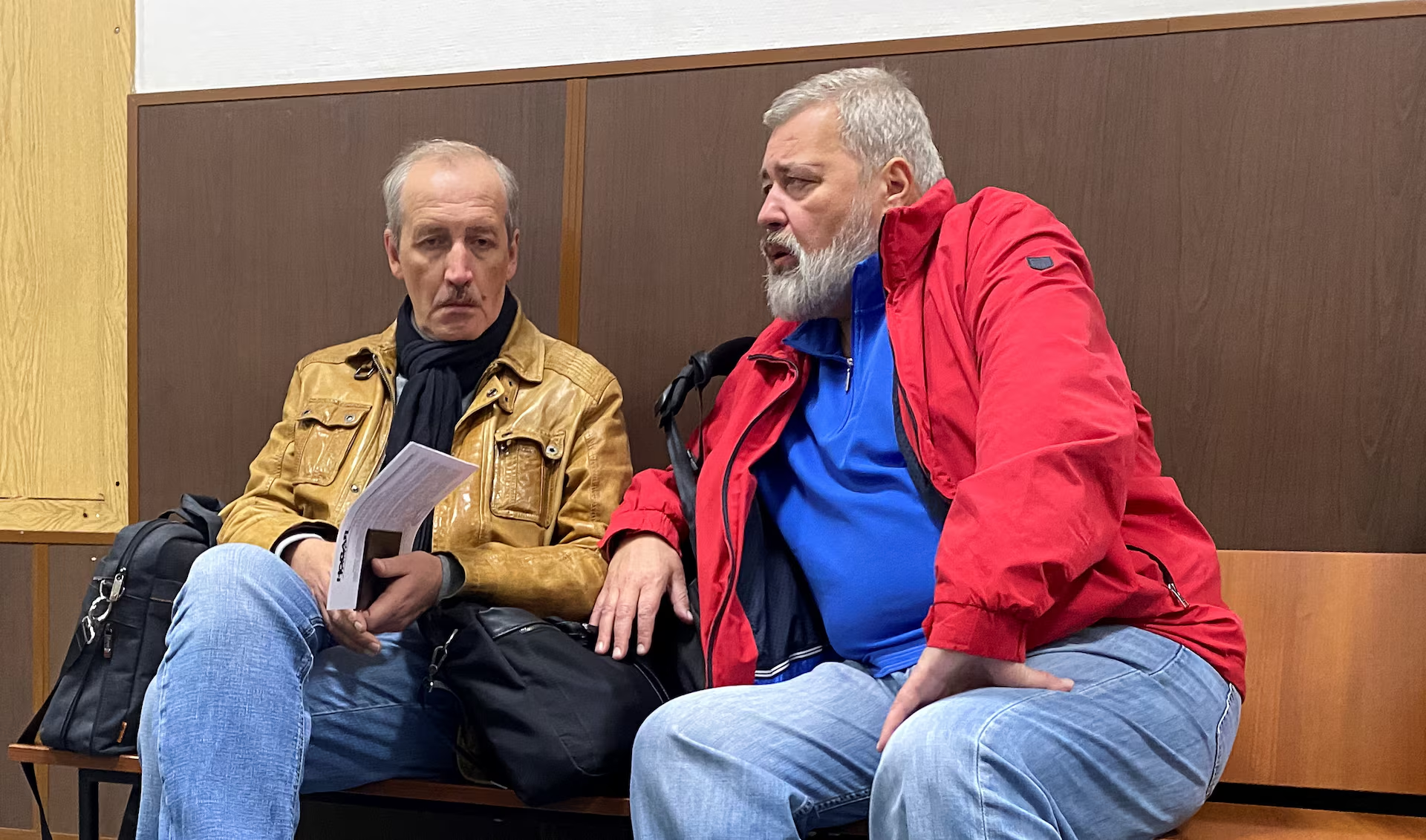
Sergei Sokolov, the newspaper’s editor-in-chief, announced the decision in a video statement published on Friday. He said the editorial team had been forced to end its work because of actions taken by Russian authorities and security services.
“Novaya Gazeta is ceasing to exist,” Sokolov said, describing the newspaper as having effectively been destroyed by official pressure.

The newspaper plans to shut down its remaining operations on 9 November. Sokolov said the organisation would turn off its servers and leave the premises where the newsroom had operated for around three decades.
The closure comes after a series of developments involving members of the newspaper’s staff. Earlier this month, Sokolov was questioned by Russian authorities and his home was searched as part of a criminal investigation involving one of his colleagues.
The case concerns journalist Oleg Roldugin, who was arrested in April and charged with unlawful access to computerised information. Russian authorities have provided limited public detail about the allegations.
Roldugin has denied the accusations, according to Russian state media, and remains under house arrest while awaiting trial. His detention has reportedly been extended until 10 November, the same day Novaya Gazeta plans to complete its shutdown.
For Sokolov and the newspaper’s staff, the events surrounding Roldugin’s case appear to have been the latest in a much longer period of pressure on independent journalism.
Novaya Gazeta has been one of the most prominent independent newspapers in Russia, developing a reputation for investigative reporting and for publishing material that challenged official narratives.
Its journalists have reported on corruption, political repression, human rights violations and the conflicts involving Russia. That work has repeatedly brought the newspaper into conflict with authorities.
The political environment for independent media deteriorated dramatically after Russia launched its full-scale invasion of Ukraine in February 2022.
Since then, Russian authorities have introduced increasingly restrictive measures against independent journalists, media organisations and civil society groups. Many journalists have left the country, while others have continued working from abroad.
Novaya Gazeta itself was forced to reduce its operations inside Russia following the invasion. Later in 2022, Russian authorities revoked the newspaper’s media licence, severely limiting its ability to operate as it had done previously.
The newspaper was also designated a foreign agent, a classification that Russian authorities have increasingly used against media organisations, journalists and other groups viewed as politically inconvenient.
The designation carries legal and administrative requirements and has become a significant obstacle for organisations seeking to operate independently.
The closure of Novaya Gazeta therefore represents more than the end of a single newspaper. It is another indication of how dramatically Russia’s media environment has changed over the past several years.
Before the war in Ukraine, independent newspapers and broadcasters still operated within Russia despite facing significant political and financial pressure. The space available for such organisations has narrowed substantially since 2022.
Novaya Gazeta’s history makes its closure particularly significant.
The newspaper became internationally recognised for its willingness to investigate powerful individuals and institutions. Its journalists often worked on subjects that carried considerable personal risk.
The organisation’s former editor-in-chief Dmitry Muratov became one of the most prominent representatives of Russian independent journalism. In 2021, Muratov jointly received the Nobel Peace Prize for his efforts to protect freedom of expression.
The Nobel committee recognised Muratov and the journalist Maria Ressa for their work defending freedom of expression under difficult political circumstances.
Muratov’s award brought international attention to the newspaper and highlighted the importance of independent journalism in societies where governments exert significant control over information.
The newspaper’s staff has also paid a heavy price for its reporting. Novaya Gazeta journalists have faced threats and intimidation over the years, while some of the organisation’s reporters became symbols of the risks associated with investigative journalism in Russia.
Despite those pressures, the newspaper continued publishing for decades.
Its eventual closure demonstrates the extent to which the operating environment has changed.
The decision also comes at a time when Russian authorities maintain strict control over reporting concerning the war in Ukraine. Independent accounts that contradict official government narratives can expose journalists and media organisations to legal consequences.
The authorities argue that restrictions are necessary for national security and to prevent what they describe as false information or foreign interference. Critics, however, say the measures have been used to suppress dissent and eliminate independent reporting.
The dispute over the media environment has become part of a broader confrontation between the Russian government and independent civil society.
For journalists, the consequences have been particularly severe. Numerous reporters have left Russia, established organisations abroad or continued working remotely. Others have stopped journalism altogether because of legal or personal risks.
The closure of Novaya Gazeta is therefore likely to resonate far beyond its own newsroom.
For readers who relied on the newspaper for investigations that were not available through state-controlled outlets, its disappearance represents a major loss of an independent source of information.
For Russian journalists, meanwhile, the decision may reinforce concerns that there is increasingly little room inside the country for organisations willing to challenge official accounts.
Sokolov’s announcement carried a strong sense of finality. His description of the newsroom being forced to close reflected the belief among its staff that the pressure had reached a point where continued operations were no longer sustainable.
Yet the legacy of Novaya Gazeta is unlikely to disappear with the shutdown of its physical newsroom.
The newspaper helped establish a tradition of investigative reporting in Russia that influenced generations of journalists. Its reporting demonstrated that independent journalism could continue to operate even in an increasingly difficult political environment.
The organisation also provided a platform for stories involving people who might otherwise have struggled to receive national attention.
That role became especially important as Russia’s broader media landscape became increasingly dominated by state-controlled television, government-aligned newspapers and heavily regulated digital platforms.
The closure also raises questions about the future of Russian journalism outside the country.
A significant number of former Russian journalists now work from exile, producing publications for audiences inside Russia and abroad. Digital technology has allowed some of those organisations to continue reporting despite restrictions and blocked websites.
But working from outside Russia does not eliminate the risks. Journalists and their families can still face pressure, legal threats and other forms of intimidation.
The Novaya Gazeta announcement is consequently being viewed within the wider context of a shrinking space for independent media.
For the newspaper itself, however, the immediate future is now clear. On 9 November, its remaining operations are expected to stop, its servers will be shut down and its newsroom will close.
The organisation that once operated from the same premises for approximately 30 years will no longer function in its traditional form.
The decision closes another chapter in the history of Russian journalism.
Novaya Gazeta survived political pressure, threats and repeated restrictions for decades. Its journalists continued working despite the risks, while its former editor received one of the world’s most prestigious international awards for defending freedom of expression.
But the post-2022 environment proved increasingly difficult for independent media organisations.

With its licence revoked, its activities restricted and members of its staff facing legal pressure, the newspaper has now concluded that it can no longer continue its work in Russia.
Its closure is therefore not simply the story of a newspaper shutting its doors. It is also a reflection of the profound transformation of Russia’s media environment, where independent reporting has become increasingly difficult to sustain.
For many readers and journalists, the final turning off of Novaya Gazeta’s servers on 9 November will represent the end of an era.
The newspaper may cease to exist as an operating newsroom, but its decades of investigations, its journalists’ work and its contribution to independent reporting will remain part of the history of Russian journalism.
Related News:
 Elif Eralp Emerges as Berlin’s Next Political Force
 French Students Protest Poor Conditions in Paris Suburbs
 Greta Thunberg Backs French Students in School Protests
 Serbia’s Student Victory Sparks a ‘Smell of Freedom’
 Spain Mourns 68 Dead After High-Speed Train Crash
 France Faces Record Presidential Crowded Race Amid Far-Right Surge
 Is America Ready for an AOC Presidential Run?
 Five Years of Taliban Rule Leave Afghanistan in Crisis
 Ukraine Villagers Demand Answers After Deadly Arms Depot Strike
 Europe’s democracies face a growing far-right threat
 Lib Dems Prepare for Election Amid Reform Challenge
 Madrid Tent Camp Grows as Spain Housing Crisis Deepens
 French Student Protests Escalate Into Violent Clashes
 Drumcree Talks Falter as Legal Challenge Deepens
 UK-France Returns Deal Faces Expiry as Talks Stall
 Green Party faces dispute over Zionism motion
 French School Protests Escalate as 400 Schools Close
 Bosnia’s Young People Look Beyond Election Hope
 Germany Pledges €1bn Military Aid to Ukraine
 Latin America women fear rollback of rights
 Spain Sets Snap Election as Housing Crisis Deepens
 Former German Intelligence Chief Arrested Over Espionage
 French Student Protests Grow Despite Government Pledge
 France Promises 3,000 Teachers as Student Protests Grow
 India’s Youth Movement Alleges Mass Detentions Before Protest
 Gaza War Deepens India’s Strategic Ties With Israel
 Bolsonaro Gains Key Endorsement Ahead of Brazil Runoff
 Controversial Vaccine Trial Approved in Guinea-Bissau
 France Faces Debt Crisis as Protests and Markets Clash
 Trump Attacks Norway After Nobel Peace Prize Snub
 Delhi Braces for Youth Protests Over Voter Roll Dispute
 Trump Names Katie Zacharia as Next White House Spokesperson
 UK Gaza Refugee Route Criticised Over False Hope Claims
 PTI Announces Swabi Rally Ahead of Long March Plans
 UK Greens Face Crisis Over Zionism and Extremism Row
 Millions Face Tougher Medicaid Rules From January
 Ohio Airports Become Key Hubs for ICE Deportation Flights
 Farage Rejects Claims Reform Would Let Troops Shoot Migrants
 Ukrainian Soldier Faces Trial Over Nord Stream Blast
 Gadi Eisenkot: Israel’s Anti-Netanyahu Challenger
 French Police Face Scrutiny Over Injured Teenagers
 Trump Slams Ukraine Strikes as Russia Ceasefire Collapses
 Macron Condemns Violence as France Faces 2,400 Arrests
 Milan Luxury Stores Shut as Italy Plans Troop Deployment
 Milan Braces for Unrest as Debate Intensifies Over Lost Generation
 France to Deploy 70,000 Police Amid Unrest Fears
 Ukraine Peace Talks Set to Resume in November
 Taylor Faces Backlash Over Response to Haines Attack
 Trump’s Midterm Campaign Faces Racism and Political Backlash
 McKenzie Warns MP Safety Fears Could Weaken Democracy
 King Charles Faces Calls for Slavery Reparations Talks
 Obama Mocks Trump at Georgia Rally for Democrats
 Albania Introduces $6,000 Fines for Violent Protests
 Italian Town Buys Mussolini Villa to Keep Away Fascist Fans
 US ‘Narco Boat’ Strikes Draw Global Outcry
 Pope Meets Families in Italy Toxic Waste Zone
 Farage and Reform UK Reshape British Politics
 Starmer Leadership Under Pressure After Setbacks
 England and Norway Fans Turn Miami Into World Cup Carnival
 Ghent Professors Questioned Cofnas Appointment
 Bayeux Tapestry Revives Franco-British Ties
 Trump Calls Iran War ‘Small Potatoes’ Despite US Deaths
 Turkey LGBTQ Crackdown Expands With New Arrests
 US Networks Suspend Trump White House Pool Coverage
 Democrat Says ICE Restricted Detention Camp Oversight
 Republican Senator Questions Trump Ad Spending
 Free Speech Emerges as Key UK Election Issue
 Burnham Opens Door to Possible UK Return to EU
 Badenoch Raises Prospect of 2027 UK Election
 France Schools Protests Draw 250,000 as Police Clash
 Trump Says He Deserves Nobel Peace Prize
 Australian Advocates Seek Subsidised Drugs for PMOS
 Trump Names Katie Zachariah as Next White House Press Secretary
 Brazil Court Scandal Threatens Lula as Bolsonaros Rise
 India’s Voter Roll Crisis Sparks Nationwide Protests
 Greens Face Leadership Test as Jordon Steele-John Misconduct Claims Leave Party in Limbo
 Lula Supporters Make Final Push Ahead of Brazil Runoff
 Fire Engulfs Hitler’s Eagle’s Nest Retreat
 Xi Jinping Tightens China’s Anti-Corruption Campaign
 Trump’s Global Policies Put Republicans at Risk