Albania has introduced fines of up to $6,130 for people who remain at demonstrations that turn violent, even if they do not personally engage in violence, as the government seeks to contain months of anti-government protests that have shaken the capital, Tirana. The measures, adopted by Prime Minister Edi Rama’s government, have intensified debate over public order, political accountability and the right to peaceful assembly in the Balkan country.
The new rules allow authorities to impose financial penalties on people who remain in crowds involved in violence or looting in public spaces, as well as those who conceal their identities under the circumstances specified in the measures. The maximum fine of 500,000 Albanian leks is equivalent to approximately €5,500 or $6,130, making the penalty particularly significant in a country where average monthly earnings are considerably lower.
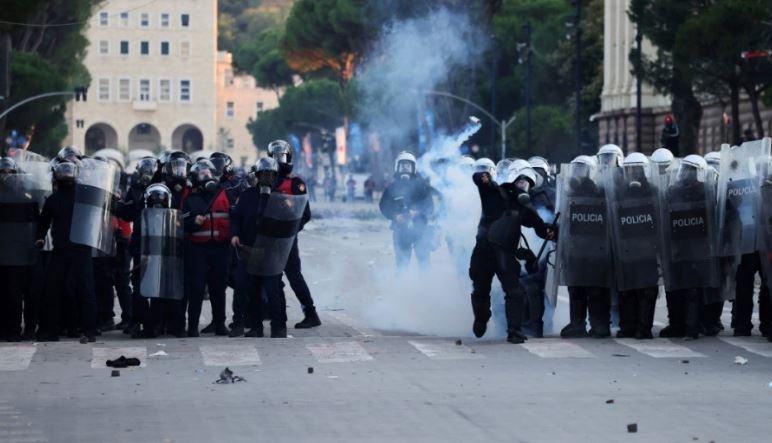
The decision comes after months of demonstrations that began over a controversial development project and subsequently developed into a broader protest movement against alleged corruption, weaknesses in public services and limited economic opportunities for young people. In recent days, clashes between demonstrators and security forces in Tirana have become increasingly confrontational, prompting the government to introduce stricter measures to control public gatherings.

The legislation has immediate effect but must receive parliamentary approval within 45 days to remain in force. That deadline creates an important period for lawmakers to consider the provisions, debate their implications and determine whether the government’s approach should become a lasting part of Albania’s legal framework.
The protests initially emerged in May, when demonstrators opposed plans for a luxury hotel project in a nature reserve. The development, backed by Jared Kushner, the son-in-law of US President Donald Trump, became a focal point for concerns about environmental protection, the influence of wealthy investors and the transparency of major development projects.
What began as opposition to a particular project gradually developed into a wider expression of public dissatisfaction. By mid-October, student-led demonstrations had expanded to include criticism of perceived corruption, problems within the healthcare system and the lack of promising career opportunities for young Albanians.
The country has a population of approximately 2.3 million, and concerns about employment, public services and future prospects have become important elements of the political debate. For many younger people, the protests represent an opportunity to demand greater accountability from political leaders and improvements in the institutions that shape their daily lives.
As the demonstrations continued, tensions between protesters and police increased. Several recent gatherings in Tirana deteriorated into clashes, with security forces confronting demonstrators amid a deteriorating public order situation. The escalation provided the immediate backdrop for the government’s decision to introduce more substantial financial penalties.
Under the new measures, authorities can fine individuals who choose to remain in a crowd engaged in violent acts or looting in a public place. The rules also address the concealment of identity and provide the police with additional powers to restrict gatherings temporarily in designated areas where officials believe there is a risk of violence.
Such restrictions may apply near educational establishments, healthcare facilities and government institutions. The government argues that these powers are necessary to protect public safety, prevent disorder and ensure that essential services and public buildings can continue operating without disruption.
However, the decision to penalise people who remain in a violent crowd, regardless of whether they personally commit violent acts, raises questions about how the rules will be enforced. A key issue will be whether authorities can reliably distinguish between individuals participating in violence, people attempting to leave a dangerous situation and peaceful demonstrators who happen to be present when clashes erupt.
The maximum penalty is particularly striking when compared with average earnings in Albania. The average monthly salary before tax is approximately €930, equivalent to around $1,026. A fine of €5,500 therefore represents almost six months of average gross salary and could place a substantial financial burden on ordinary citizens.
For people on lower incomes, the consequences could be even more severe. A large penalty could affect household budgets, savings and the ability to meet essential expenses. The scale of the fine is likely to become a central issue in discussions about proportionality, fairness and the circumstances in which financial sanctions should be imposed.
The government has also included provisions addressing online incitement to violence. Authorities are seeking to respond not only to confrontations in the streets but also to communications that could encourage or organise violent activity. The measures additionally provide for compensation for small businesses whose premises or property are damaged during demonstrations.
The compensation provisions could offer a mechanism for businesses affected by unrest to recover losses. Shops, restaurants and other small enterprises can be particularly vulnerable when demonstrations disrupt commercial areas, damage property or discourage customers from visiting city centres.
Nevertheless, the practical impact of the new rules will depend on how the authorities interpret and apply them. The effectiveness of the measures will also depend on whether enforcement is transparent, penalties are proportionate and individuals have access to appropriate procedures for challenging decisions.
Rama has defended the government’s approach while referring to similar initiatives elsewhere in Europe. On Sunday, the prime minister said he had drawn inspiration from a French legislative proposal intended to make demonstrators financially responsible for damage caused during street protests.
The French measure, which had passed the upper house of parliament on Wednesday according to the report, reflects a wider European debate about the balance between protecting the right to demonstrate and holding individuals accountable for damage and violence.
Governments across Europe face the challenge of responding to increasingly polarised public demonstrations. While authorities have a responsibility to protect people and property, restrictions on public gatherings can also affect fundamental freedoms when they are applied too broadly or without sufficient safeguards.
In Albania, the debate is especially sensitive because the protests have developed beyond a single development dispute into a broader challenge to the government’s credibility. Demonstrators have raised concerns about corruption, healthcare provision and the limited prospects available to young people, issues that extend beyond immediate questions of public order.
The government has repeatedly blamed what Rama describes as foreign actors for contributing to the unrest. The prime minister has accused Russia and Iran of driving online misinformation, although such allegations remain distinct from the question of who is responsible for individual acts of violence during demonstrations.
Rama has also called for dialogue, signalling that the government recognises the need for political engagement alongside its security response. Whether such dialogue can address the underlying grievances remains uncertain, particularly as the movement has grown to encompass a range of concerns and does not appear to have a single central leader.
The absence of a clearly defined leadership structure may complicate efforts to negotiate with demonstrators. Student groups, environmental campaigners and people concerned about public services may have different priorities, even when they share dissatisfaction with the government.
For the authorities, the immediate task is to prevent further violence without allowing the response to deepen public distrust. For protesters, the central concern is whether their grievances will receive meaningful attention and whether they can continue to demonstrate without facing disproportionate financial or legal consequences.
The parliamentary approval process will provide an important test of the new measures. Lawmakers will have to decide whether the provisions strike an appropriate balance between public safety and civil liberties, including whether the maximum fines and restrictions on gatherings are sufficiently clear and proportionate.
The 45-day deadline also creates uncertainty over the longer-term status of the rules. Although they have taken effect immediately, their continued operation depends on parliamentary approval. The debate could therefore become a significant moment in Albania’s wider discussion about the relationship between the government, law enforcement and citizens exercising their right to protest.
The economic consequences of the unrest also deserve attention. Persistent demonstrations and clashes can disrupt businesses, discourage investment and undermine confidence in the capital’s commercial environment. At the same time, unresolved concerns about corruption, public services and economic opportunity can create deeper problems if citizens believe their complaints are not being addressed.
The controversy surrounding the luxury hotel project illustrates how development decisions can become symbols of broader concerns about transparency, environmental protection and the influence of powerful interests. When such concerns intersect with frustrations over healthcare and employment, an initially local protest can evolve into a national political challenge.

Albania now faces a difficult choice about how to restore public confidence while maintaining order. Stronger penalties may deter some forms of violence, but their effectiveness will depend on fair enforcement and a credible response to the issues driving the demonstrations.
As the country approaches the parliamentary decision on the new measures, attention will remain focused on the streets of Tirana and the government’s handling of the protest movement. The coming weeks will help determine whether the tougher approach reduces violence or intensifies tensions between authorities and demonstrators.
Ultimately, the challenge for Albania is not simply to control public gatherings but to address the grievances that have brought people into the streets. A lasting resolution will require both effective protection against violence and meaningful engagement with citizens demanding accountability, better public services and greater opportunities for the future.
Related News:
 French Student Protests Escalate Into Violent Clashes
 French School Protests Escalate as 400 Schools Close
 Macron Condemns Violence as France Faces 2,400 Arrests
 Milan Braces for Unrest as Debate Intensifies Over Lost Generation
 Serbia’s Student Victory Sparks a ‘Smell of Freedom’
 Hungary election: Orbán faces biggest test amid scandal
 France Faces Record Presidential Crowded Race Amid Far-Right Surge
 Trump’s Revenge Drive Deepens GOP Divide
 Former ICC prosecutor condemns US sanctions
 Irish Gangland Figure Fails in Dublin Election Bid
 Le Pen’s Popularity Holds Despite Conviction
 British Man Faces Deportation Threat in Sweden
 British widow says deportation from Sweden feels like a death sentence
 King Refers Jamaica Slavery Petition to Privy Council
 Elif Eralp Emerges as Berlin’s Next Political Force
 Madrid Tent Camp Grows as Spain Housing Crisis Deepens
 Burnham Opens Door to Possible UK Return to EU
 Drumcree Talks Falter as Legal Challenge Deepens
 UK-France Returns Deal Faces Expiry as Talks Stall
 Bosnia’s Young People Look Beyond Election Hope
 Latin America women fear rollback of rights
 Spain Sets Snap Election as Housing Crisis Deepens
 Lithuania Offers to Fund Permanent US Military Base
 France Suspends Stun Grenades After Student Injury
 French Student Protests Grow Despite Government Pledge
 France Promises 3,000 Teachers as Student Protests Grow
 EU Divisions Deepen Over Israel Policy
 Navi Pillay Wins Nobel Peace Prize for Justice
 Controversial Vaccine Trial Approved in Guinea-Bissau
 France Faces Debt Crisis as Protests and Markets Clash
 Trump Attacks Norway After Nobel Peace Prize Snub
 Delhi Braces for Youth Protests Over Voter Roll Dispute
 Delhi Detains Protest Leaders as Youth Rally Escalates
 French Students Protest Poor Conditions in Paris Suburbs
 Ten US Midterm Races That Could Defy Expectations
 Greta Thunberg Backs French Students in School Protests
 Ohio Airports Become Key Hubs for ICE Deportation Flights
 Farage Rejects Claims Reform Would Let Troops Shoot Migrants
 Ukrainian Soldier Faces Trial Over Nord Stream Blast
 Brazil Cuts Working Week to 40 Hours in Lula Election Boost
 Gadi Eisenkot: Israel’s Anti-Netanyahu Challenger
 Talarico Faces Tough Voter Test in Texas Senate Race
 Albania’s Rama Defies Calls to Quit Amid Student Protests
 French Police Face Scrutiny Over Injured Teenagers
 Trump Slams Ukraine Strikes as Russia Ceasefire Collapses
 One Nation Pledges $2,000 Baby Subsidy in Victoria
 Alberta Referendum Exposes Deep Divisions Over Independence
 Marseille Activist Defies France’s Powerful Drug Gangs
 Obama Warns Against Threat to Ilhan Omar’s Citizenship
 Milan Luxury Stores Shut as Italy Plans Troop Deployment
 Suu Kyi Appears in Rare Photos After Royal Gift
 Zelenskyy Accuses US of Delaying Ukraine Missile Supplies
 Alberta Voters Reject Push for Canadian Independence
 Fifth Foreign Firm Withdraws From Jerusalem Cable Car Plan
 Helen Haines Loses Both Legs After Alleged Attack
 French Fast-Track Courts Face Backlash Over Riot Cases
 Massive Student-Led Movement Marches in Belgrade Ahead of Serbian Vote
 Greens Face Leadership Test as Jordon Steele-John Misconduct Claims Leave Party in Limbo
 France to Deploy 70,000 Police Amid Unrest Fears
 US Midterms Could Reshape Trump’s Second Term
 Trump’s Midterm Campaign Faces Racism and Political Backlash
 Albanese Vows Swift Action on MP Safety Threats
 Spain Mourns 68 Dead After High-Speed Train Crash
 Farage and Reform UK Reshape British Politics
 England and Norway Fans Turn Miami Into World Cup Carnival
 Bayeux Tapestry Revives Franco-British Ties
 Democrat Says ICE Restricted Detention Camp Oversight
 Republican Senator Questions Trump Ad Spending
 Badenoch Raises Prospect of 2027 UK Election
 Gosport Protesters Clash With Police Over Migrant Rescue
 France Schools Protests Draw 250,000 as Police Clash
 Trump Says He Deserves Nobel Peace Prize
 South Africa Withdraws Directive on Asylum Applications
 Trump Names Katie Zachariah as Next White House Press Secretary
 Brazil Court Scandal Threatens Lula as Bolsonaros Rise
 India’s Voter Roll Crisis Sparks Nationwide Protests
 UK Visa Refusal Threatens Baby’s Family Christmas
 Lula Supporters Make Final Push Ahead of Brazil Runoff
 Fire Engulfs Hitler’s Eagle’s Nest Retreat
 UK Land Registry Plan Faces Opposition From Landowners