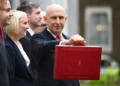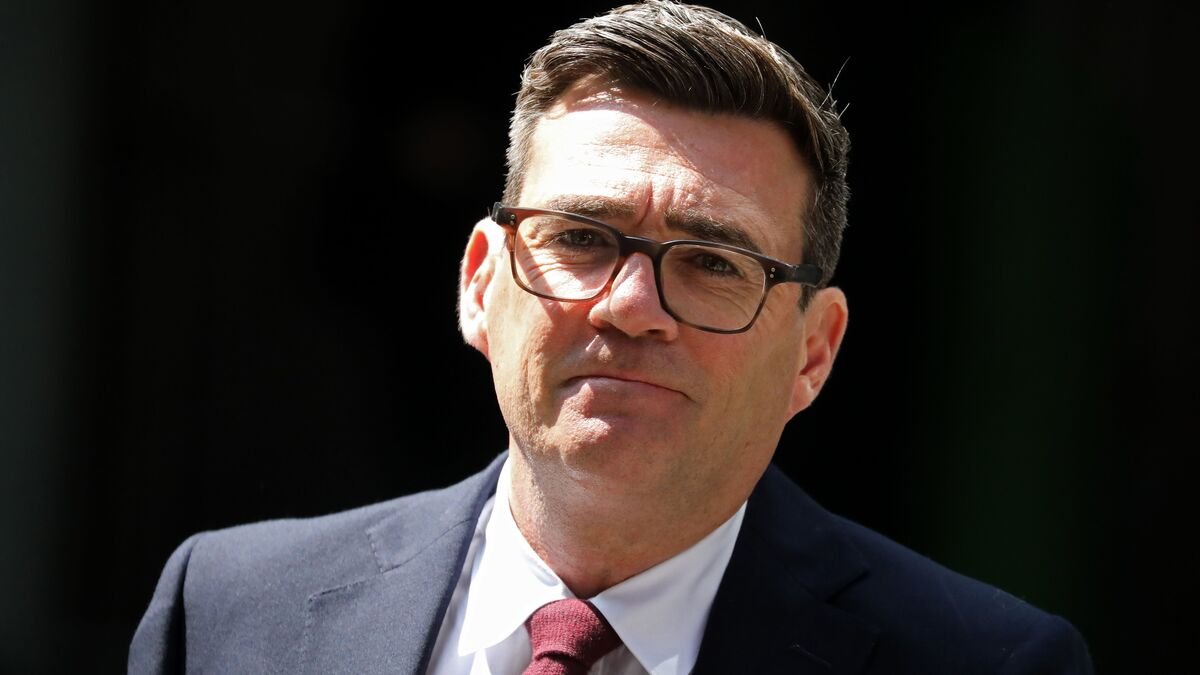
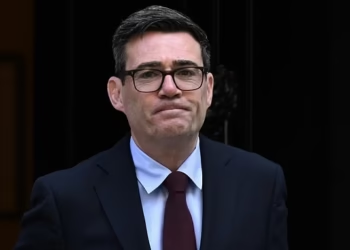
British Prime Minister Andy Burnham has acknowledged that his first budget did not go as far as he would have liked, admitting that economic uncertainty, international conflicts and restrictions imposed by Labour’s election manifesto limited the government’s ability to introduce more ambitious reforms. His comments have raised fresh questions about the gap between his promise of sweeping economic change and the relatively cautious measures announced by Chancellor John Healey.
Speaking after the budget announcement, Burnham said he had wanted to deliver a more radical package, including greater financial support for households struggling with energy costs. However, he argued that the government’s room for manoeuvre had been reduced by unpredictable global developments, particularly the war involving Iran, which has contributed to higher borrowing costs and increased uncertainty in financial markets.
The budget, presented by Healey on Wednesday, included a £100 payment for most households to help with energy bills during the winter. The government also announced measures intended to ease pressure on household finances, although critics have questioned whether the assistance is sufficient given the continuing cost-of-living challenges facing many families.

Burnham defended the payment as a significant intervention because it would reach approximately 20 million households. He also highlighted the decision to require banks to repay some of the financial support they received from the public around two decades ago, describing it as an important political and economic choice.
Nevertheless, the prime minister admitted that the budget was not the programme he would ideally have wanted to deliver. He argued that governments must make decisions according to the circumstances they face rather than pursue ambitious spending plans without considering economic conditions.
The remarks represent an important moment for Burnham, who entered office promising a fundamental change in Britain’s economic direction. Earlier this year, he described his political ambition as ending four decades of neoliberal economic thinking and pledged to pursue a more interventionist approach to the economy.
His broader programme has included proposals for higher taxes on wealth and the potential nationalisation of major utilities. These ideas helped establish expectations that his government would move quickly towards a more substantial redistribution of economic power and resources.
So far, however, the administration has concentrated on a series of comparatively limited measures. Burnham and Healey have defended the approach as an effort to give households some immediate financial breathing space while the government develops longer-term economic reforms.
Previous announcements have included plans to reduce the tax burden on electricity bills, introduce lower bus fares across England and take action against passengers who play music loudly through their phones on public transport. The measures have been presented as practical interventions designed to improve everyday life, although opposition politicians argue that they fall short of the transformation Burnham promised.
Conservative leader Kemi Badenoch criticised the budget, suggesting that many people would be disappointed by the scale of the announcements. Her response reflected a wider political challenge facing the government: delivering visible improvements to household finances while managing expectations created by promises of significant change.
Burnham’s comments also revealed the influence of Labour’s 2024 election manifesto on his government’s economic choices. The manifesto helped the party secure a landslide victory but included commitments not to increase income tax, national insurance or VAT. Those restrictions have limited the range of tax measures available to the government as it attempts to raise revenue and finance public services.
The prime minister acknowledged that he would not have written the manifesto in exactly the same way if he had been responsible for shaping it. He indicated that he would seek his own mandate when the opportunity arose, suggesting that future policy decisions could be based on a different set of commitments.
That statement could become significant as Burnham considers how to finance his longer-term programme. Higher public spending, expanded welfare support and major changes to public ownership would require difficult decisions about taxation, borrowing and the allocation of government resources.
For now, the government is attempting to balance immediate economic pressures against the need to maintain financial stability. The war involving Iran has added uncertainty to energy markets and borrowing costs, making it more difficult to predict the resources available for domestic programmes.
The budget has also exposed tensions over welfare reform. Burnham has said he wants to make major changes to the benefits system, with a particular focus on helping young people enter employment and reducing the number who become dependent on long-term financial support.
He is expected to outline more detailed proposals in the coming months after the publication of two major reports on the welfare system. One has been prepared by former minister Alan Milburn, while the other is associated with current minister Stephen Timms. Their findings are expected to inform the government’s approach to employment support, disability benefits and the wider structure of social security.
Burnham has sought to reassure people who rely on benefits that his reforms will not involve severe cuts that leave vulnerable individuals facing an immediate crisis. He said he did not want to see young people in their twenties receiving benefits when they could instead be supported into employment.
However, he made clear that people unable to work because of disability or other circumstances should not be treated in the same way as those who could reasonably enter the labour market. His comments suggest that the government intends to place greater emphasis on employment opportunities, training and tailored support rather than relying solely on reductions in benefit payments.
The challenge will be to develop a system that encourages employment without undermining the financial security of people who face genuine barriers to work. Disability organisations and welfare campaigners are likely to examine the proposals closely, particularly how the government defines eligibility and provides support for those with complex needs.
Defence spending is another issue placing pressure on the government’s financial plans. Some Labour politicians have criticised the administration for failing to move quickly enough to increase investment in the armed forces amid growing international security concerns.
Tan Dhesi, Labour chair of the defence select committee, accused the government of inaction earlier in the week. His criticism added to pressure on Burnham to demonstrate that the government is taking Britain’s military requirements seriously.
Defence Secretary Wes Streeting rejected the accusation, arguing that the government was already increasing defence investment and funding additional military capabilities. He said further details would be announced during the spending review and insisted that the government was taking immediate action rather than delaying decisions.
Streeting also indicated that additional defence spending could require difficult financial trade-offs in the coming year. He acknowledged that other government departments and taxpayers were already carrying part of the burden of prioritising military investment.
His remarks suggest that departments could face further spending restrictions as the government attempts to increase defence funding without breaching its wider fiscal commitments. Such decisions could create new political tensions, particularly if spending reductions affect public services already experiencing financial pressure.
The debate illustrates the competing demands confronting Burnham’s administration. Households want stronger protection from rising living costs, public services require additional resources, defence officials are seeking greater investment, and ministers are under pressure to reform welfare and immigration systems.
Each of these priorities requires funding, while the government’s ability to raise additional revenue remains constrained by existing political commitments and uncertain economic conditions.
Burnham’s first budget has therefore become an early test of whether his government can translate its ambitious political language into practical economic policy. His admission that the package was less radical than he wanted may help explain the cautious approach, but it also creates an expectation that more substantial changes will follow.

The prime minister is attempting to present the current measures as an initial stage rather than the final shape of his economic programme. His government argues that immediate support for households must be combined with longer-term reforms capable of improving productivity, employment and public services.
Whether that strategy succeeds will depend on the government’s ability to manage international economic pressures while maintaining public confidence at home. The coming months will be particularly important as ministers publish their welfare proposals, negotiate departmental budgets and prepare the next stage of their economic plans.
For Burnham, the central political challenge is to show that limited short-term measures can lead to the deeper transformation he promised. His first budget may have been shaped by circumstances beyond his control, but voters will ultimately judge the government by whether it delivers meaningful improvements to living standards, public services and Britain’s economic future.
Related News:
 Thinktank Calls for Abolition of UK State Pension
 Labour Fears Budget Will Fail to Lift Living Standards
 BBC News Faces Deep Cuts in 2,000 Job Plan
 Reeves Fights to Keep Treasury Role Amid Labour Turmoil
 UK Households Could Save £173 on Fixed Energy Deals
 Burnham Faces Mounting Budget Challenges
 UK House Prices Fall as Mortgage Rates Rise
 Thames Water Revises Oxfordshire Mega-Reservoir Plan
 UK Pay Growth Slows to 3.9% as Rate Decision Nears
 Bank Urged to Slow Bond Sales as UK Costs Rise
 UK Inflation Hits 3.1% as Household Pressure Grows
 UK Youth Jobs Gap Reveals Deep Regional Divide
 UK Rent Gap Puts Low-Income Families Under Pressure
 MPs Defend UK Economic Watchdog Against Critics
 Tony Blair Calls for Britain to Rejoin EU Within a Decade
 New UK Homes in Flood Zones Face Insurance Risk
 Burnham Opens Door to Possible UK Return to EU
 Poundland Rescue Bid Could Protect 11,000 Jobs
 Healey urged to act as UK energy bills rise 4%
 Badenoch Raises Prospect of 2027 UK Election
 London Council Warns of 150% Council Tax Rise
 Informa Agrees £2.24bn Deal to Buy Clarion
 Labour MP Urges Billions for Affordable Homes
 France Faces Debt Crisis as Protests and Markets Clash
 IFS Warns UK Budget Faces £35bn Spending Gap
IMF Raises UK Growth Forecast Ahead of Healey’s Budget
 Business Chief Urges Burnham to Fix Brexit Damage
 Cormann Warns Australia Against Populist Migration Caps
UK Borrowing Hits £24.5bn Ahead of Healey’s Budget
 Tax Online Sales to Save High Street, Burnham Urged
Brexit Deal Not Good Enough for Britain, Burnham Says
 Labour MPs Urge Burnham to Lead UK Reindustrialisation
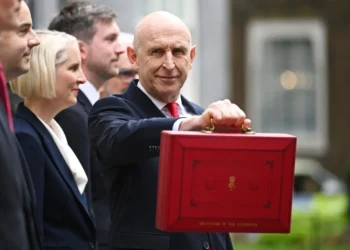 UK Budget Leaves Households Facing Higher Energy Bills
 UK Side-Hustle Tax-Free Limit to Rise to £3,000
 UK Doubles Steel Tariffs to 50% to Protect Domestic Plants
 UK Pushes for New EU Goods Trade Deal
 UK rejects EV charging VAT cut amid Treasury clash
 Burnham unveils £65m drought aid for farmers
 UK Subsidence Claims Surge After Record-Breaking Summer
 Reform Faces Fresh Financial Controversy
 Oil nears $100 as Saudi attacks shake markets
 John Lewis Losses Widen to £124m as Confidence Falls
 UK Retailers Accused of Breaking Refund Laws
 North Sea Firms Urge Early End to Windfall Tax
 Mayors Could Gain Greater Powers Over Water Firms
 Entain Plans 400 Job Cuts After Profit Update
 Trump Threatens EU With Tariffs Over Canada Proposal
 Trump Threatens EU Over Canada Partnership Proposal
 UK Retail Sales Rebound as Consumers Spend More
 Reform UK Faces Internal Debate Over £72m Spending
 Calls Grow to Expand UK National Wealth Fund
 Labour Apprenticeship Scheme Faces Slow Start
 AO Acquires Jessops in Camera Retail Expansion
 Saudi intercepts Houthi missiles as oil fears grow
 Should Savers Lock Into 5.25% Fixed Rates?
 UK house price growth slows as mortgage rates rise
 UK borrowing costs surge as global bond sell-off deepens
 UK Assures Public Over Diesel Supply
 UK Diesel Reaches £2 as Inflation Surges Across Europe
 Minister Rejects Fears of UK Diesel Shortage
 BT Agrees £400m TalkTalk Rescue Deal
 EU-China Talks Target Surge in Hybrid Car Imports
 IMF Warns Governments Over Rising Debt Burdens
 Ministers Push ATO to Reconsider Credit Card Ban
 Milburn Proposes Pre-Apprenticeship Route for Young People
 IMF Warns Global Economy Is Nearing Its Limits
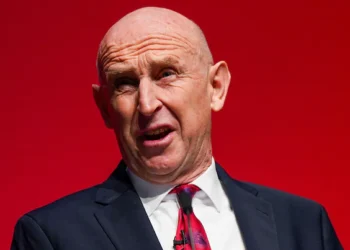 Healey Plans £1bn Online Marketplace Tax Crackdown
 UK Water Firms Face £107m Bill Reduction Penalties
 UK Could Rejoin EU Through a Switzerland Plus Deal
 UK Plans Higher Training Costs for Older Apprentices
 UK Unemployment Falls to 4.7% as Vacancies Decline
 Middleton Revitalisation Blueprint for UK Towns
 UK Consumer Confidence Plunges at Fastest Rate Since Brexit Vote
 UK Land Registry Plan Faces Opposition From Landowners
 UK Chancellor Moves to Scrap Gas Standing Charges
 Healey Set to Scrap Planned Cut to Cash ISA Allowance
 Fed Expected to Hold Rates Steady Ahead of US Midterms
 Albanese Faces Labor Pressure as Inflation Hits 4.3%
UK Devolution Plan Faces Test Over Regional Inequality
 MPs Urge UK to Write Off Most British Council Debt