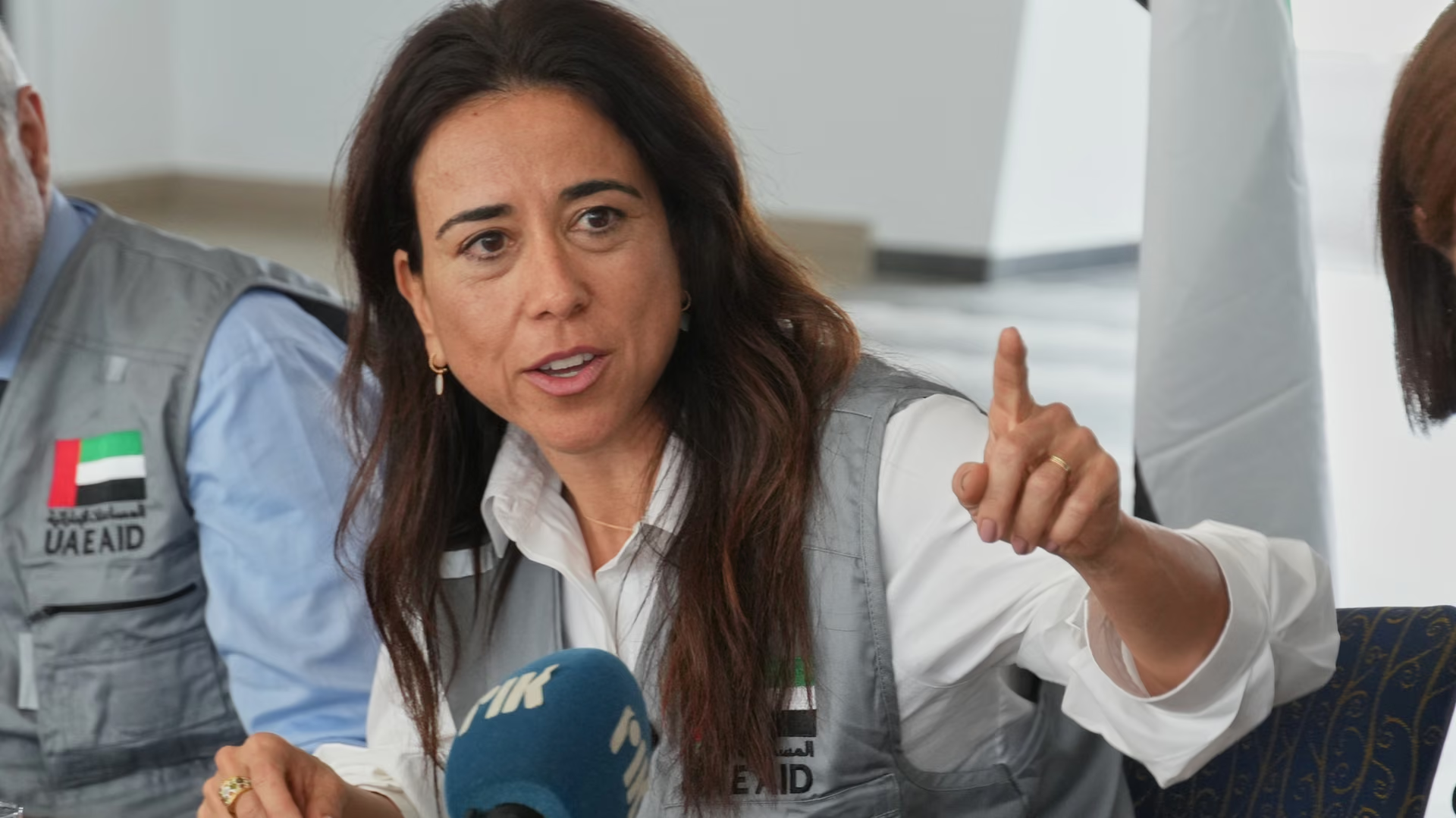
The nomination of senior Emirati diplomat Lana Nusseibeh for the position of United Nations secretary-general has triggered strong criticism from Sudanese diaspora communities and international human rights organisations, raising questions about political independence, accountability and the credibility of the world’s most influential multilateral institution. Critics argue that her previous defence of the United Arab Emirates against allegations of supporting Sudan’s paramilitary Rapid Support Forces (RSF) makes her an unsuitable candidate to lead the United Nations at a time when millions of Sudanese civilians are suffering from a devastating conflict.
The controversy has emerged at a particularly sensitive moment for the international organisation as its current secretary-general, António Guterres, approaches the end of his second five-year term. The UAE nominated Nusseibeh last week, significantly changing the dynamics of a leadership race that had already encountered considerable diplomatic difficulties. Although her candidacy has introduced a new dimension to the selection process, it has also intensified scrutiny of the UAE’s international policies and its alleged involvement in Sudan’s ongoing war.
For Sudanese activists and human rights advocates, the central concern is not simply Nusseibeh’s diplomatic background but her previous public statements concerning allegations of Emirati support for the RSF. The paramilitary organisation has been accused of widespread atrocities against civilians during its conflict with the Sudanese Armed Forces. Human rights organisations and international monitors have documented serious violations, including killings, sexual violence, forced displacement and attacks against civilian communities.

The UAE has repeatedly denied accusations that it provides military assistance to the RSF. Nusseibeh, who served as the country’s representative to the United Nations until 2024, has consistently reflected her government’s position and rejected allegations of Emirati involvement. However, critics argue that her previous statements raise questions about whether she could independently investigate or address allegations involving the country from which she comes.
The controversy is particularly significant because of the humanitarian consequences of the conflict in Sudan. Fighting between the Sudanese Armed Forces and the RSF has devastated communities, destroyed essential infrastructure and displaced millions of people. The conflict has also generated widespread international concern over allegations of ethnic violence and crimes against humanity.
One of the most disturbing episodes occurred in El Fasher, the capital of North Darfur, where RSF fighters carried out a major attack in October 2025. The United Nations subsequently described the reported pattern of atrocities as having the hallmarks of genocide. The events surrounding the attack have become central to international discussions about accountability and the responsibility of external actors allegedly supporting armed groups.
Hala al-Karib, a Sudanese pro-democracy and women’s rights activist who serves as regional director of the Strategic Initiative for Women in the Horn of Africa, strongly criticised Nusseibeh’s nomination. She argued that the Emirati diplomat had not demonstrated a record of acting independently from her government’s position on Sudan.
Al-Karib warned that approving the nomination through the Security Council could effectively undermine recognition of the atrocities committed in El Fasher. Her criticism reflects a broader concern among Sudanese civil society groups that appointing a representative associated with a government accused of supporting one of the conflict’s principal armed parties could weaken confidence in international accountability mechanisms.
Similar concerns were expressed during a virtual briefing organised by the international human rights advocacy organisation Avaaz. Participants argued that the selection of a new secretary-general should prioritise independence, impartiality and a demonstrated commitment to protecting civilians, particularly in situations involving allegations against powerful governments.
Ibrahim Alduma, who grew up in El Fasher and co-founded the human rights organisation Sudan Action Hub, warned that Nusseibeh’s appointment could further damage public confidence in the United Nations. He questioned how Sudanese civilians could trust the organisation to defend their rights if its highest leadership position went to someone who had previously defended a government accused of supporting an armed group responsible for serious abuses.
Alduma also emphasised that the implications would extend beyond Sudan. People affected by wars, international crimes and political violence in other parts of the world could also begin questioning whether the United Nations is genuinely capable of delivering justice when powerful states are involved.
Husam Mahjoub, a Sudanese advocate and co-founder of independent media organisation Sudan Bukra TV, also criticised the nomination. He argued that appointing a senior Emirati diplomat as secretary-general could place the leadership of international institutions in the hands of someone perceived as a defender of the UAE government’s position, precisely when Sudanese civilians need the United Nations to hold influential countries accountable.
Kenneth Roth, the former executive director of Human Rights Watch, expressed similar concerns during the Avaaz briefing. Roth argued that Nusseibeh had repeatedly dismissed allegations concerning the UAE’s role in supporting the RSF without adequately addressing the evidence raised by international observers and human rights organisations.
He questioned whether someone who had defended her government’s position so consistently could provide the independent leadership required of a United Nations secretary-general. Roth also maintained that the RSF would not have achieved the same level of military effectiveness without the alleged external assistance attributed to the UAE.
His comments reflect a wider debate about the international dimensions of Sudan’s war. Although the conflict is primarily being fought between rival Sudanese military forces, allegations of foreign support have complicated diplomatic efforts to end the violence. Human rights organisations have repeatedly called for greater scrutiny of external military assistance and stronger mechanisms to prevent the flow of weapons and resources to parties accused of committing atrocities.
On Wednesday, Bruno Stagno Ugarte, chief advocacy officer at Human Rights Watch, also criticised Nusseibeh’s position. He argued that her dismissal of United Nations reports documenting alleged connections between the UAE and the RSF had seriously undermined efforts to establish justice and accountability for victims.
However, Nusseibeh has defended her candidacy and attempted to address concerns about her ability to serve independently. In a statement issued on Tuesday, she described the RSF’s crimes as atrocious and said that, if elected secretary-general, she would support the work of United Nations fact-finding missions examining the conflict.
She also expressed support for accountability and transitional justice initiatives aimed at addressing violations committed during the war. According to her statement, the conflict in Sudan would serve as a critical test of the effectiveness and credibility of an incoming secretary-general.
Nusseibeh further stated that she had taken a leave of absence from her ministerial position in the UAE government to remain mindful of the independence obligations associated with the United Nations leadership role. Her position appears intended to reassure critics that she understands the importance of separating her future responsibilities from the interests of her home government.
Nevertheless, her assurances have not convinced several human rights advocates and Sudanese campaigners. Critics maintain that formal commitments to independence cannot automatically resolve concerns arising from a candidate’s previous public positions, particularly when those positions involve allegations of serious international crimes.
The selection process itself is expected to involve considerable diplomatic negotiations. To become the next secretary-general, a candidate must receive at least nine affirmative votes from the 15 members of the United Nations Security Council. In addition, the candidate must avoid a veto from any of the five permanent members: the United States, the United Kingdom, China, France and Russia.
The voting structure gives the permanent members substantial influence over the outcome. Even a candidate who secures broad support among other Security Council members can be blocked by a single permanent member exercising its veto power.
Before the UAE announced Nusseibeh’s nomination, former Costa Rican vice-president Rebeca Grynspan had emerged as a narrow frontrunner in an informal Security Council poll earlier in October. However, she and the other candidates reportedly received at least two opposing votes from permanent members, highlighting the difficulties facing the selection process.
Another informal straw poll could take place as early as Friday, although diplomats are still negotiating its format and precise timing. The results could provide a clearer indication of how the competing candidates are positioned and whether Nusseibeh’s nomination has the support necessary to advance.
Kate Ferguson, co-founder and co-executive director of the charity Protection Approaches, also questioned whether sufficient evidence existed to establish Nusseibeh’s independence from the UAE government. She warned that allowing national political interests to influence leadership of the United Nations could undermine the credibility of the organisation’s most important responsibilities.
The controversy comes at a time when the United Nations is facing growing pressure to demonstrate its ability to respond effectively to conflicts, protect vulnerable populations and hold powerful actors accountable. Its secretary-general plays a significant role in diplomatic negotiations, humanitarian coordination and international advocacy, making independence and public confidence essential qualifications for the position.

For Sudanese communities affected by years of violence, the leadership question carries particular emotional and political importance. Many families have lost relatives, homes and livelihoods, while millions remain displaced and dependent on humanitarian assistance. Their demand for justice is closely connected to the expectation that international institutions will investigate alleged crimes without political favouritism.
As the selection process continues, Nusseibeh’s candidacy is likely to remain a subject of intense international debate. Her supporters will need to demonstrate that she can exercise independent leadership, while critics are expected to continue questioning whether her previous defence of the UAE’s position on Sudan is compatible with the responsibilities of the world’s top diplomatic office.
Ultimately, the controversy extends beyond one diplomatic appointment. It raises fundamental questions about the independence of international institutions, the accountability of powerful states and the ability of the United Nations to maintain the trust of people experiencing war and humanitarian suffering. For Sudanese civilians seeking justice, the next secretary-general’s approach to the conflict could become an important measure of whether the international community is prepared to defend its stated principles when political interests are at stake.
Related News:
 Israel Accused of Undermining Palestinian Life
 Israel Promotes Film Challenging Controversial Gaza Documentary
 Israeli Strike in Southern Lebanon Kills Seven
 Ukraine Villagers Demand Answers After Deadly Arms Depot Strike
 Miliband Rejects Chief Rabbi’s West Bank Warning
 Gaza Strike Kills Child and Paramedic
 Latin America women fear rollback of rights
 Iran Nobel Laureate Reveals Prison Torture and Fears
 Navi Pillay Wins Nobel Peace Prize for Justice
 Iran Crisis Tests Trump’s Global Leadership
 Cartel crackdown raises fears of fresh violence
 US ‘Narco Boat’ Strikes Draw Global Outcry
 Ebola outbreak in DRC overwhelms health system as cases surge
 Former ICC prosecutor condemns US sanctions
 New Footage Revives Peter Falconio Mystery
 Ukraine Creates Long-Range Strike Command
 Dreyfus Statue Finally Gets Permanent Paris Home
 Five Years of Taliban Rule Leave Afghanistan in Crisis
 Daughter Finds Bones in Parents’ Burned-Out Car
 Argentina Orders Return of Nazi-Looted Painting
 Trump Calls Iran War ‘Small Potatoes’ Despite US Deaths
 UN expert urges UK to rethink Israel policy
 Royal Crown Branded Enslaved Africans in Britain’s Slave Trade
 Saudi Pact Raises Risk of Pakistan Entering War
 South Africa’s Femicide Crisis Deepens
 Japan PM Backs International Criminal Court
 King Refers Jamaica Slavery Petition to Privy Council
 UK Pauses Chagos Deal Amid US Opposition
 Ukraine and Russia Escalate Long-Range Drone War
 Economic growth and political strain reshape Benin
 New Maps Reveal Gaza’s Vast Destruction
 Former German Intelligence Chief Arrested Over Espionage
 Israeli Settlers Assault Palestinian Photographer
 South Sudan Trauma Wards Struggle as Fighting Intensifies
 EU Divisions Deepen Over Israel Policy
 Controversial Vaccine Trial Approved in Guinea-Bissau
 Church of England Reparations Fund Faces Growing Backlash
 Senegal LGBTQ+ Crackdown Drives People Into Hiding
 Saudi Arabia Faces Outcry Over Execution of Former Minor
 Zelenskyy Says US Failed to Warn Kyiv of Russian Strikes
 Russia Strikes Kyiv After Agreeing to Resume Peace Talks
 Serbia’s Student Victory Sparks a ‘Smell of Freedom’
 Trump’s Midterm Campaign Faces Racism and Political Backlash
 King Charles Faces Caribbean Slavery Apology Demands
 Greene Pushes Epstein Files Amid Trump Fallout
 Venezuela Threatens Nobel Winner Machado with Fugitive Status
 Iran Defiance Grows Amid US-Israel War Pressure
 Injured Mojtaba Khamenei Elevated as Iran Leader
 Ben Roberts-Smith Denies War Crime Allegations in First Statement
 Trump Announces 3-Day Russia–Ukraine Ceasefire Deal
 Houthis Strike Saudi Arabia as Middle East Tensions Rise
 Former Diplomats Urge UK and France to Act on Palestine
 Europe’s democracies face a growing far-right threat
 Sweden Election Hangs on Far-Right Breakthrough
 Harrods Faces Dispute Over Fayed Abuse Compensation
 US Networks Suspend Trump White House Pool Coverage
 Democrat Says ICE Restricted Detention Camp Oversight
 Republican Senator Questions Trump Ad Spending
 Pilot and Passengers Help Save Flydubai Flight
 French School Protests Escalate as 400 Schools Close
 Yemen government launches offensive against Houthis
 Tigray rebels accused of recruiting boys as war returns
 Kenya Confirms First Ebola Case as Patient Dies
 Israel Marks Three Years Since October 7 Attack
 Trump Says He Deserves Nobel Peace Prize
 Sri Lanka Ex-First Lady Arrested Over Donation Probe
 South Africa Withdraws Directive on Asylum Applications
 Trump Rules Out Iran Attack Before US Elections
 Delhi Tightens Security Ahead of Election Protest
 French Students Protest Poor Conditions in Paris Suburbs
 Brazil Court Scandal Threatens Lula as Bolsonaros Rise
 Greta Thunberg Backs French Students in School Protests
 India’s Voter Roll Crisis Sparks Nationwide Protests
 Iranian Woman Faces Death Sentence Over Social Media Post
 Gadi Eisenkot: Israel’s Anti-Netanyahu Challenger
 UK Bill Faces Warning Over Fayed Trafficking Victims
 Xi Jinping Tightens China’s Anti-Corruption Campaign
 Flávio Bolsonaro Reportedly Leaves Brazil After Election Defeat
 Palestinian Parties Gain Power in Israel’s Election