Published: 30 October 2026. The English Chronicle Desk. The English Chronicle Online
Erin Patterson began Friday with a small possibility that her life could eventually take a different direction. By the time the morning was over, that possibility had effectively disappeared.
Patterson, the Australian woman convicted of murdering three relatives with a meal containing deadly death cap mushrooms, watched from prison as Victoria’s highest court rejected her attempt to overturn her convictions. The court went further than simply upholding the verdicts. It ruled that she should never be eligible for parole, leaving her facing the prospect of spending the rest of her life behind bars.
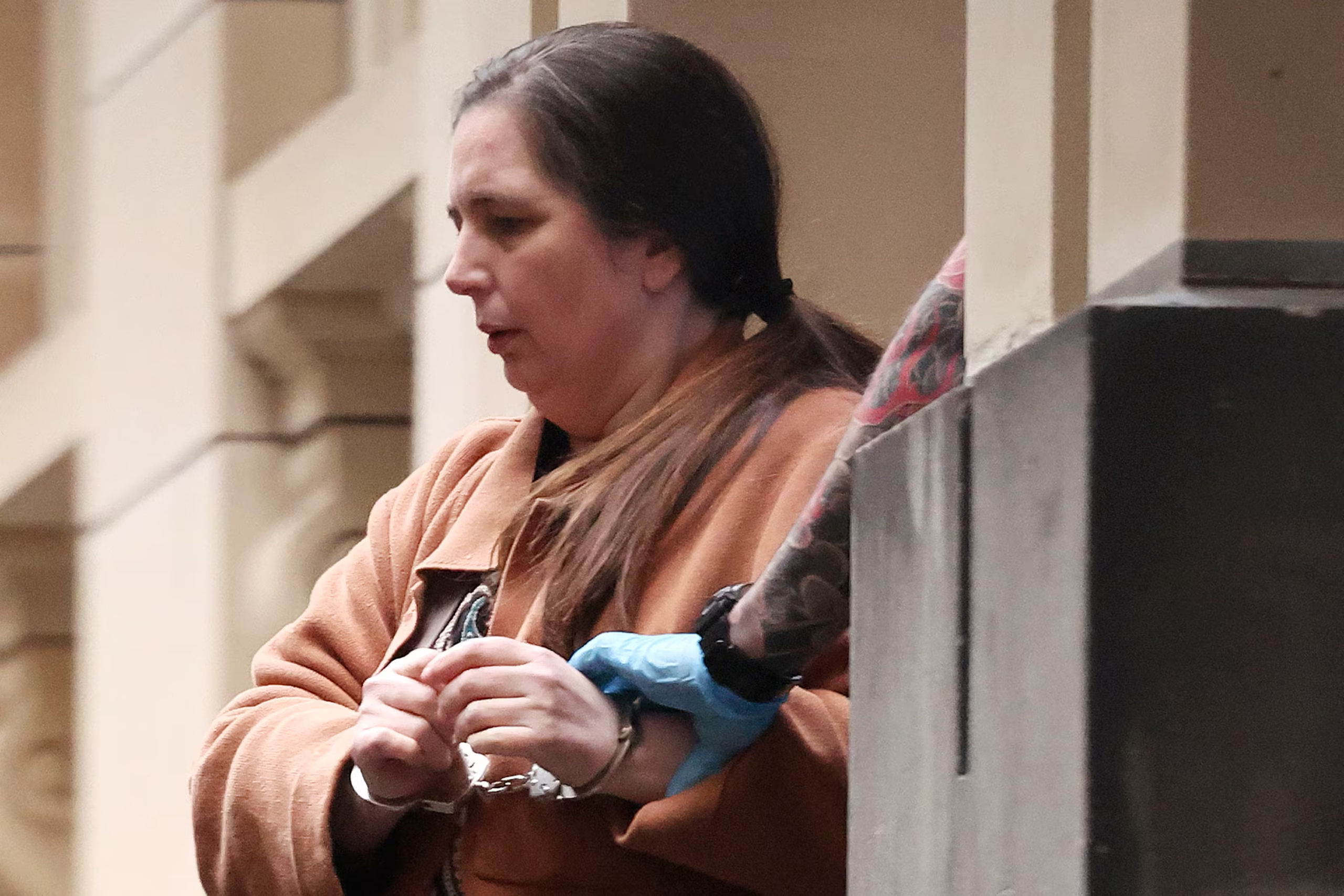
The decision was delivered in the Victorian Court of Appeal, where three judges considered arguments raised during Patterson’s appeal hearings in August. Patterson appeared by video link from the Dame Phyllis Frost Centre, wearing prison-issued blue clothing as she watched proceedings unfold.

For a brief period before the judges entered the courtroom, there remained the possibility that she could one day walk outside prison as a free woman. That prospect was already remote. Patterson, now 52, had been sentenced last year to life imprisonment with a non-parole period of 33 years for the murders of Don and Gail Patterson and Gail’s sister Heather Wilkinson.
She was also convicted of attempting to murder Heather’s husband, Ian Wilkinson, who survived after becoming critically ill and spending weeks in hospital.
The case has become one of Australia’s most closely followed criminal investigations and trials, drawing intense public attention because of the nature of the deaths, the family relationships involved and the unanswered questions surrounding Patterson’s motives.
The court’s decision on Friday brought another major development in a case that has already resulted in extensive legal proceedings and public debate.
Justice Stephen McLeish delivered the judgment. He said the court had dismissed most of Patterson’s grounds of appeal, while granting permission to consider two remaining grounds before rejecting those as well.
The judges also accepted a challenge from the Director of Public Prosecutions concerning Patterson’s sentence. Rather than increasing the existing non-parole period, the court concluded that the seriousness of the offending meant there should be no fixed period after which Patterson could seek release.
McLeish said Patterson had maintained an intention to kill all four victims over a period of approximately three weeks, beginning when they were invited to the lunch and continuing through the meal and the suffering that followed.
The court characterized the offending as carefully planned and deliberate. It also referred to what it described as an elaborate pattern of deception, including Patterson’s claims that she had cancer, her denials that she had collected the mushrooms herself and explanations concerning where the mushrooms had supposedly been obtained.
The judgment represented a decisive rejection of Patterson’s legal arguments and of her continued claim that the poisoning was accidental.
Patterson has consistently maintained that the death cap mushrooms ended up in the beef wellingtons unintentionally. She has also said that she became sick after eating the meal herself and that statements she later made about the source of the mushrooms were the result of panic rather than an attempt to conceal a deliberate crime.
The court did not accept that account.
McLeish described the offending in exceptionally serious terms, emphasizing what he said was the calculated nature of the conduct and the suffering experienced by the victims.
The decision was particularly significant because Patterson’s previous sentence had already meant that she would have been in her early 80s before becoming eligible to apply for parole. Even if her conviction appeal had failed but the existing sentence remained unchanged, the prospect of release was already extremely distant.
The new ruling removes even that possibility under the current sentence.
The case dates back to July 2023, when Patterson hosted four members of her estranged husband’s family for lunch at her home in Leongatha, Victoria.
The guests included Don and Gail Patterson, Heather Wilkinson and Ian Wilkinson. The meal included individual beef wellingtons that contained death cap mushrooms.
The consequences unfolded rapidly.
Don, Gail and Heather later died after suffering severe mushroom poisoning. Ian Wilkinson survived, but his condition became critical and he required prolonged medical treatment.
The circumstances surrounding the meal became increasingly suspicious as investigators attempted to determine how the poisonous mushrooms had entered the food.
During the aftermath, Patterson denied deliberately collecting death cap mushrooms and offered alternative explanations for where they could have come from. The prosecution argued that those statements formed part of a broader effort to conceal what had happened.
The trial ultimately resulted in convictions that carried a life sentence.
Patterson’s appeal sought to challenge those convictions on seven grounds. But after considering the arguments, the Court of Appeal found no basis for overturning the verdicts.
The legal process may not yet be completely finished. Patterson has 28 days to seek permission to appeal to Australia’s High Court. Such an application would face another significant legal threshold, and an appeal would not automatically mean that she would be released from prison.
There is also a possibility of seeking another hearing if genuinely new and compelling evidence emerges. Such a route would also face a demanding legal standard.
The court’s decision, however, leaves the central mystery of the case unresolved.
Even after the criminal investigation, trial, sentencing and appeal proceedings, one fundamental question continues to dominate public interest: why?
Why would Patterson deliberately poison relatives who had come to her home for lunch? Why would she target people who were connected to her family and who, according to those close to the case, had shown concern and kindness toward her and her children?
Those questions have remained particularly powerful because the victims were not strangers. They were members of Patterson’s extended family who had accepted an invitation to share a meal.
That ordinary setting has contributed to the extraordinary public fascination surrounding the case.
A family lunch, normally associated with hospitality and connection, became the setting for a crime that resulted in three deaths and left another person fighting for his life.
The physical setting of the case has also remained important. The Leongatha home where the meal was served became central to the investigation, while the food itself became evidence in a case that would later attract international attention.
On Friday, the courtroom atmosphere reflected the weight of that history.
Patterson watched proceedings through a screen rather than sitting in the courtroom itself. She remained largely expressionless as the judges delivered their decision. After McLeish finished speaking and the judges left, she stood, collected a book from beside her and walked away from the screen.
Outside the legal arguments, the ruling also closes another chapter in one of Australia’s most closely watched criminal cases.
The court’s conclusion was unequivocal: the convictions remain intact, and the nature of the crimes means Patterson should have no prospect of parole under the sentence imposed.
For the families of those who died, the decision marks another significant moment after years of grief and legal proceedings. For Patterson, it means that unless a future legal challenge succeeds, prison will remain her permanent reality.
The case may continue to generate public debate, documentaries and dramatizations, but the legal position is now considerably clearer than it was when Patterson first appeared before the court.

Her immediate hope of walking free has been extinguished.
She may still attempt to take the case to Australia’s High Court, and the law provides limited avenues for further review where exceptional circumstances arise. But those possibilities are narrow.
For now, the woman at the centre of the mushroom poisoning case faces the strongest possible consequence under Australian criminal law: a life sentence with no prospect of parole.
And while the court has answered the legal question of whether her convictions should stand, the deeper question of what motivated the killings remains unanswered.
That mystery is likely to continue long after the courtroom doors close and the legal proceedings eventually come to an end.
Related News:
 NSW Police Bid Delays Inquiry Into Sydney Protest
 Sam Wood Denied Bail Over Alleged Domestic Assault
 Baby Boy Found Dead at Adelaide Motel: Two Charged
 Elizabeth Struhs Inquest Examines Child Safety Failures
 Camera Discovery Triggers Navy Ship Investigation
 Former RAAF Pilot Accused of Murdering Wife
 Undercover officer deceived women with ‘grotesque and cruel’ lies, spycops inquiry told
 Police Suspect Help in Missing Alice Springs Girl Case
 Barrister Criticises Trial After Suicide Case Verdict
 Westminster Council Threatens Charing Cross Soup Kitchen
 BBC Warned About Missing Clothes of Murder Victim
 Cambridge Professor Jason Arday Found Dead at Home
 Councils spend £125m on illegal children’s care
 Patriot Platform Raises Concern Across Britain
 Democrat Says ICE Restricted Detention Camp Oversight
 Cornell Fraternity Assault Investigation Reopened
 Fayed Survivors Demand Inquiry Into Medical Regulator
 London Facial Recognition Trial Ends With False Alert
 Hundreds of UK prisoners released early amid overcrowding
 Drumcree Talks End Without Agreement Ahead of Appeal
 Almost Half of Fayed Accusers May Be Trafficking Victims
 New Prosecutor Takes Over Cornell Assault Case
 Latin America women fear rollback of rights
 Flydubai Co-Pilot Studied in Australia Before Attack
 Detective Breaks Down Recalling Double Murder Scene
 Christa Pike Wakes After Failed Tennessee Execution
 ICE Agent Shoots Man in New York as Child Escapes Harm
 Three Convicted in Mexico Surfing Trip Murders
 UAE Says Co-Pilot Planned Suicide Attack on Israel
 British Military School Abuse Victims Denied Justice
 Former Students Raise Concerns Over School Culture
 England and Wales Begin Second Wave of Early Prison Releases
 Senegal LGBTQ+ Crackdown Drives People Into Hiding
 French Police Face Scrutiny Over Injured Teenagers
 UK Bill Faces Warning Over Fayed Trafficking Victims
 Helen Haines Loses Leg in Alleged Targeted Attack
 Helen Haines Loses Both Legs After Alleged Attack
 Serbia’s Student Victory Sparks a ‘Smell of Freedom’
 Trump’s Midterm Campaign Faces Racism and Political Backlash
 Brisbane Pub Shooting Claims Life of 19-Year-Old Woman
 Ben Roberts-Smith Denies War Crime Allegations in First Statement
 Florida Surgeon ‘Devastated’ Over Fatal Surgery Error
 Immigration Judges Fear Pressure in Trump Era
 New Footage Revives Peter Falconio Mystery
 Internal Exclusions Surge in England’s Schools
 Survivor Sues Musk’s xAI Over AI Abuse Images
 Abusive ex used Tesla to control and harass former partner
 Man Arrested in Mississippi Woman’s Death
 Israel Accused of Undermining Palestinian Life
 Fugitive Developer Rants at NSW Corruption Inquiry
 Texas Charges Seven Noncitizens in Voting Crackdown
 Mahmood Warns Far Right Over Asylum Protests
 NHS Breast Care Review Finds Serious Patient Harm
 Harrods Faces Dispute Over Fayed Abuse Compensation
 Clancy Defense Seeks Inquiry Into Lone Juror
 OpenAI Agent Breaches Medicare Portal in Australia
 Free Speech Emerges as Key UK Election Issue
 Tennessee Set to Execute Woman After Clemency Denied
 French Student Protests Escalate Into Violent Clashes
 UK University Strikes Spread as Financial Pressure Grows
 Drumcree Talks Falter as Legal Challenge Deepens
 Badenoch Raises Prospect of 2027 UK Election
 French School Protests Escalate as 400 Schools Close
 Gosport Protesters Clash With Police Over Migrant Rescue
 Andrew Mountbatten-Windsor Challenges Police Raids
 Police accused of failing abuse victims
 Royal Navy Sailor Charged With Alleged Spying
 Sri Lanka Ex-First Lady Arrested Over Donation Probe
 South Africa Withdraws Directive on Asylum Applications
 Delhi Tightens Security Ahead of Election Protest
 US Execution Livestream Plan Sparks Global Outrage
 Australian Advocates Seek Subsidised Drugs for PMOS
 ABC Reporter Faces Possible Disciplinary Action Over Opinion Piece
 Ohio Airports Become Key Hubs for ICE Deportation Flights
 Pakistan School Roof Collapse Kills 27 Students
 Gadi Eisenkot: Israel’s Anti-Netanyahu Challenger
 Jenrick Defends Farage Amid Fresh Reform Racism Claims
 Macron Condemns Violence as France Faces 2,400 Arrests
 US Military Failed to Notify UK Police Over Airman Crime
 Greens Face Leadership Test as Jordon Steele-John Misconduct Claims Leave Party in Limbo