Published: 17 October 2026. The English Chronicle Desk. The English Chronicle Online
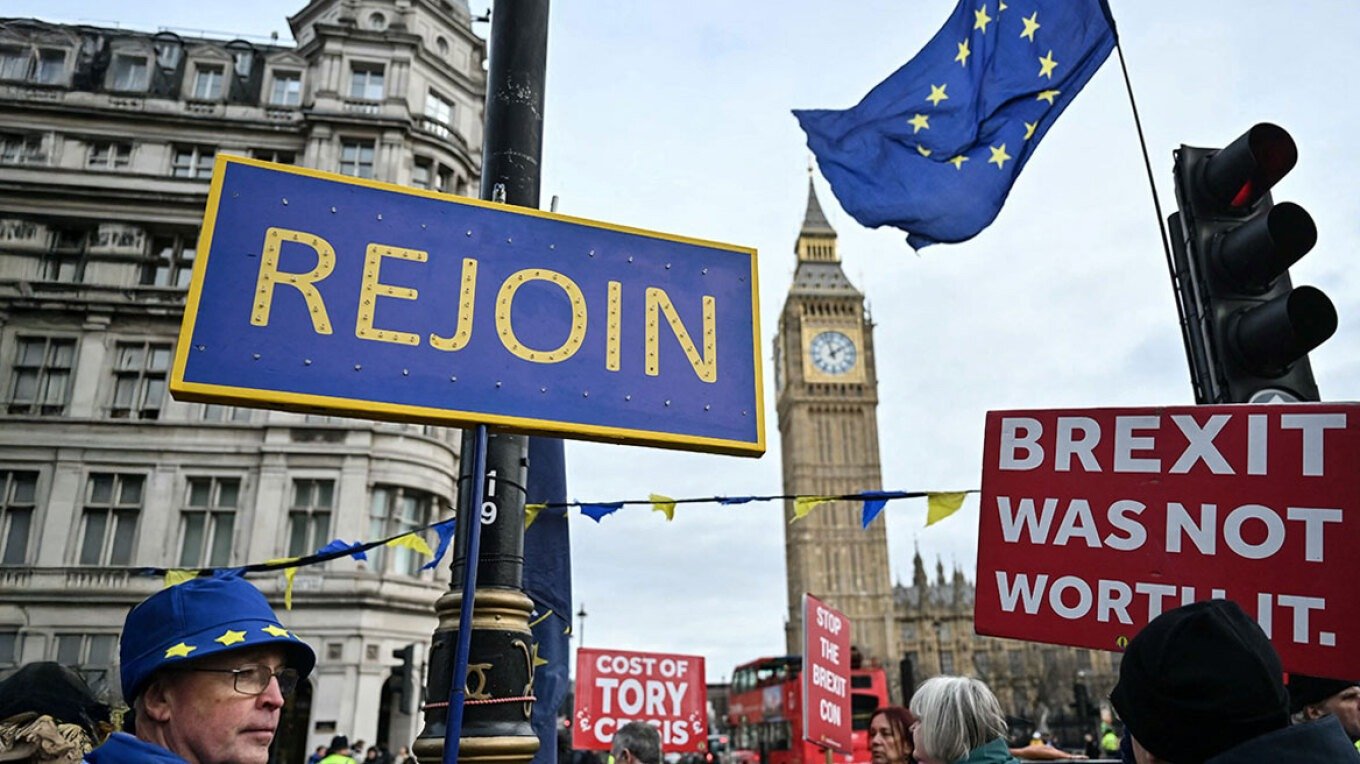
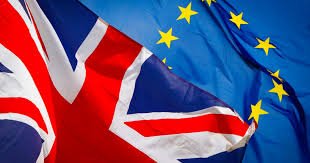
A decade after Britain voted to leave the European Union, Brexit is once again emerging as a significant issue in British politics, with growing public support for rejoining the bloc prompting renewed debate about the country’s economic future, political direction and relationship with Europe. As senior Labour figures consider closer alignment with the EU, new polling suggests that public attitudes towards Brexit have shifted considerably since the historic 2016 referendum.
Andy Burnham, one of the prominent figures in the Labour Party, has helped bring the issue back into the political conversation by arguing that Britain’s current relationship with the EU is no longer sufficient. His remarks have raised questions about whether the country should pursue closer cooperation with European partners or eventually consider the more ambitious step of rejoining the bloc.
The renewed discussion marks a notable change in British political discourse. For years after the referendum, many politicians avoided directly challenging the decision to leave the EU, wary of reopening divisions that had shaped elections, divided communities and contributed to prolonged political uncertainty. However, mounting economic concerns and changing public attitudes appear to be creating space for a more open debate about the consequences of Brexit.

In February 2016, former prime minister David Cameron warned that the referendum would represent a decision with lasting consequences. Speaking during the campaign ahead of the vote, he presented the choice between remaining in and leaving the European Union as a generational decision rather than a temporary political preference. His warning reflected the expectation that the referendum would settle Britain’s relationship with Europe for many years.
The outcome, however, has not ended the debate. Instead, Brexit has continued to influence British politics, trade policy, immigration discussions, economic planning and the country’s international relationships. Ten years after the referendum, a growing number of voters appear willing to reconsider whether leaving the EU delivered the benefits they expected.
Recent polling has provided fresh momentum to those calling for a reassessment. A large survey involving more than 11,000 respondents found that approximately half of Britons supported rejoining the European Union, while 28 per cent opposed the idea. The remaining respondents were undecided. The same polling indicated that almost 60 per cent believed the original decision to leave had been wrong.
Other research has suggested that support for rejoining extends well beyond traditionally pro-European areas. A survey conducted by More in Common in June found that, if a new referendum were held under the conditions examined by the researchers, only 11 of Britain’s 632 constituencies would vote to leave the EU. Even Clacton, the constituency represented by Reform UK leader Nigel Farage, recorded majority support for rejoining in the survey.
These figures indicate a substantial change in the political landscape, although they do not guarantee that voters would maintain the same position during an actual referendum campaign. Public opinion can change when political parties intensify their arguments, economic consequences are debated and voters are presented with the practical implications of a proposed constitutional change.
Several factors may help explain the shift. Rob Ford, a professor of political science at the University of Manchester, has highlighted demographic change, disappointment with Brexit and the growing influence of younger voters. People who were too young to vote in 2016 have since entered the electorate, while younger generations tend to be more supportive of European integration.
Demographic changes have also altered the composition of the electorate over the past decade. Some people who voted to leave have died, while others who did not participate in the original referendum are now eligible to vote. Together, these developments have gradually changed the balance of public opinion.
Another important factor is the gap between expectations and experience. During the referendum campaign, supporters of leaving the EU argued that Brexit would allow Britain to regain greater control over its laws, borders, money and trade relationships. Many voters also hoped that leaving would strengthen the domestic economy and create new opportunities for businesses and workers.
However, the economic benefits anticipated by some Brexit supporters have remained contested. Businesses have faced changes to trading arrangements, while additional administrative requirements have complicated certain commercial relationships with European partners. Some households and communities have also become increasingly concerned about living costs, employment opportunities and the broader economic outlook.
Karl Turner, the Labour MP who represented Hull East after the constituency voted heavily to leave the EU in 2016, has argued that the mood among some voters has changed. He said constituents had expected Brexit to improve their lives but were instead experiencing higher costs and fewer opportunities. In his assessment, more people are now prepared to consider the practical advantages of rejoining the European Union.
Economic considerations have become particularly important as Britain seeks to strengthen growth and protect domestic industries. The EU’s evolving industrial policy, including proposals associated with its Made in Europe agenda, has raised questions about whether British manufacturers could face disadvantages if the UK remains outside important European arrangements.
Closer cooperation could potentially improve market access and reduce certain barriers for British companies. However, the details would matter considerably. Any agreement would require negotiations with European institutions and member states, while the terms available to a country seeking to rejoin would not necessarily replicate the arrangements Britain previously enjoyed as an EU member.
Burnham has argued that maintaining the current position is not good enough for Britain. His approach has opened the door to a wider discussion about the available options, ranging from closer economic cooperation and regulatory alignment to the possibility of eventually seeking full EU membership.
The political implications could be significant for Labour. Many Labour supporters favour closer relations with Europe, and the issue could help the party reconnect with voters who believe the government has not adequately addressed the economic consequences of Brexit.
Sara Hobolt, a professor in the Department of Government at the London School of Economics, has suggested that the issue could become an effective political rallying point. According to her assessment, some voters have been frustrated by the reluctance of Labour leaders to discuss Brexit more openly. Raising the issue could energise parts of the party’s support base while placing pressure on political opponents.
The debate could also expose divisions among right-leaning parties. The Conservative Party has struggled to maintain a unified position on Europe, while some strongly pro-Brexit voters have moved towards Reform UK. Renewed scrutiny of Brexit could therefore create difficulties for political groups that depend on maintaining a consistent position on the issue.
Nevertheless, Labour faces considerable risks if it pushes the debate too far or too quickly. Many constituencies represented by Labour MPs voted to leave in 2016, and some voters remain deeply committed to the original decision. A renewed national argument over Europe could alienate these communities and recreate divisions that political leaders have spent years attempting to overcome.
There is also a difference between supporting closer relations with the EU and backing full membership. Voters may favour easier trade, stronger cooperation on security or improved access to European markets without necessarily supporting the obligations that could accompany rejoining.
Luke Tryl, director of More in Common, has warned that current support for rejoining should not automatically be interpreted as a guaranteed referendum victory. Although a campaign to rejoin might begin with an advantage, public opinion could shift as opponents raise questions about sovereignty, immigration, regulation, financial contributions and the terms of membership.
Brexit fatigue could also influence the outcome. After years of political disputes, economic uncertainty and successive national challenges, some voters may have little appetite for another prolonged campaign over Britain’s relationship with Europe. For these people, reopening the issue could appear to offer further uncertainty rather than a clear solution to the country’s problems.
The European Union’s position would also be crucial. Rejoining would require negotiations and agreement among EU member states, and Britain could not simply restore its former membership arrangements unilaterally. European leaders would need confidence that a future British government would maintain a stable commitment to membership rather than reverse course again after another change of government.
That uncertainty could make European governments cautious about engaging in detailed discussions while British political parties remain divided over the country’s long-term direction.
There is a further concern that Brexit could once again dominate political debate at the expense of other major challenges. Britain continues to face difficult questions involving productivity, public services, regional inequality, housing, industrial competitiveness and long-term economic growth. If the EU question overwhelms the national conversation, politicians may find it harder to develop consensus on these wider structural problems.
For Burnham and other politicians considering a more pro-European approach, the challenge will therefore be to explain what closer cooperation could deliver in practical terms. Voters are likely to demand evidence that a change in policy would improve living standards, strengthen businesses and expand opportunities, rather than simply reopen an old political dispute.

The return of Brexit to the political agenda does not mean Britain is certain to seek EU membership again. It does, however, suggest that the political settlement established by the 2016 referendum is no longer beyond question.
Public attitudes have evolved, economic concerns remain significant and political leaders are increasingly being pressed to explain whether the current relationship with Europe serves the country’s interests. The debate is now less about whether Brexit can be discussed and more about what Britain should do with the lessons of the past decade.
Ultimately, the future of the relationship will depend on whether support for rejoining can withstand sustained political scrutiny and whether Britain and the European Union can agree on mutually acceptable terms. For now, the renewed debate demonstrates that the question Cameron once described as a decision for life has returned to the centre of British politics, with voters once again considering what Britain’s future in Europe should look like.
Related News:
 UK Pushes for New EU Goods Trade Deal
 Reeves Fights to Keep Treasury Role Amid Labour Turmoil
 Green Leader Targets Starmer’s Former Seat
 Argentina to file criminal charges over Falklands oil drilling
 UK plans tougher Israel stance with settlement trade ban
 Burnham Leaves Door Open to Future Brexit Reversal
 Tony Blair Calls for Britain to Rejoin EU Within a Decade
 Burnham Opens Door to Possible UK Return to EU
 Report Urges UK to Rethink Overseas Military Spending
 France Urges UK to Consider Returning to EU
 UK Urges Interpol to Reject Argentina’s Falklands Arrest Requests
 UK Rejects EU Pressure to Impose Tariffs on China
 UK Could Rejoin EU Through a Switzerland Plus Deal
 British Woman in Iran ‘Losing Hope’ Amid Ongoing Detention
 BBC Journalist Held and Interrogated in Vietnam
 Trump’s UK Ambassador Urges North Sea Drilling to Strengthen US Ties
 Millionaires group urge Reeves to introduce wealth tax to ‘lift kids out of poverty’
 Canada Passes Carney’s First Budget in Tight Parliamentary Vote
 PM Highlights UK Business at G20 in South Africa
 India’s Labour Law Overhaul Sparks Fierce Debate
 Starmer Says Labour’s Economic Plan Needs Years to Deliver
 UK Government Borrowing Drops to £11.6bn in December
 Starmer Condemns ‘Depraved’ Russian Strikes on Ukraine
 UK shelves £110m border project amid trade strain
 Trump Tariffs Threat Spark UK and EU Alarm
 Reeves Must Back Defence Plan or Face Dismissal, Says Unite Chief
 OBR Reform Row Deepens Before Spring Forecast
 Gordon Brown urges court for crimes against children
 Trump to Deploy “God Squad” Over Gulf Wildlife Protections
 Army Probes Apache Flyover at Kid Rock’s Nashville Estate
 Relationship with Trump may be beyond repair, Starmer warned
 Trump Slams UK Ties and Threatens To Rewrite Trade Deal
 UK Stands Firm on Falklands Amid US Rift
 Capitalism ‘Suicidal’, Warns Petro at Climate Summit
 Oil Prices Surge Above $120 Amid Iran Blockade Fears
 Silent Tracks: Rail Line Without Passengers
 Trump approval plunges amid Iran war fears
 US Awaits Iran Reply on New Ceasefire Proposal
 Farage and Reform UK Reshape British Politics
 Starmer Leadership Under Pressure After Setbacks
 Andy Burnham Enlists Economic Heavyweights for Leadership Bid
 New South Wales Premier Chris Minns Signals Tough Road Ahead for Labor
 Ukraine Creates Long-Range Strike Command
 Burnham unveils £65m drought aid for farmers
 Unions Warn Labour Over Zero-Hours Contract Reforms
 Former Diplomats Urge UK and France to Act on Palestine
 Trump Hardens Canada Trade Stance as Talks Stall
 Bayeux Tapestry Revives Franco-British Ties
 Trump Calls Iran War ‘Small Potatoes’ Despite US Deaths
 Reform Faces Fresh Financial Controversy
 Swedish Mining Push Puts Sami Land Rights Under Pressure
 Europe’s democracies face a growing far-right threat
 Iceland to Open First UK High Street Store in Falklands
 Saudi Arabia Shuts Oil Pipeline After Drone Attack
 Trump Threatens EU With Tariffs Over Canada Proposal
 Tom Watson Takes Senior Role at Palantir
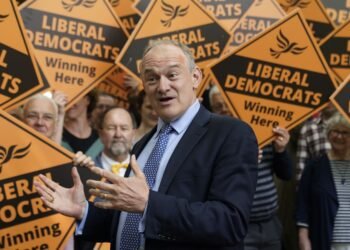 Lib Dems Prepare for Election Amid Reform Challenge
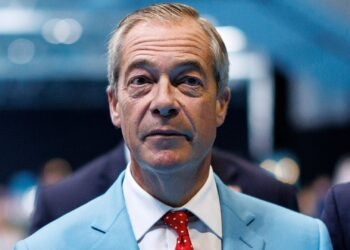 Reform UK Faces Internal Debate Over £72m Spending
 MPs Defend UK Economic Watchdog Against Critics
 UK Plans New Centre to Counter Information Warfare
 Xi urges Trump to avoid US-China military conflict
 Lula accuses Trump of seeking control over Brazil
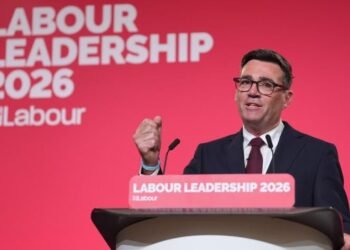 The Tests Awaiting Andy Burnham After Labour Conference
 Economic growth and political strain reshape Benin
 Drumcree Talks Falter as Legal Challenge Deepens
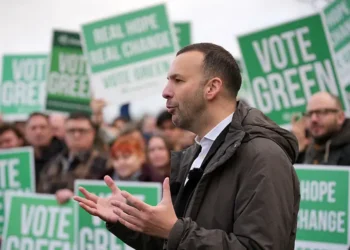 Green Party faces dispute over Zionism motion
 Badenoch Raises Prospect of 2027 UK Election
 UK Diesel Reaches £2 as Inflation Surges Across Europe
 South Korea Probes Fuel Shipments to Russia
 UK Mission in East Jerusalem to Remain Open
 Houthi Missile Claim Sparks Riyadh Airport Disruption
 Labour Wins Key London By-election as Greens Fall Short
 Trump’s Russian Diesel Deal Sparks Ukraine Fury
 Australia Rejects Russian Fuel as Trump Strikes Deal
 UK Must Build Its Own AI to Protect National Security
 IMF Warns Global Economy Is Nearing Its Limits
 Brazil Court Scandal Threatens Lula as Bolsonaros Rise
 Millions Face Tougher Medicaid Rules From January
 Trump Rallies GOP as Senate Democrats Boost Key Races
 Serbia Leader Linked to Controversial Trump Tower Plan