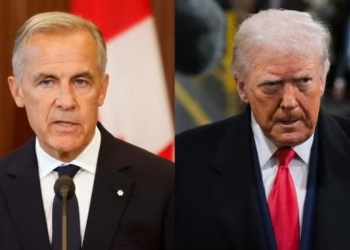
Canada has joined a growing international coalition of countries refusing to compete against Russian ice hockey teams while Moscow continues its full-scale invasion of Ukraine, deepening the sporting isolation facing Russian athletes. Canadian Prime Minister Mark Carney has confirmed that Russian players will not be allowed to represent their country at the upcoming world junior ice hockey championship scheduled to take place in Alberta next month. The decision reflects increasing opposition among several national hockey federations to Russia’s return to international competition, despite a recent ruling by the Court of Arbitration for Sport (CAS) that lifted a longstanding suspension on Russian teams.
The development has created a fresh dispute within international ice hockey, placing sporting organisations, national governments and tournament organisers in a difficult position. While the latest legal decision has opened the possibility of Russia returning to international competitions, several countries have made it clear that they are unwilling to participate in matches involving Russian teams as long as the war in Ukraine continues.
Carney announced Canada’s position while speaking to reporters on Tuesday. He said Russia and Belarus continued to support what he described as an illegal, unjustified and devastating war against Ukraine. As long as the conflict remained ongoing, he maintained, athletes from those countries would not be permitted to compete for their national teams in Canada.

Canada’s decision carries particular importance because the country has a long-standing international reputation as one of the leading nations in ice hockey. The sport occupies a significant place in Canadian sporting culture, and the country regularly hosts major international competitions. Its participation in the growing boycott could therefore influence how international organisers approach the question of Russian involvement in future tournaments.
The controversy follows a decision by the Court of Arbitration for Sport that overturned the International Ice Hockey Federation’s ban on Russian national teams. The suspension was introduced after Russia launched its full-scale invasion of Ukraine in February 2022. Since then, the international governing body has extended the restrictions annually, preventing Russian teams from participating in major international competitions.
Russia’s hockey federation challenged the restrictions through several appeals, arguing that the continued exclusion of its national teams was unjustified. On Friday, the Court of Arbitration for Sport ruled in Russia’s favour, concluding that concerns relating to safety and security had not been supported by sufficient evidence to justify the continued exclusion under the circumstances considered by the court.
The decision created the possibility of Russian teams returning to international ice hockey competitions. However, it also triggered immediate resistance from several national federations that believe sporting participation should remain restricted while the war continues. Their position highlights the growing disagreement between legal decisions governing international sport and the political and ethical concerns of individual countries.
Finland was among the first countries to respond publicly to the ruling. On Monday, the Finnish Ice Hockey Association called on other national federations to oppose Russia’s return and take a collective position on the matter. The appeal quickly received support from several European countries, demonstrating that opposition was not limited to a single national organisation.
Denmark, Sweden, Norway, Latvia and the Czech Republic subsequently announced that they supported Finland’s position. Norway was particularly clear in its response, becoming the first country in the latest wave of announcements to state that its national teams would participate in international tournaments against other countries but would refuse to play against Russia.
Norway’s ice hockey federation explained that its longstanding position on Russia’s exclusion from international championships remained unchanged while the war in Ukraine continued. The organisation also referred to its responsibility to protect the safety and wellbeing of players, coaching staff and their families.
According to the Norwegian federation, competing against Russian teams under the current circumstances could expose players and team officials to significant security risks. Its statement suggested that the decision was not simply a political gesture but also reflected concerns about the practical arrangements and potential consequences of participating in matches involving Russia.
The announcements from other European federations followed a similar approach, strengthening the emerging coalition against Russia’s return to international ice hockey. Although the countries may differ in their individual sporting and political circumstances, their decisions demonstrate a growing willingness to challenge the practical implementation of the arbitration court’s ruling.
Ukraine has welcomed the international resistance. Foreign Minister Andrii Sybiha thanked European countries for refusing to share the ice with Russian teams and called on the wider sporting community to maintain pressure on Moscow. He argued that international sport should not be separated from the wider consequences of military aggression.
In a public statement, Sybiha criticised the arbitration court’s position and urged national federations to consider the broader ethical responsibilities associated with allowing Russian teams to return. He also called on governments to deny visas to Russian players, arguing that sporting competition and a war of aggression were incompatible.
Ukraine’s position reflects its wider efforts to prevent Russia from regaining international recognition through sporting and cultural platforms while the conflict continues. Since the invasion began in 2022, Ukrainian officials and sporting organisations have repeatedly called for restrictions against Russian athletes and national teams across different international competitions.
The latest disagreement also raises questions about the relationship between international sports law and the independence of national sporting federations. Although the Court of Arbitration for Sport has removed the legal obstacle that previously prevented Russian teams from competing under the relevant international rules, individual countries and tournament organisers may still face practical, political and security-related decisions concerning participation and hosting arrangements.
The situation has become particularly sensitive because of the upcoming world junior ice hockey championship. The tournament is scheduled to begin on 26 December in Alberta, Canada, and is expected to attract considerable international attention. The participation of Russian players could now become a major source of disagreement between the tournament organisers and countries that have announced their refusal to play against Russia.
Canada’s position places additional pressure on international organisers to clarify how the competition will proceed. The country is not only a major participant in international ice hockey but also the host of the upcoming tournament. Its refusal to allow Russian players to compete for their country could create complications for the organisers if the governing federation seeks to implement the arbitration ruling.
The issue also presents a broader challenge for the International Ice Hockey Federation. The organisation must consider the legal implications of the arbitration decision while responding to the concerns of national federations that are unwilling to compete against Russian teams. If more countries adopt similar positions, international tournaments could face scheduling difficulties, participation disputes and uncertainty over their future arrangements.
The growing coalition could also influence other sporting organisations considering whether to restore Russian participation in international events. Russia’s exclusion from many competitions since 2022 has remained a contentious issue, with some organisations maintaining restrictions while others have explored ways to allow individual athletes to compete under neutral conditions.
Supporters of continued restrictions argue that allowing Russian national teams to return while the invasion continues would undermine the international response to the conflict. They believe that national representation in major sporting competitions carries political and symbolic significance, particularly when a country remains involved in a major military confrontation.
Those who favour broader sporting participation have generally raised questions about collective punishment and the rights of individual athletes. However, the latest developments demonstrate that several national federations remain unwilling to separate international sporting participation from the security and humanitarian consequences of the war.
For Canadian authorities, the decision also reflects the country’s broader position on the conflict. Ottawa has continued to support Ukraine and oppose Russia’s invasion through diplomatic and international measures. Carney’s latest announcement demonstrates that these concerns are also influencing decisions involving major sporting events hosted on Canadian territory.

The refusal by Canada and several European countries to play against Russian teams could make the country’s return to international ice hockey considerably more complicated, even after the arbitration court’s ruling. The dispute is no longer limited to the question of whether Russian athletes are legally eligible to participate. It has developed into a wider debate over whether international sporting communities should provide national platforms to countries involved in ongoing military aggression.
As the world junior championship approaches, attention will increasingly focus on the response of international hockey authorities and the decisions of other participating nations. Further countries could join the coalition, potentially increasing pressure on tournament organisers to reconsider the arrangements for the competition.
Ultimately, the dispute highlights how the war in Ukraine continues to affect international relations far beyond the battlefield. Four years after Russia launched its full-scale invasion, the conflict remains a defining issue in global diplomacy, sporting governance and international cooperation. Canada’s decision, alongside the growing European opposition, demonstrates that Russia’s return to international ice hockey will face considerable resistance despite the latest legal development.
Related News:
 USS Lincoln Ends Record 265-Day Deployment
 Trump Slams Ukraine Strikes as Russia Ceasefire Collapses
 Alberta Referendum Exposes Deep Divisions Over Independence
 Alberta Voters Reject Push for Canadian Independence
 Iran unrest slows under brutal crackdown and global tensions
 Thousands Protest ICE Operations in Nationwide US Day of Action
 Epstein Files Reveal Trump Officials’ Emails with Financier
 Thousands Protest ICE in New York Against Trump Deportation Campaign
 Yvette Cooper: UK Must Follow Principles, Not US Pressure
 A Global Voice For Justice: Stephen Lewis Dies At Age 88
 Ukraine Urges UK to Seize Russian Oil Tankers
 US Calls Australia Media Law “Foreign Extortion”
 Oil Prices Surge Above $120 Amid Iran Blockade Fears
 John Terry Faces Backlash Over Political Posts
 Trump orders US troop pullout from Germany
 Activists allege abuse after Gaza flotilla seizure
 FIFA Confirms Global Ban for Benfica Star Prestianni
 Tensions Emerge in Netanyahu-Trump Alliance
 France Faces Record Presidential Crowded Race Amid Far-Right Surge
 Discontent grows around Putin amid war strain
 Former ICC prosecutor condemns US sanctions
 Farage and Reform UK Reshape British Politics
 Starmer Leadership Under Pressure After Setbacks
 Canada Secure Historic Last 16 Spot with Late Goal
 Trump’s Mount Rushmore Speech: A Divisive Anniversary
 Le Pen’s Popularity Holds Despite Conviction
 Bryne Backs Haaland Before England World Cup Clash
 England and Norway Fans Turn Miami Into World Cup Carnival
 Houthis Strike Saudi Arabia as Middle East Tensions Rise
 Russian Missiles Intensify Pressure on Kyiv
 Trump Calls Strait of Hormuz ‘American Territory’
 Former Diplomats Urge UK and France to Act on Palestine
 Trump Hardens Canada Trade Stance as Talks Stall
 Lib Dems Prepare for Election Amid Reform Challenge
 King Refers Jamaica Slavery Petition to Privy Council
 Madrid Tent Camp Grows as Spain Housing Crisis Deepens
 South Korea-Ukraine Row Erupts Over North Korean POWs
 French Student Protests Escalate Into Violent Clashes
 Burnham Opens Door to Possible UK Return to EU
 Drumcree Talks Falter as Legal Challenge Deepens
 UK-France Returns Deal Faces Expiry as Talks Stall
 Pilot and Passengers Help Save Flydubai Flight
 Green Party faces dispute over Zionism motion
 French School Protests Escalate as 400 Schools Close
 Families Await USS Abraham Lincoln Homecoming
 Bosnia’s Young People Look Beyond Election Hope
 Argentina Protesters Resist Milei’s Land Sale Drive
 Israeli Settlers Assault Palestinian Photographer
 UK Mission in East Jerusalem to Remain Open
 Labour Wins Key London By-election as Greens Fall Short
 India’s Youth Movement Alleges Mass Detentions Before Protest
 Gaza War Deepens India’s Strategic Ties With Israel
 Turkey Rules Out Troops in Saudi Arabia’s Houthi Conflict
 Bolsonaro Gains Key Endorsement Ahead of Brazil Runoff
 Delhi Detains Protest Leaders as Youth Rally Escalates
 Trump Names Katie Zachariah as Next White House Press Secretary
 French Students Protest Poor Conditions in Paris Suburbs
 UK Greens Face Crisis Over Zionism and Extremism Row
 Greta Thunberg Backs French Students in School Protests
 Millions Face Tougher Medicaid Rules From January
 Ohio Airports Become Key Hubs for ICE Deportation Flights
 Gadi Eisenkot: Israel’s Anti-Netanyahu Challenger
 Talarico Faces Tough Voter Test in Texas Senate Race
 Serbia Leader Linked to Controversial Trump Tower Plan
 Macron Condemns Violence as France Faces 2,400 Arrests
 Milan Luxury Stores Shut as Italy Plans Troop Deployment
 Suu Kyi Appears in Rare Photos After Royal Gift
 Zelenskyy Says US Failed to Warn Kyiv of Russian Strikes
 Japan’s Takaichi Faces a Crucial Second Year in Power
 Greens Face Leadership Test as Jordon Steele-John Misconduct Claims Leave Party in Limbo
 Lula Supporters Make Final Push Ahead of Brazil Runoff
 Rubio Urges Cubans to Seize Moment for Change
 Taylor Faces Backlash Over Response to Haines Attack
 Palestinian Parties Gain Power in Israel’s Election
 Gulf States Push Multi-Part Deal to Avert US-Iran War
 Spain Mourns 68 Dead After High-Speed Train Crash
 Novaya Gazeta to Close After Russian Government Pressure
 King Charles Faces Reparations Protests at Antigua Summit
 Bedouin Women Drive Historic Arab Election Gains
 Australia Reviews UK Visa Rules Amid Worker Influx