Published: 06 October 2026. The English Chronicle Desk. The English Chronicle Online
Fuel shipments from South Korea to Russia have increased sharply as Moscow struggles with shortages caused by repeated Ukrainian attacks on its oil-refining infrastructure, raising fresh questions about the effectiveness of international sanctions and Seoul’s efforts to support Ukraine while maintaining economic channels with Russia.
An analysis of shipping and port records indicates that more than 176,000 tonnes of fuel, much of it diesel, was loaded at South Korean ports during July and August before being transported to Russian ports in the country’s far east. The shipments were carried out across 14 voyages involving seven tankers, including several vessels already subject to sanctions imposed by Western governments.
Three of the vessels involved were under sanctions imposed by the United Kingdom and European Union. In one particularly notable case, a sanctioned tanker received fuel through a ship-to-ship transfer in South Korean waters rather than loading directly at a conventional port terminal. Such transfers can make it more difficult to establish the origin of a cargo and can allow vessels to avoid direct calls at port facilities.

The shipments have attracted criticism from sanctions and energy experts, who argue that the movement of fuel into Russia risks weakening the broader international campaign to reduce Moscow’s ability to finance its war in Ukraine.
Isaac Levi, an analyst at the Centre for Research on Energy and Clean Air, said the presence of EU-sanctioned vessels loading fuel in South Korea raised serious concerns. He argued that such activity could undermine both the sanctions regime and South Korea’s public support for Ukraine.
The issue is particularly sensitive because Seoul has attempted to maintain a careful balance throughout the war. South Korea has provided Ukraine with humanitarian assistance and non-lethal military equipment, including protective gear and vehicles used for demining operations. In 2023, the country also pledged billions of dollars in support, most of which was structured through loans.
At the same time, Seoul has consistently avoided directly supplying lethal weapons to Ukraine. Its longstanding policy has been not to provide arms to countries actively engaged in war, although South Korea has expanded other forms of assistance as the conflict has continued.
The fuel trade with Russia appears to occupy a complicated legal and diplomatic space. The shipments identified in the analysis do not appear to violate South Korean law, even though some of the vessels involved have been sanctioned by Seoul’s Western partners. South Korea’s own restrictions on Russia have focused largely on export controls covering strategic and potentially military-use goods rather than a comprehensive ban on all trade involving Russian energy products.
That distinction could nevertheless leave South Korea vulnerable to criticism from Ukraine and its Western allies. While Seoul publicly supports international efforts to end the war, continued fuel shipments to Russia could make the country appear to be a weak point in efforts to constrain Moscow’s access to energy products.
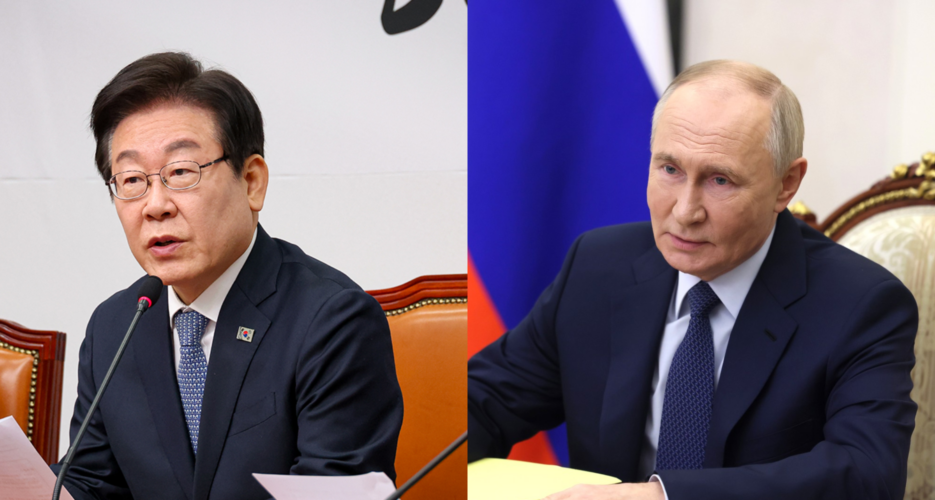
The timing of the shipments has added to the controversy. South Korean fuel loadings bound for Russia began increasing significantly in July, around the same period that President Lee Jae Myung pledged additional financial assistance for Ukraine’s reconstruction during a NATO summit.
South Korea has also faced pressure to protect its own energy security and domestic fuel supplies. Earlier in the year, disruptions linked to the war involving Iran and the closure pressures around the Strait of Hormuz prompted Seoul to impose temporary restrictions on certain fuel exports while also importing Russian naphtha under a US sanctions waiver.
The latest shipments demonstrate how difficult it has become for governments to separate energy markets from the geopolitical consequences of the war. Russia remains one of the world’s largest energy producers, but its refining sector has come under severe pressure as Ukrainian drones have repeatedly attacked facilities across the country.
Russian refinery output reportedly fell in June to its lowest level in more than two decades. Diesel production has also declined substantially compared with the previous year, increasing pressure on Moscow to find alternative sources of refined fuel.
Ukrainian military intelligence has said Russia has increasingly been forced to import petroleum products to maintain supplies for its military operations. The need to source fuel from abroad illustrates the economic consequences of Ukraine’s long-range campaign against Russian energy infrastructure.
Maritime trade data indicates that Russian imports of oil products have risen sharply. Russia imported about 368,000 tonnes of oil products by sea in August, more than seven times the volume recorded in the previous month and the highest monthly figure since the beginning of the full-scale invasion.
South Korea accounted for approximately 112,000 tonnes of those imports, representing around 31% of the total. Only India supplied a larger volume during that period.
The identity of the companies responsible for selling the fuel is not always clear from South Korean port records. However, shipping and maritime data indicate that some of the cargoes were ultimately connected to major Russian energy interests.
Among the reported buyers was Rosneft, Russia’s state-controlled oil company, which is under sanctions imposed by the UK, United States, European Union and Australia. Another reported recipient was NNK, a Russian oil group whose owner and one of its companies are also subject to British sanctions.
The vessels involved provide an additional layer of complexity. One sanctioned tanker, the Layla, made two voyages from Ulsan to Vladivostok during July and August, carrying a combined total of roughly 57,000 tonnes of diesel.
On its first voyage, the vessel reportedly declared Vladivostok as its destination to South Korean authorities. On its second voyage, however, it declared that it was travelling to Japan before ultimately heading towards Russia.
Another tanker, the Russian-flagged Astoria, loaded almost 11,000 tonnes of fuel at Ulsan in early August. Although Japan was reportedly listed as its destination, the vessel subsequently travelled to Vladivostok.
The third sanctioned vessel, the Chongchon, did not enter a South Korean port. Instead, it reportedly received approximately 26,000 tonnes of fuel from another tanker at an anchorage near Yeosu. The vessel then headed towards Vladivostok after declaring Singapore as its destination.
The use of ship-to-ship transfers is particularly significant because such operations can complicate efforts to track cargo origins and final destinations. They have become increasingly associated with attempts to navigate sanctions and restrictions affecting Russian energy exports.
The companies and individuals connected to the vessels did not respond to requests for comment concerning the shipments.
South Korea’s government also declined to directly address questions about the specific cargoes or the sanctioned tankers. Its foreign ministry instead emphasised the country’s broader commitment to international efforts aimed at ending the war and supporting Ukraine’s recovery.
The ministry said Seoul had expanded its export controls on Russia under its Foreign Trade Act. According to the government, restrictions now cover more than 1,400 non-strategic products considered to have a significant potential for diversion to military use.
South Korean authorities said they were continuing to monitor implementation of the controls and would take action when necessary under the country’s laws.
The British government, meanwhile, did not provide details about whether the use of South Korean ports by UK-sanctioned vessels had been raised directly with Seoul. A British Foreign Office spokesperson reiterated that the UK remained committed to monitoring sanctions and working with international partners to increase economic pressure on Russia.
The controversy comes at a delicate moment in South Korea-Ukraine relations. Seoul has supported Kyiv in a number of areas, but disagreements have emerged over other aspects of the war, including issues involving North Korean prisoners of war and their transfer to South Korea.
Russia, meanwhile, has continued to signal that it wants to preserve or rebuild economic relations with South Korea. Moscow has a strong interest in maintaining access to Asian markets and securing alternative supply routes as Western sanctions restrict many of its traditional trading relationships.
For South Korea, the challenge is to maintain energy security and economic flexibility without weakening its stated position against Russia’s invasion. The growing volume of fuel shipments demonstrates how difficult that balancing act can become when commercial interests intersect with international sanctions.
The shipments also highlight a wider problem confronting the sanctions regime. Restrictions are designed to limit Russia’s access to revenue, technology and strategic goods, but global energy markets remain highly interconnected. When one route becomes restricted, traders can seek alternative suppliers, shipping arrangements or destinations.
As Ukraine continues targeting Russian refineries, Moscow’s demand for imported fuel is likely to remain elevated. That could create further opportunities for suppliers in Asia and elsewhere, while simultaneously increasing scrutiny of companies, vessels and ports involved in the trade.
The South Korean shipments therefore represent more than a series of individual maritime journeys. They illustrate the complicated economic landscape created by the prolonged war, where governments must balance sanctions, energy security, commercial interests and geopolitical commitments.

For Kyiv and its Western partners, the central concern is whether Russia can continue obtaining the refined fuel required to keep its economy and military supplied despite increasing pressure on its domestic refining industry. For Seoul, the question is how to maintain its support for Ukraine while ensuring that legitimate commercial activity does not undermine international efforts to constrain Moscow.
As the war continues into another winter, Russia’s need for imported fuel may remain a growing feature of the conflict. The movement of South Korean diesel and other petroleum products towards Russian ports is likely to face increasing scrutiny, particularly when sanctioned vessels or opaque shipping arrangements are involved.
The developments demonstrate that the economic front of the war is evolving alongside the military conflict. Ukrainian drone attacks may be damaging Russia’s refining capacity, but international trade networks are providing Moscow with alternative sources of fuel. How effectively sanctions can address those alternative routes could become an increasingly important factor in determining the economic pressure Russia faces as the war continues.
Related News:
 Australia pushes Pacific security pact amid China tension
 Discontent grows around Putin amid war strain
 Houthis Strike Saudi Arabia as Middle East Tensions Rise
 Taliban global ties grow as rights fears mount
 Seoul proposes historic peace talks to replace Korean War armistice
 Nearly 50,000 Flee as Houthis Advance in Yemen
 South Korea-Ukraine Row Erupts Over North Korean POWs
 Shock US Raid: Maduro Pleads Not Guilty in Manhattan Court
 Machado Trump medal gesture reshapes Venezuela power struggle
 Trump Receives Machado’s Nobel Medal in White House Meeting
 Iran unrest slows under brutal crackdown and global tensions
 US Considers Asylum for British Jews Amid Rising Antisemitism
 Russia Strikes Kyiv and Kharkiv as Peace Talks Enter Day Two
 Thousands Protest ICE Operations in Nationwide US Day of Action
 Epstein Files Reveal Trump Officials’ Emails with Financier
 Thousands Protest ICE in New York Against Trump Deportation Campaign
 Nine Killed in Karachi Consulate Protest
 Yvette Cooper: UK Must Follow Principles, Not US Pressure
 Southeast Asia Turns to Russia Amid Energy Crisis
 US Calls Australia Media Law “Foreign Extortion”
 Oil Prices Surge Above $120 Amid Iran Blockade Fears
 Trump orders US troop pullout from Germany
 Activists allege abuse after Gaza flotilla seizure
 Global order shifts amid Trump-era turmoil
 BJP Sweeps West Bengal in Historic Breakthrough
 Indiana Republicans Defy Trump in Key Vote Test
 Middle East Crisis Escalates as Oil Routes Shake Markets
 Tensions Emerge in Netanyahu-Trump Alliance
 US Awaits Iran Reply on New Ceasefire Proposal
 One Nation Stuns Australia With Historic Farrer Win
 Putin Declares Russia Victory at Scaled Victory Day Parade
 Hormuz Talks Near Critical Stage
 Zelenskyy warns over Oreshnik threat as Kyiv hit
 Former ICC prosecutor condemns US sanctions
 Trump’s Iran Legacy Hangs on Tehran Deal
 Millions Gather for Khamenei’s Six-Day State Funeral
 Venezuela Quake Death Toll Surpasses 4,000
 Israeli Strike in Southern Lebanon Kills Seven
 Five Years of Taliban Rule Leave Afghanistan in Crisis
 Russian Missiles Intensify Pressure on Kyiv
 Trump Calls Strait of Hormuz ‘American Territory’
 Trump Faces Iran War Crisis Before Midterm Vote
 Former Diplomats Urge UK and France to Act on Palestine
 Trump announces major US oil deal with Venezuela
 Trump Hardens Canada Trade Stance as Talks Stall
 UN expert urges UK to rethink Israel policy
 North Korea Expands Uranium Facility at Yongbyon
 Saudi Arabia Shuts Oil Pipeline After Drone Attack
 South Korea Rules Out Military Role in Iran War
 Saudi Pact Raises Risk of Pakistan Entering War
 Middle powers seek new alliances amid Trump era
 Japan PM Backs International Criminal Court
 Iran Rejects Claims of Shift in US Talks
 Netanyahu faces protests and pressure at UN
 Xi urges Trump to avoid US-China military conflict
 Saudi intercepts Houthi missiles as oil fears grow
 Iran Awaits Trump Response on Seven-Day Hormuz Plan
 Trump Asked Xi About Buying US Weapons
 South Korea demands apology over DMZ mine blast
 Pilot and Passengers Help Save Flydubai Flight
 New Maps Reveal Gaza’s Vast Destruction
 Ukraine’s New FP-7 Missile Makes Combat Debut
 Russian Strikes Disrupt Kyiv Bridge Traffic
 North Korea Fires Missile Amid DMZ Tensions
 Germany Pledges €1bn Military Aid to Ukraine
 Pacific Climate Summit Draws Limited Global Leaders
 BBC to Apologise Over Edited Trump Speech Amid Backlash
 Greene Pushes Epstein Files Amid Trump Fallout
 Shadow Fleet at Sea: Europe’s Battle Against Illicit Oil Shipping
 UK and US Drop in Global Corruption Index Rankings
 Canberra Poster Seizure Sparks Free Speech Row
 Jacinda Ardern Move Sparks Kiwi Reflection
 New Zealand Covid Response Praised Despite Lingering Scars
 Injured Mojtaba Khamenei Elevated as Iran Leader
 Investigation Into Anti-Trump Motives After Gala Shooting
 Maldives Cave Diving Tragedy Raises Safety Alarm
 Grief and Devotion Amidst the Rubble of Nabatieh
 Bayeux Tapestry Revives Franco-British Ties
 Trump gives Xi red-carpet welcome as trade truce extends
 Yemen government launches offensive against Houthis