Published: 15 October 2026. The English Chronicle Desk. The English Chronicle Online
Victoria is set to become the first Australian state to provide universal access to abortion care without out-of-pocket costs after the state’s Liberal-National Coalition agreed to match a major election commitment announced by the Labor government. The decision marks a significant development in Australia’s reproductive healthcare debate, placing affordability and access to essential medical services at the centre of the November 2026 state election campaign.
The commitment means that, regardless of which major political bloc wins the election, women seeking abortion care in Victoria could receive financial assistance covering a range of expenses associated with the procedure up to 16 weeks of pregnancy. The proposed coverage includes general practitioner and specialist consultations, medical scans, diagnostic tests and abortion medication. These costs can accumulate quickly, potentially exceeding A$1,000 for patients paying privately or facing gaps in existing healthcare coverage.
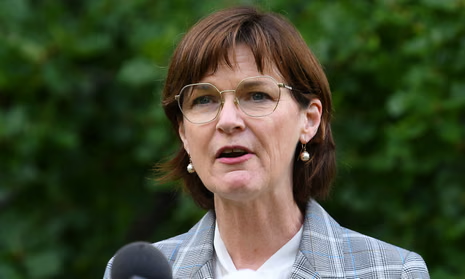
The Coalition’s announcement came only hours after Labor unveiled its own proposal, highlighting the political importance of reproductive healthcare in the lead-up to the election. Opposition leader Jess Wilson said a government led by the Liberals and Nationals would adopt the funding commitment, arguing that her party would not allow Labor to use abortion access as a political weapon.

The decision has substantially changed the political debate surrounding the issue. Rather than facing a clear divide between the major parties over whether abortion care should be made more affordable, voters are now being presented with competing claims about responsibility, healthcare policy and the best way to protect women’s reproductive rights.
Wilson announced that a Coalition government would cover out-of-pocket costs for abortion care up to 16 weeks’ gestation. She also committed to expanding the Victorian Patient Transport Assistance Scheme so that women living in regional areas who must travel considerable distances to obtain abortion services could qualify for subsidised transport and accommodation.
The proposed travel assistance is particularly relevant for people living outside Melbourne and other major population centres. Specialist reproductive healthcare services may be less accessible in rural and regional communities, where patients can face long journeys, additional accommodation expenses and the need to take time away from work or family responsibilities.
For women already managing financial pressures, these additional costs can become a substantial barrier to obtaining timely care. Extending transport and accommodation assistance could help reduce some of the inequalities between people living in metropolitan areas and those in more remote communities.
“The Liberals and Nationals will not allow Labor to play politics on this issue,” Wilson said, criticising the government for what she described as its failure to improve healthcare access during 12 years in office.
She argued that Labor was introducing the proposal shortly before the election for political reasons. Nevertheless, by agreeing to match the central funding commitment, the opposition has provided voters with an assurance that the policy would not necessarily disappear if the government changed hands.
The Coalition has not, however, agreed to every element of Labor’s reproductive healthcare agenda. One significant difference concerns the availability of medical abortion, which uses medication rather than a surgical procedure to end a pregnancy.
Under the existing arrangements described in the policy debate, medical abortion is subsidised through Australia’s Pharmaceutical Benefits Scheme for use up to nine weeks of pregnancy. Labor has proposed extending access to 10 weeks and commissioning a clinical review to examine whether medical abortion could safely be offered up to 12 weeks.
The World Health Organization’s guidance allows for medical abortion up to 12 weeks under appropriate circumstances and clinical guidance. Labor’s proposed review would examine the potential for extending access within Victoria, although any change would need to take account of relevant clinical standards, medicine availability and applicable national arrangements.
The Coalition has declined to match Labor’s proposed extension or its commitment to conduct the clinical review. This leaves an important distinction between the parties despite their agreement on the broader goal of reducing the financial burden associated with abortion care.
Labor’s health minister, Ingrid Stitt, argued that her party was the one prepared to protect women’s reproductive choices. She also raised concerns about the potential influence of One Nation if the election produces a hung parliament and the Coalition needs support from smaller parties to form government.
The concern reflects the broader political debate surrounding reproductive rights in Victoria. Labor has argued that One Nation could seek to restrict abortion access, pointing to the party’s stated position on the issue. The possibility of post-election negotiations has therefore become part of the discussion about whether existing reproductive healthcare protections would remain secure.
Wilson rejected suggestions that a Coalition government would change abortion laws. She said there would be no changes to abortion legislation under a government she led and described Labor’s campaign messaging as an attempt to politicise women’s reproductive rights shortly before voters go to the polls.
Wilson has previously characterised abortion as a personal decision that should be made by women in consultation with healthcare professionals. Her latest comments were intended to reassure voters that the Coalition would maintain the existing legal framework while implementing its proposed funding commitment.
Premier Ben Carroll also defended Labor’s record, pointing to the state’s decision to decriminalise abortion in 2008. He argued that the government would continue to defend access to reproductive healthcare and warned that One Nation represented a potential threat to women’s right to choose.
The political exchanges demonstrate how an issue involving healthcare funding has developed into a broader debate about personal autonomy, legislative protections and the future direction of Victorian politics.
The Coalition’s decision has nevertheless been welcomed by parliamentarians who have advocated for more affordable abortion services across party lines. Georgie Purcell of the Animal Justice Party, who has worked alongside Legalise Cannabis MP Rachel Payne to push for free abortion care, described Wilson’s commitment as a welcome development.
Purcell said the opposition leader’s decision had helped ease anxiety among women concerned about the affordability of reproductive healthcare. She expressed appreciation that the Coalition had agreed to support a policy that campaigners had been pursuing for some time.
Purcell also argued that the Labor government should not wait until after the election to begin implementing the commitment. With Labor still in office and the opposition supporting the central proposal, she said the government should use its existing authority and public funding to move the policy forward as soon as possible.
The intervention highlights a practical question that remains unresolved: how quickly the proposed arrangements could be introduced and what administrative steps would be required to ensure patients can access them. A funding promise alone does not automatically eliminate costs. Implementation would require clear eligibility rules, arrangements with healthcare providers, funding mechanisms and reliable information for patients seeking services.
Another important consideration is the difference between making abortion care free at the point of access and ensuring that appropriate services are actually available. Even where medical costs are covered, patients may face delays, limited provider availability, travel difficulties or challenges finding suitable appointments. For a universal-access policy to achieve its objectives, affordability would need to be accompanied by sufficient healthcare capacity and clear pathways to treatment.
Victoria has had a legal framework permitting abortion since 2008, when the state decriminalised the procedure. Under the framework described in the current debate, abortion can be obtained during the first 24 weeks of pregnancy, with later terminations permitted under specified conditions involving the agreement of two doctors.
The proposed funding reform would not itself change those legal limits. Instead, its principal objective would be to reduce the direct financial costs associated with obtaining care within the covered period. This distinction matters because the legal availability of a medical procedure does not necessarily guarantee that every patient can afford or access it in practice.
Victoria’s proposal would also build on developments elsewhere in Australia. The Australian Capital Territory began covering out-of-pocket costs for abortion care in 2023, establishing a precedent for publicly supported access. Victoria’s planned approach would represent a major state-level commitment to universal affordability and could influence future discussions about reproductive healthcare funding in other parts of the country.
The November election will therefore take place against a changed policy landscape. Both Labor and the Liberal-National Coalition have now committed to covering out-of-pocket abortion costs up to 16 weeks of pregnancy, reducing the likelihood that the central proposal will be abandoned simply because voters choose one major party over the other.
Differences remain over medical abortion time limits, clinical reviews and the political implications of a possible hung parliament. Voters will also have to assess the parties’ wider healthcare policies and their credibility in delivering the commitments they have made.

For women who have faced substantial medical bills, particularly those in regional communities, the proposed reform could make a meaningful difference. If implemented effectively, it could reduce financial barriers, support more equitable access to care and lessen the additional burden on people who must travel to receive treatment.
Ultimately, Victoria’s emerging policy agreement illustrates how sustained advocacy and electoral pressure can push competing political parties towards a shared healthcare commitment. Whether the reform delivers on its promise will depend on the details of implementation, the availability of services and the ability of the next government to turn its election pledge into a practical, accessible system of care.
Related News:
 Townsville Hospital Probes Privacy Breach After Activist Posts Foetus Image
 Anthony Albanese Must Uphold Rights for All Australians
 Ebola outbreak in DRC overwhelms health system as cases surge
 The Crisis of Essential Medication Withdrawals
 Unflinching Witness: Doctors Document Gaza’s Medical Crisis
 Abusive ex used Tesla to control and harass former partner
 Fayed Survivors Demand Inquiry Into Medical Regulator
 Europe’s Record Heat Summer Signals Climate Risks
 Cancer rises faster among younger adults, study finds
 Kenya Confirms First Ebola Case as Patient Dies
 WHO Says Russia Plague Epidemic Risk Remains Low
 South Sudan Trauma Wards Struggle as Fighting Intensifies
 Three Convicted in Mexico Surfing Trip Murders
 Australian Advocates Seek Subsidised Drugs for PMOS
 Elizabeth Struhs Inquest Examines Child Safety Failures
 Greens Block Labor’s Health Rebate Cuts for Pensioners
 Senegal LGBTQ+ Crackdown Drives People Into Hiding
 Lamarre-Condon Trial Hears Phone Disposal Request
 Hospice Cuts Raise Alarm Across England Amid Funding Crisis
 Patients to Test Health at Home to Ease NHS Winter Pressure
 Shouting Works Best to Deter Gulls, UK Study Finds
 Reeves rejects £1bn plea for NHS redundancy payouts
 Senator John Fetterman Hospitalized After Fall from Heart Flare-Up, Keeps Sense of Humor
 New AI tool could cut wasted efforts in organ transplants
 Stroke Patient Mistaken for Drunk, Care Delayed
 ‘Traumatic Wait’: Northern Ireland Women Face Breast Cancer Delays
 Scottish Families Take Legal Action Over School CO Leak
 Five-Year-Old Dies After Rare Tonsil Surgery Complication
 Fibromyalgia Patients Struggle as NHS Fails to Provide Care
 More Patients Now Contacting GPs Online, Data Shows
 Kenya Signs $2.5bn Health Deal with US Amid Data Concerns
 UK Enforces Junk Food Ad Ban Before 9pm
 Google Removes Some AI Health Summaries Over Safety Concerns
 PM pushes urgent hate speech and gun laws after Bondi terror attack
 Bondi memorial flowers preserved in lasting tribute artwork
 Streeting moves on doctor pay to end strike dispute
 Autistic Girls Often Missed in Childhood Diagnoses, Study Finds
 UK reports baby formula toxin poisoning cases across the country
 Concerns rise for Canberra boy amid Iran detention fears
 Placenta Accreta Warning as Hunt Urges Action
 ‘It’s a horrible feeling’: Loma Bropho’s Struggle to Secure Housing
 Zorevunersen Breakthrough for Dravet Syndrome
 New Zealand Covid Response Praised Despite Lingering Scars
 Taking Multivitamins Daily Could Slightly Slow Ageing, Study Finds
 ‘Drinking from a Fetid Pond’: Superbug Genes in Lough Neagh
 NHS Plans to Cut Overseas Workers Labeled Overambitious
 Family of Alleged Bondi Gunman Seeks Name Suppression
 Palantir Boss Defends NHS Deal Amid Government Break Clause
 Sam Konstas Dropped as Australia Unveils New Contract List
 Canadian Mother and Daughter Released From ICE Detention
 Unions Raise Concerns Over Doctors’ Pay Dispute
 Kyiv and Odesa Mourn After Deadly Wave of Russian Strikes
 Labor Reforms NDIS Amidst Mounting Budget Concerns
 Crisis in NHS Surgery Scheduling Hits Patients Hard
 Britain’s Health Decline: A Growing National Concern
 New AI Tool To Target Obesity Risk And Transform NHS Care
 UK Watchdogs Warn Over AI Facial Recognition Oversight
 Trump Announces 3-Day Russia–Ukraine Ceasefire Deal
 Barrister Criticises Trial After Suicide Case Verdict
 Cruisers Face Perth Quarantine After Hantavirus Outbreak
 Wes Streeting faces narrow road to Labour members’ favour
 Tony Abbott Returns as New Liberal Party President
 Maldives Cave Diving Tragedy Raises Safety Alarm
 Pope Meets Families in Italy Toxic Waste Zone
 Ben Proud Defends Enhanced Games Participation
 AI Medical Error: NHS Doctors Risk Facing Huge Lawsuits
 Clean Air Initiatives Spark Major Fall in London Hospital Admissions
 Labour MP Revives Blocked Assisted Dying Bill in Commons
 Gaza Doctor Unrecognisable After Brutal Israeli Detention
 Breakthrough NHS Tests for Endometriosis Patients
 Kylian Mbappé Slams Paraguayan Senator Over Racist Attack
 New Footage Revives Peter Falconio Mystery
 UK Schools Struggle as Classrooms Top 40C
 Ukraine Villagers Demand Answers After Deadly Arms Depot Strike
 Drones Could Speed Up Defibrillator Delivery
 Pelicot Trial Play Comes to London for One Night
 Yemen government launches offensive against Houthis
 Christa Pike Awake After Failed Tennessee Execution
 Ministers Push ATO to Reconsider Credit Card Ban
 Former Students Raise Concerns Over School Culture