Published: 12 June 2026. The English Chronicle Desk. The English Chronicle Online.
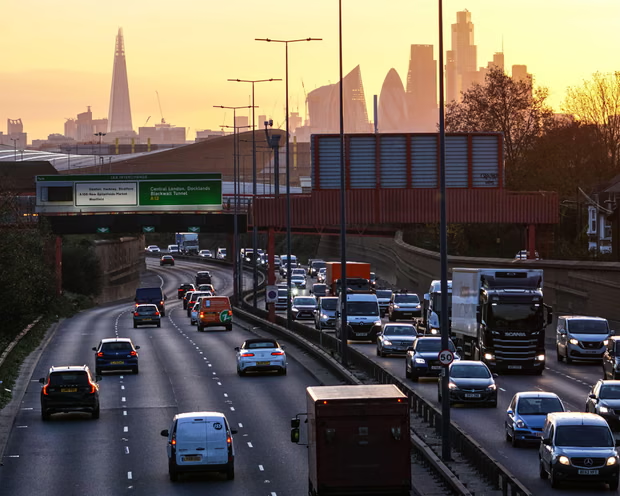
The debate surrounding urban emission zones has captivated the British public for several years now. Every new proposal for a clean air zone tends to spark heated community discussions. Drivers frequently express concerns about the financial impacts of compliance during tough economic times. Traders often worry that restricted vehicle access might deter shoppers from visiting high street businesses. Yet a growing body of evidence suggests these environmental policies achieve their primary goals. Recent data indicates that reducing traffic pollution directly leads to cleaner air for everyone. Several major cities across the United Kingdom are now seeing measurable improvements in public health.
A striking example of this positive trend recently emerged from a detailed study in Bradford. Following the introduction of their clean air zone, local medical practices reported fewer patients. General practitioners noted a twenty-five percent reduction in appointments for heart and respiratory issues. This significant drop provided early proof that changing traffic patterns can relieve pressure on clinics. Furthermore, workplace surveys from the capital revealed another encouraging trend among the local workforce. After central London implemented its strict emission boundaries, employees reported taking far fewer sick days. This suggested that cleaner air was already helping people stay healthier during their working week. Now, a major breakthrough study has connected these environmental policies directly to emergency hospital care. Researchers have carefully analyzed thousands of NHS health records from the capital over several years. Their findings reveal that emergency admissions fell notably after new traffic restrictions were introduced. The study focused specifically on the impacts of the T-charge and the subsequent ultra-low emissions zone. Both initiatives were explicitly designed to lower the volume of toxic fumes inhaled by Londoners. The initial T-charge scheme launched back in twenty-seventeen as an extra cost for drivers. It levied a daily financial penalty on older, highly polluting vehicles entering the city center.
This early measure successfully encouraged thousands of motorists to upgrade their cars and delivery vans. Many fleet operators chose to invest in cleaner technology ahead of the next phase. This preparation was crucial for the seamless arrival of the central London ultra-low emissions zone. Introduced in twenty-nineteen, this comprehensive scheme set much stricter emission standards for all vehicles. Dr Rosemary Chamberlain performed this vital health research while working at Imperial College London. She explained that her team wanted to explore the real-world impacts of these policies. Given the proven links between pollution and illness, looking at hospital admissions was essential.
The research team meticulously examined emergency hospital admission records covering a span of multiple years. To ensure accuracy, they intentionally excluded cases unrelated to air quality from their data. Admissions resulting from traffic accidents, severe burns, or accidental poisonings were completely left out. The scientists also removed cases involving drug overdoses and self-harm from the final statistics. This careful filtering allowed the researchers to focus purely on pollution-linked medical emergencies. For residents living within the central London zone, the historical data revealed an alarming trend. Before the emission schemes began, emergency hospital admissions had been rising by three percent annually.
However, the trajectory altered dramatically once the environmental traffic policies were officially put in place. Following the twin launches, emergency admissions among central London residents dropped by three percent annually. This reversal represented a major shift in public health outcomes for the local community. The detailed breakdown showed an eight percent reduction in admissions specifically for heart problems. Additionally, the researchers identified a six percent drop in hospitalizations for serious breathing difficulties. These figures offered the first clear evidence of immediate health benefits from the traffic schemes. The findings suggested that cleaner air could rapidly reduce acute episodes of cardiovascular illness.
After discovering these positive trends, the research team investigated whether other factors were responsible. They knew that general improvements in healthcare could potentially explain the falling admission rates. Changes in how people sought medical help might also have influenced the final numbers. Furthermore, national trends in hospital management could have played a role in the drop. To resolve this, Dr Chamberlain and her colleagues utilized a robust comparative research method. They compared the central London data against other urban areas across the country. The team selected control regions that shared very similar demographic and socio-economic characteristics.
This comparative analysis confirmed that the reduction in total emergency admissions remained highly robust. The drop in cardiovascular admissions was clearly unique to the area with emission zones. When compared to the control cities, London showed a distinct advantage in heart health. The downward trend for respiratory problems was also clearly visible in the raw data. However, this specific reduction did not quite reach the threshold for full statistical significance. Dr Chamberlain suggested that this inconclusive finding might relate to the scope of their data. The study looked exclusively at adult health records rather than the entire local population.
Medical experts know that young children are incredibly susceptible to the effects of poor air. Fumes from heavy traffic can severely damage developing lungs and worsen childhood asthma symptoms. Dr Chamberlain noted that analyzing childhood respiratory outcomes might yield much more definitive statistical results. Future research will likely focus on younger age groups to complete the health picture. The timeline of the central London ultra-low emissions zone created unique challenges for researchers. The strict motoring scheme launched just one single year before the global pandemic arrived. This timing meant that normal traffic patterns were severely disrupted by nationwide public lockdowns.
Before the first lockdown began, roadside nitrogen dioxide had already fallen by forty-four percent. This massive reduction represented a historic shift in the air quality of central London. However, the subsequent pandemic made isolating the long-term health trends exceptionally complicated for scientists. The research team lacked sufficient consecutive data to separate the individual impacts of each scheme. It remained difficult to distinguish the exact benefits of the T-charge from the Ulez. Despite these complex data overlaps, the overarching positive conclusion of the study remains firm. The design of the project successfully accounted for external societal shifts and national trends.
Dr Daniela Fecht expertly led this comprehensive investigation into London’s changing public health landscape. She confirmed that the observed reductions in hospitalizations link directly to the emission initiatives. The strict traffic policies in central London clearly drove down the number of medical emergencies. Dr Fecht acknowledged that other positive lifestyle factors might also be assisting the trend. The emission zones have naturally encouraged more residents to embrace daily walking and cycling. Furthermore, a noticeable reduction in heavy traffic noise can lower stress and boost health. Nevertheless, the research team feels confident that lower pollution is the primary driving factor.
The final results provide powerful evidence for policymakers considering similar schemes in other cities. Clean air zones deliver undeniable public health benefits that save lives and protect hospitals. By reducing emergency admissions, these initiatives help ease the immense financial strain on the NHS. The study proves that urban environmental policies are investments in the well-being of communities. As more data emerges, the link between clean air and public health grows stronger. London’s bold traffic experiments have successfully created a healthier environment for millions of people. This research will undoubtedly influence future urban planning decisions across the United Kingdom and beyond.
Related News:
 Hospice Cuts Raise Alarm Across England Amid Funding Crisis
 The diet that can significantly ease symptoms of IBS
 Celebrities and Charities Demand UK Government Act on Child Poverty
 Experts Warn on Home Birth Risks, Call for Skilled Midwives
 Experts Urge Legal Right to Timely Cancer Care
 Patients to Test Health at Home to Ease NHS Winter Pressure
 London’s Childlessness Crisis: Schools Closing as Families Shrink
 North Sea oil workers must lose weight or face job loss
 Crisis charity to become landlord amid UK housing emergency
 No link found between paracetamol in pregnancy and autism
 Shouting Works Best to Deter Gulls, UK Study Finds
 Reeves rejects £1bn plea for NHS redundancy payouts
 Leading doctors issue warning amid ‘bad’ flu season
 Stroke Patient Mistaken for Drunk, Care Delayed
 ‘Traumatic Wait’: Northern Ireland Women Face Breast Cancer Delays
 Welsh Government Christmas 2020 Lockdown Criticised
 Coffins Now Too Large to Cremate Amid Rising Obesity Crisis
 NHS paediatric leave parents waiting months for answers
 Catherine urges end to stigma around addiction
 Five-Year-Old Dies After Rare Tonsil Surgery Complication
 Fibromyalgia Patients Struggle as NHS Fails to Provide Care
 More Patients Now Contacting GPs Online, Data Shows
 Streeting launches review into mental health and ADHD diagnoses
 People in England’s Poorest Areas Face Higher Lung Health Emergencies
 Minor A&E Visits Surge Across England as Hospitals Face Pressure
 Children to Receive Home Vaccines as England Acts
 UK Enforces Junk Food Ad Ban Before 9pm
 Patients Collapsing in NHS Corridors, Watchdog Warns
 Offenders to Receive Health Support During Probation Appointments
 NHS Violence Crisis: Staff Face Daily Assaults
 NHS corridor care crisis sparks fears over patient safety
 Jess’s Rule Urges GPs to Rethink Persistent Symptoms
 UK Glaucoma Rise Signals Looming Eye Health Crisis by 2060
 Small risk warning raised over weight-loss jabs in UK review
 Pneumonia Surge Pushes England Emergency Cases Higher
 Streeting moves on doctor pay to end strike dispute
 UK reports baby formula toxin poisoning cases across the country
 Children of Close-Relative Parents Face Higher Mortality Risk in England
 Campaign Demands NHS Action on Placenta Accreta Diagnosis
 NHS Bone Cement Shortage Threatens Surgeries
 Placenta Accreta Warning as Hunt Urges Action
 Half of Britons Avoid GP When Ill, Survey Reveals Growing Concern
 NHS Maternity Units Cover Up Harmful Childbirth Errors
 Drop in Overseas Workers Sparks ‘Car Crash’ for UK Hospitals
 Weight-loss drugs may transform heart attack recovery
 Cancer Death Rate in Britain Falls by Nearly a Third
 Palantir NHS Contract Sparks Fears Over Data Power
 UK Patients Face Long Journeys as Pharmacies Cut Hours
 UK Biobank Health Data Leaks Raise Privacy Concerns
 NHS Plans to Cut Overseas Workers Labeled Overambitious
 Kent Meningitis Outbreak Claims Two Young Lives as Cases Rise
 Meningitis Cases in Kent Outbreak Rise to 27
 Palantir Boss Defends NHS Deal Amid Government Break Clause
 NHS Staff Shortages Stifling Recovery for Stroke Survivors
 Unions Raise Concerns Over Doctors’ Pay Dispute
 Wes Streeting Accuses Doctors of Torpedoing Pay Deal
 Private Profits From NHS Contracts Spark Urgent National Debate
 Crisis in NHS Surgery Scheduling Hits Patients Hard
 NHS Safety Fears as Nurses Cover Doctor Gaps
 New Scan Offers Hope for Faster Endometriosis Diagnosis
 New AI Tool To Target Obesity Risk And Transform NHS Care
 Barrister Criticises Trial After Suicide Case Verdict
 NHS Drug Deal Faces Legal Threat Over US Trade Agreement
 NHS Staffing Crisis Reaches Dangerous Levels
 Crisis in Care: Children Stuck in A&E for Days
 Empowering the Elderly or Shifting the Blame to Individuals?
 England Faces Rising Lyme Disease Cases Amid New Vaccine Hopes
 Record Spending Highlights Growing Crisis In National Health Service
 The Race for Radical Change in Westminster
 Swimming Champion Demands Urgent Action on Brain Cancer
 Nursing Workforce Crisis Leaves Disabled Patients at Risk
 UK Heatwave: Why Extreme Humidity is Making June Feel Unbearable
 Mortuary Crisis Exposed at Scandal-Hit NHS Trust
 The Hidden Revival of a Fatal Infection on British Soil
 NHS Urges Investigation For Irregular Periods
 BMA Faces Unprecedented Staff Cuts Amidst Severe Financial Turmoil
 Trump Immigration Cuts Threaten US Caregiver Stability
 Stricter Rules Proposed to Shield Children from Vaping
 UK Schools Struggle as Classrooms Top 40C
 London Tube Heat Reaches Dangerous Levels