Published: 25 June 2026. The English Chronicle Desk. The English Chronicle Online.
A historic summer heatwave is currently breaking major temperature records across the entire European continent. More than ninety million people are experiencing extreme heat well above normal levels this week. The World Health Organization recently issued urgent warnings regarding these soaring and dangerous thermal conditions. Officials stated that the extreme heat is actively putting many vulnerable human lives at risk. The unprecedented weather system is stretching from the British Isles all the way to southern Europe. Citizens are searching for immediate relief as major capital cities face intense and direct sunlight. Forecasters predict that these stifling conditions will likely persist throughout the entire coming weekend. Environmental scientists believe that global climate breakdown is heavily driving these intense weather patterns. The sheer scale of this meteorological event has shocked many experienced and professional weather forecasters. Across the region, communities are expanding their emergency responses to deal with the worsening situation.
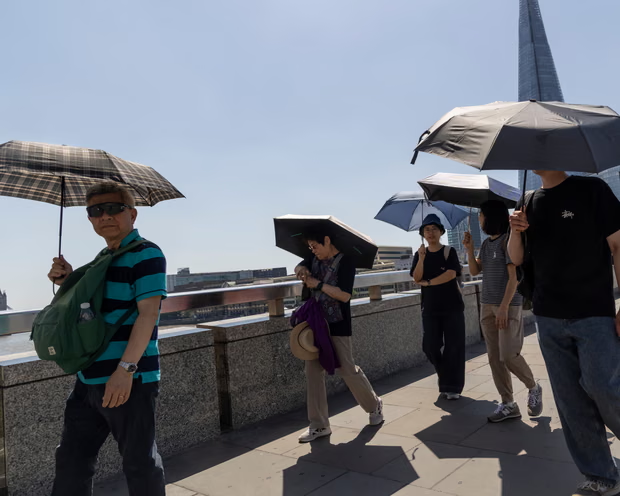
The United Kingdom recently recorded its hottest June day since official monitoring began long ago. Provisional data from the Met Office showed temperatures reached thirty-six point one degrees Celsius. This extraordinary peak was logged in the coastal town of Gosport, located within Hampshire. Earlier that same afternoon, weather stations in West Sussex also reported similarly extreme thermal conditions. The previous record for the month of June had stood firmly for nearly seventy years. That historic milestone was originally established in London during the summer of nineteen fifty-seven. It was later reached again in Southampton during a famous heatwave in nineteen seventy-six. However, the absolute highest temperature ever recorded occurred more recently during July twenty twenty-two. The Met Office recently issued a rare red extreme heat warning for citizens this week. This urgent safety declaration covered a wide geographical area over two consecutive hot days.
Chief scientist Stephen Belcher described these June temperature readings as deeply sobering and alarming events. He emphasized that such conditions bring home the severe implications of global climate change today. High levels of humidity are currently increasing the overall risk of severe human heat stress. These combined factors are creating difficult challenges for various sectors like energy and water supply. Transport networks are also experiencing significant disruptions due to the expanding thermal emergency across Britain. Poorly insulated buildings and inadequately adapted infrastructure are struggling to cope with the intense heat. Over one thousand schools and nurseries have partially or fully closed across England and Wales. Some educational institutions chose to bring in early finishing times to protect young children. Other schools relaxed their uniform policies so that students could remain as cool as possible.
Transport executives are urging commuters to avoid unnecessary travel during the peak afternoon hours. They warned passengers to prepare for heavily disrupted journeys if they choose to travel now. Outside Buckingham Palace, the traditional ceremonial guard changes were cancelled for the remaining week. Organizers of the London climate action week also cancelled several important scheduled public events. Paradoxically, these cancelled discussions were meant to focus directly on the dangers of extreme heat. The Met Office has kept further amber warnings in place for Friday and Saturday. Public health officials are advising everyone to stay indoors during the hottest parts of the day. Emergency services are experiencing higher call volumes as people struggle with the relentless summer conditions. The government is monitoring the situation closely to ensure vital services remain fully operational.
Across the English Channel, France is experiencing an equally unprecedented and severe meteorological emergency. The national weather service reported the hottest average day since official records began in nineteen forty-seven. The country’s national heat index recently reached a record high of thirty degrees Celsius. This specific index calculates the average of day and night temperatures across the nation. It represents the latest in a series of never-before-seen highs for the French Republic. The previous record was established during the deadly and historic heatwaves of two thousand and three. That benchmark was later matched during another intense and widespread summer spell in twenty nineteen. Now, more than seventy-two French departments have been placed under a strict red alert. This maximum warning level applies to over three-quarters of the entire domestic population.
More than fifty departments have registered temperatures exceeding forty degrees Celsius this month alone. This intense heat has caused significant disruptions to daily French life, education, and commerce. Local authorities are taking drastic steps to protect people from these dangerous environmental conditions. Officials in Paris recently launched a comprehensive level four heatwave response plan this week. This emergency strategy includes keeping municipal parks and public gardens open all night long. City workers are also extending the operational hours of various local swimming pools daily. Special outreach teams are actively checking on vulnerable people living on the city streets. Meanwhile, administrators decided to reschedule important end-of-school examinations for thousands of young students. Famous tourist landmarks like the Eiffel Tower have significantly shortened their daily visiting hours. The Louvre museum also restricted its schedule to protect international tourists from heat exhaustion.
The intense weather system is affecting several other European nations beyond France and Britain. In Spain, daily average temperatures reached unprecedented levels for the entire month of June. One in every eight Spanish weather stations recorded peaks well above forty degrees Celsius. Italy has placed sixteen major cities under strict red alerts for extreme summer heat. Construction workers in Rome were ordered to halt their duties during the afternoon hours. Delivery riders were also instructed to stay off the roads during peak thermal periods. In the Netherlands, public transport services were scaled down to prevent equipment failure today. Outdoor sporting events were canceled completely across many Dutch provinces due to safety concerns. Swiss authorities decided to offer free daytime cinema screenings in cool air-conditioned theaters. Meanwhile, Germany is bracing for temperatures to approach forty degrees over the coming weekend.
Nearly two-thirds of the entire European population is facing this intense and dangerous heatwave. Schools, hospitals, and care homes across the continent are struggling to handle the weather. Sweltering temperatures are putting immense stress on human organs and vital bodily functions daily. Coping measures have resulted in trains driving much slower to prevent tracks from buckling. Hospitals are cancelling non-urgent appointments to focus resources on heat-related medical emergencies instead. Water companies are introducing hosepipe bans to preserve precious resources during this dry spell. France has tragically recorded forty deaths from drowning as people sought to escape heat. The country experienced its hottest night on record just before this current peak arrived. Central Europe is experiencing slightly cooler conditions, but temperatures are still creeping steadily higher.
Medical experts warn that extreme heatwaves kill tens of thousands of people every year. The most scorching extremes have grown hotter, longer, and more common as time passes. Rapid scientific analysis indicates that climate breakdown has increased temperatures by several degrees already. The director general of the World Health Organization urged world leaders to take action. Tedros Adhanom Ghebreyesus stated that European temperatures are rising at an alarming rate. This regional warming is happening at roughly twice the global average pace, he added. Leaders must invest heavily in resilient health systems to prevent future climate tragedies. We cannot afford further delay in addressing these clear and present environmental dangers. Charities like Age UK are advising elderly citizens to take immediate and practical precautions.
Vulnerable individuals should remain in shaded areas and drink plenty of fresh water daily. Caroline Abrahams emphasized that red extreme heat weather warnings must be taken very seriously. Older people living with underlying health conditions face the highest risk of heat-related harm. Activities like shopping or walking should be confined strictly to the early morning hours. People should avoid being outside during the hottest hours between eleven and three o’clock. Keeping domestic curtains closed during the daytime can also keep indoor spaces much cooler. Neighbors are being asked to check on elderly residents who live alone this week. Taking these simple steps can make a massive difference in saving lives during heatwaves. Collective community action is essential as Europe faces this historic and challenging climate event.
Related News:
 Aberdeen Chosen for GB Energy HQ at Marischal Square
 Scotland’s Climate Plans Face Scrutiny Over ‘Science Fiction’ Targets
 Ocean Warming Drives Massive Marine Life Loss, Study Warns
 Tropical Flowers Shift Blooming Due to Climate Crisis
 UK Energy Reform Could Cut Bills by £200
 Evacuations Ordered as California Wildfires Spread Fast
 UK Records Earliest Spring as Nature Awakens Fast
 North Sea Drilling to Cut UK Imports Only Slightly
 Queensland Braces for Potential Second Severe Cyclone Hit
 Heavier SUVs Accelerate Britain’s Pothole Crisis
 Cyclone Vaianu Forces Mass Evacuations in New Zealand
 Chornobyl Still at Risk 40 Years After Disaster
 Crackdown Backfires on UK Climate Protesters
 Older Than Dinosaurs: Secrets of Mayfly Dance Revealed
 Capitalism ‘Suicidal’, Warns Petro at Climate Summit
 Coalition pushes fossil fuel phaseout plan
 Record May Heat to Cold Front in Eastern Australia
 Norway Doubles Down on Oil and Gas for Europe Energy Security
 Doomsday Clock Nears Midnight Amid Global Crises
 Tractor Breakdown Tests Lincolnshire Farmers
 Britons Build Emergency Supplies Amid Rising Fears
 Migratory Bird Crisis: UK Numbers Plunge Despite Record Warmth
 UK Faces Mass Water Shortages by 2055, Lords Warn
 Sycamore Gap Artwork Chosen After Public Vote
 Pope Meets Families in Italy Toxic Waste Zone
 UK rejects EV charging VAT cut amid Treasury clash
 Essex valley emerges as rising English wine hub
 Hope for mountain bongos returns to Kenya
 UN Issues Urgent Warning: Imminent Return of El Niño
 Germany Summons Chinese Envoy Over Russian Troop Training
 Sydney Records Hottest June Since 1859 as Expert Warns New High a ‘Signature’ of Global Warming
 UK Heatwaves Ignite Crisis of Sleep and Public Safety
 UK Seas Face Extreme Heatwave as Global Temperatures Surge
 Europe Pushes for Binding Heat Safety Laws at Work
 Europe Scorched as Record Heatwaves Grip the Continent
 UK Power Grid Strained by Summer Heatwave
 UK Schools Struggle as Classrooms Top 40C
 London Tube Heat Reaches Dangerous Levels
 Venezuela Quake Death Toll Surpasses 4,000
 Olympus Awaits Unesco Heritage Recognition
 Wildfires Force Mass Evacuations in France And Spain
 Three-Quarters of England’s Riverbanks Still Off Limits
 Powerful 7.7-Magnitude Earthquake Hits Eastern Indonesia
 London’s 2026 ‘Great Stink’ Raises Sewer Concerns
 Wildfires rage across Europe as hundreds arrested in France
 Burnham unveils £65m drought aid for farmers
 Gen Z turns to BirdTok for a gentler digital escape
 ‘Extinct’ Antelope Returns to Sahara, Bringing Hope
 IndiGo Cancels Hundreds of Flights Amid Pilot Shortages
 Young Britons Face Heaviest Burden from Ageing Population, Lords Warn
 U‑Turn on Farmers’ Inheritance Tax Sparks Political Firestorm
 Aston Villa Remain Arsenal’s Key Obstacle in Title Pursuit
 Irish Beach Tragedy: Irish Drown at Whitehaven Beach in Australia
 Starmer Faces Parliamentary Battles Over UK-EU ‘Reset’ Plan
 Met Police Vetting Failures Let Serial Rapists Remain
 Federal Immigration Shift: Officers Leave Louisiana for Minneapolis
 Fatal Bolton Taxi Crash Claims Three Teens and Driver
 Australia grants Asio powers to designate hate groups under new laws
 Friedman Uninvited From 2024 Adelaide Writers’ Week
 ScottishPower Tops List of Worst UK Energy Suppliers
 Judi Dench Champions Fight to Save London’s Green Spaces
 Crowborough Camp Welcomes First Asylum Seekers
 UK Shoppers Face Prolonged Price Rises At Tills
 Tube Strike Brings Capital to a Standstill Over Shift Disputes
 Makerfield Voters Demand Real Change as Election Looms
 Man City Threaten Legal Action Over Haaland Real Madrid Shirt
 Celestial Waltz: Venus and Jupiter Meet at Twilight
 Abbott Signals Bold Strategy Change For Australian Right
 Ryanair Faces Probe Over Mandatory Family Seating Fees
 Britain’s Crowning Butterfly Takes the Nation by Storm
 Fifa Official Under Investigation Over Hand Gesture Controversy
 US Trafficking Arrest Exposes Shocking Exploitation
 Trump Signs Landmark Iran Accord in Versailles
 Grief and Devotion Amidst the Rubble of Nabatieh
 Stirchley Community Housing Scheme Faces Crisis
 UK Care Crisis: Row Explodes Over New Visa Settlement Rules
 Sainsbury’s Boss Optimistic As Grocery Inflation Eases
 US Advance Past Bosnia in World Cup Thriller
 Trump’s Mount Rushmore Speech: A Divisive Anniversary
 Trump’s Red-Card Intervention Hurts the US World Cup