Published: 25 June 2026. The English Chronicle Desk. The English Chronicle Online.
The Australian mining sector is facing another major legal challenge regarding the treatment of female workers. High-profile iron ore miner Fortescue has become the latest corporation targeted by a substantial class action lawsuit. This legal action highlights serious allegations of systemic sexual harassment and violence at remote work sites. Filed in the Federal Court of Victoria, the lawsuit brings forward deeply disturbing accounts from several employees. The legal documents detail a culture where female workers allegedly faced consistent safety threats and retaliation. Such revelations have sparked widespread concern regarding the everyday realities of women in the mining sector. This case represents the third major class action filed recently against an Australian mining giant. It follows previous legal proceedings initiated against industry leaders BHP and Rio Tinto over similar systemic failures. The accumulation of these legal challenges suggests deep-seated cultural problems within the broader resources sector.
According to the filed legal documents, specific allegations outline extreme violations of personal safety. One female worker reported being dragged into a dark alleyway by a male colleague. The individual then allegedly attempted to force a physical encounter against her explicit will. Another woman returned to her private accommodation village only to find a strange man inside. A third employee described enduring humiliating group behaviour when entering the communal dining facility on site. Male colleagues allegedly howled at her in an effort to intimidate and demean her presence. These incidents reflect an environment where basic personal security was routinely compromised for female staff. The legal firm JGA Saddler is leading the class action on behalf of workers. This extensive litigation receives financial backing from the United Kingdom litigation funder Aristata Capital. The involvement of international funding emphasizes the global significance of these workplace safety allegations.
Legal experts representing the plaintiffs have expressed profound dismay over the reported conditions on site. Special counsel Paris Hamrey stated that the allegations span a very broad and troubling spectrum. The claims encompass both severe physical assaults and continuous day-to-day workplace microaggressions. One particularly disturbing report involves routine warnings given to new female employees regarding on-site laundries. Women were regularly advised against washing their underwear in these shared facilities due to theft. The theft of female undergarments is described as a rife occurrence across several camps. Hamrey emphasized that workers should never have to worry about such mundane daily tasks. Beyond the immediate violation, this specific behavior raises major fears about the escalation of offences. It directly highlights the pervasive safety risks that female staff members must navigate while working. Such conditions create a climate of fear that undermines professional focus and personal well-being.
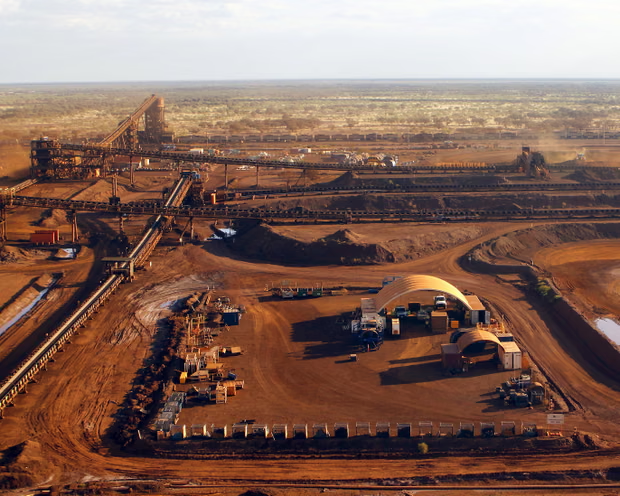
The operational structure of Fortescue heavily relies on remote locations within Western Australia. The company utilizes a massive fly-in, fly-out workforce to run its highly profitable iron ore operations. Employees live in specialized on-site accommodation villages during their weeks-long operational shifts. This isolation inherently creates unique social dynamics and heightened vulnerabilities for minority workers within camps. The current litigation aims to test the legal liability of the corporation over two decades. It covers an extensive period spanning from 2006 through to the conclusion of 2025. The lawsuit claims Fortescue failed to protect female workers from systemic discrimination and harassment. It argues that management allowed a hostile work environment to persist without implementing effective safeguards. This long timeframe suggests that the alleged issues are deeply embedded within corporate history.
Fortescue is currently chaired by its billionaire founder Andrew Forrest, a prominent global business figure. The company has responded to the filing with a brief statement via an official spokesperson. The representative noted it would be inappropriate to comment extensively before formal court proceedings begin. However, the spokesperson insisted Fortescue remains fully committed to maintaining a safe workplace environment. The company claims to prioritize a respectful and inclusive atmosphere for all employees and contractors. Their statement emphasized that sexual harassment and unlawful discrimination have no place within the organization. Any behavior that makes people feel unsafe is contrary to stated corporate values and policies. Despite these assurances, the legal challenge suggests a significant disconnect between policy and reality. The court will ultimately determine whether corporate actions matched the public commitment to safety.
The legal strategy pursued by JGA Saddler targets a broader pattern across the industry. This action follows similar lawsuits filed against major competitors BHP and Rio Tinto recently. Both of those high-profile cases currently remain unresolved before the Australian court system. The three concurrent lawsuits indicate a widespread failure of corporate culture across the resource sector. Hamrey stated that the mining industry clearly has a fundamental problem regarding female representation. She suggested that most women working on remote sites have suffered some form of harassment. Discrimination appears to be a common experience rather than an isolated series of incidents. The legal team argues that these massive companies must finally address these systemic issues openly. They need to strengthen existing policies and actually enforce them on the ground.
The reliance on fly-in, fly-out workforces creates distinct challenges for regulating employee behavior. Workers are isolated from standard community support networks for extended periods of time. The power dynamics within remote camps can easily exacerbate existing gender inequalities and vulnerabilities. When corporate management fails to police behavior strictly, a toxic environment can rapidly develop. This class action seeks to hold executives accountable for the atmosphere within their camps. It demands financial compensation for the psychological and professional harm suffered by female employees. Furthermore, the lawsuit aims to force structural changes in how mining companies manage safety. Without judicial intervention, advocates argue that internal corporate reforms are often slow and ineffective. The outcome of this case could set a vital precedent for workplace safety globally.
British investment involvement via Aristata Capital shows the growing commercial viability of social justice litigation. Litigation funders view these cases as necessary mechanisms to drive corporate accountability worldwide. By financing the legal costs, they enable workers to challenge multi-billion dollar corporations effectively. This financial support levels the playing field for employees who otherwise could not afford litigation. The British connection also brings international media scrutiny to Australian mining practices. This global attention pressures companies to align their operations with international human rights standards. Investors increasingly look at social and governance factors when allocating capital to resource companies. Persistent allegations of harassment can damage corporate reputations and impact long-term financial performance. Therefore, resolving these cultural issues is both a moral imperative and a commercial necessity.
The mining sector has traditionally been dominated by male workers and masculine cultural norms. While companies have tried to recruit more women, inclusion efforts often lag behind hiring targets. Simply increasing the number of female employees is insufficient without changing the underlying culture. True safety requires rigorous reporting mechanisms that protect victims from professional retaliation. Many women in the industry fear that reporting harassment will ruin their career prospects. This fear often leads to underreporting, allowing perpetrators to continue their behavior without consequences. The class action alleges that Fortescue failed to create a safe reporting environment for staff. By coming forward collectively, the plaintiffs hope to break the silence surrounding camp culture. Their bravery could inspire more women to demand dignity and respect within heavy industries.
As the legal proceedings commence, the international community will watch the Federal Court closely. The evidence presented could expose further details about life inside remote mining camps. For Fortescue, the trial represents a significant challenge to its corporate image and leadership. For the broader industry, it serves as a stark warning that systemic harassment will face consequences. Women in mining are no longer willing to accept unsafe working conditions as standard. They are utilizing the power of the courts to demand systemic, lasting institutional change. The era of ignoring workplace harassment in remote locations appears to be coming to an end. True progress will be measured by the safety and confidence of women on site.
Related News:
 Canada-China trade gains momentum in new strategic partnership
 India-EU Free Trade Deal Marks Historic Economic Shift
 Keir Starmer meets Xi to strengthen UK-China economic relations
 UK Experts Raise Alarm Over Machinery Export to Armenian Firm
 Caffè Nero Warns Coffee Prices May Rise Again
 Abramovich Chelsea Sale Cash Faces Jersey Probe
 Stocks rise as Trump offers Iran peace plan
 US Military Weighs Perilous Moves to Reopen Hormuz
 IMF Predicts Global Economic Crisis Due to Gulf Unrest
 Manila Transport Crisis: Fuel Costs Hit Breaking Point
 Trump Slams Europe as Transatlantic Tensions Boil Over
 Trump Issues Stark Warning After Strike On Iran’s Largest Bridge
 Middle East Conflict Sparks Global Food Price Surge
 Albanese Flies to Singapore to Bolster Fuel Security
 US and Iran Agree to Two-Week Provisional Ceasefire
 Norwegian Group Eyes South Yorkshire Steel Revival
 Ian Katz to Step Down as Channel 4 Content Chief
 Middle East Conflict Risks UK Food Supply Chains This Summer
 Cost of Conflict: UN Warns of Lost Lives in Iran War
 BP Profits Surge Amidst Middle East Conflict Crisis
 Ukraine Urges UK to Seize Russian Oil Tankers
 US Calls Australia Media Law “Foreign Extortion”
 Oil Prices Surge Above $120 Amid Iran Blockade Fears
 Europe’s AI Sector Faces Sovereignty Crisis Over US Deals
 Trump Offers EU Independence Day Deadline For Trade Deal
 US Cities See 42% Drop in Canadian Visits Under Trump 2.0
 High Stakes in Beijing as Trump and Xi Meet Amid Global Turmoil
 Trump and Xi Convene in Beijing for Historic High-Stakes Summit
 Big Tobacco Under Fire Over Controversial New Ad Campaign
 Rubles and Resilience: How Russia-China Border Towns Thrive
 UK Urged to Build EU Rejoin Consensus, Says Miliband
 Cash Registers Stall Japan’s Promised Food Tax Relief
 Trump Floats Fresh Tariffs on 60 Nations Over Forced Labour
 The Exploding Australian Black Market For Nicotine
 Japan Suffers Plastic Shortage Due to Middle East Crisis
 Steel Tensions Rise Between United Kingdom and European Union
 New York Consumer Watchdog Tackles Corporate Lawbreaking
 Levi’s Sues Globe Over Infringing Pocket Tabs
 BYD Aims for Global Car Supremacy Within Five Years
 Trump Signs Historic Iran Peace Plan to Avert Depression
 Gas Prices Fall Below $4 Following US-Iran Peace Deal
 Reeves Faces Setback as Labour May Miss Homes Target
 Trump’s UK Ambassador Urges North Sea Drilling to Strengthen US Ties
 Millionaires group urge Reeves to introduce wealth tax to ‘lift kids out of poverty’
 Starmer Says Labour’s Economic Plan Needs Years to Deliver
 US Senate rejects resolution limiting Trump military powers
 Gulf states warn Trump Iran strikes risk wider Middle East war
 Shinzo Abe’s killer receives life sentence in Japan
 China General Under Investigation Amid Leadership Purge
 US Dollar Hits Four-Year Low Amid Market Turmoil
 UK New Car Discounts Near £6,000 as Prices Are Slashed
 BT Names New Openreach Chief Amid Major Fibre Expansion
 UK Job Vacancies Hit Five-Year Pandemic Low
 UK Youth Unemployment Surges Amid Tax Changes
 Strong Rebound for UK Housing Market Sees 6% More Homes
 Charity Watchdog Takes Control of Learning Disability Care Home
 Spain Faces Backlash Over Xenophobic Chants in Egypt Draw
 Reform UK Pledges To Halt Visas Over Reparations Demands
 Starmer visits Gulf as US and Iran agree ceasefire
 Green Light for Britain’s Electric Future in Somerset
 Pakistan’s Ambitious Bid for Middle East Peace
 Israeli Soldiers Jailed Over Vandalism of Lebanese Statue
 Prominent Voices Challenge Palestine Action Ban
 Lords Demand Larger Fiscal Buffers for UK
 UK Envoy Sparks Controversy Over Special Relationship Claims
 Capitalism ‘Suicidal’, Warns Petro at Climate Summit
 US to Escort Trapped Ships Through the Strait of Hormuz
 UK Electric Car Sales Surge Amid Rising Iran Conflict Fears
 US Awaits Iran Reply on New Ceasefire Proposal
 US and Mexico Face Heatwave as Floods Batter South Africa
 Putin Signals War End as Russian Momentum Stalls
 Romania’s Judicial Crisis: A System Under Siege
 Philippine Senator Flees After Days Under Senate Siege
 High Street Crisis: Fears Grow Over Post Office Closures
 Court Upholds Landmark Win for Transgender Rights
 ICC Arrest Warrant Threat Sparks West Bank Retaliation
 Tony Abbott Returns as New Liberal Party President
 UK Economy Suffers a Sharp Downturn as Iran Conflict Bites
 Tuchel’s England Mission Goes Beyond Football Success
 Historic Victory for Canada as They Defeat Nine-Man Qatar