Published: 01 October 2026. The English Chronicle Desk. The English Chronicle Online
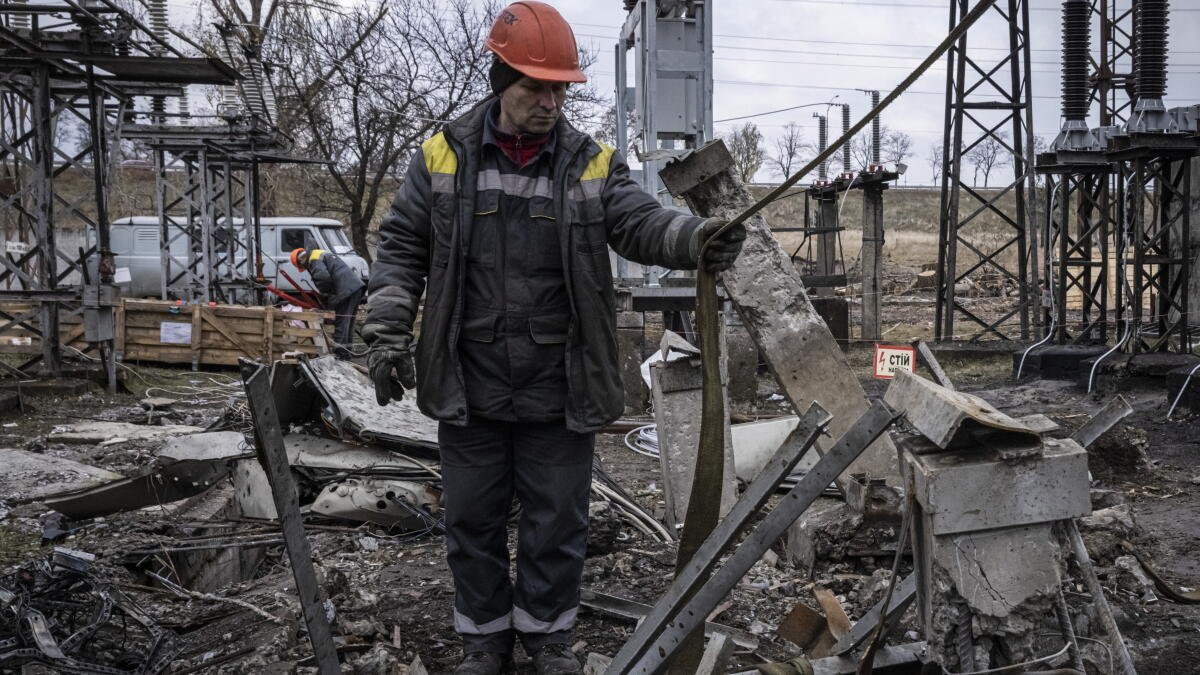
Russia has launched one of its largest combined attacks on Ukraine’s energy infrastructure in months, striking power facilities and critical infrastructure in and around Kyiv and several other regions as the country prepares for another difficult winter. Ukrainian officials said seven people, including a child, were killed in the latest wave of attacks, while widespread damage and emergency electricity restrictions disrupted daily life across parts of the country.
The strikes came after several days of increasingly intense Russian drone attacks, particularly over the Ukrainian capital. For many residents, the renewed assault has raised fears that Russia is again seeking to weaken the country’s electricity and heating systems before freezing temperatures arrive.
Ukraine’s state electricity grid operator, Ukrenergo, introduced emergency power cuts in Kyiv and three surrounding regions following the attacks. It was the first time emergency restrictions had been imposed in the capital since the spring, highlighting the pressure placed on the country’s energy network by the latest bombardment.

The consequences were immediately visible in Kyiv. Some tram and trolleybus services were suspended because of electricity disruptions, while the city’s water utility reported reduced pressure in parts of the water system. Smoke from damaged energy facilities spread across the capital, adding to the sense of uncertainty among residents already accustomed to frequent air-raid warnings.
Ukrainian Prime Minister Sergii Koretskyi said the country had experienced attacks on energy infrastructure almost continuously since the summer, but described the latest combined assault as significantly larger than those seen since the end of the previous heating season. Authorities have been preparing for renewed attacks for months, strengthening protective structures and attempting to diversify electricity generation in anticipation of another period of sustained pressure.
Ukrainian officials said critical infrastructure was targeted in five regions, with additional damage reported in five others. President Volodymyr Zelenskyy said seven people were killed nationwide, including a child. The Ukrainian air force reported intercepting 254 of 285 Russian drones launched during the attack period, including a large number of faster, jet-propelled drones that Ukrainian officials say are more difficult to stop. Russian forces also used ballistic missiles during the assault.
Russia has acknowledged carrying out strikes against Ukrainian infrastructure but has presented the targets as military-related facilities. Russian authorities said their forces hit energy facilities in the Kyiv region, an industrial complex in Odesa and port infrastructure at Izmail in southwestern Ukraine. Moscow has repeatedly denied deliberately targeting civilians, although Russian missile and drone attacks have repeatedly caused casualties and damage in Ukrainian cities.
The latest attack has particular significance because of the timing. Forecasts indicate that nighttime temperatures in Kyiv are expected to fall toward freezing in the coming days. Ukraine’s energy system was already severely damaged during previous Russian winter campaigns, leaving households and businesses vulnerable to prolonged power, heating and water disruptions.
For ordinary residents, the prospect of another winter under attack carries memories of earlier periods when electricity shortages forced families to rely on generators, battery systems and alternative heating arrangements. Hospitals, schools, businesses and public transport networks also face additional challenges when electricity supplies become unstable.
The Ukrainian government has ordered local authorities to inspect backup power systems at critical facilities and accelerate the installation of additional emergency capacity. Officials are particularly concerned about maintaining electricity and heating for hospitals, water systems and other services that cannot easily operate without reliable power.
The renewed strikes are also taking place against the backdrop of continued fighting along the eastern front. Zelenskyy visited a military command post near Lyman, where he met military commanders and reviewed the situation along the frontline. He said Ukrainian forces had made progress during a counteroffensive and had regained approximately 176 square kilometres of territory since the beginning of the operation.
According to Zelenskyy, the Ukrainian operation has helped prevent Russian forces from breaking through defensive positions around Sloviansk and Kramatorsk. Those cities form part of a heavily defended network in the Donbas region, where Russia continues to seek territorial gains. The battlefield claims have been made by the Ukrainian side and come amid an ongoing war in which both sides regularly provide differing accounts of military developments.
Alongside the fighting, Ukraine is also seeking additional international measures against Russian military and technological capabilities. Kyiv has urged the United States to sanction companies and other entities it says are involved in developing Russia’s Rassvet satellite network, which Moscow is developing as a domestic alternative to SpaceX’s Starlink system.
Ukraine’s acting ambassador in Washington, Denys Sienik, has warned that the Russian network could eventually provide Moscow with enhanced communications and intelligence capabilities. Kyiv has said it intends to impose its own sanctions on entities linked to the programme and is asking Washington to take further action. Reuters reported that Russia has already begun launching Rassvet satellites and plans a much larger constellation.
The dispute over satellite technology reflects the increasingly technological nature of the war. Communications, drones, satellite imagery and electronic systems have become central to military operations, while both Russia and Ukraine are seeking ways to improve their ability to identify targets and maintain communications under battlefield conditions.
At the same time, diplomatic and humanitarian contacts have continued despite the intensity of the fighting. Cardinal Matteo Zuppi, the Vatican’s Ukraine peace envoy, held discussions with Russian officials and visited Ukrainian prisoners of war during a three-day visit to Russia, according to the Russian Foreign Ministry. His discussions included humanitarian matters connected with the conflict.
Zuppi’s visit came as Pope Leo called on Russia and Ukraine to engage in discussions aimed at finding a way to end the war. The Vatican has continued to focus on humanitarian issues, including prisoners of war and civilians affected by the conflict.
The latest discussions also touched on the situation in the Russian-occupied city of Oleshky in Ukraine’s Kherson region. Ukrainian officials have said that food and medicine were delivered to civilians there by drone, while Russian authorities have offered their own account of conditions and humanitarian access in the area.
For Ukraine, however, the immediate challenge remains keeping essential services operating as winter approaches. The latest strikes have demonstrated the continuing vulnerability of the energy system, despite months of preparations and international assistance.

The attacks have also increased pressure on Ukraine’s already stretched air-defence resources. Ukrainian officials have repeatedly called for additional systems and interceptor missiles as Russia continues to expand its use of drones and missiles. The ability to protect energy facilities, residential areas and other critical infrastructure is expected to remain a central issue as the colder months begin.
For residents of Kyiv and other affected regions, the latest attacks have brought the war back into the centre of everyday life. Electricity interruptions, damaged transport networks, air-raid alerts and concerns over heating are reminders that the conflict continues to affect civilians far from the immediate frontline.
As Ukraine enters another winter of war, the condition of its energy infrastructure will be closely watched. Whether emergency preparations can withstand sustained attacks will have consequences not only for electricity supplies but also for heating, water, transport, hospitals and the wider civilian economy.
The latest assault therefore represents more than another night of missile and drone strikes. It has renewed concerns over the resilience of Ukraine’s essential infrastructure and the humanitarian pressures that could emerge if attacks continue as temperatures fall.
Related News:
 Putin Declares Russia Victory at Scaled Victory Day Parade
 Former ICC prosecutor condemns US sanctions
 Russian Missiles Intensify Pressure on Kyiv
 UN expert urges UK to rethink Israel policy
 Saudi Pact Raises Risk of Pakistan Entering War
 Emails Show Epstein Funded Mandelson’s Husband After Jail
 UK Prepares Aircraft Carrier for Middle East Crisis
 Anti-Regime Iranians Turn Anger Toward Trump
 Hungary election: Orbán faces biggest test amid scandal
 MoD Has Lost Track of Veteran Recall List, Says Adviser
 Judge halts deportation of Yemeni refugees in US
 Activists allege abuse after Gaza flotilla seizure
 Asylum deal sparks fears over Syria deportations
 Ceasefire Standoff Deepens in Ukraine War
 Trump Announces 3-Day Russia–Ukraine Ceasefire Deal
 Zelenskyy warns over Oreshnik threat as Kyiv hit
 Irish Gangland Figure Fails in Dublin Election Bid
 Taliban global ties grow as rights fears mount
 Israeli Strike in Southern Lebanon Kills Seven
 Trump dismisses concerns over 250-day carrier deployment
 US immigration arrests hit record high in July
 Ukraine Villagers Demand Answers After Deadly Arms Depot Strike
 Miliband Rejects Chief Rabbi’s West Bank Warning
 Sweden Election Hangs on Far-Right Breakthrough
 Israel Accused of Undermining Palestinian Life
 Japan PM Backs International Criminal Court
 King Refers Jamaica Slavery Petition to Privy Council
 Russia Targets Ukraine’s Digital Economy With Strikes
 Trump Asked Xi About Buying US Weapons
 Putin Orders Russian Army Expansion as War Intensifies
 French Student Protests Escalate Into Violent Clashes
 Trump Administration Dismisses 17 Immigration Judges, Sparking Debate Over Judicial Independence
 Jailed Georgian Opposition Leaders Warn UK of Iranian Links to Ruling Party
 Johnson Approved China’s London ‘Super-Embassy’ in 2018
 Trump Urges Herzog to Grant Netanyahu Full Pardon
 US Justice Department Files Lawsuit Against California Over Partisan Voting Maps
 Trump Deploys DHS to Charlotte in Major Arrest Operation
 Chinese & Japanese Boats Clash Near Disputed Islands
 Iran Leader Blames Protesters, Says They Serve Trump
 Guterres Warns Global Cooperation Under Threat at UN’s 80th Year
 South Korea Jails Ex-President in Martial Law Ruling
 UK and EU Signal Fresh Push for Defence Cooperation Talks
 Thousands Protest ICE Operations in Nationwide US Day of Action
 Thousands Protest ICE in New York Against Trump Deportation Campaign
 Italian Town Buys Mussolini Villa to Keep Away Fascist Fans
 Report Says Pezzullo Acted ‘Recklessly’ in Dealings
 Suspected Plot Targets Pipeline Before Hungary Vote
 Ukraine Urges UK to Seize Russian Oil Tankers
 Cartel crackdown raises fears of fresh violence
 Trump orders US troop pullout from Germany
 Trump warns Iran as Middle East tensions surge again
 Afghan Families Left in Limbo Face Risk of Deportation
 France Faces Record Presidential Crowded Race Amid Far-Right Surge
 Immigration Judges Fear Pressure in Trump Era
 US green card applicants must apply from abroad, DHS says
 Discontent grows around Putin amid war strain
 Deadly Russian Air Raids Strike Across Ukraine
 Millions Gather for Khamenei’s Six-Day State Funeral
 Le Pen to Run for President Despite Embezzlement Conviction
 New Footage Revives Peter Falconio Mystery
 Ukraine Creates Long-Range Strike Command
 Le Pen’s Popularity Holds Despite Conviction
 Houthis Strike Saudi Arabia as Middle East Tensions Rise
 Bayeux Tapestry Revives Franco-British Ties
 UK plans tougher Israel stance with settlement trade ban
 Europe’s democracies face a growing far-right threat
 Fugitive Developer Rants at NSW Corruption Inquiry
 Amnesty Finds Coordinated Abuses in Iran Protest Crackdown
 Turkey LGBTQ Crackdown Expands With New Arrests
 Trump Threatens EU With Tariffs Over Canada Proposal
 Trump Threatens EU Over Canada Partnership Proposal
 US Sanctions Open New Battle for Cuba Assets
 US Networks Suspend Trump White House Pool Coverage
 Republican Senator Questions Trump Ad Spending
 Five Arrested Near RAF Fairford in Terror Probe
 Madrid Tent Camp Grows as Spain Housing Crisis Deepens
 South Korea demands apology over DMZ mine blast
 Burnham Opens Door to Possible UK Return to EU
 Drumcree Talks Falter as Legal Challenge Deepens
 UK-France Returns Deal Faces Expiry as Talks Stall