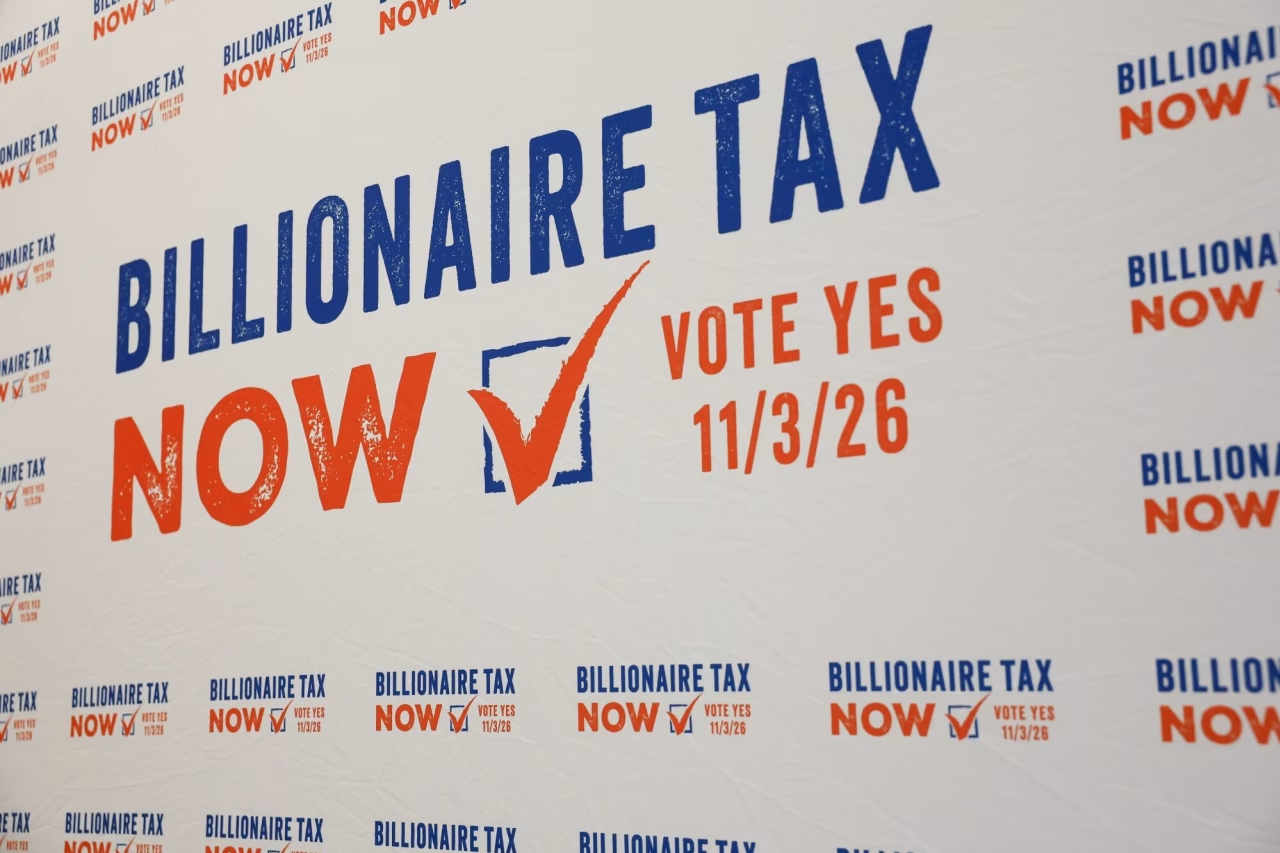
California voters have rejected a controversial proposal to impose a one-time tax on billionaires’ wealth, delivering a significant victory to some of the world’s richest individuals and technology industry leaders after an expensive and politically divisive campaign. The defeat of Proposition 40 marks an important moment in the debate over wealth inequality, taxation and the responsibility of ultra-wealthy individuals to contribute towards public services.
The campaign surrounding the proposal became the most expensive ballot measure battle in California’s history, attracting enormous financial contributions from Silicon Valley executives, wealthy investors, labour organisations and political groups. The result also represents a setback for campaigners seeking to introduce higher taxes on billionaires and strengthen public funding for healthcare, education and social assistance.

Proposition 40 proposed a one-time tax of 5 per cent on the net worth of individuals living in California who possessed wealth exceeding $1 billion as of 1 January 2026. Unlike conventional income taxes, which are generally calculated on earnings, the proposed measure would have targeted the accumulated wealth of the state’s richest residents.
The initiative was sponsored by the Service Employees International Union-United Healthcare Workers West, a major healthcare workers’ union. Supporters argued that the tax could generate substantial revenue at a time when healthcare programmes were facing considerable financial pressure following federal policy changes under US President Donald Trump’s One Big Beautiful Bill Act.
Under the proposal, money collected through the tax would have been directed towards healthcare programmes, with additional allocations for certain education services and food assistance initiatives. Supporters maintained that the measure would help protect essential public services and reduce the financial burden on ordinary households.
The campaign attracted backing from major labour unions and several prominent progressive politicians. Vermont Senator Bernie Sanders and California Congressman Ro Khanna were among the political figures who supported the initiative, arguing that America’s wealthiest individuals should contribute more towards the services and infrastructure that benefit society.
For supporters, the proposal represented an attempt to address the growing concentration of wealth among a relatively small group of individuals. They argued that billionaires had benefited enormously from California’s economic environment, technological development and public infrastructure, making it reasonable to ask them to contribute additional resources towards the state’s social needs.
However, the proposal faced strong opposition from influential business leaders, political figures and organisations representing different sectors of California’s economy. Both Democratic and Republican candidates for governor opposed Proposition 40, highlighting concerns about its structure, potential economic consequences and the long-term sustainability of its proposed funding arrangements.
Governor Gavin Newsom also firmly opposed the measure, despite his position within the Democratic Party and the broader political debate over economic inequality. His opposition demonstrated that the proposal had created divisions not only between political parties but also within Democratic leadership.
One of the central criticisms was that Proposition 40 would impose a one-time tax rather than establish a permanent source of revenue. Opponents questioned whether a temporary collection of wealth taxes would provide a reliable foundation for long-term healthcare programmes.
They also raised concerns about the possibility of wealthy residents relocating their assets or changing their residency arrangements to avoid the tax. Critics argued that such developments could have wider consequences for investment, business activity and California’s ability to retain major entrepreneurs and investors.
The state’s billionaires became the most powerful opponents of the proposal, organising a financially substantial campaign to persuade voters to reject it. The opposition attracted contributions from some of Silicon Valley’s most recognisable business figures and technology companies.
Among the major contributors were executives and prominent figures associated with Google, Palantir, DoorDash, Stripe and Reddit, alongside influential venture capitalists. Their financial involvement transformed the campaign into a major confrontation between wealthy technology investors and organisations seeking greater taxation of accumulated wealth.
Google co-founder Sergey Brin emerged as the largest individual contributor to the opposition campaign. According to campaign finance filings, he contributed at least $132 million to efforts to defeat Proposition 40.
Overall, opponents reportedly spent nearly $425 million fighting the proposal, making it the most expensive opposition campaign in California’s political history. The extraordinary financial commitment demonstrated the importance wealthy technology leaders attached to preventing the proposed tax from becoming law.
Campaign spending increased particularly sharply during October. Financial disclosures indicated that spending exceeded $2.5 million per day during the first two weeks of the month, illustrating the intensity of the effort to influence public opinion ahead of the vote.
The campaign also became complicated by the introduction of two additional ballot measures, Propositions 41 and 42, which were designed to challenge the proposed billionaire tax through separate legal and policy mechanisms.
Proposition 41 directly targeted the wealth-tax initiative, while Proposition 42 proposed broader restrictions on certain new taxes and included provisions that would prohibit taxation of billionaire wealth.
The structure of the ballot created an unusual political situation. Under the proposed arrangements, either of the two counter-measures could prevent Proposition 40 from taking effect if it received more votes in favour than the billionaire tax proposal. This meant that even a victory for Proposition 40 could potentially be neutralised by the alternative measures.
Supporters of the billionaire tax strongly criticised the strategy, describing Propositions 41 and 42 as political poison pills intended to undermine the original initiative. They argued that presenting competing proposals on the same ballot could confuse voters and make it more difficult for the wealth-tax campaign to succeed.
The use of multiple ballot measures also highlighted how California’s direct democracy system can become a battleground for competing financial and political interests. Wealthy donors, unions, advocacy organisations and political groups can use the ballot process to advance or challenge major policy changes.
The defeat of Proposition 40 is likely to influence future discussions about taxing extreme wealth in the United States. Across the country, progressive politicians and economic justice campaigners have increasingly argued that traditional tax systems do not adequately address the growing gap between the wealthiest households and ordinary workers.
Supporters of wealth taxation believe that individuals with enormous financial resources should contribute a greater share towards public services, particularly when governments face rising healthcare, education and infrastructure costs. They also argue that additional revenue could help reduce dependence on borrowing and protect programmes relied upon by lower-income communities.
Opponents, however, maintain that aggressive wealth taxation could discourage investment, encourage wealthy residents to move elsewhere and create uncertainty for businesses. They argue that policies targeting accumulated assets could have unintended economic consequences, particularly in states with large technology and investment industries.
California occupies a particularly important position in this debate because it is home to Silicon Valley, major technology corporations, venture capital firms and some of the world’s wealthiest entrepreneurs. Decisions made in the state can influence national discussions about economic policy, business regulation and taxation.
The campaign also exposed the growing influence of wealthy individuals in American political campaigning. The enormous financial contributions made by billionaires demonstrated how individuals with substantial resources can play a decisive role in shaping the debate around policies that directly affect their financial interests.
At the same time, the involvement of labour unions and progressive political leaders showed that the opposition to concentrated wealth remains an important force in California politics. The campaign provided a platform for wider discussions about healthcare funding, economic fairness and the responsibilities of wealthy citizens.
For now, the rejection of Proposition 40 means California will not introduce the proposed one-time 5 per cent billionaire wealth tax through this initiative. It also represents a considerable political victory for the technology executives and business leaders who invested heavily in defeating the measure.

Nevertheless, the broader debate is unlikely to disappear. Questions about how governments should tax extreme wealth, finance public healthcare and address economic inequality will remain central to American political discussions, particularly as states search for ways to maintain essential services amid changing federal funding priorities.
The California vote has demonstrated that even an ambitious proposal supported by major unions and progressive politicians can struggle against a well-financed opposition. More importantly, it has highlighted the growing confrontation between public demands for economic fairness and the financial influence of America’s wealthiest individuals.
Related News:
 Informa Agrees £2.24bn Deal to Buy Clarion
 EU-China Talks Target Surge in Hybrid Car Imports
 Doubts Grow Over Trump’s $15bn Iowa Steel Plant
 Ministers Push ATO to Reconsider Credit Card Ban
 Australia Delays Tax Credit Card Payment Ban After Backlash
 Trump Faces Voter Backlash Over Soaring Gas Prices
 Labour MPs Urge Burnham to Lead UK Reindustrialisation
 Fed Expected to Hold Rates Steady Ahead of US Midterms
 G20 Photo Cancelled as Russia Deepens Western Rift
 BBC News Faces Deep Cuts in 2,000 Job Plan
 Kevin Warsh sworn in as Fed chair amid economic backlash
 Reeves Fights to Keep Treasury Role Amid Labour Turmoil
 Trump Refuses to Sign Housing Bill, But Law Takes Effect
 Firms on both sides fear damage from US-Canada trade war
 Burnham Faces Mounting Budget Challenges
 Trump Hardens Canada Trade Stance as Talks Stall
 Swedish Mining Push Puts Sami Land Rights Under Pressure
 Oil nears $100 as Saudi attacks shake markets
 Trump Pledges $5,000 if Republicans Win Midterms
 John Lewis Losses Widen to £124m as Confidence Falls
 Thames Water Revises Oxfordshire Mega-Reservoir Plan
 US House Passes Russia Sanctions Bill Amid Debate
 Trump Eyes Major Belarus Fertiliser Deal Amid Canada Trade Dispute
 Thinktank Calls for Abolition of UK State Pension
 MPs Defend UK Economic Watchdog Against Critics
 Chinese Hybrid Car Surge Raises EU Auto Industry Concerns
 Tony Blair Calls for Britain to Rejoin EU Within a Decade
 UK Trade Losses Grow Without EU Product Deal
 AO Acquires Jessops in Camera Retail Expansion
 Saudi intercepts Houthi missiles as oil fears grow
 Beaverbrooks Boss Calls for Relief on Business Costs
 Why Americans Feel Ripped Off by Rising Prices
 Poundland Rescue Bid Could Protect 11,000 Jobs
 UK Diesel Reaches £2 as Inflation Surges Across Europe
 Minister Rejects Fears of UK Diesel Shortage
 DOJ Declines to Reopen Powell Renovation Probe
 London Council Warns of 150% Council Tax Rise
 BT Agrees £400m TalkTalk Rescue Deal
 IMF Warns Governments Over Rising Debt Burdens
 Tesco Raises Profit Forecast as Consumer Confidence Holds
 US Senate Debates Turn Bitter as Midterms Near
 France Faces Debt Crisis as Protests and Markets Clash
 Labour Fears Budget Will Fail to Lift Living Standards
 IFS Warns UK Budget Faces £35bn Spending Gap
 EU Caps Chinese Hybrid Car Imports at 350,000
 Brazil Court Scandal Threatens Lula as Bolsonaros Rise
IMF Raises UK Growth Forecast Ahead of Healey’s Budget
 Healey Plans £1bn Online Marketplace Tax Crackdown
 Trump Rallies GOP as Senate Democrats Boost Key Races
 Business Chief Urges Burnham to Fix Brexit Damage
 Trump Halts New Russia Sanctions Amid Ukraine Rift
 Cormann Warns Australia Against Populist Migration Caps
 Trump Fears Shock Democratic Senate Win in Kansas
 Trump Pledges $400m to Boost Republicans in Midterms
UK Borrowing Hits £24.5bn Ahead of Healey’s Budget
 Sainsbury’s Warns of Tough Christmas Ahead
 Tax Online Sales to Save High Street, Burnham Urged
 China’s AI Ambitions Hit $2.4 Trillion Market Setback
 Anthropic IPO Reveals AI Boom’s Huge Costs and Risks
 Albanese Faces Labor Pressure as Inflation Hits 4.3%
 UK Budget Leaves Households Facing Higher Energy Bills
 Lloyds Warns Against Extending Higher Bank Tax
 BP Profits Surge as Middle East Conflict Lifts Margins
Burnham Admits First Budget Fell Short of His Ambitions
 Global Crises Test Diplomacy as Trump’s Policies Face Scrutiny
 Rate Rise Threatens Australian Jobs and Businesses
 Australia Faces Deeper Economic Slowdown
 Australia Raises Interest Rates to 18-Year High
 David Jones Faces Administration After Talks Collapse
 Elon Musk’s $446m Midterm Gamble Ends in Defeat
 Poundland Remains Vulnerable as Rescue Talks Continue
 Paraguay President Quits After Major Bank Collapse
 UK House Prices Suffer Sharpest Fall in Three Years
 Paraguay President Impeached and Arrested After Banking Crisis
 Qatar Pushes Iran Deal to Reopen Strait of Hormuz
 Nvidia and Jensen Huang Face Shareholder Lawsuit
 Trump gives $45,000 holiday gifts to White House aides
 North Sea Firms Urge Early End to Windfall Tax
 Entain Plans 400 Job Cuts After Profit Update
 Healey urged to act as UK energy bills rise 4%