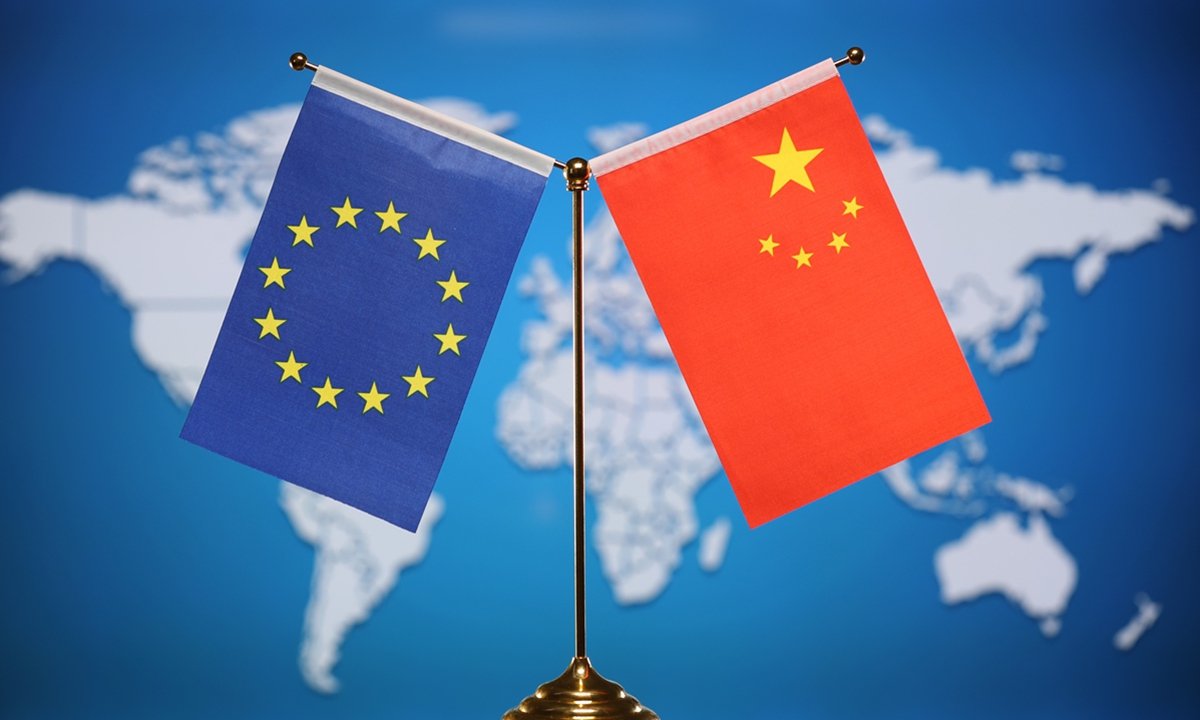
European manufacturers could face an increasingly difficult choice by the end of this decade: continue competing against China’s rapidly expanding industrial sector or become part of Chinese-led global supply chains to preserve their businesses. Jens Eskelund, president of the European Union Chamber of Commerce in China, has warned that current economic trends could fundamentally change Europe’s manufacturing landscape, threatening industrial employment, economic independence and the long-term competitiveness of major European economies.
His warning comes amid growing concerns about China’s expanding influence across international markets, particularly in industries such as automobiles, chemicals, renewable energy, robotics and advanced technology. Chinese manufacturers have strengthened their position through large-scale investment, government support, technological development and increasingly competitive production costs. European companies, meanwhile, are struggling to maintain their traditional advantages in several important industrial sectors.

Eskelund, who leads the Beijing-based European business organisation and also serves as a managing director of shipping giant Maersk’s Chinese operations, believes European manufacturers could reach an existential crossroads before 2030. He questioned whether traditional trade relationships would remain sustainable if China’s growing exports continued to generate substantial benefits for Chinese producers while weakening industrial activity in Europe.
According to Eskelund, European companies operating in China are already reconsidering their business strategies. Previously, many European manufacturers followed a model commonly described as “Made in China for China”, producing goods within the country primarily to serve Chinese consumers. However, an emerging approach could see companies increasingly manufacturing in China to supply international markets.
The shift reflects the growing recognition that competing directly with Chinese manufacturers is becoming difficult across multiple industries. Rather than attempting to maintain separate production systems, some European businesses may increasingly seek partnerships with Chinese companies and integrate themselves into their established supply chains.
Eskelund discussed the issue during meetings with European Commission officials in Brussels, where he presented the concerns of European businesses operating in China. He argued that Europe was approaching a critical point in its economic relationship with Beijing and needed to reconsider how it responded to China’s industrial expansion.
The economic imbalance between the two sides has become a major source of tension. The European Union’s trade deficit with China has reached record levels, with the gap reportedly running at approximately £1 billion, or €1.18 billion, every day. The widening imbalance has strengthened calls in Brussels, Berlin and Paris for greater protection of European industries and measures to address unfair competition.
However, Eskelund warned that simply increasing protectionism might not provide a sustainable solution. He suggested that European governments should consider allowing domestic manufacturers to become part of Chinese companies’ international supply chains rather than treating Chinese businesses exclusively as competitors.
His argument is based on concerns about the economic consequences of allowing Europe’s manufacturing capabilities to decline. If European companies lose their ability to compete, the consequences could extend beyond individual businesses and affect entire communities.
A substantial reduction in manufacturing activity could result in widespread job losses, lower tax revenues and increased pressure on public finances. Regions dependent on industrial employment could face long-term economic difficulties, while workers who lose their jobs might struggle to find comparable opportunities. Eskelund warned that such developments could create unemployment lasting across generations and increase the cost of social welfare programmes.
He also cautioned that excessive dependence on foreign industrial supply chains could weaken Europe’s ability to determine its own economic and political future. If essential technologies, components and production capabilities become concentrated outside Europe, governments could face serious difficulties during future economic or geopolitical crises.
The pressure is already visible in several important European industries, particularly Germany’s automotive sector. German car manufacturers have traditionally depended on their strong position in China, which has been one of their most important international markets. However, domestic Chinese manufacturers are increasingly challenging European brands through competitive pricing, technological innovation and expanding production capacity.
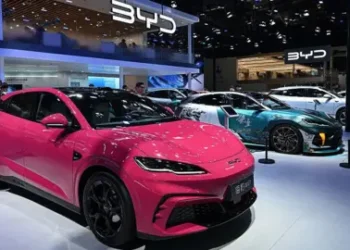
Companies such as BYD, Geely and SAIC Motor have become major competitors in electric vehicles and other automotive segments. Their growing market presence has intensified pressure on established European manufacturers, both inside China and across international markets.
BMW provides a significant example of the difficulties facing the industry. The German automaker reported a 22 per cent decline in sales in China during the first nine months of 2026, reflecting weaker demand and increasingly challenging market conditions. The company also issued its second profit warning of the year, highlighting the financial pressure facing established European carmakers.
The difficulties are not limited to automobiles. European chemical manufacturers and renewable energy companies are also confronting competition from Chinese producers, whose large-scale production facilities and extensive industrial networks have helped them expand rapidly.
Solar panels, wind turbines, batteries, robotics equipment and advanced electronic components are among the products where Chinese manufacturers have developed substantial global influence. European businesses that once enjoyed technological or manufacturing advantages are increasingly facing competitors capable of producing comparable products at lower prices and in much larger quantities.
Eskelund rejected the suggestion that China’s expanding industrial influence should be treated as an unexpected development. He expressed reservations about the phrase “China shock 2.0”, which has been used to describe the latest wave of Chinese exports affecting European industries.
He argued that Beijing’s industrial ambitions had been clearly outlined through successive five-year economic plans. China’s Made in China 2025 strategy, introduced in 2015, established an ambitious direction for developing domestic manufacturing capabilities and reducing reliance on foreign suppliers.
According to Eskelund, the Chinese government has remained focused on strengthening its domestic industrial base and reducing imports in strategically important sectors. The results of this long-term approach are now becoming increasingly visible in international markets.
China’s latest five-year plan for 2026 to 2030 continues to emphasise technological independence, advanced manufacturing and industrial competitiveness. Priority areas include artificial intelligence, quantum computing, robotics, smart and green technologies, biomanufacturing, brain-computer interfaces and sixth-generation communications.
These sectors are expected to play an important role in China’s future economic development. The country’s ambitions also extend to advanced semiconductors, autonomous vehicles, renewable energy technologies and sophisticated industrial machinery.
A recent assessment by the Centre for European Reform has urged Germany to reconsider its approach towards Beijing, warning that China’s growing emphasis on self-reliance could further weaken European industrial competitiveness. The report highlighted Beijing’s determination to replace imports in sectors where the country continues to depend on foreign technology or supplies.
Eskelund said European companies should not ignore these developments or assume that Chinese industrial expansion would slow down. He argued that once Beijing establishes a strategic priority, financial incentives, tax advantages and subsidies can be distributed throughout the country’s regional and local administrative structures.
This coordinated approach allows industrial policies to influence decisions at different levels of the economy, helping businesses develop production capacity and compete internationally.
The European business leader believes that engagement with China could offer a more realistic response than attempting to isolate the country’s manufacturers. He encouraged European governments to maintain discussions with Beijing and identify areas where economic cooperation could generate benefits for both sides.
He also suggested that European policymakers might need to reconsider their traditional approach to international trade. In his assessment, China has concentrated heavily on achieving economic outcomes, while European governments have often prioritised principles and established policy frameworks. He questioned whether Europe’s existing approach was producing the economic results required to protect its industrial future.
The idea of increasing European exports to address the trade imbalance was also criticised by Eskelund, who described expectations of a rapid correction as unrealistic. China’s substantial trade surplus with the rest of the world demonstrates the scale of its export capacity and industrial competitiveness.
He noted that many European companies continue to earn money in China, but competition within the country’s supply chains has become increasingly intense. He also pointed to concerns about the valuation of China’s currency, arguing that its estimated undervaluation of around 30 per cent creates additional difficulties for foreign competitors.
For European manufacturers, becoming part of Chinese supply chains could therefore offer an alternative route to international competitiveness. By establishing joint ventures, developing production partnerships and manufacturing in China, European businesses may gain access to established industrial networks and global distribution channels.
Eskelund stressed that the financial benefits of operating in China should not be measured solely by profits generated within the Chinese market. Access to Chinese supply chains could allow European companies to compete more effectively in other international markets.
This represents a significant evolution in the relationship between European manufacturers and China. Instead of producing goods in China exclusively for Chinese consumers, companies could increasingly use the country as a global manufacturing base.
According to Eskelund, some European businesses have already begun adapting to this approach, with several reporting improved confidence over the past year as they explore export opportunities beyond China’s domestic market.
Nevertheless, the proposed strategy also carries risks. Greater integration into Chinese supply chains could increase European dependence on a country with which the EU has growing economic and geopolitical disagreements. It could also create difficulties for domestic manufacturers if production and investment gradually move away from European industrial centres.

European governments therefore face a complicated balancing act. They must preserve access to international markets and remain competitive while protecting strategically important industries, skilled employment and economic independence.
The coming years will determine whether European manufacturers can adapt successfully to China’s industrial expansion or whether the continent experiences a prolonged decline in important manufacturing sectors. For businesses, the challenge is no longer simply how to compete with Chinese companies but how to remain relevant in an international economy increasingly shaped by Chinese production networks.
Eskelund’s warning highlights the urgency of the situation. Without a clear industrial strategy, stronger technological investment and more effective international partnerships, Europe could find itself losing ground in industries that have historically supported its economic strength and prosperity.
Related News:
 China’s AI Ambitions Hit $2.4 Trillion Market Setback
 Oil nears $100 as Saudi attacks shake markets
 Chinese Hybrid Car Surge Raises EU Auto Industry Concerns
 UK Diesel Reaches £2 as Inflation Surges Across Europe
 Minister Rejects Fears of UK Diesel Shortage
 EU-China Talks Target Surge in Hybrid Car Imports
 EU Caps Chinese Hybrid Car Imports at 350,000
 Hall and Woodford Win Nobel Economics Prize
 Nvidia and Jensen Huang Face Shareholder Lawsuit
 UK Wage Growth Slows as Jobs Market Holds Firm
 Reeves Fights to Keep Treasury Role Amid Labour Turmoil
 UK rejects EV charging VAT cut amid Treasury clash
 Firms on both sides fear damage from US-Canada trade war
 Dutch Bank Moves 86 Tonnes of Gold to London
 Swedish Mining Push Puts Sami Land Rights Under Pressure
 John Lewis Losses Widen to £124m as Confidence Falls
 Oil Prices Surge as Saudi Pipeline Closure Deepens Crisis
 Thames Water Revises Oxfordshire Mega-Reservoir Plan
 Next Raises Profit Forecast After Strong Summer Sales
 UK Productivity Improves as Bank Weighs Interest Rates
 Trump Threatens EU Over Canada Partnership Proposal
 Japan Raises Rates to 31-Year High
 Tony Blair Calls for Britain to Rejoin EU Within a Decade
 UK Trade Losses Grow Without EU Product Deal
 AO Acquires Jessops in Camera Retail Expansion
 Saudi intercepts Houthi missiles as oil fears grow
 TalkTalk Races to Sell Arms as Administration Looms
 Beaverbrooks Boss Calls for Relief on Business Costs
 Ukraine Faces $45m Hourly Cost From Missile Alerts
 Poundland Rescue Bid Could Protect 11,000 Jobs
 Bank Chief Calls for Power to Intervene in AI
 BBC Three and Scotland Face Online-Only Future
 French Debt Fears Put Euro Markets Under Pressure
 Feeld Founders Receive Record Dividend as Sales Rise
 BT Agrees £400m TalkTalk Rescue Deal
 Informa Agrees £2.24bn Deal to Buy Clarion
 Asos Investigates Hack Claims After Customer Alerts
 Tesco Raises Profit Forecast as Consumer Confidence Holds
 Ministers Push ATO to Reconsider Credit Card Ban
 Oil Shock Sends Markets Lower as Middle East Risks Grow
 Australia Delays Tax Credit Card Payment Ban After Backlash
 Firmus Abandons Major ASX Listing Amid Investor Doubts
 France Faces Debt Crisis as Protests and Markets Clash
 IMF Warns Global Economy Is Nearing Its Limits
 Cyber Fraud Threatens Trust in Global Financial System
 Healey Plans £1bn Online Marketplace Tax Crackdown
 Global Tech Sell-Off Deepens on Inflation and AI Debt Fears
 Cormann Warns Australia Against Populist Migration Caps
 Meta Reaches Deal to Keep Zuckerberg in California
 Sainsbury’s Warns of Tough Christmas Ahead
 Labour MPs Urge Burnham to Lead UK Reindustrialisation
 US Bans BYD Vehicles at Japan Military Base
 Anthropic IPO Reveals AI Boom’s Huge Costs and Risks
 Fed Expected to Hold Rates Steady Ahead of US Midterms
 Lloyds Warns Against Extending Higher Bank Tax
 North Korea Linked to Record $6.3bn Binance Crypto Heist
 BP Profits Surge as Middle East Conflict Lifts Margins
 Global Crises Test Diplomacy as Trump’s Policies Face Scrutiny
 G20 Photo Cancelled as Russia Deepens Western Rift
 Australia Faces Deeper Economic Slowdown
 Australia Raises Interest Rates to 18-Year High
 David Jones Faces Administration After Talks Collapse
 Poundland Remains Vulnerable as Rescue Talks Continue
 UK House Prices Suffer Sharpest Fall in Three Years
 California Voters Reject One-Time Billionaire Tax
 Billionaire Chris Rokos poised to leave UK
 JPMorgan Boss Warns Against UK Bank Tax Rise
 UK Retailers Accused of Breaking Refund Laws
 Entain Plans 400 Job Cuts After Profit Update
 Trump Threatens EU With Tariffs Over Canada Proposal
 US Sanctions Open New Battle for Cuba Assets
 UK Rent Gap Puts Low-Income Families Under Pressure
 Calls Grow to Expand UK National Wealth Fund
 MPs Defend UK Economic Watchdog Against Critics
 Trump gives Xi red-carpet welcome as trade truce extends
 Healey urged to act as UK energy bills rise 4%
 UK Water Firms Earn Millions From Industrial Wastewater
 UK Unemployment Falls to 4.7% as Vacancies Decline
 UK Inflation Hits 3.5% as Middle East War Drives Fuel Costs
 Labor Minister Defends Chalmers Amid Budget Tensions