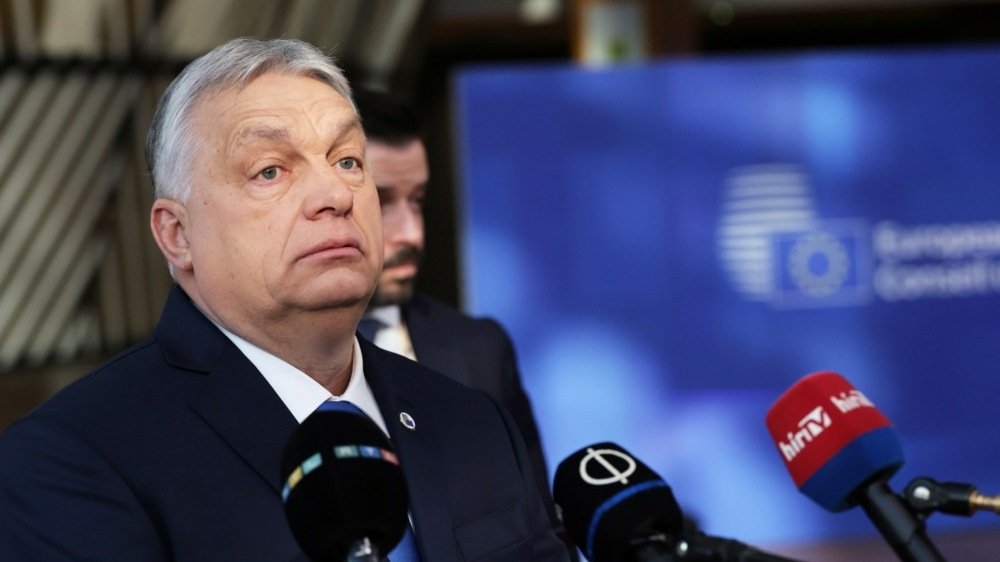
Hungary has detained the younger brother of former prime minister Viktor Orbán as part of an investigation into an alleged people-smuggling network, adding another politically sensitive case to the corruption investigations targeting figures associated with the country’s previous government.
The detention was announced by current Prime Minister Péter Magyar, who said businessman Áron Orbán, 49, had been taken into custody. The development comes amid a wider anti-corruption campaign launched by Magyar’s administration following its victory over Orbán in the April election. The investigation has drawn considerable attention because it involves allegations of wrongdoing during the previous government’s 16 years in power and could deepen the political confrontation between the two leaders.
Magyar made the announcement while attending an event in Berlin, where he referred to the detention of Orbán’s brother and said several former members of the previous administration were already in custody. His remarks appeared to underline the scale of the investigations now facing individuals connected to the former governing establishment.

The announcement followed a statement from Hungary’s National Asset Protection and Recovery Office, known by its Hungarian abbreviation NVVH. The agency confirmed that it had worked alongside police to detain four people and conduct searches at several properties in Budapest and Pest county. The operation forms part of an investigation into suspected human smuggling and the alleged misuse of official connections to facilitate immigration arrangements.
According to the authorities, the four individuals are suspected of helping Vietnamese citizens travel to western Europe over a period of several months in 2024. Investigators believe the operation involved charging visa applicants additional fees through Hungary’s diplomatic missions in Vietnam. The money was allegedly collected under the description of recruitment fees and subsequently divided among those involved.
Police said the woman and three men detained in the operation were suspected of human smuggling committed through a criminal conspiracy for financial gain. The investigation is examining how the alleged arrangements operated, who benefited financially and whether official or political connections were used to secure residence permits and facilitate the movement of foreign nationals.
The authorities have not yet publicly provided a complete account of the alleged network or detailed the precise role attributed to each person detained. The investigation remains ongoing, and the allegations have not been established in court. Detention and searches are investigative measures rather than proof of guilt.
Viktor Orbán, who served as Hungary’s prime minister for 16 years before losing power, reacted angrily to news of his brother’s detention. In a statement published on Facebook, he described the development as political revenge and accused the new government of using investigations to weaken its political opponents.
Orbán argued that his brother was being used as a means of targeting him personally. He portrayed the investigation as part of what he characterised as an attempt to eliminate political opposition and establish a one-party system. His comments reflected the increasingly confrontational relationship between the former prime minister and Magyar’s administration.
The allegations of political motivation have added another dimension to a case that is already attracting public attention because of its connection to the previous government. The authorities, however, have presented the operation as part of their broader effort to investigate suspected corruption and misuse of public institutions. Whether the case will reveal further connections to former officials remains to be determined through the legal process.
The National Asset Protection and Recovery Office was established by Magyar after he defeated Orbán in the April election. Its creation marked a significant shift in Hungary’s approach to investigating allegations of corruption involving the previous administration. The agency has been assigned a central role in examining suspected financial misconduct, questionable public transactions and the alleged misuse of political influence.
Magyar has described the broader anti-corruption initiative as “Operation Purgatory”, a campaign intended to investigate suspected wrongdoing associated with Orbán’s long period in office. The initiative has become one of the defining elements of the new government’s political programme. It also represents a major test of whether the administration can translate its promises of accountability into investigations that withstand legal scrutiny.
The people-smuggling investigation is particularly significant because of the suspected use of employment-related immigration arrangements. In September, the NVVH identified the alleged sale of political connections to obtain employment residence permits as one of the first four areas it intended to investigate.
That announcement suggested that investigators were examining whether individuals with access to political or administrative networks had been able to exploit immigration procedures for financial gain. The latest operation appears to fall within that broader area of scrutiny, although the authorities have yet to establish publicly whether the suspected activities involved any senior political figures beyond those already identified.
The alleged use of recruitment fees at Hungarian diplomatic missions in Vietnam raises questions about the safeguards surrounding visa and employment-related immigration procedures. If the allegations are substantiated, the case could expose weaknesses in the way applications were handled and reveal how private individuals may have profited from access to official processes.
Hungary has experienced years of political debate over corruption, public procurement, institutional independence and the concentration of political influence. During Orbán’s 16-year premiership, his government faced repeated accusations from critics and opposition groups over the management of public funds and the relationship between political power and business interests. Orbán consistently rejected allegations of corruption and defended his administration’s record.
The current investigations have intensified those longstanding disputes. Two former ministers from Orbán’s government and former central bank governor György Matolcsy are already under arrest in separate cases involving corruption allegations. Their detention has increased pressure on figures associated with the former administration and strengthened the political significance of Magyar’s anti-corruption campaign.
The cases are separate investigations, and their legal circumstances should not be treated as evidence that all individuals connected to the previous government were involved in wrongdoing. Each allegation must be assessed independently, with investigators required to establish evidence and prosecutors expected to follow the applicable legal procedures.
For Magyar, the latest detention offers an opportunity to demonstrate that his government is prepared to investigate allegations involving powerful individuals, including members of the former prime minister’s family. At the same time, the political sensitivity of the case means that the administration will face scrutiny over the independence, transparency and fairness of the investigative process.
The detention of Orbán’s brother also raises the possibility of a prolonged political dispute between the former prime minister and the new government. Orbán remains an influential figure in Hungarian politics, and his accusations of political revenge could become part of a wider campaign challenging the legitimacy of the investigations.
The coming weeks are likely to be important in determining whether investigators can provide further details about the alleged smuggling operation, the financial arrangements involved and the identities of any additional suspects. Authorities will also face pressure to clarify whether the suspected recruitment-fee scheme was isolated or connected to a wider network operating through employment and residence-permit procedures.

For the individuals detained, the immediate issue is the progress of the criminal investigation and whether prosecutors will bring formal charges supported by evidence. For Hungary, the case has become another test of its institutions at a time when the country is attempting to address allegations of corruption while navigating a sharp political transition.
Although the detention of a former prime minister’s family member has given the investigation a high-profile political dimension, its ultimate significance will depend on the evidence presented and the outcome of the judicial process. The case could expose serious weaknesses in immigration-related procedures, but it could also deepen political divisions if the competing accusations of corruption and political retaliation remain unresolved.
Related News:
 Ukraine Villagers Demand Answers After Deadly Arms Depot Strike
 Former German Intelligence Chief Arrested Over Espionage
 Serbia’s Student Victory Sparks a ‘Smell of Freedom’
 Cartel crackdown raises fears of fresh violence
 US ‘Narco Boat’ Strikes Draw Global Outcry
 Irish Gangland Figure Fails in Dublin Election Bid
 Israeli Strike in Southern Lebanon Kills Seven
 Europe’s democracies face a growing far-right threat
 Israel Accused of Undermining Palestinian Life
 Elif Eralp Emerges as Berlin’s Next Political Force
 French Student Protests Escalate Into Violent Clashes
 French School Protests Escalate as 400 Schools Close
 Germany Pledges €1bn Military Aid to Ukraine
 Latin America women fear rollback of rights
 France Promises 3,000 Teachers as Student Protests Grow
 Israel Promotes Film Challenging Controversial Gaza Documentary
 EU Divisions Deepen Over Israel Policy
 French Students Protest Poor Conditions in Paris Suburbs
 Greta Thunberg Backs French Students in School Protests
 Ukrainian Soldier Faces Trial Over Nord Stream Blast
 French Police Face Scrutiny Over Injured Teenagers
 Macron Condemns Violence as France Faces 2,400 Arrests
 Milan Luxury Stores Shut as Italy Plans Troop Deployment
 France to Deploy 70,000 Police Amid Unrest Fears
 Ukraine Peace Talks Set to Resume in November
 Trump’s Midterm Campaign Faces Racism and Political Backlash
 Spain Mourns 68 Dead After High-Speed Train Crash
 UAE Nominee Faces Backlash Over Sudan War Role
 Novaya Gazeta to Close After Russian Government Pressure
 Spain Train Crash Kills 69, Foreign Victims Identified
 Hungary to Reveal Names of Communist-Era Informants
 Paraguay President Impeached and Arrested After Banking Crisis
 Kraków Shooting Suspect Dies After Killing Six
 Greene Pushes Epstein Files Amid Trump Fallout
 Venezuela Threatens Nobel Winner Machado with Fugitive Status
 Italian Town Buys Mussolini Villa to Keep Away Fascist Fans
 Hungary election: Orbán faces biggest test amid scandal
 Ben Roberts-Smith Denies War Crime Allegations in First Statement
 Le Pen to Run for President Despite Embezzlement Conviction
 New Footage Revives Peter Falconio Mystery
 Ukraine Creates Long-Range Strike Command
 Bayeux Tapestry Revives Franco-British Ties
 Trump Calls Iran War ‘Small Potatoes’ Despite US Deaths
 Reform Faces Fresh Financial Controversy
 Sweden Election Hangs on Far-Right Breakthrough
 Royal Crown Branded Enslaved Africans in Britain’s Slave Trade
 Fugitive Developer Rants at NSW Corruption Inquiry
 Lib Dems Prepare for Election Amid Reform Challenge
 US Networks Suspend Trump White House Pool Coverage
 Democrat Says ICE Restricted Detention Camp Oversight
 Japan PM Backs International Criminal Court
 UK Plans New Centre to Counter Information Warfare
 Lula accuses Trump of seeking control over Brazil
 Republican Senator Questions Trump Ad Spending
 Madrid Tent Camp Grows as Spain Housing Crisis Deepens
 Economic growth and political strain reshape Benin
 Green Party faces dispute over Zionism motion
 Bosnia’s Young People Look Beyond Election Hope
 Iran Nobel Laureate Reveals Prison Torture and Fears
 France Schools Protests Draw 250,000 as Police Clash
 Royal Navy Sailor Charged With Alleged Spying
 Trump Says He Deserves Nobel Peace Prize
 Sri Lanka Ex-First Lady Arrested Over Donation Probe
 Gaza War Deepens India’s Strategic Ties With Israel
 Delhi Tightens Security Ahead of Election Protest
 Brazil Court Scandal Threatens Lula as Bolsonaros Rise
 Millions Face Tougher Medicaid Rules From January
 India’s Voter Roll Crisis Sparks Nationwide Protests
 Gadi Eisenkot: Israel’s Anti-Netanyahu Challenger
 Serbia Leader Linked to Controversial Trump Tower Plan
 Zelenskyy Says US Failed to Warn Kyiv of Russian Strikes
 Omar Claims US Raid on Residence Was Meant to Intimidate
 Fire Engulfs Hitler’s Eagle’s Nest Retreat
 Spain Deepfake Ad Sparks Election Outrage
 Xi Jinping Tightens China’s Anti-Corruption Campaign
 Flávio Bolsonaro Reportedly Leaves Brazil After Election Defeat
 Trump’s Global Policies Put Republicans at Risk
 Riot Police Deployed as Poland Court Row Escalates
 Alan Jones Trial Paused for Melbourne Cup Viewing
 ANC Faces Voter Backlash in South African Elections