Published: 17 April 2026. The English Chronicle Desk. The English Chronicle Online.
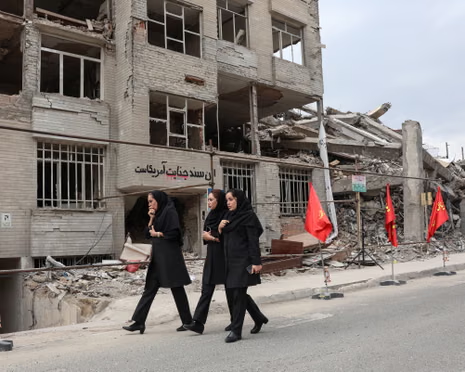
The morning light reveals a city that feels vastly different from the one residents left. Mehdi is a thirty-six-year-old IT professional who recently returned to his home within the capital. He joined thousands of others who fled toward the northern provinces when the initial strikes began. The journey back was filled with a sense of dread for what might remain behind. He found his neighborhood transformed into a landscape defined by jagged glass and heavy debris. His own apartment suffered significant damage as the pressure from nearby blasts shattered every window. Before the current truce was reached, he spent many nights crouched in total darkness. The sound of a falling missile is a whistling noise that haunts his daily thoughts. He explains that the proximity of the explosions makes every second feel like a gamble. Three missiles struck his narrow street in rapid succession just days before the temporary pause. Now he navigates a city where the infrastructure appears to be holding on by threads. The fragile truce offers little comfort to those who expect the violence to return soon.
Mehdi walks past the ruins of a local fast food shop he once loved. He notes that the clinic where his family sought medical care is now gone. Even the public gardens of his youth have been scarred by the heavy ordnance. This destruction highlights the inaccuracy of what many officials call precision strikes on targets. He and his wife now sleep in the living room to avoid falling glass. They are trying to organize insurance papers while living as refugees in their home. Their story is echoed by many who have returned to find their lives erased. The emotional weight of losing familiar landmarks adds a deep layer to their trauma. Every corner of Tehran seems to tell a story of sudden and violent change. People walk through the streets with a quiet intensity that suggests a deep exhaustion. The physical rebuilding cannot truly start until people feel safe from future aerial attacks. For now, they simply exist in the shell of a once vibrant metropolis.
The economic toll on the nation has been described as an immense civilian burden. Noor is a local activist who chose to stay in Tehran during the strikes. She reports that schools, universities, and pharmaceutical centers have all faced total destruction today. City buses and private cars sit charred and abandoned along the main arterial roads. Even though the streets are busy again, the underlying economy is in total turmoil. The government has maintained a strict internet blackout for over forty-five days and counting. This digital silence has effectively destroyed the livelihoods of millions of young Iranian workers. About ten million people rely on the internet to run small, local businesses daily. Some wealthy residents pay vast sums for satellite links to reach the outside. For most citizens, the loss of connectivity means a complete loss of monthly income. This isolation makes an already difficult situation feel much more desperate and lonely.

The affordability crisis in Iran was already severe before the first bombs started falling. Noor explains that vital medications for chronic illnesses are now nearly impossible to find. While food is still present on some shelves, the prices have become unreachable. The cost of dairy products has surged by forty percent in recent weeks. Red meat and fish have vanished from the tables of most ordinary families. Basic grocery items now represent a luxury that few can afford to purchase. Factories are struggling to stay open because they cannot source any raw materials. Construction workers find themselves without projects as the city remains in a frozen state. Many private firms are laying off staff to survive the current economic freeze. Banks and government offices struggle to process simple tasks without a stable internet connection. The closure of kindergartens has left working mothers with few options for childcare. Life has become a series of impossible choices between food and basic safety.
The atmosphere in the city is further complicated by a heavy security presence. Arash is a twenty-one-year-old student who recently returned from the countryside to study. He describes the capital as a place that feels heavily surveilled and tense. Security forces from various branches have established roadblocks at almost every major junction. These units frequently search private vehicles and personal mobile phones for any banned content. Arash says he once crossed three separate checkpoints on a single short street. The guards are heavily armed with rifles and keep a constant, watchful eye. There is a palpable sense of fear that the truce could break tonight. The presence of armed personnel serves as a constant reminder of the conflict. Citizens move quickly and avoid making eye contact with those patrolling the rubble. The silence between the checkpoints is often heavier than the noise of traffic. This level of scrutiny makes the process of returning home feel like an invasion.
One of the most disturbing developments involves the recruitment of children at checkpoints. Arash reports seeing boys who appear to be no older than eleven or twelve. These children are often armed with heavy weapons and tasked with stopping cars. The use of child soldiers is a grave violation of international law and standards. An official campaign was launched recently to enlist young civilians for homeland defense. The minimum age for these recruits was reportedly set as low as twelve. Arash feels a deep sense of devastation seeing children trapped in this way. They are caught between the external military threat and the internal state pressure. Watching a child carry a Kalashnikov is a sight that many cannot forget. It signals a breakdown of the social fabric that should protect the vulnerable. These young guards are often seen standing alongside seasoned soldiers in the heat. Their presence adds a layer of moral complexity to the city’s daily life.

As the deadline for the end of the ceasefire nears, anxiety is growing. Everyone who remains in Tehran is looking toward the horizon with great fear. Arash points out that rebuilding is impossible when the war might restart tomorrow. Hope is the only thing people have left, but it feels very thin. The rhetoric coming from international leaders has added to the general sense of doom. Comments about returning the country to the stone age are taken very seriously. Mehdi worries about the prospect of facing one-tonne bombs in his neighborhood again. The fear of nightly bombardments keeps many people from sleeping through the night. It feels as though the future offers nothing but further cycles of ruin. The prospect of total destruction of the country’s infrastructure is a looming shadow. Every diplomatic failure feels like a personal death sentence for those on the ground. The residents are waiting for a sign that the violence will finally end.
Despite the immense hardship, some voices still cling to a sense of national pride. Noor believes that the people of Iran possess a deep, internal source of power. She remains hopeful in the resilience of her neighbors during these dark times. However, she admits there is no clear plan to protect any civilians. The lack of a humanitarian strategy leaves the population feeling exposed and forgotten. For Arash, being stuck in this limbo is the worst possible outcome. The city is already in ruins and the economy has collapsed entirely now. The distinction between winning and losing the war seems irrelevant to the public. Ordinary Iranians are the ones who bear the physical and emotional scars today. They are the ones who must live among the debris of their dreams. The ticking clock of the ceasefire is the only sound that matters now. Whether the world listens or not, the people of Tehran continue to wait. Their lives are suspended in the balance between a fragile peace and total war.
Related News:
 Middle East Flights Halted After Iran Strikes
 US Iran Operation: Sixth Service Member Killed
 Hezbollah Anger Erupts as War Returns to Beirut
 Gaza Siege Deepens as Iran War Escalates
 Riyadh Drone Attack Escalates Regional War
 Middle East attacks intensify as Trump rejects Iran talks
 Iran-Iraq border airstrikes spark new tensions
 Iran-Iraq Border Strikes Spark New Front Fears
 Iran-Backed Militias Escalate Attacks Across Middle East
 UK Prepares Aircraft Carrier for Middle East Crisis
 Mojtaba Khamenei Chosen as Iran’s New Supreme Leader
 Tehran Oil Depot Strikes Darken City With Toxic Smoke
 Seventh US Service Member Killed in Iran Conflict Identified
 Mojtaba Khamenei Supporters Rally as Iranians Fear Repression
 Tehran Strikes Mark War’s Most Devastating Night
 Iran Defiance Grows Amid US-Israel War Pressure
 Hormuz Crisis Sparks Global Oil Market Fears
 Iranian Exile Factions Seek US Backing for Iran’s Future
 US-Israeli Strategy Shifts to Plan B in Iran War
 Injured Mojtaba Khamenei Elevated as Iran Leader
 US Missile Strike on Iran School Sparks Global Shock
 Iran Gulf attacks escalate as ships and airports targeted
 Iran Conflict: Trump’s Uncertain Path and Diplomatic Off-Ramp
 Ancient Heritage Sites Damaged in Recent Airstrikes
 Tehran Diary: Dark Days Under Relentless Bombardment
 British Tourist Charged Over Dubai Missile Strike Video
 Gaza Detainee Abuse: Israel Drops Charges Against Soldiers
 Trump Iran War Stance Hardens as Conflict Widens
 Lebanon Ground Campaign Raises Occupation Fears
 Gulf Tensions Rise as Iran Alleges Covert Support
 Kabul hospital strike sparks deadly blame row
 Iran Threatens Total Destruction of Mideast Energy Grid
 Ghalibaf Iran: Survivor Emerges in Shifting Power Game
 Gulf Distrust Grows Over Rumoured US-Iran Peace Talks
 WHO Warns of Health Crisis Unfolding in Middle East
 Saudi Arabia Urging US to Keep Up Iran Attacks
 Iranian President’s Son Shares Wartime Hopes and Fears
 Iran Warns of US Ground Assault Amid Rising War Tension
 MAGA Anxiety and the Iran War: A Movement Divided at CPAC
 Trump Threatens Iran With Total Infrastructure Destruction
 Iran Drone Strike Hits Kuwaiti Oil Tanker in Dubai Port
 Albanese to Address Nation as War Sparks Economic Crisis
 Death, displacement and military duties: children plunged into crisis
 Trump’s Six-Week Iranian War: The High Cost of Ignorance
 Beirut Under Fire: Massive Israeli Strikes Shaking Lebanon
 Middle East Analysis: The Cost of a Fragile Peace
 Lebanon Must Join Ceasefire to Prevent Escalation, Says Cooper
 Israel Launches Massive Airstrikes Across Lebanon
 Netanyahu Vows Continued Lebanon Strikes Amid Peace Talks
 Iran Crisis Tests Trump’s Global Leadership
 US and Iran Pursue Extension of Ceasefire via Pakistan
 Aid Crisis Grows as Hormuz War Disrupts Supply
 Trump likens US Navy actions to ‘pirates’
 Global order shifts amid Trump-era turmoil
 Middle East Crisis Escalates as Oil Routes Shake Markets
 Tensions Emerge in Netanyahu-Trump Alliance
 Trump Rejects Tehran Peace Plan as Regional Truce Crumbles
 Netanyahu Calls Early Election Amid Coalition Turmoil
 Tensions Flare as Israeli Nationalists March in Jerusalem
 Gulf Crisis Deepens After Drone Attack Near Nuclear Facility
 Global Flotilla Intercepted in International Waters
 Israeli Strikes in Lebanon Kill 10 Amid Ceasefire Strain
 Hunger increasingly weaponised in global conflicts
 Former ICC prosecutor condemns US sanctions
 Trump Claims Iran Peace Deal Near Completion
 US Strikes Iranian Sites Amid Shaky Ceasefire Talks
 Israel Intensifies Lebanon Strikes to Crush Hezbollah
 Trump’s Iran Deal Plan Sparks Intense Alarm Across Israel
 US and Iran Trade Fresh Strikes, Threatening Ceasefire
 Trump Confronts Netanyahu in Explosive Beirut Phone Call
 Iran To Propose New Shipping Fees In Strait Of Hormuz
 Grief and Devotion Amidst the Rubble of Nabatieh
 High Drama in Tehran Over Secret Nuclear Letters
 Houthis Strike Saudi Arabia as Middle East Tensions Rise
 BBC to Apologise Over Edited Trump Speech Amid Backlash
 Greene Pushes Epstein Files Amid Trump Fallout
 Zelenskyy Signs Fighter Jet Deal Amid Russian Drone Attacks
 Shadow Fleet at Sea: Europe’s Battle Against Illicit Oil Shipping
 US Suspends Afghan Immigration After White House Shooting
 Scepticism and tight security as Beijing braces for Trump