Published: 02 June 2026. The English Chronicle Desk. The English Chronicle Online.
A standard day metal detecting in a quiet Somerset field recently turned into a historic event. Kevin Minto, a dedicated lorry driver and former soldier, made an incredible archaeological discovery near Ilminster. His hobby of scanning fields for historical remnants unexpectedly uncovered a truly magnificent piece of ancient jewelry. The stunning object turned out to be an incredibly rare and massive gold Roman signet ring. This exceptional find has fascinated both professional historians and the general public across the United Kingdom. It represents one of the most significant archaeological discoveries made in the region in recent years.
When Minto first spotted the glinting gold object, he assumed it was just a coin. Many detectorists find ordinary coins, so he did not expect anything completely life-changing that afternoon. Upon digging closer, he thought the beautiful item might perhaps be an elaborate ancient brooch. He finally realized it was a heavy ring and stood there completely frozen in disbelief. One of his metal detecting companions immediately started screaming with pure excitement about being rich. The sheer shock of the moment felt exactly like being hit by an express train. The overwhelming emotion of uncovering such history is incredibly difficult for him to put into words.
The South West Heritage Trust has officially announced its successful acquisition of the spectacular Roman ring. They also purchased a substantial hoard of nearly three hundred ancient Roman coins from the site. The entire historical collection was purchased for a final confirmed sum of seventy-eight thousand pounds. This important acquisition ensures that these irreplaceable treasures will remain permanently within the county of Somerset. Keeping the items locally was incredibly important to everyone involved in the lengthy valuation process. Minto expressed immense pride and satisfaction that the artifact is staying in the local area. He feels strongly that keeping the history where it was found is absolutely right.
The lucky finder is sixty-eight years old and currently resides in the county of Wiltshire. He originally took up the hobby of metal detecting to stay active after his military retirement. The financial reward from this discovery has allowed him to change his daily working life. The landowner received exactly half of the total payout from the official heritage acquisition fund. Minto then split his remaining share equally with a close friend who assisted him that day. This windfall allowed the former soldier to pay off his remaining home mortgage completely. He has now happily reduced his demanding lorry driving schedule to just four days a week.
The story of this incredible find actually began nearly a decade ago, back in 2017. Minto discovered the first scattered Roman coins while exploring the same Somerset field that year. He kept returning to the site, sensing that more history was waiting to be found. The ancient coins were scattered across a very wide area by decades of modern agricultural ploughing. During one of his many return trips, he even uncovered a fascinating lead-lined ancient coffin. The magnificent gold ring itself was finally pulled from the earth during the 2018 season. The official financial payout took several years to resolve due to complex legal evaluation processes.
A significant complication arose because the ring was found during a military veterans’ detecting rally. A brief dispute occurred regarding who was legitimately entitled to the proceeds of the find. Minto expressed great relief that the stressful legal situation has now been fully concluded. The beautiful ring dates back to approximately the year two hundred and ninety-seven after Christ. It weighs an impressive forty-eight grams, making it exceptionally heavy for jewelry from that era. The South West Heritage Trust describes the artifact as an unparalleled discovery for modern Britain. Experts are amazed by both the sheer physical scale and the exquisite artistry of the piece.
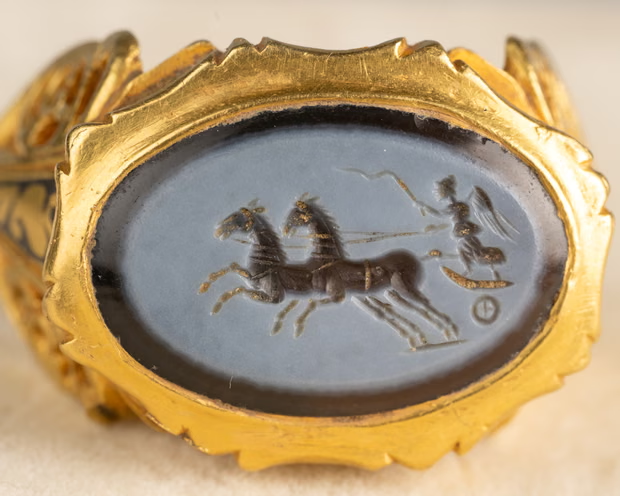
Amal Khreisheh serves as the senior curator of archaeology for the South West Heritage Trust. She noted that the Ilminster ring is remarkably large and heavy for a personal item. The piece features incredibly elaborate gold work alongside a beautifully executed and detailed gemstone intaglio. This specific engraving technique involves carving a highly detailed design directly into the gemstone surface. The beautiful artwork on this specific ring depicts the winged goddess Victoria driving a two-horse chariot. While other Roman rings exist, this specific combination of elements makes it completely unique. Its overall craftsmanship can only be compared to elite continental discoveries made in Europe.
The curator suggests the ring was likely worn by its wealthy owner during important occasions. It is also highly possible that the item served some significant ceremonial or political function. There is a fascinating contrast between the simple elegance of the stone and the gold. The sheer amount of gold utilized in the design is described as incredibly extravagant. Interestingly, the stable gold has not required any intensive professional cleaning since its discovery. Small flecks of the local red Somerset soil remain visible within the intricate gemstone setting. Scientists plan to conduct further detailed analysis to determine exactly where it was manufactured.
Researchers hope to discover whether the ring was crafted locally or imported from Europe. This specific find helps shed valuable light on a turbulent period in regional British history. South Somerset’s ancient inhabitants navigated a time of great political unrest during that specific decade. It is highly likely the ring was buried quickly to protect it from danger. The owner probably hid it alongside coins, lead items, and various pieces of pottery. Several wealthy Romans are known to have lived around the Ilminster area back then. The region was a prosperous hub featuring several highly important trade and transport routes.
Archaeologists speculate the ring belonged to a governor, a merchant, or a wealthy landowner. More research will be conducted to see if the coffin links to the ring. Usually, professional archaeologists spend their time handling broken pottery fragments or old animal bones. Pristine and spectacular items like this beautiful ring do not appear very often in careers. The historic ring is now set to travel across the region for public viewing. It will be taken on an educational tour of local primary schools this month. An official discovery day will also take place at the town’s art centre.
The local event in August will allow residents to see the magnificent treasure up close. Eventually, the ring will find a permanent home at the Museum of Somerset. The museum is located in Taunton and hosts many important local historical artifacts. Meanwhile, Minto has no plans to stop searching the historic Somerset field anytime soon. He continues to return regularly, hoping more ancient treasures might still be hidden there. His incredible story proves that patience and persistence can yield truly life-changing historical rewards. The ground beneath our feet still holds many fascinating secrets waiting to be uncovered.
Related News:
 Reeves Faces Setback as Labour May Miss Homes Target
 Kate Winslet to Narrate Film Highlighting King’s Environmental Mission
 Trump’s UK Ambassador Urges North Sea Drilling to Strengthen US Ties
 UK Bans Fake Numbers: Scammers Lose Their Trick
 Millionaires group urge Reeves to introduce wealth tax to ‘lift kids out of poverty’
 Reeves rejects £1bn plea for NHS redundancy payouts
 PM Condemns Leaks, Vows Loyalty to Ministers and Stability
 Inside the Helpline Protecting Missing Children in the UK
 PlayStation PS5 Deals Hit Lowest Prices Ahead of Black Friday
 Five-Year-Old Dies After Rare Tonsil Surgery Complication
 Starmer Says Labour’s Economic Plan Needs Years to Deliver
 UK unemployment rises to four-year high of 5.1% before budget
 Wiltshire Police Use Lasso to Catch Rampaging Village Goat
 Coasting Drinks: The Trend Redefining Alcohol Enjoyment This New Year
 Rising Hate Crimes Threaten Safety on UK Public Transport
 Starmer Faces Parliamentary Battles Over UK-EU ‘Reset’ Plan
 Met Police Vetting Failures Let Serial Rapists Remain
 Google Employee Claims Redundancy After Harassment Report
 Fatal Bolton Taxi Crash Claims Three Teens and Driver
 ScottishPower Tops List of Worst UK Energy Suppliers
 Judi Dench Champions Fight to Save London’s Green Spaces
 Crowborough Camp Welcomes First Asylum Seekers
 BBC Funding Crisis: Tim Davie Warns of Jeopardy Ahead
 Storm Chandra floods Somerset, triggers major incident declaration
 Artificial intelligence will cost jobs, admits Liz Kendall
 Older Women Vanish from BBC Screens, Review Confirms Bias
 Mandelson Faces Police Inquiry Over Epstein Leak
 Streeting moves on doctor pay to end strike dispute
 UK reports baby formula toxin poisoning cases across the country
 Morgan McSweeney downfall shocks Labour leadership
 Send spending gap leaves deprived areas behind
 Hidden Crisis: Domestic Abuse Suicide Toll in UK
 UK Unemployment Rate Climbs to 5.2% Peak
 Farage Unveils Reform UK Frontbench Team
 BBC World Cup Presenting Duties Shared Among Trio
 Placenta Accreta Warning as Hunt Urges Action
 Wales Approves Assisted Dying Bill Consent
 CPS Updates Guidance on Honour-Based and Dowry Abuse
 Rolling Hills and Heritage: A Car-Free Break in Leicestershire
 Corbyn Leads Your Party in Coordinated Left-Flank Strategy
 Asylum Seekers to Work After Year-Long Wait
 Starmer Row as Greens Demand Apology
 Inquiry into HMRC child benefit errors launched by NAO
 Rising Costs Force Families to Rethink Days Out
 Scott Mills Sacked by BBC Over Personal Conduct Claims
 Palantir Boss Defends NHS Deal Amid Government Break Clause
 Relationship with Trump may be beyond repair, Starmer warned
 UK Government Poised to Revive Stalled Hillsborough Law
 Home Office Faces Legal Risks Over Asylum Hotel Living
 Crisis in NHS Surgery Scheduling Hits Patients Hard
 Blue Badge Abuse: The Rising Tide of Public Hostility
 Scott Parker Leaves Burnley After Premier League Drop
 Silent Tracks: Rail Line Without Passengers
 RFU Backs Borthwick Despite England’s Poor Six Nations
 Major test for Labour as polls open in Great Britain
 Keir Starmer Struggles to Secure His Grip on Downing Street
 Farage Faces Standards Probe Over Cash Property Purchase
 Closing the Gap: UK Pensions Commission Demands Action
 Russian Electronic Attack Targets UK Defence Chief Jet
 UK Shoppers Face Prolonged Price Rises At Tills
 Tube Strike Brings Capital to a Standstill Over Shift Disputes
 BP Stands Firm on Amanda Blanc Amid Boardroom Storm
 Teaching Machines Right From Wrong in the Digital Age
 UK House Prices Drop For Third Month Due To War Fears
 The Hidden Crisis Eroding Trust in British Communities
 Deepfake Abuse on X Sparks Safety Concerns for Dissidents
 Stolen Mobiles Could Soon Become Useless Bricks
 Clean Air Initiatives Spark Major Fall in London Hospital Admissions
 United Kingdom Politics Worse Now Than Before Brexit, Warns MP
 Russian Tanker Captain Remanded in UK Court After Channel Seizure
 Shocking Zoo Incident Sparks Attempted Murder Probe
 The Hybrid School Revolution Defying the Social Media Ban
 UK Care Crisis: Row Explodes Over New Visa Settlement Rules
 Sainsbury’s Boss Optimistic As Grocery Inflation Eases
 NHS Urges Investigation For Irregular Periods
 US Airman Avoids British Court in Indecent Exposure Case
 Farage Warns Sky News Following Financial Inquiry
 Ann Widdecombe, Formidable Political Figure, Dies at 78
 UK Schools Struggle as Classrooms Top 40C
 Westminster Council Threatens Charing Cross Soup Kitchen