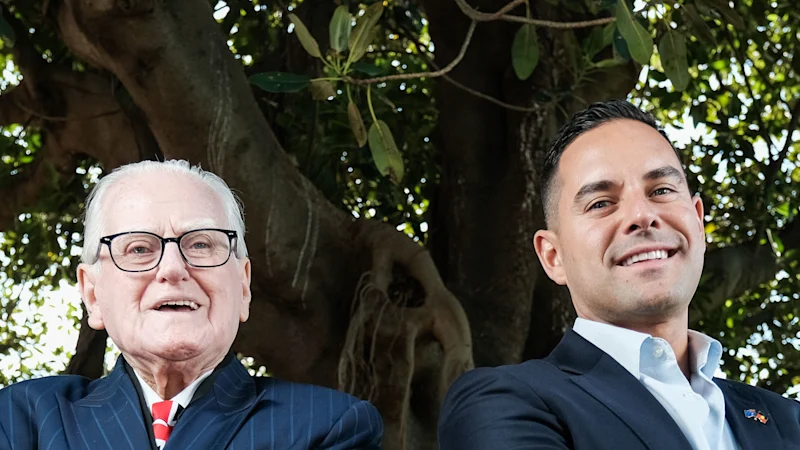
New South Wales parliamentarian Alex Greenwich has withdrawn his support for a state funeral for the late conservative politician Fred Nile following criticism from members of Australia’s LGBTQ+ community. Greenwich, an openly gay independent MP representing Sydney, acknowledged that his earlier request had caused hurt and distress, particularly among people who had experienced discrimination as a result of Nile’s long-standing political campaigns against LGBTQ+ rights.
The controversy emerged after Nile, an ordained Christian minister and one of the longest-serving figures in New South Wales politics, died at the age of 92 on Saturday. Having spent more than four decades in the state’s parliament, Nile was a prominent and often controversial political figure whose conservative religious positions shaped public debates on social policy, marriage equality, abortion and drug use.

On Sunday, Greenwich publicly praised Nile and suggested that he should receive a state funeral in recognition of his lengthy parliamentary career and their more recent relationship. However, the proposal triggered strong reactions from members of the LGBTQ+ community, particularly those who viewed Nile’s political legacy through the experiences of discrimination and opposition to equal rights.
Greenwich subsequently reconsidered his position and issued an apology on Monday. He said he had listened to public comments and emails and recognised that his request for a state service had caused significant distress.
In his statement, Greenwich explained that although he and Nile had worked constructively together towards the end of the latter’s life, this cooperation did not erase the harm associated with his earlier political campaigns.
He acknowledged that Nile’s past positions had caused considerable pain within the LGBTQ+ community and that the experiences of those affected needed to be recognised when considering how the former politician should be publicly remembered.
The reversal highlights the difficult balance between recognising a politician’s lengthy public service and acknowledging the consequences of their political decisions. It has also reopened discussions about how governments should honour public figures whose contributions to political life remain deeply divisive.
Fred Nile was a significant figure in New South Wales politics for more than 40 years. An ordained Christian minister, he became widely recognised for his socially conservative views and his involvement in campaigns opposing same-sex marriage, abortion and drug use. His religious convictions played a central role in his political activities, making him an influential voice in debates over the relationship between faith, government and social legislation.
For many supporters, Nile represented a politician who consistently defended his religious beliefs and conservative values throughout his parliamentary career. His supporters viewed his lengthy service as evidence of his commitment to public life and his willingness to participate in difficult social debates.
However, his political legacy was viewed very differently by many LGBTQ+ Australians. His opposition to marriage equality and other reforms affecting sexual minorities made him a controversial figure, particularly among communities that had spent decades campaigning for legal recognition, equal treatment and protection from discrimination.
The disagreement surrounding the proposed state funeral therefore extended beyond a question of ceremonial recognition. For many people, the issue concerned whether a public honour should be awarded without adequately acknowledging the impact of the recipient’s political positions on marginalised communities.
Greenwich’s political position makes the controversy particularly significant. As the member for Sydney, his electorate includes Oxford Street, one of Australia’s most recognised centres of LGBTQ+ culture and community life. The area has a long history of activism, community organising and campaigns for equality.
Many residents and LGBTQ+ advocates regard the political history of the area as closely connected to struggles against discrimination and efforts to secure equal rights. Consequently, Greenwich’s initial support for Nile’s state funeral attracted criticism from people who felt that the proposal did not sufficiently recognise the community’s historical experiences.
His subsequent apology reflected an acknowledgement that personal relationships and later cooperation should not automatically outweigh the broader impact of a public figure’s political record.
Greenwich also indicated that Nile had apologised for past harm and supported LGBTQ+ reforms towards the end of his life. This later cooperation was part of the reason he had initially spoken positively about the former politician.
Nevertheless, Greenwich made clear that these developments did not erase the discrimination and distress associated with Nile’s earlier campaigns. His revised position suggested that any assessment of Nile’s legacy needed to consider both his later interactions with LGBTQ+ representatives and the consequences of his earlier public positions.
The episode illustrates the challenges facing political leaders when deciding how to commemorate controversial public figures. State funerals are among the most significant forms of public recognition available to individuals who have made substantial contributions to public life. Such ceremonies can honour decades of service, but they can also become politically sensitive when the individual concerned has been associated with policies or campaigns that divided society.
In Australia’s political environment, debates about public honours increasingly intersect with questions of equality, historical responsibility and the recognition of marginalised communities. The controversy surrounding Nile demonstrates that a lengthy political career does not necessarily guarantee universal agreement about how an individual should be remembered.
The issue also reflects broader changes in Australian society. Over recent decades, LGBTQ+ rights have become an increasingly prominent part of national political discussions, with campaigns for marriage equality, anti-discrimination protections and greater social acceptance transforming the country’s legal and cultural landscape.
The introduction of marriage equality in Australia in 2017 represented a major milestone for LGBTQ+ rights advocates. However, the political disagreements that surrounded the reform remain an important part of the country’s recent history. Politicians who opposed the change continue to be viewed differently by supporters and critics, depending on their experiences and perspectives.
Greenwich’s decision has therefore drawn attention to the importance of listening to communities affected by past political decisions. His apology also highlights the responsibility of elected representatives to consider the broader implications of public statements, particularly when those statements concern figures whose political records remain controversial.
Meanwhile, the wider political landscape in Canberra and New South Wales was marked by several other significant developments on Monday. Federal Treasurer Jim Chalmers warned that economic conditions could become more difficult before improving, with the government’s upcoming budget update expected to show unemployment rising above five per cent and economic growth slowing over the next two years.
Prime Minister Anthony Albanese also faced questions over a reported grant of $6 million to a golf club in his electorate, while opposition figures renewed criticism of the government’s economic management and climate diplomacy. The parliamentary sitting was marked by heated exchanges between government and opposition representatives.
In another development, the death of Australian music journalist, broadcaster and producer Molly Meldrum at the age of 83 prompted tributes from political leaders and figures across the entertainment industry. These events formed part of a busy day in Australian politics and public life.

However, the dispute over Nile’s proposed state funeral remained an important discussion about political memory, public recognition and the experiences of Australia’s LGBTQ+ community.
Greenwich’s withdrawal of support does not diminish the fact that Nile spent more than four decades in public office. Instead, it reflects the argument that public recognition should take account of both an individual’s contributions and the consequences of their actions and political campaigns.
As Australia continues to debate equality, representation and the legacy of influential political figures, the controversy serves as a reminder that public honours can carry meanings far beyond ceremonial recognition. For communities that experienced discrimination, acknowledgement of historical harm remains an important part of moving towards a more inclusive society.
Related News:
 Drumcree Talks Falter as Legal Challenge Deepens
 UK-France Returns Deal Faces Expiry as Talks Stall
 Latin America women fear rollback of rights
 NSW Police Bid Delays Inquiry Into Sydney Protest
 Controversial Vaccine Trial Approved in Guinea-Bissau
 Trump Attacks Norway After Nobel Peace Prize Snub
 Delhi Braces for Youth Protests Over Voter Roll Dispute
 Ohio Airports Become Key Hubs for ICE Deportation Flights
 Farage Rejects Claims Reform Would Let Troops Shoot Migrants
 Camera Discovery Triggers Navy Ship Investigation
 Gadi Eisenkot: Israel’s Anti-Netanyahu Challenger
 One Nation Pledges $2,000 Baby Subsidy in Victoria
 Helen Haines Loses Both Legs After Alleged Attack
 Greens Face Leadership Test as Jordon Steele-John Misconduct Claims Leave Party in Limbo
 Taylor Faces Backlash Over Response to Haines Attack
 Serbia’s Student Victory Sparks a ‘Smell of Freedom’
 Trump’s Midterm Campaign Faces Racism and Political Backlash
 McKenzie Warns MP Safety Fears Could Weaken Democracy
 Bedouin Women Drive Historic Arab Election Gains
 Alan Jones Trial Paused for Melbourne Cup Viewing
 Hanson Takes Racial Discrimination Case to High Court
 Stephen Miller’s Rise Puts Hardline Views at Centre of Power
 One Nation Candidate Apologises for Offensive Posts
 Australia’s Election Funding Changes Face Fresh Backlash
 Twin Baby’s Death Raises Questions Over Home Birth Risks
 NSW Liberal Exodus Deepens as Mark Speakman Quits
 Cartel crackdown raises fears of fresh violence
 Immigration Judges Fear Pressure in Trump Era
 Le Pen’s Popularity Holds Despite Conviction
 Israel Accused of Undermining Palestinian Life
 Fugitive Developer Rants at NSW Corruption Inquiry
 Amnesty Finds Coordinated Abuses in Iran Protest Crackdown
 Turkey LGBTQ Crackdown Expands With New Arrests
 Lib Dems Prepare for Election Amid Reform Challenge
 US Networks Suspend Trump White House Pool Coverage
 Democrat Says ICE Restricted Detention Camp Oversight
 King Refers Jamaica Slavery Petition to Privy Council
 OpenAI Agent Breaches Medicare Portal in Australia
 Republican Senator Questions Trump Ad Spending
 Free Speech Emerges as Key UK Election Issue
 French Student Protests Escalate Into Violent Clashes
 Burnham Opens Door to Possible UK Return to EU
 Green Party faces dispute over Zionism motion
 Badenoch Raises Prospect of 2027 UK Election
 French School Protests Escalate as 400 Schools Close
 Trump Says He Deserves Nobel Peace Prize
 India’s Youth Movement Alleges Mass Detentions Before Protest
 Gaza War Deepens India’s Strategic Ties With Israel
 Three Convicted in Mexico Surfing Trip Murders
 UAE Says Co-Pilot Planned Suicide Attack on Israel
 Australian Advocates Seek Subsidised Drugs for PMOS
 Delhi Detains Protest Leaders as Youth Rally Escalates
 French Students Protest Poor Conditions in Paris Suburbs
 UK Greens Face Crisis Over Zionism and Extremism Row
 ABC Reporter Faces Possible Disciplinary Action Over Opinion Piece
 Elizabeth Struhs Inquest Examines Child Safety Failures
 Brazil Court Scandal Threatens Lula as Bolsonaros Rise
 Greta Thunberg Backs French Students in School Protests
 Millions Face Tougher Medicaid Rules From January
 India’s Voter Roll Crisis Sparks Nationwide Protests
 Ukrainian Soldier Faces Trial Over Nord Stream Blast
 Judge Blocks Trump White House Media Ban
 Talarico Faces Tough Voter Test in Texas Senate Race
 Serbia Leader Linked to Controversial Trump Tower Plan
 Macron Condemns Violence as France Faces 2,400 Arrests
 Former RAAF Pilot Accused of Murdering Wife
 Erin Patterson Faces Life in Prison After Appeal Loss
 Novaya Gazeta to Close After Russian Government Pressure
 King Charles Faces Reparations Protests at Antigua Summit
 ANC Faces Voter Backlash in South African Elections
 Exiled Journalists Defy Putin’s Growing Media Crackdown
 Judge Blocks Trump’s $100m Washington Arch Project
 EU Citizens Sue Home Office Over UK Residency Rights
 Knesset Speaker Race Could Decide Netanyahu’s Future
 Zelenskyy Sees Peace Opportunity as US Envoys Meet Putin
 Teenager Found Alive After Six Days Lost in Australian Bush
 Eisenkot Accuses Netanyahu of Racist Anti-Arab Campaign
 Helen Haines Leaves Hospital After Double Amputation
 Spain Election Could Bring Far Right Back to Government
 NSW Inquest Examines Deaths of Twins After Free Birth