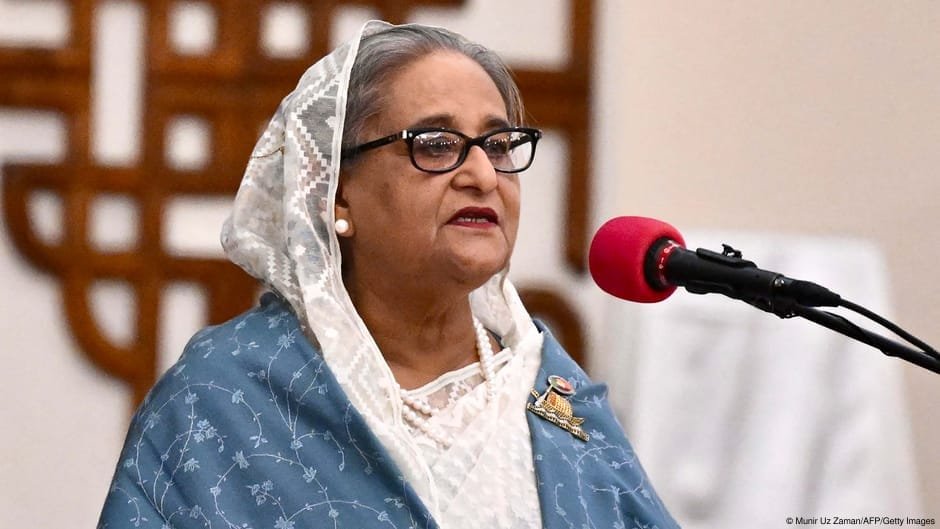
Bangladesh has witnessed a fresh wave of political violence, arson attacks and deadly confrontations as supporters of former prime minister Sheikh Hasina launched nationwide protests ahead of her planned return from exile in December. Several districts experienced disruption on Thursday after the Awami League announced a week-long protest programme, culminating in a nationwide lockdown. The escalating unrest has raised concerns about public safety, political stability and the country’s ability to maintain law and order during an increasingly tense period.
The demonstrations have been accompanied by crude bomb explosions, attacks on vehicles, fires at political offices and confrontations involving supporters of rival political groups. Among the most disturbing incidents was an arson attack on the ancestral home of former interim government chief adviser Muhammad Yunus in Chattogram. Police said the building was set on fire late on Wednesday, although members of Yunus’s paternal family who live on the upper floors were reported safe.

The latest unrest comes after the Awami League called for a series of demonstrations to mobilise support for Hasina’s planned return to Bangladesh. The former prime minister has been living in neighbouring India since leaving Dhaka in August 2024 following a student-led uprising that forced her government from power.
Hasina’s party announced the protest programme after the government rejected her request for a new passport and national identity card, documents she reportedly wanted to facilitate her return. The Awami League has portrayed the decision as an obstacle to her political and personal return to the country, prompting supporters to organise demonstrations and demand action from the authorities.
The planned return has become a major political issue, particularly because Hasina remains a deeply controversial figure in Bangladesh. Her 15-year period in power ended amid widespread protests, allegations of human rights abuses and a violent government crackdown on demonstrators. Her departure created a significant political vacuum and triggered a prolonged period of institutional and political uncertainty.
In preparation for possible violence during Thursday’s demonstrations, the Bangladesh Border Guard deployed 97 platoons across seven districts. The security operation particularly focused on areas considered strongholds of Awami League supporters, including Gopalganj and Faridpur. The deployment was intended to prevent attacks, protect public property and assist local law enforcement agencies in maintaining order.
Police and other security agencies have been dealing with repeated incidents of violence over the past 10 days. Reports indicate that dozens of crude bomb explosions and vehicle arson attacks have occurred in at least 28 districts. Several police officers and members of the public have reportedly been injured during the incidents, highlighting the growing risks faced by ordinary citizens.
The attack on Yunus’s ancestral home has added another dimension to the political tensions. Police said the fire broke out late Wednesday in Chattogram, approximately 300 kilometres south-east of Dhaka. Investigators believe flammable substances may have been thrown into an unused room on the ground floor, triggering the blaze. The fire did not spread to the upper floors, where members of the former interim leader’s paternal family live.
The incident is particularly sensitive because Yunus became the head of the interim administration following Hasina’s departure in 2024. His administration was responsible for overseeing the country during a politically difficult transition and preparing the way for a new political arrangement. However, his leadership and the decisions taken during the interim period have faced criticism from Hasina’s supporters, who have repeatedly accused the administration of political persecution.
The recent attacks have also targeted individuals and properties associated with the Bangladesh Nationalist Party (BNP), the country’s ruling political party. In one of the most serious incidents, a BNP activist was allegedly killed by unidentified individuals during a protest near Gopalganj, Hasina’s home district, late on Tuesday. Police said the killing occurred amid heightened political tensions and was being investigated.
Violence was also reported in the capital, Dhaka. A crude bomb exploded outside the residence of Cultural Affairs Minister Nitai Roy Chowdhury on Tuesday night. Authorities also reported arson attacks on the house of a BNP lawmaker and several shops belonging to BNP supporters in Gopalganj. These incidents have intensified concerns that political hostility is spreading beyond demonstrations and increasingly targeting residential and commercial properties.
Another deadly incident occurred in the southern district of Pirojpur on Wednesday morning, when a helper working for a bus company was burnt to death after two buses were set on fire. The victim’s death illustrates the devastating consequences of attacks on public transport, where workers and passengers can become victims of political violence despite having no direct involvement in political disputes.
The attacks have also extended to financial and social institutions. Grameen Bank, established by Nobel Peace Prize laureate Muhammad Yunus, reported that at least 37 of its branches and offices had been targeted in arson attacks or attempted fires since 10 November. According to the bank, 14 additional incidents had occurred since midnight on Tuesday.
The attacks against the microfinance institution have raised particular concerns because its operations are connected to millions of people, especially low-income households and small-scale borrowers. Any prolonged disruption to its branches could affect access to financial services, loan repayments and other essential activities for communities that depend on the institution.
Meanwhile, the political situation has become more complicated following the arrest of several individuals linked to the former ruling party. On Thursday, authorities detained former education minister Nurul Islam Nahid from his residence in Dhaka. Police told Reuters that he faces charges connected to several killings during the 2024 protests.
His detention comes amid a broader investigation into violence surrounding the uprising that eventually ended Hasina’s government. The legal proceedings have become an important part of the country’s political transition, with questions about accountability, due process and the treatment of former government officials continuing to generate debate.
The latest confrontation also coincides with the first anniversary of Hasina’s death sentence. On 17 November 2025, a local court found the former prime minister guilty of crimes against humanity over her alleged role in ordering a deadly crackdown on the student-led uprising in 2024 and sentenced her to death. Hasina has remained outside Bangladesh since fleeing to India and has rejected the proceedings against her.
Her supporters have continued to challenge the political and legal developments surrounding her removal from power. The Awami League’s latest mobilisation appears intended to demonstrate that the party retains political influence and a support base despite the upheaval of 2024 and the subsequent legal action against its leadership.
The government, however, has accused senior Awami League figures living abroad of encouraging supporters to destabilise the country and attack public and private property. Home Minister Salahuddin Ahmed said on Tuesday that individuals involved in violence would be identified and prosecuted. His remarks indicate that the authorities intend to take a firm position against attacks on public security and property.
The government faces the difficult task of maintaining security while ensuring that political disagreements do not turn into widespread violence. Security agencies must protect public infrastructure, transport services, financial institutions and residential areas while responding to demonstrations in accordance with the law.
The situation also presents challenges for ordinary people, who are increasingly exposed to disruptions caused by political confrontations. Transport interruptions, damaged businesses, attacks on public facilities and fears of further violence can affect daily economic activities, employment and access to essential services. Small businesses and workers who depend on regular movement between districts are particularly vulnerable when roads and commercial areas become unsafe.
For Bangladesh, the latest unrest represents another difficult chapter in the political instability that has followed the dramatic events of August 2024. The country is still dealing with the consequences of the previous government’s collapse, legal proceedings against former officials and continuing disagreements over political representation and the future direction of the state.

Hasina’s proposed return has further intensified these divisions. While her supporters are demanding that she be allowed to return, opponents continue to emphasise the need for accountability over the violence associated with her administration. Reconciling these competing demands will require political restraint, respect for legal procedures and a commitment to protecting citizens from further violence.
As protests continue and security deployments increase, the immediate priority remains preventing further deaths, injuries and destruction. The coming days could prove crucial in determining whether the situation can be brought under control or whether the confrontation will develop into a wider political and security crisis.
Related News:
 Israeli Strike in Southern Lebanon Kills Seven
 Sri Lanka Ex-First Lady Arrested Over Donation Probe
 Israel Promotes Film Challenging Controversial Gaza Documentary
 India’s Youth Movement Alleges Mass Detentions Before Protest
 Delhi Tightens Security Ahead of Election Protest
 Delhi Braces for Youth Protests Over Voter Roll Dispute
 PTI Announces Swabi Rally Ahead of Long March Plans
 India’s Voter Roll Crisis Sparks Nationwide Protests
 Ukraine Captures First Indonesian Fighter in Russian Army
 Zelenskyy Warns Starshield Curbs Weaken Ukraine Defences
 Cartel crackdown raises fears of fresh violence
 US ‘Narco Boat’ Strikes Draw Global Outcry
 Five Years of Taliban Rule Leave Afghanistan in Crisis
 Nepal-Tibet Flood Death Toll Rises as 2,478 Remain Missing
 Ukraine Villagers Demand Answers After Deadly Arms Depot Strike
 Nepal Flood Survivors Face Unimaginable Loss
 Nepal Tunnel Rescue Offers Hope Amid Flood Devastation
 Israel Accused of Undermining Palestinian Life
 Yemen War Displaces 125,000 as Fighting Intensifies
 Japan PM Backs International Criminal Court
 Sri Lanka Easter Bombings: 15 Get Long Prison Terms
 Ukraine and Russia Escalate Long-Range Drone War
 Nepal PM calls deadly flood a global climate warning
 Trump Asked Xi About Buying US Weapons
 South Korea-Ukraine Row Erupts Over North Korean POWs
 Pilot Recalls Fight to Save Flydubai Passengers
 Germany Pledges €1bn Military Aid to Ukraine
 Latin America women fear rollback of rights
 Japan PM condemns alleged killing by US Marine
 Former German Intelligence Chief Arrested Over Espionage
 Gaza War Deepens India’s Strategic Ties With Israel
 Pakistan Lawyers Back PTI Long March and Demands
 Delhi Detains Protest Leaders as Youth Rally Escalates
 Gadi Eisenkot: Israel’s Anti-Netanyahu Challenger
 Suu Kyi Appears in Rare Photos After Royal Gift
 Zelenskyy Accuses US of Delaying Ukraine Missile Supplies
 Zelenskyy Says US Failed to Warn Kyiv of Russian Strikes
 Japan’s Takaichi Faces a Crucial Second Year in Power
 Xi Jinping Tightens China’s Anti-Corruption Campaign
 Ukraine Peace Talks Set to Resume in November
 Serbia’s Student Victory Sparks a ‘Smell of Freedom’
 Trump’s Midterm Campaign Faces Racism and Political Backlash
 Amnesty Alleges Cambodian Officers Guarded Scam Compounds
 China Expels Record 33 Officials in Xi Jinping Purge
 UAE Nominee Faces Backlash Over Sudan War Role
 Bedouin Women Drive Historic Arab Election Gains
 Paraguay President Impeached and Arrested After Banking Crisis
 US Pushes for Final Russia-Ukraine Peace Deal
 Orbán’s Brother Detained in Smuggling Probe
 Knesset Speaker Race Could Decide Netanyahu’s Future
 Iran Death Row Boxer Wins Prestigious Human Rights Award
 US Indictment Reveals New Links in RAF Fairford Case
 Eisenkot Accuses Netanyahu of Racist Anti-Arab Campaign
 Trump, Xi and Putin Face Fears of a New Yalta
 Greene Pushes Epstein Files Amid Trump Fallout
 Venezuela Threatens Nobel Winner Machado with Fugitive Status
 Ben Roberts-Smith Denies War Crime Allegations in First Statement
 Maldives Cave Diving Tragedy Raises Safety Alarm
 Discontent grows around Putin amid war strain
 New Footage Revives Peter Falconio Mystery
 Houthis Strike Saudi Arabia as Middle East Tensions Rise
 Trump Calls Iran War ‘Small Potatoes’ Despite US Deaths
 Royal Crown Branded Enslaved Africans in Britain’s Slave Trade
 US Networks Suspend Trump White House Pool Coverage
 Democrat Says ICE Restricted Detention Camp Oversight
 Xi urges Trump to avoid US-China military conflict
 Republican Senator Questions Trump Ad Spending
 French School Protests Escalate as 400 Schools Close
 Israel Marks Three Years Since October 7 Attack
 South Korea Probes Fuel Shipments to Russia
 Trump Says He Deserves Nobel Peace Prize
 Trump Rules Out Iran Attack Before US Elections
 Trump’s Russian Diesel Deal Sparks Ukraine Fury
 Brazil Court Scandal Threatens Lula as Bolsonaros Rise
 Pakistan School Roof Collapse Kills 27 Students
 Flávio Bolsonaro Reportedly Leaves Brazil After Election Defeat
 Trump’s Global Policies Put Republicans at Risk
 Alan Jones Trial Paused for Melbourne Cup Viewing
Zelenskyy Sees Peace Opportunity as US Envoys Meet Putin
 Drone Warfare Fuels a Deadly Civilian Crisis in Sudan