Delaying the publication of a major international climate science assessment could seriously undermine global efforts to tackle the climate crisis, one of the world’s leading climate scientists has warned. Johan Rockström, director of the Potsdam Institute for Climate Impact Research, has called on governments to allow the Intergovernmental Panel on Climate Change (IPCC) to complete its next comprehensive assessment as quickly as possible, warning that political disagreements over the organisation’s work could weaken international cooperation at a critical moment for the planet.
Rockström’s warning comes as governments remain divided over the timing, structure and representation of the IPCC’s seventh assessment report, known as AR7. The report is expected to provide an updated scientific understanding of climate change, its consequences and the measures needed to reduce greenhouse gas emissions. It is considered particularly important because it could help governments evaluate their progress towards the objectives of the 2015 Paris climate agreement.

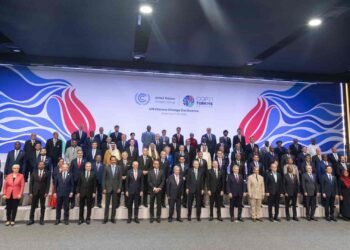
Speaking during the COP31 climate conference in Antalya, Turkey, Rockström described climate science as a fundamental foundation of international climate policy. He argued that delaying the work of the world’s leading climate assessment body would create unnecessary obstacles for countries attempting to coordinate their responses to global warming.
The IPCC, established in 1988, brings together scientists from around the world to assess existing research on climate change. Rather than conducting all the research itself, the organisation evaluates thousands of scientific studies and produces comprehensive reports that help governments understand the scale of environmental threats and the available policy options.
Its findings have become central to international climate negotiations, particularly the annual United Nations climate conferences. The seventh assessment cycle is expected to culminate in three major working group reports, which together will provide an updated picture of the physical science of climate change, its impacts and possible solutions.
The reports were initially expected to be completed in 2028, ahead of COP33, scheduled for later that year. That timing is important because governments are preparing for the second global stocktake under the Paris agreement, a process designed to assess whether international climate commitments are sufficient to limit global temperature increases to 1.5 degrees Celsius above pre-industrial levels.
The global stocktake is one of the most important mechanisms established under the Paris agreement. It evaluates collective progress in reducing emissions, adapting to climate impacts and providing financial support to vulnerable countries. Its findings are expected to influence the next generation of national climate commitments.
However, disagreements among participating countries have raised the possibility that the IPCC’s seventh assessment could be postponed until 2029, after the global stocktake has already been completed. Russia, several Arab countries, including Saudi Arabia, and India are among those pushing for a later publication schedule.
Supporters of the proposed delay argue that developing countries do not have sufficient influence over the scientific assessment process. They have raised concerns that the organisation’s recommendations and economic assumptions may reflect the priorities of wealthier nations rather than the circumstances and development needs of countries in the Global South.
Some climate campaigners have also questioned the fairness of the IPCC’s emissions-reduction scenarios. These scenarios, commonly described as mitigation pathways, examine different ways countries could reduce greenhouse gas emissions while pursuing economic and social development.
Lidy Nacpil, coordinator of the Asian Peoples’ Movement on Debt and Development, has argued that some of these pathways are biased against developing countries. She particularly questioned the assumption that emissions reductions should take place wherever they can be achieved at the lowest cost.
According to Nacpil, such an approach could place a disproportionate burden on poorer countries because emissions-reduction measures may be cheaper to implement in parts of the Global South. She argued that the underlying assumptions used to construct climate scenarios should be reconsidered to reflect historical responsibility, economic inequality and the different development challenges facing nations.
She also criticised what she viewed as the selective targeting of countries such as Saudi Arabia, arguing that wealthy industrialised nations and multinational companies had historically benefited from fossil fuel extraction and the expansion of the global oil and gas industry. In her view, discussions about climate responsibility should recognise the historical role of developed economies rather than placing the burden primarily on developing nations.
Rockström rejected the suggestion that the IPCC’s scientific assessments were systematically biased against the Global South. He maintained that the organisation’s reports were based on peer-reviewed research and represented the collective work of scientists from different geographical and economic backgrounds.
He explained that climate pathways consider a wide range of socioeconomic circumstances, including income differences, demographic changes, public health, economic development and the varying capacities of countries to transition towards cleaner energy systems.
Rockström emphasised that the IPCC should remain an objective scientific institution rather than becoming an arena for resolving political disagreements over justice, human rights or democracy. He argued that governments should defend independent scientific assessments because reliable evidence is essential for making effective climate policies.
The debate over representation has nevertheless highlighted important questions about participation in international scientific institutions. Developing countries frequently face financial, technical and institutional barriers when contributing to global research and policy discussions. Ensuring that scientists from these regions have meaningful opportunities to participate remains an important challenge.
The IPCC has responded by pointing to improvements in the geographical diversity of its scientific contributors. According to the organisation, 664 authors have been appointed to work on the drafts of its three working group reports. Approximately 51 per cent of those authors come from developing countries and economies in transition, representing an increase of nearly half compared with the previous assessment cycle in 2021.
The organisation has also stated that every chapter across the three working group reports includes at least one scientist from a developing country. Its leadership structures involve pairs of scientists from developed and developing countries, while nations such as China, India and Saudi Arabia also contribute prominent researchers.
An IPCC spokesperson said the organisation remained committed to diversity, inclusion, integrity and professional standards. The spokesperson explained that several institutional measures had been introduced during the seventh assessment cycle to strengthen equity and ensure broader participation in the preparation of scientific reports.
Despite these improvements, some observers acknowledge that European researchers continue to exercise considerable influence over parts of the assessment process. This has reinforced calls for greater geographical representation and more opportunities for scientists from underrepresented regions to contribute to international climate research.
However, several developing countries have also expressed concern about delaying the assessment. Small island nations and least-developed countries, which are particularly vulnerable to rising sea levels, extreme weather and environmental disruption, have called for the report to be completed on schedule.
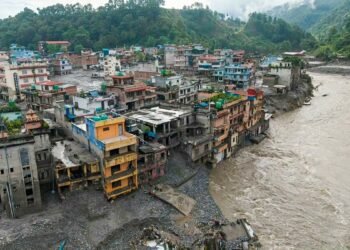
Raju Pandit Chhetri, a climate negotiator from Nepal, described accusations that the IPCC was racist as a political argument that should not distract governments from the importance of scientific evidence. He stressed that countries such as Nepal were already experiencing serious consequences of climate change.
For vulnerable countries, the effects are not distant possibilities. Flooding, landslides, extreme rainfall and other climate-related disasters threaten communities, infrastructure, livelihoods and economic stability. Chhetri warned that thousands of lives and enormous amounts of property could be lost if governments failed to respond effectively.
The urgency of the debate has increased following international assessments indicating that the world remains far from achieving its climate objectives. United Nations estimates suggest that current national commitments could put the planet on a trajectory towards approximately 2.8 degrees Celsius of warming. Such an increase would significantly exceed the Paris agreement’s temperature targets and could produce devastating environmental consequences.
Previous IPCC assessments have warned that continued global warming could accelerate the melting of glaciers and ice sheets, contribute to rising sea levels, damage coral reef ecosystems and increase the frequency or intensity of several types of extreme weather. These changes could threaten food production, water security, public health and economic development across different regions.
Rockström nevertheless believes that existing scientific evidence is already sufficient to demonstrate the need for stronger climate action. He argued that even the findings of the sixth assessment report, published in the previous assessment cycle, provide compelling evidence that governments must substantially improve their emissions-reduction commitments.
His position suggests that the absence of a new report should not become an excuse for delaying climate policies. Countries already possess extensive scientific information about the dangers of global warming and the measures required to reduce emissions.
Nevertheless, climate experts fear that postponing AR7 could create political complications beyond the scientific process itself. Some governments might use the absence of an updated assessment to question the timing or scope of the global stocktake, potentially weakening one of the central mechanisms of the Paris agreement.
One expert involved in the process warned that the dispute was adding further obstacles to an already complicated international climate negotiation process.
The disagreement is approaching an important decision point as the IPCC prepares to meet in early December to discuss its budget. Although the organisation has financial reserves, failure to reach agreement on its budget could seriously affect its ability to complete the assessment reports within the expected timeframe.
The issue cannot formally be resolved at COP31 because decisions concerning the IPCC’s internal operations must be agreed within the organisation itself. However, the presence of government representatives in Antalya has created an opportunity for discussions and a possible compromise.
IPCC chair Jim Skea, a British scientist, has extended his participation in the conference to continue discussions with governments and other representatives.
The draft COP31 decision released on Monday also recognises the central importance of the best available scientific evidence and the IPCC’s contribution to international climate policy. It further highlights the value of broader participation, including contributions from Indigenous peoples, local communities, people of African descent, non-English-speaking regions and developing countries.

As negotiations continue, the challenge for governments will be to address legitimate concerns about representation without compromising the timely production of essential scientific assessments. For countries already facing the consequences of climate change, the debate is about more than institutional procedures. It concerns the ability of the international community to make informed decisions before environmental damage becomes increasingly difficult or impossible to reverse.
Rockström’s warning therefore highlights a critical choice facing world leaders: strengthen international scientific cooperation or allow political disagreements to delay evidence that is urgently needed to protect the planet. With the next global stocktake approaching, the timing of the IPCC assessment could have far-reaching implications for the future direction of international climate action.
Related News:
 UN Warns World Must Cut Emissions by 18% by 2030
 Capitalism ‘Suicidal’, Warns Petro at Climate Summit
 Doomsday Clock Nears Midnight Amid Global Crises
 UN Warns Record El Niño Could Supercharge Global Heat
 Europe Faces Climate Reckoning After Extreme Summer
 Super El Niño Threatens Hundreds of Thousands of Lives
 Swiss Glaciers Lose Nearly One-Fifth of Ice in Five Years
 Argentina Protesters Resist Milei’s Land Sale Drive
 Warming UK Seas Threaten Marine Life and Food Security
 Zelenskyy Seeks Urgent Help as Russia Hits Ukraine’s Power Grid
 Paris Climate Agreement Faces a Critical Test After 10 Years
 Democrats Bring New Hope to Global Climate Talks
 World Faces Irreversible Climate Overshoot, Report Warns
 Indonesia Wildfires Fueled by El Niño and Climate Change
 Britain deploys RAF specialists to assist Belgium with drone threats
 Night after night, Belgium is on high alert.
 BP’s Influence Sparks Controversy in UK STEM Education
 Scotland’s Climate Plans Face Scrutiny Over ‘Science Fiction’ Targets
 Ocean Warming Drives Massive Marine Life Loss, Study Warns
 Musk’s xAI Permit Sparks Fury Over Power Plant Expansion
 Iran Social Media Strategy Shifts to Information War
 Cluster Strikes Test Israel’s Missile Defences
 Trump to Deploy “God Squad” Over Gulf Wildlife Protections
 Moldova River Crisis Exposes War’s Hidden Cost
 Big Tech Lobbies EU to Hide Massive Datacentre Emissions
 Canadian astronaut French words ease language row
 Chornobyl Still at Risk 40 Years After Disaster
 Record May Heat to Cold Front in Eastern Australia
 Norway Doubles Down on Oil and Gas for Europe Energy Security
 UN Issues Urgent Warning: Imminent Return of El Niño
 Germany Summons Chinese Envoy Over Russian Troop Training
 Lanarkshire AI Hub Fails Energy Promises
 Venezuela Quake Death Toll Surpasses 4,000
 Three-Quarters of England’s Riverbanks Still Off Limits
 Swedish Mining Push Puts Sami Land Rights Under Pressure
 Nepal seeks $20m climate compensation after deadly floods
 Tropics May Wait Longest for Net-Zero Climate Benefits
 UK Plans New Centre to Counter Information Warfare
 Norfolk Broads Housing Levy Faces Environmental Criticism
 Xi urges Trump to avoid US-China military conflict
 Nepal PM calls deadly flood a global climate warning
 Australia Weighs New Laws After OpenAI Medicare Breach
 Russia Targets Ukraine’s Digital Economy With Strikes
 Thai downpours shift north-westwards after Bangkok floods
 UN Warns of Narrowing Window to Restore Forests
 AI Deepfakes Put New Pressure on Election Trust
 AI Could Intensify Election Risks in Southeast Asia
 Berlin App Helps Residents Protect City Trees
 Edinburgh Glasshouses Reopen After Major Restoration
 Polanski Says Leadership Not Tied to By-election Result
 Bangkok Floods Push City to Breaking Point
 Pacific Climate Summit Draws Limited Global Leaders
 Drax Datacentre Faces Major Carbon Emissions Concerns
 Tech-Optimist Scientists Less Likely to Take Climate Action
 Norway Fjord Faces Fresh Mine Waste Dumping
 Britons Demand Greater Honesty on Climate Crisis
 NSW Leader Downplays Impact of Landmark Coal Ruling
 Panama Hit by Powerful 7.7-Magnitude Earthquake
 Controversial Vaccine Trial Approved in Guinea-Bissau
 Australia Rejects Russian Fuel as Trump Strikes Deal
 Ukraine Combat Units Face Sudden Starlink Restrictions
 UK Shoppers Urged to Avoid Hake and Coley
 Indonesia Tests Dry Ice as Toxic Haze Spreads Across Asia
 Climate Change Makes Tap Water Unsafe in Arctic Norway
 Zelenskyy Says US Failed to Warn Kyiv of Russian Strikes
 Meta Faces Election Bias Claims Ahead of Brazil Runoff
 Magnitude-7 Earthquake Strikes Tibet, Killing at Least 16
 Trump, Musk, and Zelenskyy Trade Blame Over Ukraine Starshield Access
 Spain Deepfake Ad Sparks Election Outrage
 Melting Dolomites Glaciers Reveal 250 WWI Explosives
 Global Crises Test Diplomacy as Trump’s Policies Face Scrutiny
 Democrats Court Maha Voters as Trump Alliance Frays
 UK Warned Over Dangerous Dependence on China for Minerals
 New Zealand’s Opportunity Party Challenges Populist Politics
 Labor Minister Defends Chalmers Amid Budget Tensions
 CEU Eyes Budapest Return as Hungary Enters New Era
 Zelenskyy Warns Starshield Curbs Weaken Ukraine Defences
 UN Climate Talks Renew Push for Carbon Removal Technology
 Russia, Saudi Arabia Lead Historic CO2 Export Rankings
 Russian Strikes Leave Kyiv in Darkness, Pressure Mounts on Mayor