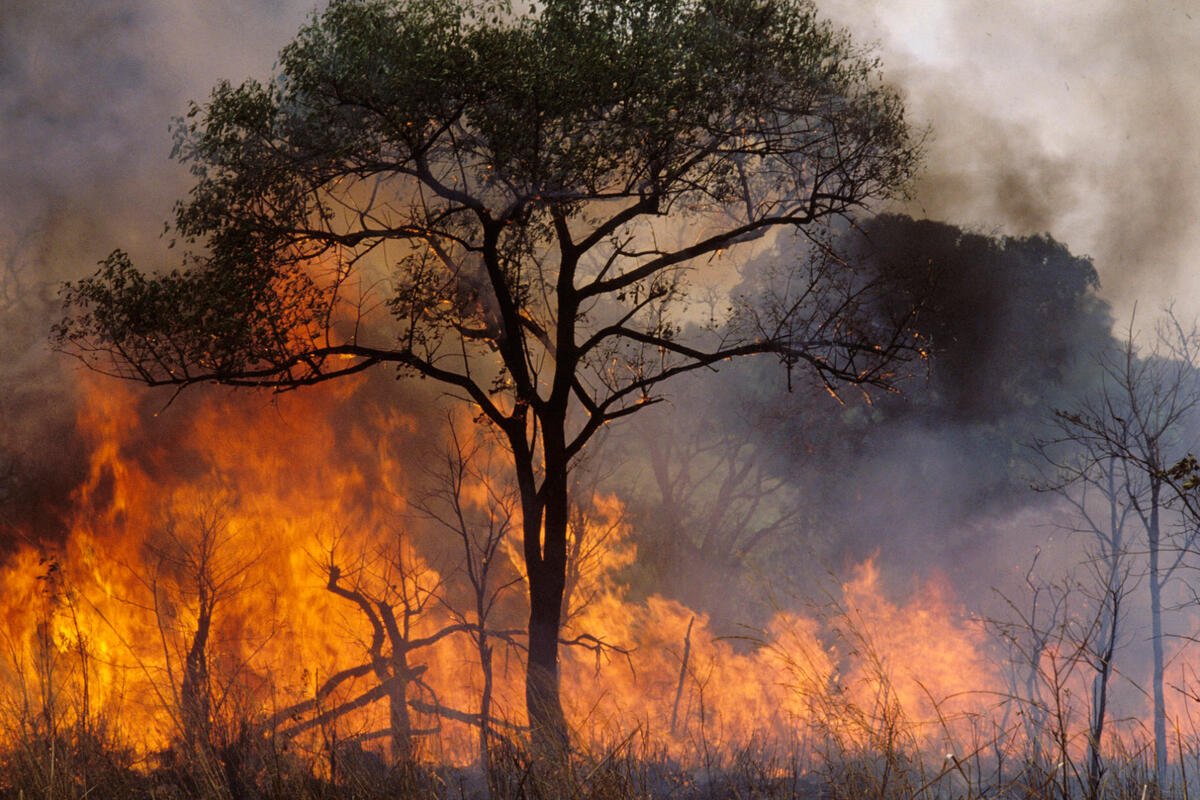
Indonesia is facing one of its most devastating wildfire seasons in more than a decade, with nearly three million hectares of land already burned as scientists identify an alarming combination of climate change, an exceptionally strong El Niño and decades of environmental destruction behind the disaster. The fires have produced toxic smoke across large parts of Southeast Asia, caused hundreds of thousands of respiratory infections and raised serious questions about the country’s forest management and climate preparedness.
An international team of climate scientists has concluded that unusually high temperatures and severely reduced rainfall created ideal conditions for widespread fires between August and October 2026. Their findings indicate that human-driven global warming and the powerful El Niño weather phenomenon significantly intensified the extreme conditions, while deforestation, agricultural expansion and the destruction of peatlands made Indonesia’s landscapes increasingly vulnerable to ignition.

The assessment was conducted by scientists associated with World Weather Attribution, an international research initiative that investigates the influence of climate change on extreme weather events. Researchers examined conditions across Java, Kalimantan and Sumatra to determine how different environmental and climatic factors contributed to the country’s devastating fire season.
According to their analysis, global warming, largely driven by the continued burning of coal, oil and natural gas, increased temperatures by approximately 1.6 degrees Celsius during the three-month peak fire period. The additional heat accelerated the drying of soil, forests and vegetation, allowing fires to spread more easily and become increasingly difficult to control.
The impact was intensified by El Niño, a naturally occurring climate phenomenon associated with changes in ocean temperatures in the tropical Pacific that can disrupt rainfall patterns across different parts of the world. Scientists estimate that the 2026 El Niño conditions contributed another 0.3 degrees Celsius to temperatures and reduced rainfall by approximately 50 per cent.
Professor Friederike Otto, a climate scientist at Imperial College London, described the combination as a dangerous interaction between natural climate variability and human-driven global warming. She explained that El Niño had effectively reduced the supply of rainfall while fossil fuel emissions had increased the heat, creating conditions favourable for widespread fires.
Otto warned that as global temperatures continue to rise, fire weather during El Niño years will become increasingly severe. Without a rapid transition away from fossil fuels and stronger protections for forests and other vulnerable landscapes, Indonesia and other countries could experience even more destructive fire seasons in the future.
The research also highlighted how climate change has altered the probability of extreme weather conditions associated with wildfires. Scientists found that the hot and dry atmospheric conditions experienced during the fire season had become approximately three times more likely because of human-driven climate change. El Niño increased the likelihood of those conditions by around five times.
Although these factors created the immediate environmental conditions for the disaster, researchers emphasised that Indonesia’s land-use practices played an equally important role. Decades of commercial logging, agricultural expansion, forest conversion and peatland drainage have transformed large areas of the country into landscapes that can ignite easily during prolonged dry periods.
Indonesia contains some of the world’s most important tropical forests, which provide habitats for endangered wildlife, store enormous quantities of carbon and help regulate regional and global climate systems. However, extensive land conversion for plantations and other commercial activities has weakened these natural protections.
Peatlands are particularly important because they store large quantities of organic carbon accumulated over thousands of years. When these waterlogged ecosystems remain intact, they are generally less vulnerable to widespread burning. However, drainage projects lower groundwater levels and expose dried organic material to oxygen, making peatland areas highly combustible.
Once peat fires begin, they can continue burning underground for extended periods, sometimes spreading unnoticed beneath the surface before emerging in new locations. These fires are also particularly difficult to extinguish and release substantial quantities of carbon dioxide and other harmful pollutants.
Pramudhian Firdaus, a meteorologist at the University of Melbourne who also works with Indonesia’s meteorological service, said the country’s landscapes had changed dramatically over the past three decades. He explained that extensive drainage infrastructure and deforestation had created an environment highly vulnerable to ignition.
His assessment underlines the importance of addressing environmental damage alongside the broader climate crisis. Even when rainfall returns, degraded forests and drained peatlands can remain vulnerable to future fires unless restoration and sustainable land-management measures are introduced.
The situation has become more complicated because Indonesia’s rainy season has been delayed by approximately 20 to 30 days. The country’s Meteorology, Climatology and Geophysics Agency has linked the delay to El Niño conditions, allowing dry weather to persist and increasing the difficulties faced by firefighting teams.
According to the latest local reports, approximately 2.88 million hectares had been affected by fires across Indonesia during 2026. If officially confirmed, this would exceed the previous record for the current century, established in 2015 when approximately 2.6 million hectares were burned.
The 2015 fire disaster generated an estimated 333 million tonnes of carbon emissions and attracted international concern over the environmental consequences of Indonesia’s land-clearing practices. The possibility that the 2026 disaster could surpass that record has raised fresh concerns about the country’s contribution to global greenhouse gas emissions.
The environmental consequences are also extending beyond Indonesia’s borders. Smoke from the fires has spread across Southeast Asia, affecting air quality in neighbouring countries, including Singapore, Malaysia and the Philippines. The regional movement of smoke demonstrates how environmental disasters in one country can create serious public health challenges for millions of people elsewhere.
The most immediate concern is the impact on human health. According to Indonesia’s health ministry, wildfire-related pollution has been associated with at least 400,000 respiratory infections, including approximately 180,000 cases involving children.
Prolonged exposure to wildfire smoke can cause breathing difficulties, irritation of the eyes and throat, and worsening symptoms among people with asthma and other respiratory conditions. Fine particles in the smoke can penetrate deep into the lungs and may also contribute to cardiovascular complications, particularly among vulnerable individuals.
Children, older people and those with existing health conditions are especially exposed to the dangers. Children are particularly vulnerable because their respiratory systems are still developing, while older adults may have reduced capacity to cope with prolonged exposure to polluted air.
Maja Vahlberg, a technical adviser at the Red Cross Red Crescent Climate Centre, warned that the Indonesian fires were creating health consequences across the region. She highlighted the particular risks facing children, elderly people and individuals with pre-existing medical conditions.
Vahlberg also emphasised that El Niño conditions are highly predictable, even when their effects are intensified by climate change. This provides governments and humanitarian organisations with opportunities to take preventive action before extreme fire conditions develop.
The growing disaster has also generated political pressure within Indonesia. Environmental activists and concerned citizens have staged protests in Jakarta, demanding stronger government action and calling for the wildfires to be declared a national emergency.
Demonstrators have criticised the authorities’ handling of the crisis and demanded more effective forest protection, improved firefighting arrangements and stronger accountability for activities that contribute to environmental destruction. Images of protesters wearing masks and carrying signs depicting wildlife affected by toxic smoke have highlighted growing public frustration.
The crisis has also raised wider concerns about global carbon emissions. Extensive wildfires release stored carbon into the atmosphere, while the destruction of forests reduces the planet’s capacity to absorb carbon dioxide. This creates a damaging cycle in which environmental destruction contributes to global warming, which in turn increases the likelihood of future fires.
Scientists have warned that the combination of widespread wildfires and unusually dry conditions in different parts of the world could contribute to a significant increase in projected carbon dioxide emissions for 2027. This concern comes despite a slight decline in some fossil fuel-related pollution associated with the economic consequences of the US-Israeli attacks on Iran.
Indonesia’s wildfire disaster therefore represents more than a national environmental emergency. It highlights the growing interaction between climate change, extreme weather, unsustainable land use and public health risks in an increasingly interconnected world.
Experts argue that reducing future damage will require a combination of policies, including stronger protection of remaining forests, restoration of degraded peatlands, restrictions on destructive land-clearing practices and improved early-warning systems. Governments will also need to strengthen regional cooperation because smoke pollution and climate-related emergencies do not respect national borders.
For Indonesia, the immediate priority remains protecting communities, controlling active fires and reducing exposure to toxic smoke. However, the longer-term challenge will be preventing the environmental conditions that have repeatedly allowed such disasters to develop.

The findings offer a clear warning that natural climate events can become considerably more destructive when combined with human-driven global warming and decades of environmental degradation. As Indonesia struggles to contain its worst fires in at least a decade, scientists fear that without decisive action, similar disasters could become increasingly frequent and severe across Southeast Asia.
The message from researchers is increasingly urgent: El Niño may have reduced the rainfall, but human activity has helped create a landscape and climate in which fires can spread with devastating consequences. Protecting forests, reducing fossil fuel dependence and preparing communities before extreme weather arrives will be essential to preventing another disaster on this scale.
Related News:
 Super El Niño Threatens Hundreds of Thousands of Lives
 Indonesia Tests Dry Ice as Toxic Haze Spreads Across Asia
 UN Warns Record El Niño Could Supercharge Global Heat
 Nepal seeks $20m climate compensation after deadly floods
 Europe Faces Climate Reckoning After Extreme Summer
 Nepal PM calls deadly flood a global climate warning
 Thai downpours shift north-westwards after Bangkok floods
 Swiss Glaciers Lose Nearly One-Fifth of Ice in Five Years
 Berlin App Helps Residents Protect City Trees
 Bangkok Floods Push City to Breaking Point
 WHO Seeks Russia Answers Over Suspected Plague Death
 Climate Change Makes Tap Water Unsafe in Arctic Norway
 UN Warns World Must Cut Emissions by 18% by 2030
 Magnitude-7 Earthquake Strikes Tibet, Killing at Least 16
 Warming UK Seas Threaten Marine Life and Food Security
 Paris Climate Agreement Faces a Critical Test After 10 Years
 Gaza Floods Leave Thousands Homeless as Tents Await Entry
 World Faces Irreversible Climate Overshoot, Report Warns
 Ocean Warming Drives Massive Marine Life Loss, Study Warns
 Musk’s xAI Permit Sparks Fury Over Power Plant Expansion
 ‘Drinking from a Fetid Pond’: Superbug Genes in Lough Neagh
 Chornobyl Still at Risk 40 Years After Disaster
 Escobar’s Hippos May Be Moved to India Zoo
 Capitalism ‘Suicidal’, Warns Petro at Climate Summit
 Record May Heat to Cold Front in Eastern Australia
 Doomsday Clock Nears Midnight Amid Global Crises
 China mine blast death toll rises to 90
 Ebola outbreak in DRC overwhelms health system as cases surge
 Maldives Cave Diving Tragedy Raises Safety Alarm
 Pope Meets Families in Italy Toxic Waste Zone
 UN Issues Urgent Warning: Imminent Return of El Niño
 Deadly H5 Bird Flu Reaches Australia’s East Coast
 UK Heatwaves Ignite Crisis of Sleep and Public Safety
 Europe Scorched as Record Heatwaves Grip the Continent
 Venezuela Quake Death Toll Surpasses 4,000
 Powerful 7.7-Magnitude Earthquake Hits Eastern Indonesia
 Battery Fires Cost UK Recycling Industry £1bn
 Nepal-Tibet Flood Death Toll Rises as 2,478 Remain Missing
 Nepal Rescuers Race to Save Hundreds Trapped Underground
 Turkmenistan Begins Fixing Major Methane Mega-Leaks
 Nepal Flood Survivors Face Unimaginable Loss
 Nepal Tunnel Rescue Offers Hope Amid Flood Devastation
 Indonesia Receives First Aircraft Carrier
 Japan Braces for Dujuan as Storm Threat Grows
 Typhoon Dujuan Leaves Four Dead in Japan
 Tropics May Wait Longest for Net-Zero Climate Benefits
 AI Takes Centre Stage in Trump-Xi Talks
 Trump gives Xi red-carpet welcome as trade truce extends
 Chinese Hybrid Car Surge Raises EU Auto Industry Concerns
 Ukraine and Russia Escalate Long-Range Drone War
 Norfolk Broads Housing Levy Faces Environmental Criticism
 Xi urges Trump to avoid US-China military conflict
 UN Warns of Narrowing Window to Restore Forests
 Europe’s Record Heat Summer Signals Climate Risks
 Edinburgh Glasshouses Reopen After Major Restoration
 Turkey’s Landfill Methane Leaks Raise Climate Questions
 Pacific Climate Summit Draws Limited Global Leaders
 Argentina Protesters Resist Milei’s Land Sale Drive
 Drax Datacentre Faces Major Carbon Emissions Concerns
 Tech-Optimist Scientists Less Likely to Take Climate Action
 Norway Fjord Faces Fresh Mine Waste Dumping
 Britons Demand Greater Honesty on Climate Crisis
 Panama Hit by Powerful 7.7-Magnitude Earthquake
 Controversial Vaccine Trial Approved in Guinea-Bissau
 Australian Advocates Seek Subsidised Drugs for PMOS
 Mexico Storms Leave Five Dead as Flooding Worsens
 UK Shoppers Urged to Avoid Hake and Coley
 Zelenskyy Says US Failed to Warn Kyiv of Russian Strikes
 Nigeria Confirms Ebola Case as Regional Outbreak Spreads
 China’s AI Ambitions Hit $2.4 Trillion Market Setback
 US Bans BYD Vehicles at Japan Military Base
 Melting Dolomites Glaciers Reveal 250 WWI Explosives
 El Niño Drought Pushes Papua New Guinea Into Crisis
 Global Crises Test Diplomacy as Trump’s Policies Face Scrutiny
 Democrats Court Maha Voters as Trump Alliance Frays
 Measles Claims Child’s Life in New York After 30 Years
 UK Ministers Warned Over Lobbying by Indian Mega-Zoo
 Zelenskyy Seeks Urgent Help as Russia Hits Ukraine’s Power Grid
 Democrats Bring New Hope to Global Climate Talks