Published: 16 September 2026. The English Chronicle Desk. The English Chronicle Online
A Michelin-starred restaurant in Seoul has been fined after serving customers a dessert topped with ants that had not been approved for use as a food ingredient under South Korean regulations.
The Seoul Western District Court on Wednesday fined the company operating the restaurant 10 million won and its chief executive 15 million won after finding them guilty of violating food-safety legislation. The case centred on the use of dried ants as an ingredient at Evett, a two-Michelin-star restaurant in Seoul’s affluent Gangnam district.
The court’s decision brought an unusual food-safety case into focus because insects are not automatically permitted as food ingredients in South Korea. While insect consumption has a long history in the country, the government maintains regulatory requirements governing which species can be sold for human consumption.
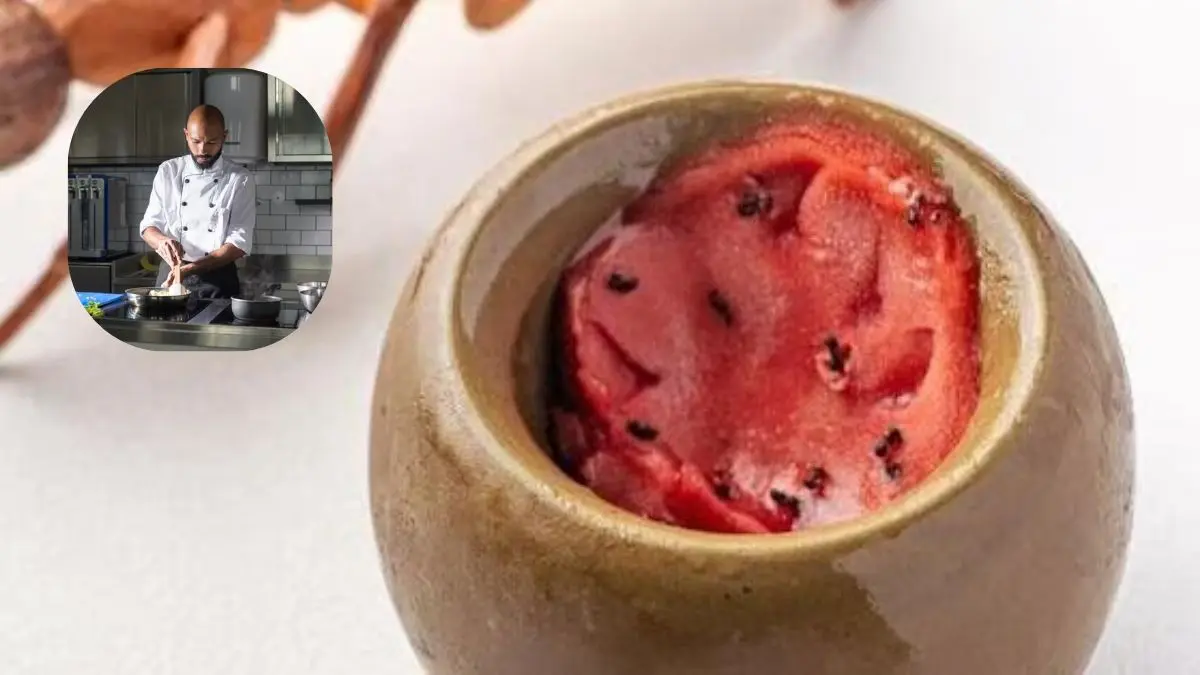
The restaurant had used ants as a topping for a dessert made with sikhye, a traditional Korean sweet rice drink. According to prosecutors, the ants were imported from the United States and Thailand and were served at the restaurant between April 2021 and January 2025.

The prosecution had sought a one-year prison sentence for the restaurant’s chief executive as well as a larger fine for the company. The court instead imposed financial penalties, taking into account factors including the defendants’ admission of the offence, the chief executive’s lack of a previous food-safety conviction and the fact that the restaurant had stopped using ants.
Judge Lee Se-chang said the offence was serious, particularly because the dishes had been offered for an extended period and the restaurant had used the unusual ingredient as part of its promotional identity. The court also considered testing that reportedly found heavy metals in the ants at levels above permitted limits.
At the same time, the judge noted circumstances that reduced the penalties. The court heard that the actual number of ants served may have been lower than the prosecution’s estimate. The restaurant also argued that only a portion of its customers accepted the ant topping when it was offered.
According to prosecutors, the dessert was served to more than 12,000 customers and involved an estimated 49,096 ants, generating approximately 120 million won in revenue. Defence lawyers challenged the calculation, saying that only around 60% of customers accepted the topping.
The case illustrates the difference between culinary practice and food regulation. Insects are increasingly used by chefs in different parts of the world, and edible insects are permitted under food regulations in a number of countries. But the legal status of a particular insect can vary substantially between jurisdictions.
South Korea has established a regulatory system for edible insects, with government authorities responsible for managing food safety from production through consumption. The Ministry of Food and Drug Safety continues to oversee regulations and safety standards concerning food and food ingredients.
The government’s approach does not mean that insects are prohibited from the Korean food system. On the contrary, several insect species have long been recognised as food ingredients. Silkworm pupae, for example, are familiar to many South Koreans through beondegi, a traditional snack that has been sold by street vendors for generations.
The legal issue in the Evett case was therefore not simply whether people could eat insects. It was whether the particular ants used by the restaurant had been authorised for use as food under South Korean law.
Businesses seeking to introduce an insect that has not already been approved are required to follow the relevant regulatory process. The restaurant did not obtain the necessary temporary approval before using the ants, according to the prosecution’s case.
The Ministry of Food and Drug Safety became involved after officials encountered references to the restaurant’s ant dishes in online blog posts and social-media material. The investigation subsequently focused on how the insects had been obtained, how long they had been used and how many customers had received the dessert.
The restaurant’s lawyers argued that the use of ants should be viewed in the context of international culinary practice. They pointed to restaurants in countries including Denmark, the United Kingdom and Australia where ants and other insects have been used as ingredients.
That argument, however, did not remove the requirement to comply with South Korean food-safety rules. A restaurant operating in one country must follow that jurisdiction’s regulations even when an ingredient is considered acceptable elsewhere.
The case also highlights the responsibilities that accompany the operation of high-profile restaurants. Evett was founded by Australian chef Joseph Lidgerwood, who has become the public face of the establishment and has appeared on the Netflix cooking competition Culinary Class Wars.
Lidgerwood was not charged in the case. Under South Korean food-safety legislation, the legal responsibilities associated with operating a food business fall on the person registered as the business operator. The restaurant’s chief executive, Ginny Kim, who is Lidgerwood’s wife, was the defendant identified in the case alongside the company operating the restaurant.
The distinction between the restaurant’s public culinary identity and its legal corporate structure was therefore significant. Although Lidgerwood is closely associated with Evett, the court proceedings concerned the registered operator and the company rather than the chef himself.
The use of ants had formed part of the restaurant’s experimental approach to food. The dessert was among a small number of dishes on its 15-course menu that incorporated the insects, according to the defence.
For customers, the unusual ingredient was presented as a culinary experience rather than as an attempt to circumvent food regulations. But the case demonstrates why innovative restaurants must also consider regulatory requirements when introducing ingredients that are unfamiliar or newly adopted in a particular market.
South Korea’s broader interest in edible insects has grown alongside international discussion about alternative food sources. Insects are sometimes promoted as a potential source of protein and as an ingredient that can be incorporated into different types of food. At the same time, governments regulate them to address questions concerning food safety, production, contamination and consumer protection.
The Ministry of Food and Drug Safety has continued to develop systems for managing the safety of edible insects. In June 2026, the ministry announced a joint initiative with agricultural authorities and a certification body aimed at strengthening safety certification for edible insects from the production stage.
That regulatory environment makes the Evett case particularly relevant. The issue was not whether insect-based cuisine is inherently unacceptable, but whether the specific ingredient had passed the required regulatory process before being served commercially.
The court also considered evidence concerning the composition and safety of the imported ants. Prosecutors presented test results indicating that heavy-metal concentrations exceeded permitted levels. The finding added a food-safety dimension to what might otherwise have appeared to be primarily a question about whether an unusual ingredient was legally approved.
The restaurant has since stopped using ants in its dishes. Both the prosecution and the defendants have seven days to appeal the judgment.
The case is likely to attract attention beyond the restaurant industry because it sits at the intersection of food innovation, international culinary trends and national regulation. Ingredients that are familiar to chefs in one country may require separate approval elsewhere, and the growing popularity of alternative foods can create new challenges for regulators and businesses.
For Seoul’s restaurant scene, Evett remains part of a highly competitive culinary landscape in which chefs often experiment with ingredients, presentation and traditional Korean flavours. The ant-topped dessert was one example of that experimentation, combining an unconventional ingredient with sikhye, a drink deeply associated with Korean food culture.

But the ruling makes clear that culinary creativity operates within a legal framework. Restaurants can draw inspiration from international food trends, yet they remain responsible for ensuring that ingredients served to customers comply with domestic food-safety requirements.
The outcome also provides a reminder that unusual food does not automatically mean illegal food. South Korea already recognises several edible insects and has systems for evaluating and regulating others. The legal problem in the Evett case arose from the use of ants that had not received the necessary approval.
As the global food industry continues to experiment with insects and other alternative ingredients, similar regulatory questions may become more common. For chefs and restaurant operators, the challenge will be to balance culinary innovation with the requirements designed to protect consumers.
In the Evett case, that balance ultimately ended in a court ruling and financial penalties. The restaurant has discontinued the use of ants, while the legal process remains open to appeal. The judgment provides a clear example of how South Korea’s food-safety rules apply even to highly regarded restaurants and internationally influenced culinary concepts.
Related News:
 UK Retailers Accused of Breaking Refund Laws
 Ukraine Urges UK to Seize Russian Oil Tankers
 Pubs and Hotels Face Business Rates Reform Review
 France Eases Cheese Rules as Drought Hits Farms
 Ukraine Moves to Seize Water Company
 UK retailers plan 100,000 placements for young people
 Councils spend £125m on illegal children’s care
 Thames Water Revises Oxfordshire Mega-Reservoir Plan
 Farage Threatens Union Funding Ban Over Reform Donations
 Fashion Firms Urge UK-Made NHS and Army Uniforms
 Mayors Could Gain New Powers Over UK Water Firms
 Mayors Could Gain Greater Powers Over Water Firms
 Horse Hill Oil Site Sold as New Drilling Bid Emerges
 Supreme Court Ruling on Car Finance Scandal Poised to Impact Millions of Motorists and Banks
 David Lammy Faces Possible Legal Challenge Over Foreign Office Secondment Scheme
 Lucy Powell urged ministers to reconsider costly legal case for Labour donor’s firm
 Virgin Media Fined £23.8m Over Telecare Safety Failures
 Abramovich Chelsea Sale Cash Faces Jersey Probe
 Rising Costs Force Families to Rethink Days Out
 Glasgow Central Set for Full Reopening After Fire
 ABC Staff Strike Over Pay and AI Concerns
 M&S Demands Urgent Action on Rising Violent Retail Crime
 Synagogue Arson Attempt Sparks Security Fears
 City & Guilds Sale Sparks Fees and Pay Uproar
 MoD Has Lost Track of Veteran Recall List, Says Adviser
 Reform UK funding: mystery billionaire revealed
 US Court Weighs Fate of TPS for Migrants
 Millions Face Food Poverty as Consumer Confidence Hits Record Low
 Greens Face Internal Row Over Antisemitism Claims
 Florida Surgeon ‘Devastated’ Over Fatal Surgery Error
 Barrister Criticises Trial After Suicide Case Verdict
 Immigration Judges Fear Pressure in Trump Era
 Father’s diaries reveal doubts over Hawking
 Hybrid village stores fight rural decline
 Cornwall Van Dwellers Face Eviction in Housing Crisis
 Le Pen’s Popularity Holds Despite Conviction
 Weight-Loss Drugs Transform Fashion Shopping Habits
 Trump Refuses to Sign Housing Bill, But Law Takes Effect
 Italy’s Beach Lunch Ban Sparks Holiday Backlash
 Trump Orders Signs Criticising Smithsonian Museum
 Westminster Council Threatens Charing Cross Soup Kitchen
 BBC Warned About Missing Clothes of Murder Victim
 Weight-Loss Drugs Offer Food Savings Mainly to High Earners
 Cambridge Professor Jason Arday Found Dead at Home
 Burnham unveils £65m drought aid for farmers
 Unions Warn Labour Over Zero-Hours Contract Reforms
 China Probes Alleged Formaldehyde Use on Cabbages
 Firms on both sides fear damage from US-Canada trade war
 UK Risks Falling Behind in AI Race
 UK Households Could Save £173 on Fixed Energy Deals
 Japan Inc Bets Big on India as China Risks Deepen
 Internal Exclusions Surge in England’s Schools
 Green Leader Targets Starmer’s Former Seat
 UK Subsidence Claims Surge After Record-Breaking Summer
 Swedish Mining Push Puts Sami Land Rights Under Pressure
 Spire Healthcare Agrees £1bn Takeover by Toscafund
 UK House Prices Fall as Mortgage Rates Rise
 Billionaire Chris Rokos poised to leave UK
 UK plans tougher Israel stance with settlement trade ban
 Oil nears $100 as Saudi attacks shake markets
 McLaren to Create 1,000 UK Jobs in £450m Investment
 Nats Boss Summoned as UK Flight Chaos Continues
 JPMorgan Boss Warns Against UK Bank Tax Rise
 Iceland to Open First UK High Street Store in Falklands
 John Lewis Losses Widen to £124m as Confidence Falls
 Patriot Platform Raises Concern Across Britain
 AI CEOs Call for Slower Development
 Oil Prices Surge as Saudi Pipeline Closure Deepens Crisis
 UK State Pension Set to Rise 3.9% as Triple Lock Holds
 UK Pay Growth Slows to 3.9% as Rate Decision Nears
 Bank Urged to Slow Bond Sales as UK Costs Rise
 Fugitive Developer Rants at NSW Corruption Inquiry
 JLR Eyes NATO Market With New Defender Military Vehicle
 Sydney Council Bans AI Smart Glasses at Pools
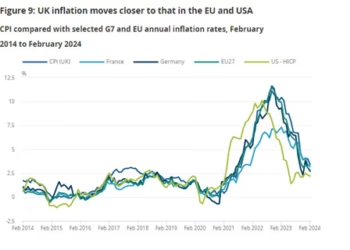 UK Inflation Hits 3.1% as Household Pressure Grows
 UK Heatwaves Set to Worsen Pothole Damage, RAC Warns
 Lisa Nandy Calls for Tougher Action on Social Media Doxxing
 Piddington Votes for Symbolic Independence Over Asylum Plan
 Texas Charges Seven Noncitizens in Voting Crackdown
 Amnesty Finds Coordinated Abuses in Iran Protest Crackdown