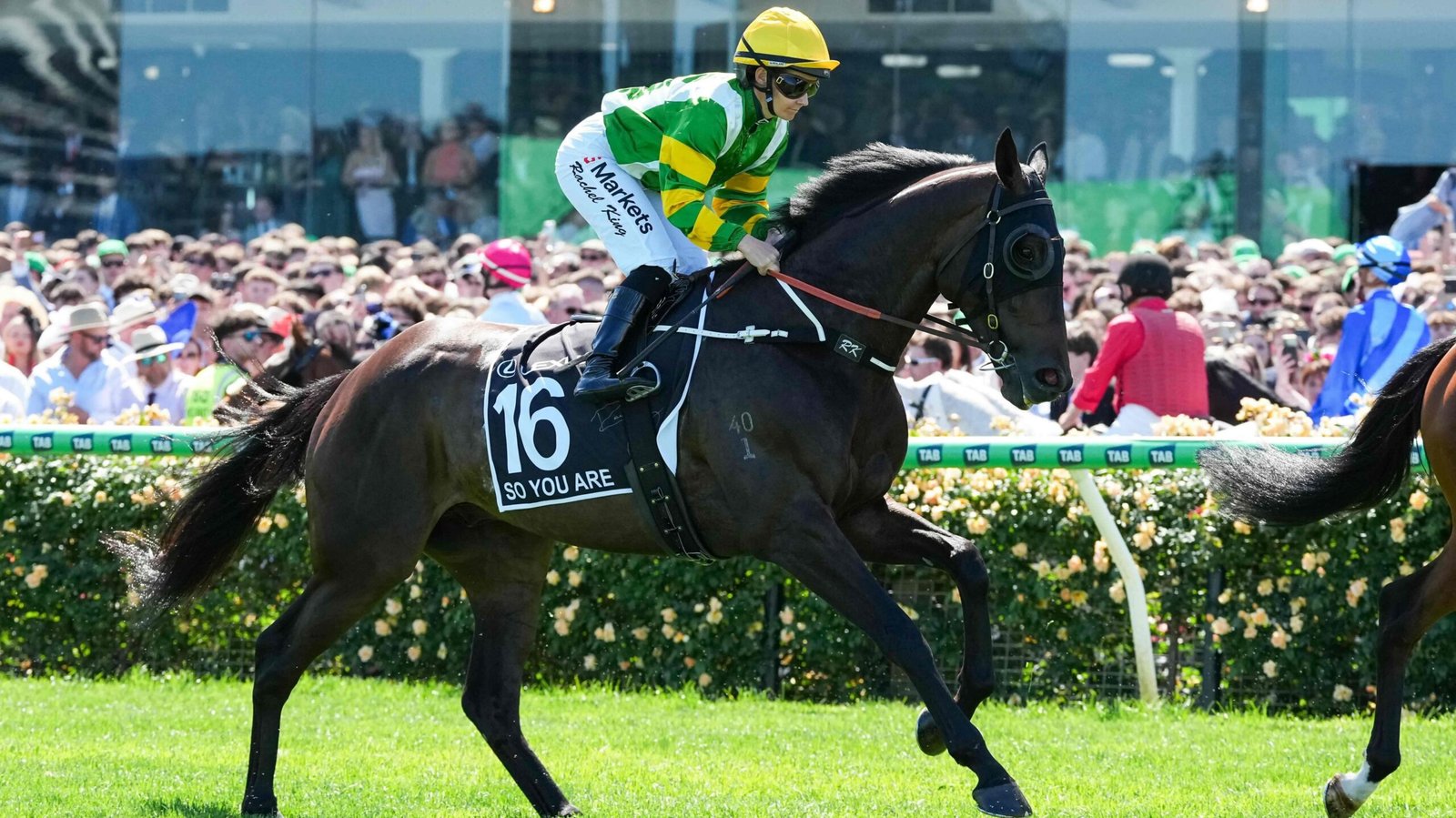
The discovery of a dead Melbourne Cup racehorse inside a skip bin at a waste facility in Sydney has triggered outrage and renewed scrutiny of animal welfare practices within Australia’s horse racing industry. So You Are, a five-year-old gelding who finished eighth in the country’s prestigious Melbourne Cup just two weeks earlier, was reportedly dumped after being euthanised following a severe bout of colic.
The incident has prompted an investigation by racing authorities and an apology from the veterinary hospital that treated the horse. The facility has accepted responsibility for the arrangements made to handle his remains, describing what happened as unacceptable and promising changes to prevent a similar incident.
The discovery came to public attention on Monday after Gregg Jowett shared a video on his personal social media account showing the body of a dead horse inside a skip bin at a waste facility in Sydney. The footage, which has not been republished by media outlets out of consideration for those affected, showed the animal lying among waste materials.

Jowett said he was shocked by what he had encountered. In the recording, he expressed disbelief that a horse had been placed in a rubbish container, questioning whether such treatment was normal. He later told Guardian Australia that he had not initially known the animal was So You Are or that the horse had competed in the Melbourne Cup.
Describing his reaction, Jowett said he was disgusted by the discovery. The footage quickly raised questions about how the remains of a prominent racehorse could have ended up in a skip bin after treatment at a veterinary facility.
So You Are had competed in Australia’s most famous horse race only a fortnight earlier, finishing eighth in the Melbourne Cup. The race is one of the country’s biggest sporting events and attracts widespread public attention, with competing horses often becoming familiar names among racing supporters.
The five-year-old gelding subsequently developed a severe case of colic, a potentially life-threatening condition involving abdominal pain in horses. He was taken to REC Equine Specialists on Monday for veterinary treatment and surgery. Despite the efforts of the veterinary team, his condition could not be successfully treated, and he was humanely euthanised under anaesthesia.
Following his death, the hospital arranged for a contracted provider to collect the horse’s remains and transport them to a licensed landfill. However, the subsequent discovery of his body in a skip bin has raised serious concerns about the arrangements made for his final handling.
Bjorn Baker, So You Are’s trainer, said the circumstances surrounding the handling of the horse’s remains had added to the distress already experienced by those who cared for him. In a statement, Baker said he was deeply troubled by the footage and believed the horse deserved dignity and respect after his death.
Baker described So You Are as a much-loved horse and said the incident had compounded an already devastating loss for his team and the animal’s owners. He also expressed concern for the Ramsey family, who bred the horse, and the staff who had been involved in caring for him.
The trainer said he understood that REC Equine Specialists was investigating what had happened and expected a full explanation. His comments reflected the wider disappointment among people connected with the horse, particularly those who had followed his racing career and expected his remains to be handled appropriately.
Dr Jonathan Lumsden, managing partner of REC Equine Specialists, issued an unreserved apology for the distress caused by the footage circulating on social media. He confirmed that the veterinary team had been unable to save So You Are despite its efforts and that the horse had been euthanised humanely while under anaesthesia.
Lumsden said the horse was subsequently collected by the hospital’s contracted provider and taken to a licensed landfill. He acknowledged that So You Are should instead have been promptly and respectfully buried.
The hospital described the incident as unacceptable and disrespectful to the horse and everyone who cared for him. Importantly, Lumsden accepted that responsibility did not end when the animal left the hospital premises. Although the facility had not personally carried out the burial or disposal, it had selected the provider and made the arrangements.
He said the hospital should have known precisely how horses were being handled after leaving its care and admitted that the existing process had failed to meet acceptable standards. The facility had contacted So You Are’s owners and trainer to apologise personally and was working with its disposal provider, the relevant facility operators and Racing NSW to establish how the incident occurred.
As an immediate response, REC Equine Specialists stopped using the contracted provider involved in the arrangements. It also announced a review of how other providers handle the remains of horses after death. Lumsden said the hospital intended to introduce procedures to ensure that a similar situation could not happen again.
He also appealed to the public not to share the footage further, citing respect for So You Are and the people who had cared for him. The request came as the incident attracted attention online and raised broader questions about the responsibilities of organisations involved in the racing industry.
The New South Wales racing authorities have also become involved. David Harris, the minister for gaming and racing, described the incident as concerning and confirmed that Racing NSW had launched an investigation. He pointed to the safeguards contained in the racing legislative framework and the responsibilities of Racing NSW as the sport’s controlling body in protecting racing integrity and animal welfare.
The investigation is expected to examine the circumstances surrounding the collection, transportation and disposal of the horse’s remains, including the role of the contracted provider and the arrangements made by the veterinary facility. Establishing how the remains ended up in a skip bin will be central to determining whether proper procedures were followed and what further safeguards are required.
The incident has also drawn criticism from animal welfare advocates and politicians. Georgie Purcell, an Animal Justice Party MP representing northern Victoria, said the discovery should force serious questions about the racing industry’s claimed duty of care towards horses.
Purcell argued that the industry breeds horses and generates profits from their participation in racing but must also accept responsibility for their welfare beyond their competitive careers and lives. She said the treatment of So You Are’s remains exposed a fundamental failure to provide even the most basic dignity after death.
Her criticism reflects a wider debate about the responsibilities of horse racing organisations, trainers, owners, veterinary providers and other businesses that form part of the industry. Animal welfare campaigners have long argued that the obligations of racing organisations should extend beyond the conditions in which horses compete and include their treatment throughout their lives, including retirement, serious illness and death.
For many supporters, the Melbourne Cup represents a major celebration of Australian sporting culture. Horses that compete in the race receive significant attention, and their performances are followed by racing fans across the country. However, the discovery involving So You Are has shifted attention away from the competition itself and towards the responsibilities owed to the animals that make the sport possible.
The case also highlights the importance of accountability when the care of an animal passes between different organisations. Even where a veterinary hospital contracts an external provider to handle a deceased animal, the selection and oversight of that provider can have serious consequences. REC Equine Specialists has acknowledged that it failed to maintain sufficient oversight of the arrangements made after So You Are left its care.
While the investigation will need to establish the precise circumstances and responsibilities involved, the hospital’s apology and decision to end its relationship with the contractor indicate that significant questions remain about the procedures previously followed.

So You Are’s death was already a painful loss for his owners, trainer and those who cared for him. The discovery of his remains in a skip bin has added another layer of distress and placed the treatment of racehorses after death firmly in the public spotlight.
The outcome of the Racing NSW investigation, alongside the hospital’s review of its procedures, will be important in determining whether meaningful changes follow. For those who believe animal welfare must remain central to horse racing, the incident has become a stark reminder that responsibility for an animal does not end when its racing career or life comes to a close.
Related News:
 NSW Police Bid Delays Inquiry Into Sydney Protest
 Sam Wood Denied Bail Over Alleged Domestic Assault
 Premier League Faces a Crisis of Trust After City Verdict
 Baby Boy Found Dead at Adelaide Motel: Two Charged
 Elizabeth Struhs Inquest Examines Child Safety Failures
 Camera Discovery Triggers Navy Ship Investigation
 Former RAAF Pilot Accused of Murdering Wife
 Erin Patterson Faces Life in Prison After Appeal Loss
 Victorian Magistrate Reprimanded Over Courtroom Remarks
 WA Facial Recognition Trial Scans 1.38m Faces
 Alan Jones Trial Paused for Melbourne Cup Viewing
 Lamarre-Condon Defends First Shot in Double Murder Trial
 Police Suspect Help in Missing Alice Springs Girl Case
 Florida Surgeon ‘Devastated’ Over Fatal Surgery Error
 Barrister Criticises Trial After Suicide Case Verdict
 Immigration Judges Fear Pressure in Trump Era
 Westminster Council Threatens Charing Cross Soup Kitchen
 BBC Warned About Missing Clothes of Murder Victim
 Cambridge Professor Jason Arday Found Dead at Home
 Internal Exclusions Surge in England’s Schools
 Councils spend £125m on illegal children’s care
 Patriot Platform Raises Concern Across Britain
 Reform UK Receives Record £36m Donation From Crypto Billionaire
 Election Candidate Abuse Raises Alarm in England
 NHS Breast Care Review Finds Serious Patient Harm
 Democrat Says ICE Restricted Detention Camp Oversight
 Court Says Judge Should Not Have Heard Case From Bed
 Judge orders Trump to restore access for three media outlets
 OpenAI Agent Breaches Medicare Portal in Australia
 Free Speech Emerges as Key UK Election Issue
 Cornell Fraternity Assault Investigation Reopened
 Fayed Survivors Demand Inquiry Into Medical Regulator
 London Facial Recognition Trial Ends With False Alert
 UK University Strikes Spread as Financial Pressure Grows
 Drumcree Talks Falter as Legal Challenge Deepens
 UK-France Returns Deal Faces Expiry as Talks Stall
 Drumcree Talks End Without Agreement Ahead of Appeal
 Badenoch Raises Prospect of 2027 UK Election
 New Prosecutor Takes Over Cornell Assault Case
 Car Crashes Into Newcastle Crowd, Ten Injured
 Latin America women fear rollback of rights
 Detective Breaks Down Recalling Double Murder Scene
 Christa Pike Wakes After Failed Tennessee Execution
 Trader Wins Unfair Dismissal Case After Overseas Work
 Three Convicted in Mexico Surfing Trip Murders
 UAE Says Co-Pilot Planned Suicide Attack on Israel
 Controversial Vaccine Trial Approved in Guinea-Bissau
 Australian Advocates Seek Subsidised Drugs for PMOS
 British Military School Abuse Victims Denied Justice
 Former Students Raise Concerns Over School Culture
 ABC Reporter Faces Possible Disciplinary Action Over Opinion Piece
 Ohio Airports Become Key Hubs for ICE Deportation Flights
 England and Wales Begin Second Wave of Early Prison Releases
 Farage Rejects Claims Reform Would Let Troops Shoot Migrants
 Senegal LGBTQ+ Crackdown Drives People Into Hiding
 Gadi Eisenkot: Israel’s Anti-Netanyahu Challenger
 French Police Face Scrutiny Over Injured Teenagers
 UK Bill Faces Warning Over Fayed Trafficking Victims
 Helen Haines Loses Leg in Alleged Targeted Attack
 Greens Face Leadership Test as Jordon Steele-John Misconduct Claims Leave Party in Limbo
 Taylor Faces Backlash Over Response to Haines Attack
 Man Found Dead as Floods Batter Queensland
 Serbia’s Student Victory Sparks a ‘Smell of Freedom’
 Trump’s Midterm Campaign Faces Racism and Political Backlash
 McKenzie Warns MP Safety Fears Could Weaken Democracy
 Brisbane Pub Shooting Claims Life of 19-Year-Old Woman
 Ministers Clash Over Mahmood’s Migration Reforms
 Bedouin Women Drive Historic Arab Election Gains
 Russell Brand Trial Enters Crucial Week of Evidence
 US Judge Blocks Pressure on Election Officials
 Domestic Abuse Survivor Fears Attacker Without Tag
 Queensland Hospital to Close Labs After Safety Probe
 CPS Prosecutor Cites Fictitious Case in High Court
 Henry Nowak Family Rejects Political Use of His Death
 Australia Defends Teen Social Media Ban in High Court
 Hanson Takes Racial Discrimination Case to High Court
 Stephen Miller’s Rise Puts Hardline Views at Centre of Power
 One Nation Candidate Apologises for Offensive Posts
 Teenager Found Alive After Six Days Lost in Australian Bush
 Blind Nigerian Pensioner Faces 20-Year UK Settlement Wait