Published: 23 April 2026. The English Chronicle Desk. The English Chronicle Online.
A damning independent review has exposed a catastrophic failure regarding vital environmental infrastructure projects. Two Australian state governments failed to deliver promised river health improvements for the Murray-Darling basin. This significant lapse concerns over one hundred and sixty million dollars in planned vital infrastructure work. These essential measures were intended to support river health across the northern part of the region. The commitment was originally made by officials eight years ago to bolster fragile river ecosystems today. Now a federal inspector general has confirmed these critical projects have been severely and consistently underdelivered. The environment and taxpayers are the clear losers in this deeply disappointing and frustrating administrative failure. This investigation highlights how broken promises directly harm vulnerable wildlife and threaten precious regional water habitats.
The Northern Basin Toolkit was designed to protect river health without requiring extra water volume. It aimed to compensate for a controversial federal decision made back in the year twenty eighteen. That decision reduced total environmental water for the northern region from three hundred ninety billion litres. The adjusted target became three hundred twenty billion litres per year to balance various competing regional needs. Governments agreed to build infrastructure and policy measures to help water flow into wetlands more efficiently. They promised to increase fish populations and protect environmental water as it moved down the river. The federal government committed one hundred sixty-six million dollars to support these vital infrastructure project goals. The final deadline for completing these critical works is set for the end of this year.
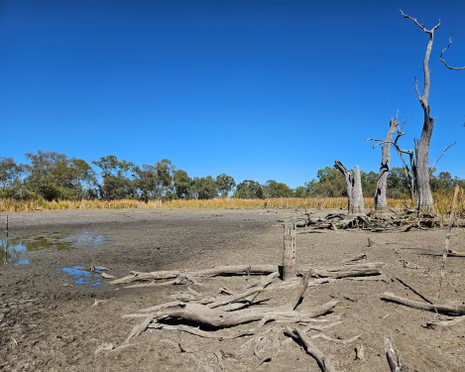
 The New South Wales government failed to secure necessary private land access for crucial floodplain improvements. This is particularly alarming in the state’s Gwydir region where local water flows are severely restricted. Scientists recently had to scramble to rescue trapped turtles from drying wetlands in that exact area. This incident serves as a heartbreaking reminder of what happens when necessary environmental work is simply neglected. The government also pledged to install migration passages to help native fish move around major barriers. They initially targeted two thousand one hundred thirty-five kilometres for this massive river connectivity infrastructure project. That original target was later reduced to five hundred eighty-nine kilometres to manage local project expectations. Yet the state has delivered just sixty-four kilometres which is only three percent of the original plan.
The federal inspector general of water compliance, Troy Grant, described these particular delivery outcomes as truly abysmal. He noted that another proposal meant to direct water to the Macquarie Marshes had not progressed. The project currently sits with only a few rocks placed to stabilize the dry riverbed floor. These limited efforts were meant to prepare the site for much-needed additional water flow capacity upgrades. The findings have sparked significant outrage among leading environmental scientists and concerned water policy advocacy groups. Professor Jamie Pittock from the Australian National University expressed deep concern regarding the lack of government accountability. He stated that the failure to implement promised projects directly causes turtles, fish, and wetlands deaths. Australians now have every right to question whether their governments can truly protect their national rivers.
The situation in Queensland is similarly bleak according to the findings released by the federal inspector general. Planned refurbishments and upgrades to regional weirs never progressed past the initial basic feasibility study stage. The state government blamed the former administration for failing to conduct basic costings and project due diligence. They argue that the federal government provided most funding to New South Wales despite the basin geography. The current administration claims it is now working hard to turn these negative historical results around. They intend to deliver real environmental outcomes for their rural and regional communities in the coming years. Nevertheless, the lack of actual progress remains a significant point of concern for all regional stakeholders.
The New South Wales water minister, Rose Jackson, officially welcomed the report and acknowledged these significant challenges. She explained that the program was established in twenty nineteen with very little early project progress. Her government is now working hard to fix the mess left by the previous political administration. She admits that delivering all required measures within such a short timeframe has been very difficult indeed. The government remains committed to achieving better environmental outcomes despite these early and persistent project failures. Minister Jackson held meetings with Troy Grant to discuss the specific findings of his critical report. She hopes to move forward with renewed focus to address the ongoing needs of the river.

Inspector General Troy Grant offered a stark metaphor for the current state of this failing program. He compared the Northern Basin Toolkit to a plane full of passengers being flown without a pilot. He observed that the only successful measures identified were policy changes that did not cost a single cent. His report includes several recommendations to improve future transparency and accountability for these types of projects. He describes the findings as a wake-up call for the broader Murray-Darling basin plan review process. Public scrutiny of the program has intensified following recent criticism of government water management decisions. A decision to abruptly stop environmental flows to the Gwydir wetlands caused extensive and avoidable damage. The loss of turtles, waterbirds, and frogs has galvanized local communities and international observers alike.
Prominent advocates suggest the funds should be redirected toward water buy-backs and other proven recovery initiatives. They believe these alternatives would more effectively return crucial environmental flows to the rivers and wetlands. The federal government is currently considering the recommendations and how they fit into broader national legislation. They maintain that the basin plan requires shared responsibility and accountability across all participating state regional jurisdictions. The debate continues as the deadline for these infrastructure projects approaches at the end of this year. Experts emphasize that the integrity of the entire national water management plan depends on these results. Without urgent action, the environmental cost of this failure will likely continue to rise significantly. The future of these delicate Australian ecosystems now hangs in a very precarious and uncertain balance. Policymakers face mounting pressure to deliver real results before more irreversible damage occurs to the rivers. Everyone is watching closely to see if governments can finally turn these broken promises into action.
Related News:
 Dutch Nationwide Fireworks Ban Expected to Transform New Year Traditions
 Queensland Braces for Potential Second Severe Cyclone Hit
 Tragic End to Outback Search as Floods Claim a Life
 US Waste Crisis: Mexico Branded a Toxic Garbage Sink
 Cyclone Maila Intensifies to Category Five Strength
 ‘Extinct’ Antelope Returns to Sahara, Bringing Hope
 Eden Project Founder Celebrates 25 Years of Nature’s Hope
 Capitol Attack Anniversary Sparks Deep Political Divide
 Saudi Officials Report Zubaidi Flee Before Yemen Peace Talks
 UK Targets in New York Bomb Threat Hoax: Man Jailed
 Gambia Supreme Court Hears Case to Overturn FGM Ban
 Storm Goretti leaves Cornwall homes without power
 Trump targets Iran trade with 25% tariff warning
 US Senate rejects resolution limiting Trump military powers
 Gulf states warn Trump Iran strikes risk wider Middle East war
 Machado Trump medal gesture reshapes Venezuela power struggle
 Greenland defence seen as shared Nato duty amid troop arrivals
 Geopolitical football: Iran, Trump and the World Cup clash
 Canada-China trade gains momentum in new strategic partnership
 Syria President Declares Victory as Ceasefire Reached with SDF
 No Gas Boiler Ban as UK Warm Homes Plan Backs Heat Pumps
 Shinzo Abe’s killer receives life sentence in Japan
 Record-Breaking Heat Looms Over South-East Australia as Catastrophic Fire Risk Escalates
 China General Under Investigation Amid Leadership Purge
 Philippines ferry disaster leaves 15 dead, dozens missing
 Devon hosts first high-density hydro power system
 US-Style Pickup Trucks Surge on UK Roads
 Cambridge Faces Scrutiny Over Arms Investment Transparency
 Wigan Dump Crisis Sparks Health and Safety Alarm
 Epstein UAE Emails Shake British Royal Andrew’s Legacy
 Christchurch gunman seeks to vacate guilty plea
 Infantino Faces Russia Threat and Trump Concerns at Uefa Congress
 Concerns rise for Canberra boy amid Iran detention fears
 Germany Faces Backlash Over Scrapped Renewable Heating Mandate
 Group Expands Legal Claim Over South West Water Pollution
 Greenpeace $345m Ruling Sparks Appeal Battle
 Ukraine Sends Drone Experts to Defend US Bases in Jordan
 Abramovich Chelsea Sale Cash Faces Jersey Probe
 Yvette Cooper: UK Must Follow Principles, Not US Pressure
 Slovenia Election: A Nation at a Crossroads
 MPs Slam Agency Over Failing Fight Against Waste Dumping
 Jury Rules Meta and YouTube Liable for Addictive Design
 Saudi Arabia Urging US to Keep Up Iran Attacks
 The Woman Guarding Earth From the Threat of Asteroids
 IMF Predicts Global Economic Crisis Due to Gulf Unrest
 Germany Grapples With AI Abuse Following TV Star Scandal
 Exiled Tycoon Warns of New Russian Attacks on UK Soil
 LA 2028: Millions of Affordable Olympic Tickets Announced
 Trump Slams Europe as Transatlantic Tensions Boil Over
 Inside the Deceptive Machine: A Former Producer Speaks Out
 Italy Faces Third Successive World Cup Absence After Loss
 Spain Faces Backlash Over Xenophobic Chants in Egypt Draw
 A Global Voice For Justice: Stephen Lewis Dies At Age 88
 Hope and Fear as Iranians Flee Across the Turkish Border
 Ben Roberts-Smith Arrested Over Alleged War Crimes
 Reform UK Pledges To Halt Visas Over Reparations Demands
 US and Iran Agree to Two-Week Provisional Ceasefire
 Starmer visits Gulf as US and Iran agree ceasefire
 Gaza Child Arrives in UK for Life-Changing Care
 Israel Defies Ceasefire as Lebanon Operations Persist
 Miles Jupp: How the Magic of the Ashes Sparked a Bold Blag
 Pakistan Brokers Historic Peace Deal Amid Rising Tensions
 RSPB Urges Summer Bird Feeder Removal to Curb Disease
 The Toxic Scent Destroying Life in a Lancashire Town
 UK Holds Firm on Strait of Hormuz Amid Trump Pressure
 Trump Signals Hope for New Iran Talks as Ceasefire Fades
 Reeves Slams Trump Over Iran War Lack Of Exit Plan
 US and Iran Pursue Extension of Ceasefire via Pakistan
 Trump’s Islamabad Gamble: The High Stakes of a New Iran Deal
 Ian Katz to Step Down as Channel 4 Content Chief
 Fuel Prices Drop Despite Geelong Refinery Blaze
 The General’s Gambit: Pakistan’s New Role in Global Peace
 Mexico, Spain and Brazil call for Cuba dialogue amid crisis
 Celestial Magic: The Lyrid Meteor Shower Returns
 Pakistan’s Ambitious Bid for Middle East Peace
 Trump Starts $166bn Tariff Refund Process
 Israeli Soldiers Jailed Over Vandalism of Lebanese Statue
 Trump Weighs Sending Afghan Allies to the Congo
 Timor-Leste Faces Tough Questions Over Resort Proposal
 Pentagon Shakes Up Navy Leadership Amid Hormuz Blockade