Published: 20 February 2026. The English Chronicle Desk. The English Chronicle Online.
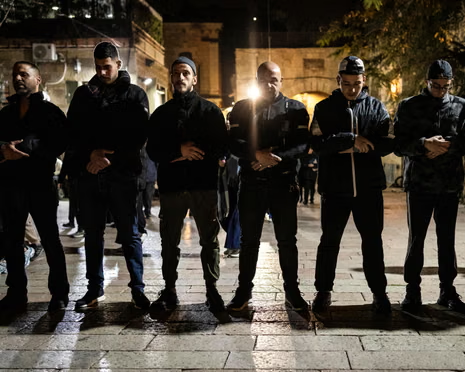
A six-decade agreement regulating Muslim and Jewish prayer at al-Aqsa mosque in Jerusalem has now collapsed. The fragile arrangement, designed to prevent conflict, has been undermined by far-right Israeli policies and escalating provocations from extremist groups. Recent arrests of Muslim Waqf staff, bans on access for hundreds of worshippers, and repeated incursions by Jewish activists have heightened concerns about renewed unrest across the region. Experts warn the breakdown risks triggering serious violence not only in Jerusalem but across the West Bank and Gaza, with wider repercussions internationally.
The al-Haram al-Sharif compound, home to the seventh-century Dome of the Rock, has long been a flashpoint. Muslims refer to it as al-Haram al-Sharif, while Jews call it the Temple Mount, citing its association with the first and second temples destroyed centuries ago. The 1967 status quo agreement strictly prohibited Jewish prayer on the site, permitting only Muslim worship. The latest series of incidents represents a fundamental rupture of this understanding, as police and security forces have allowed, and in some cases facilitated, unauthorized activities.
Historically, any alteration of the delicate arrangement has sparked violent outbreaks. In 2000, Ariel Sharon’s visit to the compound triggered the second Palestinian intifada, a five-year conflict. Similarly, Hamas invoked the name “al-Aqsa Flood” for its October 2023 attacks, which killed 1,200 Israelis and led to a full-scale Gaza war, citing violations at the mosque as provocation. Analysts stress that any perceived threat to al-Aqsa has the potential to ignite wide-scale unrest, and current developments have made this Ramadan particularly volatile.

Daniel Seidemann, a Jerusalem lawyer with extensive experience advising governments on city affairs, described the situation bluntly. He said al-Aqsa has historically acted as a detonator for broader tensions whenever sacred space integrity was challenged. “There have been provocations frequently during Ramadan, but things are exponentially more sensitive now,” he explained. The West Bank, already fragile, could become a tinderbox if tensions continue to escalate.
The rise of far-right influence in Israeli security circles has intensified pressures. National Security Minister Itamar Ben-Gvir, who assumed office despite multiple criminal convictions for supporting terrorism and incitement to racism, has openly advocated for raising the Israeli flag over the compound and constructing a synagogue there. His repeated visits to the site, alongside supportive policies, have facilitated unilateral changes, allowing Jewish prayer and singing within areas historically reserved exclusively for Muslim worship.
In January, Ben-Gvir appointed Maj Gen Avshalom Peled as Jerusalem police chief, reportedly with Prime Minister Benjamin Netanyahu’s support. This move coincided with expanded Jewish access to prayer sheets on the compound, further breaching the status quo. Seidemann noted that police measures now signal control rather than neutrality, creating a sense of systemic imposition over established religious norms. The implications, he warned, are that provocations are now institutionalised, not merely incidental.
Waqf officials managing al-Aqsa under Jordanian oversight have faced unprecedented restrictions. Reports indicate up to seventeen staff members were placed in administrative detention, and over forty were barred from entering the compound. Several offices have been ransacked, with staff prevented from completing basic maintenance, installing shelters, or providing essential facilities like temporary clinics and even toilet paper. These disruptions have strained the Waqf’s capacity to accommodate the estimated 10,000 worshippers expected during Ramadan, raising both logistical and spiritual concerns for the community.
Palestinian authorities in Jerusalem reported slightly different figures, citing 25 Waqf employees banned and four detained, underscoring the difficulties in obtaining accurate data. Requests for comment from Jerusalem police and Shin Bet authorities went unanswered, adding to international unease about the lack of transparency surrounding operations at the compound.
The first week of Ramadan saw further unilateral measures. Police extended visiting hours for Jewish worshippers and tourists from three to five hours in the morning, a significant departure from prior arrangements. Sheikh Mohammed al-Abbasi, al-Aqsa’s imam, was detained within the mosque courtyard, while social media documented police raids during evening prayers on the first Ramadan night. Analysts fear these developments could set a precedent for continued escalations and increasing tensions in the region.
Amjad Iraqi, a senior analyst at the International Crisis Group, highlighted the combination of factors contributing to the heightened risk. He explained that a confluence of political, security, and ideological pressures on both Israeli and Palestinian sides makes this Ramadan especially dangerous. Unlike previous years, authorities now exhibit fewer constraints from regional powers or international opinion, a situation that encourages further unilateral actions. The diffusion of impunity, Iraqi noted, has emboldened activists to push boundaries, risking violent confrontation in one of the world’s most sensitive religious zones.

Regional actors are also concerned. Jordan, traditionally responsible for supervising al-Aqsa under bilateral agreements, has voiced objections to Israeli policies perceived as undermining stability. Diplomatic channels remain active but strained, as Jerusalem’s internal security apparatus operates under far-right leadership prioritising ideological goals over negotiated compromise. Observers warn that any escalation could extend beyond local unrest to influence regional security and international relations, particularly with Muslim-majority countries closely monitoring developments.
Local residents and worshippers at the site have expressed alarm at the breakdown of long-standing arrangements. Many report feeling increasingly unsafe entering the compound, fearing clashes with Israeli security forces or radical groups. Social media has captured both the atmosphere of tension and the widespread concern about potential violence during Ramadan, reflecting the human dimension of this complex crisis. The psychological impact on communities accustomed to regulated worship cannot be underestimated.
The international community, including human rights organisations and foreign governments, continues to call for restraint and the restoration of established practices. Experts emphasize that maintaining the status quo is critical not only for local stability but for broader peace efforts between Israelis and Palestinians. Analysts argue that failing to address violations systematically may embolden extremists on both sides, perpetuating cycles of violence that have historically undermined regional security.
While the situation remains highly fluid, the collapse of the six-decade agreement signals a profound shift in Jerusalem’s governance of religious spaces. Analysts warn that even minor provocations could trigger major unrest, potentially affecting global politics, security, and economic stability. Observers insist that dialogue and adherence to historical agreements are crucial to preventing a crisis from escalating further, highlighting the fragile nature of peace in contested religious territories.
Related News:
 George Clooney and Amal Clooney Receive French Citizenship
 Shock US Raid: Maduro Pleads Not Guilty in Manhattan Court
 UK and France Agree Troop Deployment Plan for Ukraine
 Capitol Attack Anniversary Sparks Deep Political Divide
 EU Weakens as Trump Targets Venezuela and Greenland
 Saudi Officials Report Zubaidi Flee Before Yemen Peace Talks
 Venezuela Oil Deal Opens Tensions with US Control
 UK Targets in New York Bomb Threat Hoax: Man Jailed
 Trump Plans Venezuela Meeting, Warns of Cartel Land Strikes
 Dutch Nationwide Fireworks Ban Expected to Transform New Year Traditions
 Gambia Supreme Court Hears Case to Overturn FGM Ban
 Trump Labels Renee Good a ‘Paid Agitator’ After Minneapolis ICE Killing
 Indonesia blocks Grok chatbot over sexual content risk
 US Citizens Warned to Venezuela Flee Amid Paramilitary Threats
 UK urges peaceful Iran transition amid escalating protests
 British skier killed in La Plagne avalanche tragedy
 UK Guantánamo Settlement Paid to Tortured Detainee
 Sikh Activist Warned Over Rising Security Threats in UK
 Mandelson apologises over Epstein ties after public scrutiny
 BBC moves to dismiss Trump $10bn lawsuit over Panorama edit
 Trump targets Iran trade with 25% tariff warning
 Rudd successor: Defence chief and former ministers considered
 Russia Moves to Bypass Sanctions, Securing India Oil Imports
 US Senate rejects resolution limiting Trump military powers
 Venezuela regime claims release of political prisoners signals new era
 Friedman Uninvited From 2024 Adelaide Writers’ Week
 Trump Calls Greenland Critical for US Security After Denmark Talks
 Trump: Iran Killing Has Stopped, Strike Threats Pulled Back
 Gulf states warn Trump Iran strikes risk wider Middle East war
 Machado Trump medal gesture reshapes Venezuela power struggle
 Greenland defence seen as shared Nato duty amid troop arrivals
 Gulf states warn Trump Iran strikes risk wider Middle East war
 Geopolitical football: Iran, Trump and the World Cup clash
 Canada-China trade gains momentum in new strategic partnership
 Trump Receives Machado’s Nobel Medal in White House Meeting
 Iran unrest slows under brutal crackdown and global tensions
 Trump Allies Pursue $200m European Gas Pipeline Deal
 Syria President Declares Victory as Ceasefire Reached with SDF
 US Considers Asylum for British Jews Amid Rising Antisemitism
 Starmer Challenges US Over Controversial Greenland Deal
 Chinese tourists drop sharply over Taiwan tensions
 Spoof “Make America Go Away” Caps Rally Denmark Over Greenland
 London Residents Threaten Legal Challenge Over Chinese Embassy
 Trump slams UK ‘stupidity’ over Chagos Islands, eyes Greenland takeover
 More Than 100 Islamic State Inmates Escape Amid Syrian Clashes
 UK Presses On With Chagos Handover Despite Trump Criticism
 Trump Tightens Grip on EU and UK Energy Supply
 Kim Jong-un Fires Vice-Premier Over Factory Failures
 Shinzo Abe’s killer receives life sentence in Japan
 Starmer Resists Matching Trump Amid Greenland Tensions
 Netanyahu Accepts Trump’s ‘Board of Peace’ Invitation
 UK declines Trump’s ‘board of peace’ over Putin concerns
 Silence and Unity Mark Bondi Terror Attack Memorial
 Russia Strikes Kyiv and Kharkiv as Peace Talks Enter Day Two
 China General Under Investigation Amid Leadership Purge
 Philippines ferry disaster leaves 15 dead, dozens missing
 Israel Conditions Gaza Rafah Reopening on Hostage Search Completion
 Turnbull urges Albanese to confront Trump’s global ‘bully’ politics
 India-EU Free Trade Deal Marks Historic Economic Shift
 Iran Death Toll Crisis Exposed: Bodies, Mass Graves, and Concealment
 Snow Threatens Japan Election Turnout Amid Extreme Cold
 Crisis Looms as Liberals Debate Sussan Ley Future
 Cambridge Faces Scrutiny Over Arms Investment Transparency
 Files Link Andrew to Epstein Dinner After Prison Release
 Thousands Protest ICE Operations in Nationwide US Day of Action
 Epstein Files Reveal Trump Officials’ Emails with Financier
 US-Cuba Negotiations Shift as Oil Blockade Looms
 Trump softens stance on Chagos Islands deal after Starmer call
 Epstein UAE Emails Shake British Royal Andrew’s Legacy
 Europeans oppose US after Greenland threat, poll shows
 Christchurch Shooter Seeks to Overturn Guilty Plea in Appeals Court
 Minnesota Nurse Saves Refugees, Witnesses Tragedy Decades Later
 Christchurch gunman seeks to vacate guilty plea
 UK Experts Raise Alarm Over Machinery Export to Armenian Firm
 Liberal Fallout: Taylor Challenge Casts Shadow Over Sussan Ley’s Leadership
 Infantino Faces Russia Threat and Trump Concerns at Uefa Congress
 Concerns rise for Canberra boy amid Iran detention fears
 Ukraine, Russia Meet in Geneva Ahead of War Anniversary
 UK, US Medics Barred from Gaza Amid Rising Aid Concerns
 Sydney Businessman Falsely Claimed Security Advice Came From Kevin Rudd