Published: 05 February 2026. The English Chronicle Desk. The English Chronicle Online.
A growing Starmer crisis is shaking Westminster after senior Labour MPs warned that the prime minister’s position now looks increasingly fragile. Anger has spread quickly across the parliamentary party following controversy surrounding Peter Mandelson’s appointment as US ambassador. The Starmer crisis intensified after fresh disclosures about Mandelson’s past links with Jeffrey Epstein triggered uproar in the Commons. What began as a tense debate has now evolved into a defining political moment for the government. Several MPs privately say the damage could soon become irreversible if more details emerge publicly.
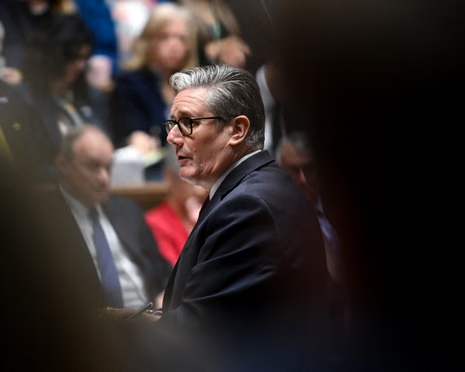
The mood inside Labour ranks shifted dramatically during a heated Commons session that nearly produced a government defeat. Ministers were forced to accept an amendment requiring the release of documents related to Mandelson’s appointment process. That concession came after urgent behind the scenes negotiations led by senior figures seeking to prevent a rebellion. According to multiple MPs, the atmosphere inside the chamber changed within minutes of the prime minister’s answers. Allies who previously defended the leadership described the moment as politically dark and deeply unsettling for party unity.
Controversy sharpened after the prime minister acknowledged he knew about Mandelson’s association with Epstein before confirming the diplomatic role. Downing Street later clarified that this knowledge referred only to information already available in the public domain. That explanation has not satisfied many backbenchers who believe stricter judgment should have been applied. Several lawmakers argue that ethical risk alone should have blocked such a sensitive international appointment. Their frustration has fed the widening Starmer crisis now dominating internal party conversations and private group meetings.

The parliamentary vote became especially tense when opposition pressure threatened to force immediate and full document disclosure. Government managers warned that defeat would severely weaken authority and accelerate leadership speculation across Westminster. A revised amendment was then negotiated to shift oversight toward a parliamentary committee structure instead. That compromise reduced the immediate rebellion risk but did not restore confidence among many uneasy Labour members. Some described the day as one of the worst since the party entered government.
Behind closed doors, several MPs said loyalty toward the leadership is now under visible strain and emotional pressure. One former minister admitted that trust has limits when judgment failures appear repeated and politically avoidable. Another suggested they were no longer certain they could support the prime minister in a confidence vote. Such remarks, once unthinkable among party loyalists, now circulate openly in corridors and private messaging groups. The Starmer crisis has therefore moved from media narrative into internal political reality.
Attention has also turned toward senior Downing Street advisers involved in vetting and approval stages of the appointment. Some MPs believe accountability should extend beyond the prime minister to those managing background checks and recommendations. Calls for at least one senior resignation have grown louder as frustration spreads through different party factions. Critics say procedural safeguards exist precisely to prevent reputational risks of this magnitude from reaching government level. Supporters counter that facts remain incomplete while police assessments continue.
The Metropolitan Police confirmed that certain documents cannot yet be released due to an active investigation. Officers warned that premature publication could compromise evidential integrity and undermine potential legal proceedings. This intervention has delayed full transparency and added another layer of political tension to the dispute. Opponents accuse the government of hiding behind procedure, while officials insist they are following lawful investigative guidance. The delay ensures the Starmer crisis will remain active in headlines for several more days.
Senior cabinet figures have expressed private irritation about how the situation was handled at multiple stages. Some warned earlier that any appearance of secrecy would quickly be labelled a cover-up by critics. They argue the political cost of hesitation often exceeds the risk of early controlled disclosure. Others maintain that national security and diplomatic sensitivity justified a more cautious release timetable. These internal disagreements reveal a leadership team not fully aligned on crisis management strategy.
Angela Rayner played a decisive role in brokering the amendment that ultimately prevented a damaging government defeat. She was not originally scheduled to intervene but stepped in once vote counts looked increasingly uncertain. Her rapid negotiation with parliamentary leaders helped shape a compromise acceptable to wavering Labour MPs. Several colleagues praised her judgment and crisis handling, calling it essential to stabilising the situation temporarily. That praise has also reignited quiet leadership speculation among members watching the Starmer crisis unfold.
Some MPs say it would be politically ironic if the prime minister fell over another figure’s past associations. They point to his long record speaking against exploitation and violence, especially involving vulnerable groups. However, they also admit that public perception often decides political survival more than personal conviction or history. Optics surrounding judgment, transparency, and standards now dominate voter reaction and media framing. In modern politics, association risk alone can produce lasting leadership damage.
Downing Street insists that once police restrictions lift, the relevant appointment documents will be published in full. Officials claim those papers will show that key facts were withheld during the vetting process. Mandelson strongly disputes wrongdoing and has not accepted claims that he misled decision makers. The eventual document release is expected to become a decisive moment in the Starmer crisis timeline. Both supporters and critics believe it will either stabilise or seriously weaken the leadership.

Meanwhile, the prime minister is attempting to redirect attention toward domestic economic and regional development priorities. A major funding announcement targeting deprived communities is scheduled as part of a regeneration strategy rollout. The programme focuses on restoring local high streets, libraries, and shared public spaces across struggling areas. Advisers hope this shift will change the media cycle and reframe public discussion around delivery. Whether that effort succeeds depends heavily on how long the Starmer crisis dominates political coverage.
For now, Labour MPs remain cautious, watchful, and divided over what happens if further revelations appear. Few are willing to move openly, but many are clearly preparing for rapid political change if required. Leadership challenges rarely begin loudly; they build quietly through confidence erosion and private vote counting. Westminster has entered that uncertain phase where speculation grows faster than official movement. The coming days will likely determine whether this Starmer crisis becomes temporary damage or historic turning point.
Related News:
 British Woman in Iran ‘Losing Hope’ Amid Ongoing Detention
 BBC Journalist Held and Interrogated in Vietnam
 Green Party Surges Past Labour in Latest UK Poll
 Celebrities and Charities Demand UK Government Act on Child Poverty
 Trump’s UK Ambassador Urges North Sea Drilling to Strengthen US Ties
 FBI Director Kash Patel Defends Girlfriend Amid Government Jet Claims
 French Taxi Driver Cleared in David Lammy Theft Case After Fare Dispute
 Rachel Reeves Set to Break Labour Pledge and Raise Income Tax
 MPs Press Rachel Reeves to Hike Gambling Taxes
 Boris Johnson accused of undermining BBC leadership
 Remaining rebel Labour MPs have whip restored
 ‘Reckless’ cuts to victims’ services will cost more than they save
 Millionaires group urge Reeves to introduce wealth tax to ‘lift kids out of poverty’
 Starmer Faces Growing Dissent as Labour MPs Weigh Leadership Challenge
 BBC Faces Backlash as Reform UK Withdraws from Film
 Reeves rejects £1bn plea for NHS redundancy payouts
 Farage appointee to lead Reform youth accused of anti-British views
 Palace to reinstate hyphen in Andrew’s surname
 Politics latest: Starmer ‘will fight any leadership coup’ as Streeting denies attempt to oust Labour PM
 PM Condemns Leaks, Vows Loyalty to Ministers and Stability
 Major Rent Reform Ends No-Fault Evictions in England
 Peers Flood Assisted Dying Bill with 942 Amendments
 England’s Special Needs Support Faces Breaking Point
 MoD warned over Excel risks before Afghan data breach
 UK Unveils Fast-Track Deportation and Asylum Overhaul
 UK Asylum Overhaul Sparks Debate Over Human Rights and Deportations
 UK Asylum Reforms: Temporary Refugee Status and Faster Deportations
 UK Candidate Moved to Safe House After Election Threats
 Mahmood Defends Tough Overhaul of UK Asylum System
 UK Warns China After MI5 Issues Espionage Alert
 Westminster Advances Legacy Bill Amid Criticism
 UK Vulnerable to Attack, Defence Committee Finds
 Labour Faces Historic Decline in Wales
 Rama Rebukes Mahmood for Targeting Albanian Families
 Russian Vessel Used Lasers on RAF Pilots, UK Claims
 PM Shares Emotional Letter to Son on Men’s Struggles
 PM Highlights UK Business at G20 in South Africa
 Kate Forbes: Motherhood Harder Than Politics
 Welsh Government Christmas 2020 Lockdown Criticised
Reeves to Crack Down on Benefit Fraud While Lifting Two-Child Limit
Welsh Government Christmas 2020 Lockdown Criticised
Reeves to Crack Down on Benefit Fraud While Lifting Two-Child Limit
 Most Tories Expect to Support a Farage-Led Government
 Labour MP claims devolution bill is ‘blatant discrimination’ against Cornwall
 Millions Face Higher Taxes Under Reeves New Budget
 Peers Get Extra Time to Debate Assisted Dying Bill
 Planned Palestinian Flag Raising at Belfast City Hall Faces Delay Amid Legal Concerns
 Government righting decades-old injustice for miners
 Starmer Says Labour’s Economic Plan Needs Years to Deliver
 UK delays ruling on China embassy plan until January
 Culture secretary to review Telegraph takeover by Daily Mail owner
 Andy Burnham Apologises for Past LGBTQ+ Police Discrimination
 Reeves Slams Farage Over Two-Child Benefit Cap Opposition
 Mandelson Refuses Apology Over Epstein Ties
 Plans to Limit Jury Trials Face Retreat After Mounting Opposition
 Jenrick Reform defection deepens Tory civil war
 China Dependence Threatens UK Energy Supply Chains and Jobs
 Right Must Unite After Jenrick Defection, Urges Rees-Mogg
 Romford MP Andrew Rosindell defects to Reform UK
 UK Ministers Drop Foreign Student Targets for Global Education Push
 MPs warn AI financial risks threaten UK stability
 MPs warn AI financial risks threaten UK stability
 No Gas Boiler Ban as UK Warm Homes Plan Backs Heat Pumps
 Hugh Grant Joins Call for Under-16 Social Media Ban in UK
 Shinzo Abe’s killer receives life sentence in Japan
 US Africa aid remarks spark anger after leaked State email
 Lords Vote Piles Pressure on Starmer Over Social Media Ban
 Judge-only trials plan fails to ease court backlog
 Planned Troubles Board Game Sparks Outrage in Northern Ireland
 Reform UK Health Plan ‘Would Cost £1.7bn’, Streeting Says
 Police response times face strict new national limits
 Labour policing overhaul sparks fears over growing central control
 Tories criticised after Braverman defection sparks mental health row
 Burnham Westminster return hopes fade amid Labour rift
 Starmer warns of toxic division politics in Reform challenge
 Starmer China visit raises human rights pressure on Beijing
 Labour Must Revive High Streets to Avoid Election Collapse
 Conservative Party Rejects Centrism Under Badenoch’s Leadership
 Calls Grow for King Charles to Apologise for Crown’s Role in Slavery
 Labour Attacks Reform Candidate Over Tommy Robinson Backing
 Starmer Signals UK Return to EU Defence Pact Talks
 Cory Bernardi joins One Nation for SA election