Published: 20 February 2026. The English Chronicle Desk. The English Chronicle Online.
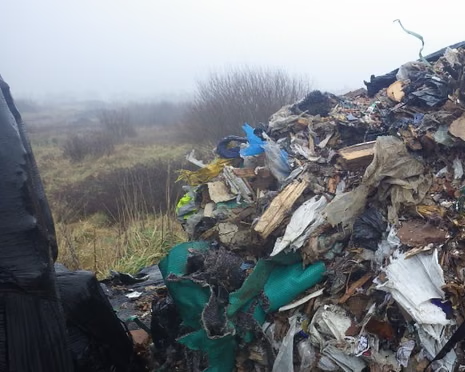
A new drone unit is being deployed to confront illegal waste dumping across England. The government confirmed the move as part of tougher action against organised waste crime. Illegal waste dumping costs the UK economy an estimated £1bn each year. Officials believe advanced aerial technology will help investigators respond faster and more effectively.
The announcement follows a significant court ruling at Birmingham Crown Court. A man described as a prolific waste criminal was ordered to repay more than £1m. The case has drawn attention to the scale and sophistication of illegal waste dumping networks. It has also intensified calls for stronger enforcement and greater deterrence.
The Environment Agency will lead the new 33-strong drone team. Several drones will carry light detection and ranging equipment, known as lidar technology. This equipment creates detailed three-dimensional maps of land and waste sites. Investigators say it can identify hidden piles of rubbish and track environmental damage. The agency hopes this will make tackling illegal waste dumping more precise and efficient.
The Environment Agency, often referred to as the EA, has also expanded its joint investigations unit. The specialist team now includes 20 officers focusing exclusively on serious waste crime. They will work alongside the drone operators and regional enforcement teams. Officials say stronger partnerships with police and local authorities remain central to the strategy.

Phil Davies, who heads the joint unit for waste crime, said criminals are becoming increasingly sophisticated. He explained that enforcement teams must adapt and use smarter technology. Davies stressed that greater drone use will help locate and shut down illegal operations quickly. He added that the message to offenders is clear and uncompromising.
The urgency of the crackdown was underscored by the recent conviction of Varun Datta. The 36-year-old from London pleaded guilty to knowingly causing controlled waste to be deposited unlawfully. Prosecutors outlined a network of 16 illegal dumping sites across England. The total weight of waste involved was estimated at 4,275 tonnes.
The sites were spread across Lincolnshire, Cambridgeshire, Lancashire, Kent, Surrey, Rutland and Middlesbrough. Some locations included sensitive environments and private land. A historic manor house and a protected nature reserve were among the affected areas. Residents reported unpleasant odours, vermin and visible pollution.
At sentencing, Judge Paul Farrer KC described the crimes as reckless and damaging. He noted that smells and flies affected several communities near the sites. The environmental impact created localised air quality problems, he said. Landowners were forced to pay substantial sums to remove the waste.
Datta received a four-month prison sentence, suspended for 18 months. He was ordered to undertake rehabilitation activity and complete unpaid work. Financial penalties formed the most significant part of his punishment. The court ordered him to pay £1.1m reflecting the benefit gained from the offences. An additional £100,000 was imposed as compensation, alongside £200,000 in prosecution costs.
The court heard that Datta became a registered waste broker in 2015. He operated through a company named Atkins Recycling Ltd. He claimed waste was being transported to a legal facility near Sheffield. However, prosecutors demonstrated that loads were diverted to unlicensed sites instead. The deception enabled large-scale illegal waste dumping across multiple regions.
The Middleton nature reserve in Lancashire was one of the most sensitive locations affected. Environmental groups expressed concern about potential long-term ecological damage. Part of the compensation awarded by the court will fund restoration efforts. Local campaigners hope the reserve can recover fully in time.
Two other men were also convicted in connection with the case. Mohammed Saraji Bashir, aged 45, admitted knowingly causing waste to be deposited at three sites. He received a suspended four-month sentence with rehabilitation requirements and unpaid work. Robert William McAllister, aged 55, pleaded guilty to breaching his duty of care as a waste broker. He was fined £750.
Two additional suspects remain under investigation. Authorities have confirmed that efforts to locate them are ongoing. The case highlights how illegal waste dumping often involves organised groups rather than isolated offenders. Investigators say financial gain remains the primary motivation behind these crimes.
Government ministers argue that enforcement must keep pace with criminal innovation. Waste criminals frequently exploit regulatory loopholes and weak oversight. They may use falsified paperwork or mislabelled shipments to avoid detection. Officials believe advanced drone surveillance will help identify suspicious activity sooner.
Lidar-equipped drones can scan large areas in a short period. They can detect changes in land contours that suggest buried waste. This reduces the need for costly and time-consuming ground inspections. Investigators say it will also improve the evidence presented in court.
Communities across England have long voiced frustration about fly-tipping and waste crime. Local councils spend millions each year clearing dumped rubbish. The broader economic cost, estimated at £1bn annually, includes environmental damage and lost tax revenue. Illegal waste dumping undermines legitimate businesses that comply with regulations.
The government insists the new measures represent a turning point. By combining technology with stronger investigative teams, authorities hope to deter future offenders. Ministers say they are committed to protecting landscapes and public health. The Environment Agency will report regularly on the unit’s progress.
Environmental advocates have cautiously welcomed the announcement. They argue that consistent enforcement is essential for long-term impact. Some campaigners also call for tougher custodial sentences in serious cases. They believe stronger penalties would reinforce the seriousness of illegal waste dumping.

Legal experts note that financial recovery orders can be highly effective. Removing criminal profit reduces the incentive to reoffend. In Datta’s case, the £1.1m repayment reflects the benefit obtained from unlawful activity. Courts increasingly use such orders to disrupt organised environmental crime.
The introduction of the drone unit signals a modern approach to enforcement. Technology continues to reshape how environmental offences are detected and prosecuted. Officials hope visible surveillance will discourage would-be offenders. They also expect faster identification of emerging hotspots.
Communities affected by waste crime are watching closely. Many have endured months of disruption before enforcement action was taken. Residents near illegal sites often report distress and health concerns. Restoring trust requires visible results and sustained effort.
As investigations continue, authorities emphasise cooperation between agencies. Police, councils and environmental regulators share intelligence to track suspicious operators. The expanded joint investigations unit will coordinate complex cases nationwide. Officials say collaboration remains essential to tackling organised illegal waste dumping.
The government believes the new strategy will strengthen deterrence and accountability. By investing in skilled personnel and advanced equipment, it aims to close gaps exploited by criminals. The recent convictions demonstrate that prosecution is possible and profitable crimes can be reversed. With the drone unit now operational, enforcement agencies hope to mark a decisive step forward in confronting illegal waste dumping across England.
Related News:
 Norfolk Coastal Graves at Risk as Erosion Deepens Family Anguish
 Winter plant bloom signals climate breakdown in UK
 Dog Food Emissions: 1% of UK Greenhouse Gas Revealed
 Storm Goretti leaves Cornwall homes without power
 Kent Residents Continue Facing Water Supply Disruptions
 Water firms may avoid fines under UK water reform plan
 No Gas Boiler Ban as UK Warm Homes Plan Backs Heat Pumps
 Judi Dench Champions Fight to Save London’s Green Spaces
 UK joins North Sea wind grid pact with nine European nations
 Devon hosts first high-density hydro power system
 Storm Chandra floods Somerset, triggers major incident declaration
 Storm Chandra flooding leaves England on high alert
 UK Pfas Action Plan Faces Criticism From Environmentalists
 Wigan Dump Crisis Sparks Health and Safety Alarm
 Fish disco plan could save 90% of fish at Hinkley C
 Flood risk homes surge across England builds
 Deer Shooting England: New Plan to Protect Woods
 Group Expands Legal Claim Over South West Water Pollution
 Scotland’s Climate Plans Face Scrutiny Over ‘Science Fiction’ Targets
 Wood burner legal threats spark council row
 South East Water Fined £22.5m for Repeated Supply Failures
 Yorkshire Water Funding Sparks Debate Amid Fines and Pay Row
 Net Zero Cheaper Than One Fossil Fuel Crisis, UK Told
 Welsh Water Faces £44.7m Enforcement Over Sewage Breaches
 London Considers New SUV Charges to Improve Road Safety
 New £10bn rescue plan offered for Thames Water
 MPs Slam Agency Over Failing Fight Against Waste Dumping
 RNLI Beach Rescues Surge as Coastal Popularity Hits New High
 UK Records Earliest Spring as Nature Awakens Fast
 RSPB Urges Summer Bird Feeder Removal to Curb Disease
 Britain Facing Sharp Decline in Rare Butterfly Species
 Toxic ‘Forever Chemicals’ Threaten Southern English Coast
 Toxic Flea Treatments Devastating UK Rivers and Wildlife
 UK Faces Mass Water Shortages by 2055, Lords Warn
 Saving Our Lost Rainforests: The Battle for Dartmoor
 Outrage in Surrey as Vital Nesting Colony of Endangered Swifts is Entirely Demolished
 The Hidden Cost of Our Oceans
 Whitehall Steps In: The Battle Over Thames Water Deepens
 UK Seas Face Extreme Heatwave as Global Temperatures Surge
 UK Pets Face Heatstroke Risks Even While Resting Indoors
 New Debt Limits Proposed for England’s Water Sector
 South East Water Faces £30.5m Penalty for Supply Failures
 Three-Quarters of England’s Riverbanks Still Off Limits
 Reeves Faces Setback as Labour May Miss Homes Target
 Kate Winslet to Narrate Film Highlighting King’s Environmental Mission
 Trump’s UK Ambassador Urges North Sea Drilling to Strengthen US Ties
 UK Bans Fake Numbers: Scammers Lose Their Trick
 Millionaires group urge Reeves to introduce wealth tax to ‘lift kids out of poverty’
 Reeves rejects £1bn plea for NHS redundancy payouts
 PM Condemns Leaks, Vows Loyalty to Ministers and Stability
 Inside the Helpline Protecting Missing Children in the UK
 PlayStation PS5 Deals Hit Lowest Prices Ahead of Black Friday
 Five-Year-Old Dies After Rare Tonsil Surgery Complication
 Starmer Says Labour’s Economic Plan Needs Years to Deliver
 ‘Extinct’ Antelope Returns to Sahara, Bringing Hope
 Starmer Faces Parliamentary Battles Over UK-EU ‘Reset’ Plan
 Met Police Vetting Failures Let Serial Rapists Remain
 Fatal Bolton Taxi Crash Claims Three Teens and Driver
 NHS Plans to Cut Overseas Workers Labeled Overambitious
 Tropical Cyclone Narelle Batters the Western Australian Coast
 Middle East Deluge: Freak Storms Bangle Desert Nations
 National Energy Grant Proposed to Slash UK Household Bills
 Medellín’s Green Revolution: A Global Climate Blueprint
 Urban Flood Crisis: A Growing Threat to English Homes
 New AI Tool To Target Obesity Risk And Transform NHS Care
 Greens Face Internal Row Over Antisemitism Claims
 Met Officers Probed Over Al Fayed Abuse Allegations
 Reform UK Faces Crisis as Newly Elected Councillors Resign
 Starmer Strikes Back as 100 MPs Sign Support Pledge
 UK Firms Freeze Spending as Iran Conflict Bites
 Reeves to Fast-Track Clean Energy Amid Iran Crisis
 The Battle for Wembley Sparking Unprecedented Legal Warfare
 Secret Role of UK Security Services in Troubles Amnesty Law
 Tube Strike Brings Capital to a Standstill Over Shift Disputes
 Teaching Machines Right From Wrong in the Digital Age
 The Hidden Crisis Eroding Trust in British Communities
 Stolen Mobiles Could Soon Become Useless Bricks
 Clean Air Initiatives Spark Major Fall in London Hospital Admissions
 UK Care Crisis: Row Explodes Over New Visa Settlement Rules
 Sainsbury’s Boss Optimistic As Grocery Inflation Eases