Published: 26 February 2026. The English Chronicle Desk. The English Chronicle Online.
Caribbean leaders have called for urgent dialogue and de-escalation amid the US oil embargo on Cuba. The summit, attended by 15 nations from the Caribbean and the Americas, focused heavily on US interventions in the region and their escalating humanitarian and economic consequences. Discussions at the Caricom meeting in St Kitts and Nevis emphasised collaboration and regional strategy to address the growing crisis affecting Cuba and neighbouring states. The focus keyword for this report is Cuba.
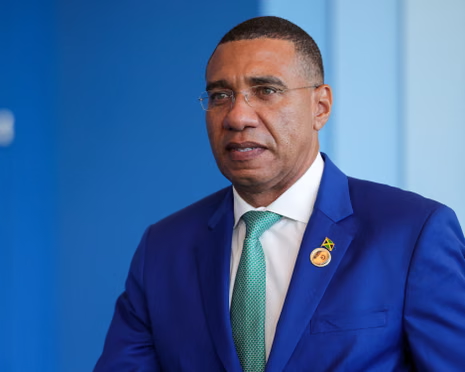
During the opening ceremony of the four-day Caricom summit, regional leaders stressed the importance of strategic collaboration to counter recent US policies. Jamaica’s prime minister and outgoing Caricom chair, Andrew Holness, highlighted the need for constructive dialogue between Cuba and the United States, stressing that peaceful solutions must be prioritised. Holness emphasised that Cuba has historically contributed medical and educational support across the Caribbean, noting the country’s ongoing role in regional welfare and development.
Holness warned that the humanitarian and economic strain in Cuba could trigger wider consequences, affecting migration, security, and economic stability across the Caribbean basin. “It must be clear that a prolonged crisis in Cuba will not remain confined to Cuba alone,” Holness stated, urging immediate attention from regional and international actors. He noted the severity of energy shortages, growing humanitarian challenges, and increasing food scarcity impacting Cuban citizens.

Cuba’s UN resident coordinator, Francisco Pichón, highlighted the impact of the US oil embargo on disaster recovery and aid distribution. He explained that Hurricane Melissa, which struck eastern Cuba as a category 3 storm last October, has left many areas in critical need of support. Pichón warned that fuel shortages are crippling logistics chains across Cuba, restricting essential services and humanitarian relief. “The energy blockade affects the entire logistics chain involved in being able to work in Cuba at this time, anywhere in the country,” he explained.
The incoming Caricom chair and prime minister of St Kitts and Nevis, Terrance Drew, shared a personal account of Cuba’s difficulties, reflecting on his seven years living and studying in the country. He described severe food shortages, limited access to clean water, disrupted electricity, and growing sanitation challenges. Drew urged Caricom to act as a conduit for dialogue and humanitarian support, emphasising that regional collaboration could alleviate suffering and provide constructive engagement with the US.
The summit also addressed wider US interventionist policies in the region over the past year, including pressure on Caribbean nations to reject Cuban medical missions and align with US geopolitical interests. These policies have sought to influence local relations with China and introduce US military hardware into Caribbean countries. Leaders at the summit expressed concern that such measures undermine regional stability and threaten Caribbean peace zones.
US Secretary of State Marco Rubio is scheduled to meet Caribbean leaders on Wednesday during the summit to discuss regional security and humanitarian issues. His visit comes more than a month after the US carried out military operations against Venezuela, resulting in the arrest of its former leader Nicolás Maduro, who faces accusations of collaborating with drug cartels. Rubio’s discussions are expected to touch on US-Caribbean cooperation and the ongoing embargo affecting Cuba.
The military dimension of US intervention has already had deadly consequences for the region. Since early September, at least 151 people have been killed in US strikes targeting suspected “narco-terrorists” in small boats, many of whom were Caribbean nationals. The latest operation, conducted on Monday in the Caribbean Sea, resulted in three fatalities, sparking condemnation from affected families. Critics argue that no verified evidence has been presented linking the targeted boats to illicit drug activities, intensifying calls for accountability and regional oversight.
Amid these developments, Caribbean leaders have stressed the importance of balancing diplomatic, economic, and security considerations while protecting human rights. Holness underscored that de-escalation and dialogue must replace military action, warning that continued aggression would exacerbate migration pressures and economic instability. The summit’s discussions also highlighted the potential for Caricom to serve as a neutral platform for negotiation, fostering constructive engagement between the US and Cuba while protecting regional interests.
Humanitarian concerns remain central to the summit, with leaders noting that Cuba’s ongoing fuel crisis affects transportation, healthcare, and food distribution. Holness explained that shortages not only disrupt daily life but also hinder broader regional resilience, as Caribbean economies are interconnected. Drew echoed these points, stating that Caricom must champion practical solutions to alleviate suffering while encouraging dialogue and reform.
Observers noted that Cuba’s strategic role in regional medical and educational initiatives amplifies the stakes of the embargo. Countries across the Caribbean rely on Cuban healthcare personnel and teachers, and disruption to these programs could have long-term impacts. Summit discussions emphasised that constructive engagement and multilateral solutions are essential to preserving stability, preventing economic collapse, and mitigating the humanitarian crisis affecting thousands of Caribbean citizens.
The summit concluded its opening day with a unified call for measured responses to US policy pressures, highlighting the risks of unilateral action and military interventions. Leaders stressed that regional cooperation and diplomatic negotiation provide a sustainable path toward security, economic stability, and human welfare. Delegates agreed to monitor the humanitarian situation in Cuba closely, with Caricom acting as a facilitator for ongoing dialogue and support.
 As Caribbean leaders continue discussions throughout the four-day summit, the emphasis remains on dialogue, humanitarian assistance, and strategic collaboration to mitigate the effects of the embargo. Experts suggest that the outcomes of these deliberations could shape US-Caribbean relations and influence broader regional policies affecting trade, migration, and development.
The situation in Cuba remains delicate, with the embargo intensifying economic hardship and limiting access to essential goods. Holness and Drew, alongside other Caricom leaders, stressed the importance of a proactive regional response to prevent further escalation and protect the wellbeing of Caribbean citizens. Their combined voices advocate for solutions rooted in diplomacy, humanitarian aid, and sustainable regional collaboration.
In summary, the Caricom summit in St Kitts and Nevis highlighted the urgent need for dialogue between Cuba and the US while addressing humanitarian challenges. Leaders warned that continued economic and military pressure could destabilise the Caribbean, emphasising that collective regional action is critical. The discussions underscored Cuba’s pivotal role in the Caribbean and the importance of supporting citizens through diplomatic engagement, relief efforts, and multilateral cooperation.
Related News:
 British skier killed in La Plagne avalanche tragedy
 Mandelson apologises over Epstein ties after public scrutiny
 Friedman Uninvited From 2024 Adelaide Writers’ Week
 Starmer Challenges US Over Controversial Greenland Deal
 Spoof “Make America Go Away” Caps Rally Denmark Over Greenland
 Silence and Unity Mark Bondi Terror Attack Memorial
 India-EU Free Trade Deal Marks Historic Economic Shift
 Concerns rise for Canberra boy amid Iran detention fears
 Anthony Albanese Must Uphold Rights for All Australians
 UK suspends study visas for four nations to curb asylum
 Jordanian Arrested in Philippines Over Bondi Beach Terror Links
 Ukraine war briefing: Zelenskyy offers help to Saudi Crown prince on combatting Iranian drones
 Abramovich Chelsea Sale Cash Faces Jersey Probe
 Starmer Praised for Stance on Trump and Iran Conflict
 UK Ministers Signal Strategic Independence From Trump Demands
 African World Cup Fans Face $15,000 Entry Bond Fee
 Trump Softens Cuba Oil Stance as Russian Tanker Nears
 Police Seek Immunity in Indigenous Custody Death Case
 Germany Grapples With AI Abuse Following TV Star Scandal
 Farage Shuns Truss as US Right-Wing Roadshow Hits London
 Trump Slams Europe as Transatlantic Tensions Boil Over
 Spain Faces Backlash Over Xenophobic Chants in Egypt Draw
 Trump Facing Backlash Over Firing of Cabinet Women
 The Price of Hubris: Trump, Netanyahu, and the ‘Easy’ War
 Trump and Tehran Find Common Ground in Landmark Ceasefire
 Own an Entire Australian Town for the Price of a UK Flat
 Cyclone Maila Intensifies to Category Five Strength
 Melania Trump Denies Ties to Epstein and Ghislaine Maxwell
 Reeves Slams Trump Over Iran War Lack Of Exit Plan
 Kyiv and Odesa Mourn After Deadly Wave of Russian Strikes
 Norway’s Telenor Faces Lawsuit Over Myanmar Data Breach
 Strait of Hormuz Status Uncertain Despite Iran’s Claims
 Trump’s Presidency: A House of Cards Collapsing?
 US Forces Seize Iranian Ship Near Hormuz Blockade
 Trump Starts $166bn Tariff Refund Process
 Israeli Soldiers Jailed Over Vandalism of Lebanese Statue
 Investigation: Offshore Loans and Sanctions
 Prominent Voices Challenge Palestine Action Ban
 Cross-Border Crisis Shatters Fragile Afghan Peace
 Tragedy Near Jakarta: Train Collision Leaves 14 Dead
 NSW Police Urged Victim to Abandon Antisemitic Case
 The Burning Lens: An Iranian Artist’s Visual Resistance
 FIFA Confirms Global Ban for Benfica Star Prestianni
 The Global Battle for Control Over the Women’s Game
 Tensions Surge in the Gulf as Ceasefire Wobbles
 One Nation Candidate’s Surprising Ties to Independents
 New South Wales Wetland Rescue Legislation Passes
 US and Mexico Face Heatwave as Floods Batter South Africa
 French Patient Told Hantavirus Was Just Anxiety
 Putin Signals War End as Russian Momentum Stalls
 Romania’s Judicial Crisis: A System Under Siege
 Scepticism and tight security as Beijing braces for Trump
 Philippine Senator Flees After Days Under Senate Siege
 Alberta Separatist Bid Blocked by Canadian Court
 Big Tobacco Under Fire Over Controversial New Ad Campaign
 Court Upholds Landmark Win for Transgender Rights
 Fragile Truce Shattered as Violence Escapes Diplomatic Control
 Secrecy Down Under: Albanese Faces FoI Scandal
 Taliban Codifies Strict New Marriage and Divorce Legislation
 Tony Abbott Returns as New Liberal Party President
 Discontent grows around Putin amid war strain
 Trump Diplomacy Faces Hurdles from Tehran to Tbilisi
 Teaching Machines Right From Wrong in the Digital Age
 Oman Defies US Pressure Over Strategic Strait of Hormuz
 Ex-CIA Agent Accused of $40m Gold Theft and Fake Spy Unit
 Aukus Deal Facing Fierce Backing and Historic Criticism
 Thai Princess Bajrakitiyabha Passes Away at 47
 Tragic Loss of Australian Sprinter Jemma Stapleton
 Trump Urged to Condemn UFC Fighter Over Obama Slurs
 US Democratic Crisis Deepens as Trump Limits Mail Voting
 Russian Tanker Captain Remanded in UK Court After Channel Seizure
 US Military Pacific Boat Strike Kills Three People
 US Battles Auction of Titanic Artifacts
 France Dominate Sweden as Deschamps’ New Era Takes Shape
 Trump’s Mount Rushmore Speech: A Divisive Anniversary
 Trump Swaps Planes Amid Iran Tensions
 Rotterdam Museum Honours Artist With Peanut Butter Floor
 Bangkok Nightclub Blaze Claims 30 Lives Amid Negligence Probe
 Yemen Accuses Iran of Violating National Sovereignty
 Houthis Strike Saudi Arabia as Middle East Tensions Rise