Published: 26 February 2026. The English Chronicle Desk. The English Chronicle Online.
Human rights must be upheld for all Australians, regardless of perceived guilt or moral standing. From my earliest experiences, I learned that defending human rights does not depend on a person’s past actions or society’s judgment of them. During a university internship at a human rights organisation, I received a letter from a man previously involved in a notorious murder case, describing mistreatment of prisoners by guards. These prisoners were among Australia’s most notorious convicted criminals, yet their rights were still violated, illustrating that human rights protections are universal.
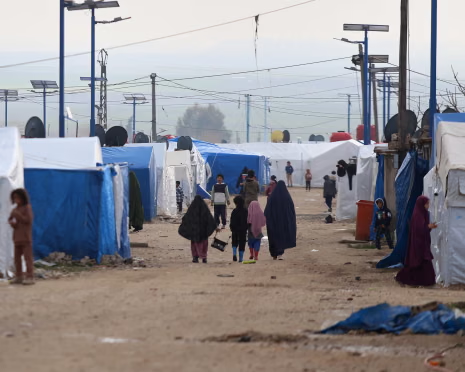
My supervisor taught me a fundamental lesson that day: rights must be defended for everyone, even those deemed unworthy by society. This principle is directly relevant to the ongoing debate in Australia regarding 11 women and 23 children seeking repatriation from al-Roj camp in north-east Syria. Many of these individuals were family members of Australians who joined the Islamic State, yet their fundamental rights remain intact despite public perception.
Since the Islamic State’s defeat in 2019, these 34 Australians have been detained arbitrarily in camps controlled by Kurdish-led authorities. They have neither been charged nor appeared before any judicial authority to assess the legality of their detention. Reports indicate extremely dangerous conditions, with Human Rights Watch documenting daily threats, theft, beatings, and verbal harassment as control of the region shifts to the Syrian government. The children, particularly those born in the camps or brought from Australia, have had no part in extremist actions and should never be held responsible for their parents’ decisions.

Australia has previously demonstrated its ability to repatriate nationals safely. In 2022, authorities brought home four women and 13 children from north-east Syria. Returning adults faced potential investigation and prosecution under Australian counter-terrorism laws, showing that human rights and security can coexist. Despite this, political rhetoric has hardened, with Prime Minister Anthony Albanese expressing contempt for the women and opposition parties proposing laws that could punish anyone aiding their return with up to ten years imprisonment.
However, human rights do not operate according to public opinion or political convenience. As stated in Article 1 of the Universal Declaration of Human Rights, all individuals are born free and equal in dignity and rights. The context of these women and children’s detention does not diminish their entitlement to protection, regardless of whether they were coerced into travelling to Syria or born there. Allegations or associations with extremist groups do not nullify the fundamental protections that international law guarantees to all Australians.
The same principle applies to men detained in north-east Syria suspected of Islamic State affiliation. Many of these men have not been charged or appeared before a judicial authority. Their rights to due process, freedom from arbitrary detention, protection from torture, and fair trial remain intact under international law. Australia, as a signatory to these conventions, carries responsibility for safeguarding the rights of its nationals abroad, particularly in life-threatening circumstances.
Children’s rights are especially critical, with international law mandating that the best interests of the child take priority in all decisions affecting them. The conduct of parents should never compromise the protections afforded to minors, and Australia has an obligation to ensure their safety, wellbeing, and eventual reintegration. Evidence from other countries shows that children returned from conflict zones are successfully reintegrated when provided with appropriate support services, demonstrating that protection is both feasible and morally necessary.
Australia possesses sophisticated services to address the needs of displaced or traumatized children, including education, psychological support, and social reintegration programs. Adults returning to Australia can also be investigated or prosecuted under existing counter-terrorism legislation, confirming that safeguarding human rights does not compromise public safety. This dual approach ensures that the government meets its obligations both to protect citizens and to enforce the rule of law effectively.
Failing to repatriate these women and children risks violating international obligations and sets a troubling precedent for selective human rights enforcement. Rights cannot be conditional on past actions or public opinion, and they must be upheld for all nationals. Arbitrary detention in foreign camps, especially under dangerous and abusive conditions, contravenes basic principles of justice, dignity, and human decency. Australia’s commitment to human rights is measured by how it treats even the most vulnerable or unpopular citizens.
Human Rights Watch and other experts have repeatedly urged the Australian government to take reasonable measures to protect nationals at risk of torture or life-threatening treatment abroad. Repudiating this responsibility undermines Australia’s credibility as a country committed to human rights and fair treatment for all. Moreover, children’s futures are particularly at stake, and delay or inaction could cause irreversible harm, leaving a generation without education, stability, or protection.
The repatriation debate also highlights a broader ethical responsibility for governments to separate public opinion from legal and moral obligations. Leaders must recognize that human rights are not privileges granted based on perceived worthiness, but inherent protections belonging to every individual. As demonstrated in previous successful repatriations, Australia has the capability and resources to ensure both safety and accountability, confirming that compassion and security can coexist.
Prime Minister Albanese’s statements suggesting contempt or moral judgment over these women illustrate a troubling misunderstanding of human rights principles. Rights are not optional or contingent upon public approval; they are universal. Upholding the rights of Australians detained abroad, regardless of alleged associations, affirms the nation’s commitment to equality, justice, and the protection of its most vulnerable citizens.
The legal framework within Australia already allows for investigation, prosecution, and monitoring of returning adults while simultaneously safeguarding their fundamental rights. Children can be reintegrated safely through educational and psychological support systems, illustrating that human rights obligations and national security concerns are not mutually exclusive. This dual approach reinforces the government’s duty to act with both justice and humanity.

Australia must act swiftly and decisively to repatriate these women and children, ensuring their safety, protecting their rights, and demonstrating commitment to international law. Ignoring or delaying action not only endangers lives but also undermines the ethical foundation of human rights protections. The government must prioritise adherence to international obligations and moral responsibilities over political rhetoric and fear-driven narratives.
The principle remains clear: human rights are universal, and they apply to all Australians without exception. Protecting these rights reflects a society that values justice, fairness, and human dignity, even in complex and politically charged situations. Children, in particular, deserve immediate attention and care, with measures focused on rehabilitation and reintegration into society. Adults must face the law where necessary, but never at the expense of fundamental protections.
In conclusion, Australia has both the capability and the legal framework to repatriate its nationals safely, while upholding security and due process. Human rights apply to everyone, including those who may be unpopular or associated with extremist actions. Delaying action or withholding protections undermines both moral and legal obligations, leaving vulnerable individuals, especially children, in harm’s way. Political rhetoric must not dictate the application of human rights, and the government must ensure that its actions reflect the nation’s enduring commitment to fairness, equality, and the protection of its citizens abroad.
Related News:
 Gambia Supreme Court Hears Case to Overturn FGM Ban
 Silence and Unity Mark Bondi Terror Attack Memorial
 Iran Death Toll Crisis Exposed: Bodies, Mass Graves, and Concealment
 Files Link Andrew to Epstein Dinner After Prison Release
 Thousands Protest ICE in New York Against Trump Deportation Campaign
 Concerns rise for Canberra boy amid Iran detention fears
 Sydney Businessman Falsely Claimed Security Advice Came From Kevin Rudd
 Brazilian Politician Brothers Sentenced for Marielle Murder
 Woman Executed in Somalia Sparks Debate on Justice System
 Uganda Crackdown: Two Women Arrested for Public Kissing
 Slovenia Election: A Nation at a Crossroads
 Police Seek Immunity in Indigenous Custody Death Case
 Victorian Liberals Face New Crisis Over Candidate Ethics
 Manila Transport Crisis: Fuel Costs Hit Breaking Point
 UN Warns Israeli Death Penalty Bill Could Be a War Crime
 Sam Konstas Dropped as Australia Unveils New Contract List
 Spain Faces Backlash Over Xenophobic Chants in Egypt Draw
 A Global Voice For Justice: Stephen Lewis Dies At Age 88
 Artist Sues in Paris Over Israeli Strike Killing Parents
 Canadian Mother and Daughter Released From ICE Detention
 Bondi Nanny Adriana Rivas to Face Extradition to Chile
 Queensland Youth Justice Debate: The Data Behind the Law
 Gaza Child Arrives in UK for Life-Changing Care
 Brisbane Rideshare Driver Faces Serious Assault Charges
 Tragedy in the Channel as Four Lives Lost in Boat Sinking
 Kyiv and Odesa Mourn After Deadly Wave of Russian Strikes
 France Urges Release of Elderly Widow Held by ICE
 Trump Weighs Sending Afghan Allies to the Congo
 Prominent Voices Challenge Palestine Action Ban
 Standoff Over Syria: Australia Defies Trump Repatriation Plea
 Desperation in Odisha: A Brother’s Grim Bank Protest
 Activists allege abuse after Gaza flotilla seizure
 Australia Faces Rising Tide of Modern Antisemitism
 Security Failures and the Road to the Bondi Inquiry
 Mexico’s Missing: State Complicity in a Growing Crisis
 Nobel Laureates Demand Release of Activist Narges Mohammadi
 Plea for Mercy: The Battle to Bring Ahmed al-Doush Home
 Court Upholds Landmark Win for Transgender Rights
 Taliban Codifies Strict New Marriage and Divorce Legislation
 Tony Abbott Returns as New Liberal Party President
 Tony Abbott Returns as New Liberal Party President
 Israeli Strikes in Lebanon Kill 10 Amid Ceasefire Strain
 US judge dismisses Kilmar Abrego Garcia indictment
 Former ICC prosecutor condemns US sanctions
 Trump Faces Legal Blow Over Global Tariffs
 Silenced Stitches: The Cost of Memory in Hong Kong
 Global Tech Giants Face Off Against Australia Over Media Levies
 Vision Lost Amid the Rubble of Modern Conflict
 Breakthrough in Hunt for Sovereign Citizen Accomplices
 Controversial London Property Show Sparks Legal Fury
 A State in Turmoil: Aussie MP Denies Assault Allegation
 US Supreme Court Rejects Trump Attack on Birthright Law
 China’s Pacific Missile Test Sparks Regional Alarm
 Gaza Doctor Unrecognisable After Brutal Israeli Detention
 UK Charity Funds Illegal Hebron Settlement Expansion
 Taliban global ties grow as rights fears mount
 Friedman Uninvited From 2024 Adelaide Writers’ Week
 African World Cup Fans Face $15,000 Entry Bond Fee
 Farage Shuns Truss as US Right-Wing Roadshow Hits London
 The Price of Hubris: Trump, Netanyahu, and the ‘Easy’ War
 Trump and Tehran Find Common Ground in Landmark Ceasefire
 US Forces Seize Iranian Ship Near Hormuz Blockade
 Investigation: Offshore Loans and Sanctions
 Cross-Border Crisis Shatters Fragile Afghan Peace
 The Burning Lens: An Iranian Artist’s Visual Resistance
 One Nation Candidate’s Surprising Ties to Independents
 Putin Signals War End as Russian Momentum Stalls
 Romania’s Judicial Crisis: A System Under Siege
 Scepticism and tight security as Beijing braces for Trump
 Philippine Senator Flees After Days Under Senate Siege
 Secrecy Down Under: Albanese Faces FoI Scandal
 Discontent grows around Putin amid war strain
 Teaching Machines Right From Wrong in the Digital Age
 Oman Defies US Pressure Over Strategic Strait of Hormuz
 Trump Urged to Condemn UFC Fighter Over Obama Slurs
 US Military Pacific Boat Strike Kills Three People
 Trump’s Mount Rushmore Speech: A Divisive Anniversary
 Trump Swaps Planes Amid Iran Tensions
 Yemen Accuses Iran of Violating National Sovereignty
 Houthis Strike Saudi Arabia as Middle East Tensions Rise