Published: 05 December 2025. The English Chronicle Desk. The English Chronicle Online
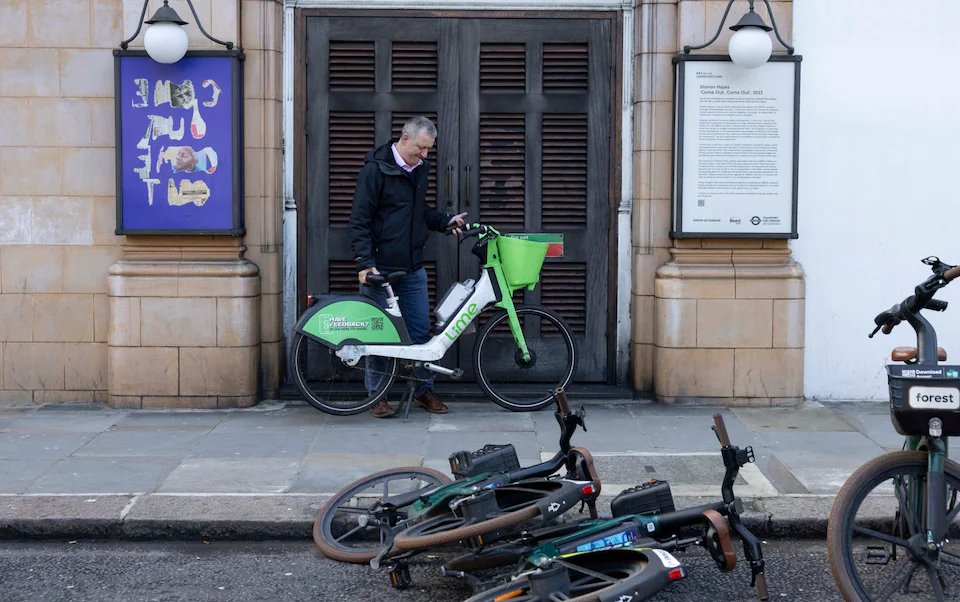
A recent experiment in London has highlighted the growing problem of e-bike clutter and poor parking enforcement, raising concerns about pedestrian safety, accessibility, and urban planning. Over the course of a week, a reporter tested hire e-bikes from companies including Lime, Forest, Voi, and Bolt, deliberately leaving them in obstructive and absurd locations across the city to see how effectively operators enforced parking rules.
The results were eye-opening. Bikes were abandoned in the middle of zebra crossings, across pavements, on double yellow lines, and even blocking fire exits. In nearly every instance, the apps approved the locations once mandatory photographs were submitted, allowing the bikes to remain locked and temporarily clutter the streets. Only Lime issued a warning in one particularly egregious case, highlighting a general lack of immediate enforcement in the dockless e-bike sector.

Campaigners representing disabled people, including wheelchair users and the visually impaired, have long warned about the dangers of haphazardly parked e-bikes. These heavy, lithium-ion battery-powered vehicles can weigh as much as a two-seater sofa, and poorly parked bikes create obstacles for the elderly, parents with prams, and those relying on tactile paving for navigation.
Mayor Sadiq Khan has previously described London’s dockless e-bike and e-scooter scene as a “Wild West” environment, acknowledging the difficulty of regulating the sector as it expands faster than the infrastructure designed to accommodate it. Some councils have increased fines and issued final warnings to operators, but evidence suggests enforcement remains inconsistent.
During the test, bikes were deliberately parked in sensitive and dangerous areas. In Old Street, a Forest e-bike was left blocking a bus stop, on benches, and across a pavement near a primary school – yet the system approved the locations. A Lime bike was parked on a speed bump in Hammersmith, and Bolt’s bikes could be left blocking pavements despite GPS geofencing intended to restrict parking to designated areas.
Of particular concern were instances where e-bikes obstructed textured paving for the visually impaired, posing serious safety risks. One Voi bike blocked a tactile crossing, and Forest approved a bike left directly on top of a zebra crossing. Fire exits, critical for public safety, were also disregarded, with multiple bikes locked in front of clearly marked exits outside Holland Park Tube station.
Freedom of Information data from Transport for London revealed that in the year to January 2026, Lime received 447 fines and Forest 216 for bikes left on red routes, showing that even on major thoroughfares, enforcement is inconsistent and slow. Observers noted that while hire companies claim to monitor parking and take corrective action, this is often applied retrospectively, meaning hazardous parking goes unaddressed for hours or days.
E-bike operators defended their practices, highlighting automated app checks, GPS geo-fencing, and manual reviews as part of their safety and enforcement measures. Lime pointed to over 1,100 funded parking bays in London and described mis-parked bikes as a challenge due to growing rider demand. Forest emphasised that enforcement could be applied retroactively and called for more designated parking spaces. Voi claimed that 95% of rides ended compliantly, while Bolt stressed that photographs are screened automatically and then manually reviewed when necessary.
Despite these measures, the experiment underscores a systemic problem: rapid e-bike adoption is outpacing infrastructure, leaving streets vulnerable to congestion and hazards. Campaigners insist that unless stricter regulation, more designated parking, and faster enforcement are implemented, vulnerable pedestrians will continue to bear the brunt of an industry prioritising convenience and profit over public safety.

The week-long test highlights the broader debate about urban micromobility: while dockless e-bikes are marketed as environmentally friendly alternatives to cars, their uncontrolled presence on streets and pavements threatens accessibility and safety. The findings suggest that cities must balance the benefits of micromobility with regulations and infrastructure that protect all residents, particularly the most vulnerable.
As London continues to embrace electric hire vehicles, the experiment serves as a stark reminder that technology alone cannot solve urban mobility challenges. Enforcement, planning, and public accountability remain essential to ensure streets remain safe and accessible for everyone.
Related News:
 UK Must Act with Courage and Clarity on Israel-Palestine Conflict, Says Foreign Affairs Committee Report
 The Ketamine Crisis in the UK is a Silent Epidemic Leaving Users with Lifelong Pain
 London Set to Honour Euro 2025 Champions as Lionesses Take Victory Parade Through the Capital
 Targeted Attack in Bury Sparks Murder Investigation as Community Awaits Justice
 Princess of Wales Launches Animated Video Series to Support Early Childhood Development
 Heartbreak in the New Forest as Shetland Ponies Vanish, Community on Edge
 Radioactive Leak at UK’s Nuclear Warhead Base Sparks Outcry Over Safety and Secrecy
 Fire Contained at Edinburgh’s Arthur’s Seat After Overnight Battle by Firefighters
 Premier League Supercomputer Predicts Tough Season for Man Utd Amid Three-Team Title Battle
 Mystery Wallaby Spotted on Norfolk-Suffolk Border Sparks Police Appeal
 UK Weather: Heat Alerts Extended as Temperatures Set to Reach 30°C This Weekend
 Terence Stamp, ’60s British Film Legend and Star of Superman, Dies at 87
 Merseyside Police Helicopter Crew Cleared After Low-Altitude Pursuit of Suspect
 Is the UK Ready to Put Boots on the Ground in Ukraine? Assessing Military Capacity and Challenges
 Education Leaders Call for End to Compulsory GCSE Resits in English and Maths
 Police Scotland Spends £500,000 Compensating Officers Over Trump Visit
 Thousands of New School Nursery Places to Be Rolled Out Across England
 Urgent Action Needed on Windrush Compensation as Survivors Speak of “Waiting to Die”
 Tanni Grey-Thompson Faces Abuse Over Opposition to Assisted Dying Bill
 Rising Food Bank Dependence Highlights Deepening Hardship Across the UK
 Birmingham Bin Strike Enters Sixth Month as Negotiations Stall
 TfL Invites RMT to Resume Talks as London Tube Strikes End
 Over 40% of Private Renters Forced to Ration Energy to Afford Bills, Study Reveals
 Systemic Racism in Maternity Care Continues to Endanger Black Women in England, MPs Warn
 Northern Ireland Faces Fears of Prolonged Race Riot “Permacrisis”
 Nigel Farage Unveils Controversial Immigration and Welfare Plans at Reform UK Press Conference
 Scottish Teenager’s Petition on Single-Use Plastics Gains Parliamentary Support
 White Low-Income Pupils in England Show Lowest Levels of School Engagement, Study Finds
 No Evidence Found to Substantiate Alleged Rape in Oxfordshire Churchyard, Police Confirm
 UK House Price Growth Slows as Buyers Exercise Caution Ahead of Autumn Budget
 Massive London Poundland Fire Engulfs High Street
 Paedophile Singer Ian Watkins Dies After Prison Attack
 UK border officers deployed to Balkans to tackle migrant smuggling
 UK MPs warn of repeat riots over online misinformation
 Giuffre’s bombshell memoir names Prince Andrew 88 times in shocking revelations
 M&S and Morrisons Lead Christmas Supermarket Taste Test
 Reeves Faces Setback as Labour May Miss Homes Target
 Kate Winslet to Narrate Film Highlighting King’s Environmental Mission
 Trump’s UK Ambassador Urges North Sea Drilling to Strengthen US Ties
 UK Bans Fake Numbers: Scammers Lose Their Trick
 M&S Profits More Than Halve After Cyber-Attack
 Patients to Test Health at Home to Ease NHS Winter Pressure
 Millionaires group urge Reeves to introduce wealth tax to ‘lift kids out of poverty’
 Reeves rejects £1bn plea for NHS redundancy payouts
 Northern Lights may illuminate UK skies this week
 PM Condemns Leaks, Vows Loyalty to Ministers and Stability
 Major Rent Reform Ends No-Fault Evictions in England
 Stroke Patient Mistaken for Drunk, Care Delayed
 Inside the Helpline Protecting Missing Children in the UK
 Boots Showstopper Beauty Bundle Outshines Many Advent Calendars This Holiday Season
 PlayStation PS5 Deals Hit Lowest Prices Ahead of Black Friday
 Five-Year-Old Dies After Rare Tonsil Surgery Complication
 Starmer Says Labour’s Economic Plan Needs Years to Deliver
 England delays four mayoral elections amid criticism
 Zelenskyy in London: Peace Push Intensifies
 UK unemployment rises to four-year high of 5.1% before budget
 Wiltshire Police Use Lasso to Catch Rampaging Village Goat
 Historic £100-Weekly Pension Boost Brings Relief for UK Mineworkers
 Children to Receive Home Vaccines as England Acts
 Cambridge College Faces Backlash Over Private School Recruitment
 Celebrity Campaign Highlights SMA Screening Failures
 Bereaved Fathers Gain New Paternity Leave Rights in UK
 Woman Jailed for Life After Killing E-Bike Rider in Tragic Mistaken Identity Case
 UK Ministers Drop Foreign Student Targets for Global Education Push
 No Gas Boiler Ban as UK Warm Homes Plan Backs Heat Pumps
 Shinzo Abe’s killer receives life sentence in Japan
 Police response times face strict new national limits
 Devon hosts first high-density hydro power system
 Pornhub blocks new UK users over age checks dispute
 UK New Car Discounts Near £6,000 as Prices Are Slashed
 Pneumonia Surge Pushes England Emergency Cases Higher
 Labour Utterly Humiliated by Straight-Talking Mum Who Cut Through Keir Starmer’s Insanity
 Draft Severe Weather Plan Following Storm Flooding
 What is Groundwater Flooding and Why Dorset is Seeing ‘Historical Highs’
 ‘Daejaun Was Drawn Deeper Into Danger,’ Says Heartbroken Mother
 Pound Sinks and Borrowing Costs Rise as Starmer Fights for Job
 Major UK Clothing Firm Collapses into Administration — 109 Jobs at Risk
 Send spending gap leaves deprived areas behind
 William Wanted Andrew BANISHED and Rowed With Charles Over ‘Stain on Royal Family’
 Renters Furious as Decent Homes Standard Delayed Until 2035